
In Sumerian literary tradition Lugalbanda is presented as a legendary king of Uruk and a soldier in the campaigns of Enmerkar; he is listed in the Sumerian King List with an extraordinarily long reign (1,200 years), marking him as a mythic, antediluvian ruler. Over centuries the figure moves from narrative hero in the Enmerkar–Aratta cycle (notably the mountain tales) into a cultic, ancestral role: later royal hymns and temple records treat him as a holy parent and personal god, father of Gilgamesh and a recipient of offerings and temple cult.
The sources provide no consistent iconographic portrait. Narrative texts portray Lugalbanda as a rugged, active soldier and wanderer—often described in mountain and wilderness settings (e.g., 'Lugalbanda in the Mountain Cave' and 'Lugalbanda and the Anzu Bird')—which implies a heroic, outdoor figure in stories. Later cultic references address him as a divine/ancestral presence rather than enumerating a stable physical depiction; specific statues or standard iconography are not documented in the supplied material.
In epic narratives Lugalbanda displays heroic endurance, daring initiative, and survival in remote high places (missions in the Zabu mountains; seeking the Anzu bird's nest). In later cultic contexts he functions as a personal god and tutelary ancestor who may be invoked and honored (e.g., Gilgamesh swears by 'holy Lugalbanda' and offerings/anointing are made to him). The provided sources do not attribute specific supernatural powers such as flight or shape-change; his role combines heroic feats in mythic tales with a protective/ancestral cultic function.
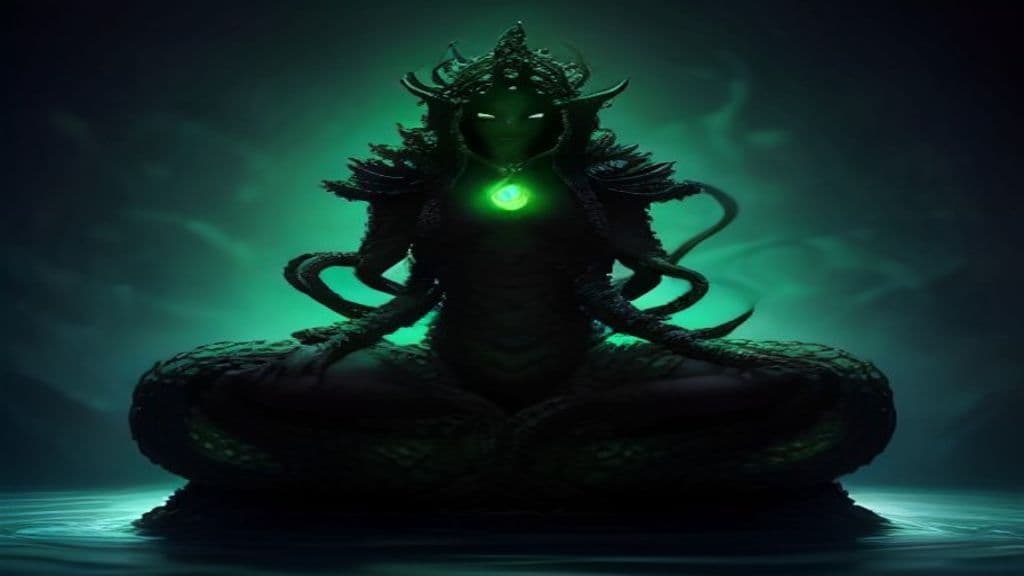
Naga
Divine serpent beings of Hindu, Buddhist, and Jain cosmology — powerful guardians of water, earth, and underground treasures. Revered as deities in South and Southeast Asia.

Ninsun
Ninsun is a Sumerian goddess of ancient Mesopotamia, mother of the hero Gilgamesh and consort of the deified king Lugalbanda. She functions as a divine intercessor, dream-interpreter, and a protective beneficent figure (sometimes called a lamma) invoked in royal legitimation and literary traditions such as the Epic of Gilgamesh.
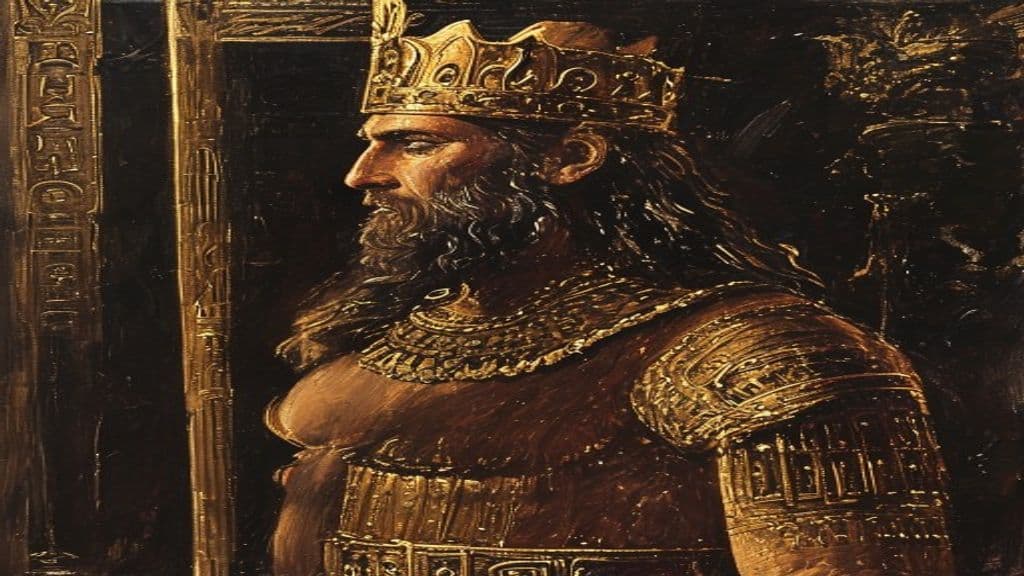
Gilgamesh
Gilgamesh is a semi-divine legendary king of the Sumerian city of Uruk who features as the protagonist of a pan‑Mesopotamian epic tradition. Portrayed in literary sources as a demigod of superhuman strength, he is both a historical monarch recorded in king lists and a later object of cultic veneration.
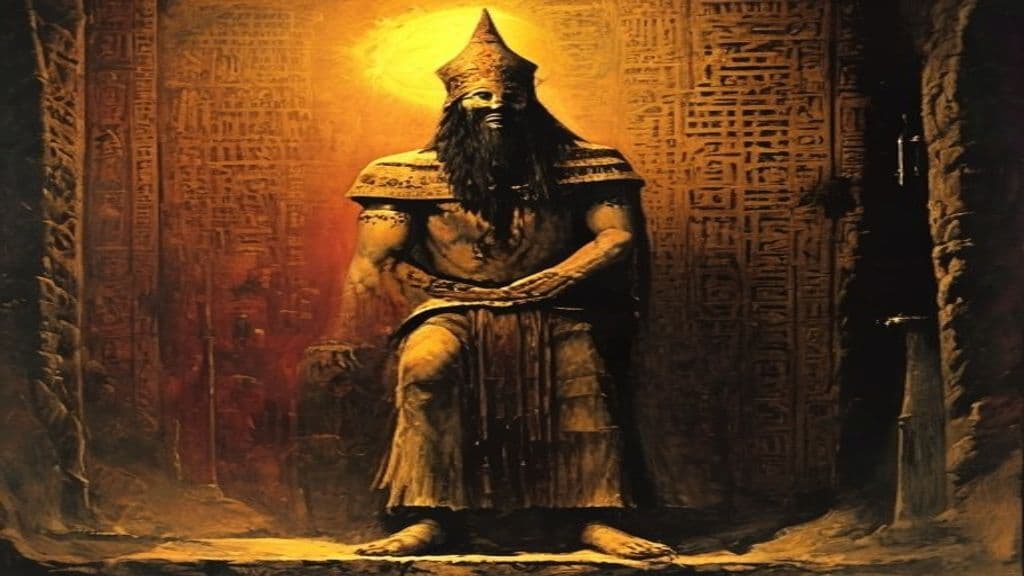
Enmerkar
Enmerkar is a Sumerian legendary king and culture-hero of Uruk (Unug), presented in the king-lists and in the Matter of Aratta poems as a ritual-priest king (en) and founder-figure who secures Inanna's favor, contests the distant city of Aratta, and is credited in narrative with instituting writing on clay tablets.

Anzû (Imdugud)
Anzû, also called dZû or Imdugud, is a large storm-associated bird-figure in Sumerian/Akkadian/Babylonian myth. Portrayed as a hybrid (commonly a massive bird with a lion's head or as a half-human storm-bird), Anzû is credited in mythic narratives with seizing the Tablet of Destinies and thereby challenging the authority of chief gods such as Enlil.
'Ain Samiya Goblet
Silver cup from the Middle Bronze Age I, discovered in a tomb at Ain Samiya. (Note: 1. Power tier should be "None", but add a note explaining that historical artifacts don't fit into the typical power tier classification. 2. Add a description of its appearance based on it being a sil)
A'annepada
A'annepada (Sumerian cuneiform 𒀀𒀭𒉌𒅆𒊒𒁕; also romanized Aanépàdda) is attested as a historical ruler of the First Dynasty of Ur, flourishing c. 2350 BC. He is recorded in dedicatory and foundation inscriptions as king of Ur and as son of Mesannepada, credited with temple-building and dedication to deities such as Ninhursag and Inanna.
Abu
Abu is a poorly understood Mesopotamian god attested in modern reference summaries. Secondary literature tentatively links him with vegetation and snakes and records that he was often paired with a deity written gu2-la2, but primary details about his cult, iconography, and myths are lacking in the cited sources.
Abzû
Abzû (Sumerian abzû; Akkadian Apsû) is the primordial freshwater abyss in Sumerian–Akkadian cosmology: the deep fresh waters that underlie and surround the earth, source of springs, rivers and ritual holy waters, and a creative principle whose mingling with the salt sea (Tiamat) figures in Mesopotamian cosmogony.
Abī-simtī
Abī-simtī (also rendered Abi-simti, Abisimti) is a named woman attested in third-millennium BCE Mesopotamian documentary and literary texts. She appears in administrative account records as a provider of animals and donor to temple cults and in Sumerian love-song literature as the named beloved/consort addressed by a royal speaker.
Adad
Adad (also Hadad, Haddad; Sumerian Iškur) is the storm- and rain-deity attested in ancient Mesopotamian and Canaanite religious contexts. Sources identify him as a principal weather god whose domain is storms and rainfall and whose name appears across multiple Near Eastern languages and sites, including Ebla (as Hadda, c. 2500 BCE).
Adapa
Adapa is a mythic figure from ancient Mesopotamian (Sumerian and Akkadian) literature: a mortal fisherman and temple sage of Ea at Eridu endowed with exceptional wisdom. He appears in a fragmentary tale in which he breaks the wings of the south wind and is summoned to the divine court; his name was later invoked in exorcistic and ritual contexts as an authoritative identity.
Adonis
Adonis is a mythic mortal youth in ancient Greek tradition, beloved by goddesses (notably Aphrodite and Persephone) whose death and seasonal return are the focus of the women’s midsummer festival Adonia. The cultic practices—planting short-lived 'gardens of Adonis' on rooftops, ritual lamentation, and casting an effigy and withered plants into the sea—symbolically link him to vegetation cycles and Near Eastern dying-and-regenerating god traditions.
Adrammelech
Adrammelech is attested in ancient Semitic textual tradition as a local god of 'Sepharvaim.' The name is commonly glossed as "Magnificent king." In modern times the name has been reused in diverse fictional, musical, and online contexts, but those are creative reworkings rather than continuations of the brief ancient attestation.
Aga of Kish
Aga of Kish (Aga, Agga, Akka) is an Early Dynastic Mesopotamian king recorded in the Sumerian King List, the Tummal Inscription, epigraphic objects, and the Sumerian poem "Gilgamesh and Aga." He functions in texts as a historical/legendary political actor who attempted hegemonic demands on Uruk and was ultimately captured and released by Gilgamesh.
Agasaya
Agasaya is presented in modern secondary sources as a little-attested Semitic war goddess who, according to some summaries, was later absorbed as the warrior aspect of the major Mesopotamian goddess Ishtar. The attestation in available materials is sparse and much inferences about her name, attributes, and later influence are explicitly marked speculative in those sources.
Agum II (Agum‑Kakrime)
Agum II (called Agum‑Kakrime in the inscriptionary tradition) is a Kassite-era Babylonian king known from the Agum‑Kakrime Inscription and later copies. He appears in Akkadian inscriptional and king-list traditions as a royal restorer who recovered and reinstalled the cult statue of Marduk and refurbished the É-sagila, presenting himself as a legitimate shepherd‑king and temple benefactor.
Community Record
- [1]Lugalbanda — Wikipedia. Wikipedia: Lugalbandawiki
- [2]Lugalbanda in the Mountain Cave — ETCSL translation. ETCSL: Lugalbanda in the Mountain Cave (translation)literary
- [3]Lugalbanda and the Anzu Bird — Gateways to Babylon. GatewaysToBabylon: Lugalbanda and the Anzu Birdliterary
- [4]Lugalbanda in the Mountain Cave — Gateways to Babylon. GatewaysToBabylon: Lugalbanda in the Mountain Caveliterary
- [5]Lugalbanda and the Anzu Bird — story summary. Online retelling/summary of the Anzu episodeother