
In the accounts available, Mikelats appears within a Basque narrative pairing him with a brother (Atarrabi/Axular). In some versions the brothers are described as offspring of the goddess Mari and a mortal, and both are sent to or entrusted to a teacher called Etsai who 'teaches from the depths of his cave.' Modern summaries and retellings frame the two brothers as diverging moral figures: Atarrabi follows a sacred path while Mikelats follows a profane, worldly one. The sources indicate variability across tellings and do not supply a single canonical origin.
Traditional mythic sources surveyed do not provide a consistent physical description of Mikelats as a mythic being. Contemporary, localized practice records show the name used for a parade giant (erraldoia) in Mendillorri fiestas — a modern festival figure or giant puppet/carrier labeled 'Mikelats' in archival captions — which functions as a public, embodied representation but is not a documentary source for any original mythic appearance.
Available materials do not enumerate specific supernatural powers for Mikelats. Instead, his character is defined behaviorally and morally: in the tale he is the brother who 'decided to stay with his master' and is characterized in modern summaries as following a profane path in contrast to Atarrabi's sacred vocation. Some tellings link his upbringing to instruction by Etsai (presented in summaries as a dark or diabolic teacher), which frames Mikelats's role around moral alignment and pedagogy rather than listed magical deeds.
Aatxe
In Basque folk mythology, Aatxe is a spirit that exists alongside humans and other entities, protecting the law-abiding and punishing malevolent individuals. (Note: 1. Power tier: The source material does not explicitly mention Aatxe as a deity-level entity, so Greater is plausible but could be clarified. 2. Abilities: While it's mentioned that Aatxe attacks male)
Akelarre (Basque Witches' Sabbath)
In Basque tradition, Akelarre is a gathering of witches presided over by a goat-like entity. (Note: - Power tier: Primordial (given it's a cosmic event and not a specific entity with supernatural power, but rather an event presided over by another entity) - Summary: In Basque tradition, the Akelarre)
Akerbeltz
Malevolent Basque spirit associated with sexual abuses and seductive powers, likely tied to the natural environment. (Note: - Power tier: Greater (Akerbeltz's abilities are more regional in scope and do not match the description of an Ancient entity) - Abilities: While source material mentions "sexual abuses" and "seductiv)
Arquetu
A Cantabrian popular-belief figure depicted as an old man marked with a green cross and seven keys on his forehead who intervenes in human economic affairs by lending money to prodigals and punishing repeat wastefulness with a curse of eternal poverty.
Artahe
Tutelary deity of Southern Gaul and Aquitania, providing protection and care to her associated group or place. (Note: - Power tier: Lower than Ancient (consider Greater, as she's a regional deity) - Sensory cues and weaknesses and wards are missing; add relevant information from source material - Abilities should inc)
Baian
A semi-divine water spirit or mermaid-like creature in Basque mythology, associated with fertility and aquatic phenomena. (Note: Power tier should be "Lesser" or possibly "Primordial", as the entity is described as semi-divine and associated with fertility and aquatic phenomena. Summary needs more detail, e.g., "Semi-divine wat)
Basajaun
A huge, hairy hominid in Basque mythology that protects flocks and teaches humans skills. (Note: * Power tier: should be "Greater" instead of "Ancient", as Basajaun's abilities suggest regional power but not deity-level. * Origin story: it is actually mentioned in the source that the origin story)
Basque Primordial Entity
Very little is known about Basque mythology due to the lack of surviving texts from the pre-Christian worldview. (Note: 1. Summary: Add that most knowledge comes from indirect sources such as legends and place names. 2. Power tier: Remove or change Primordial, as there is no information about its abilities or powers. 3)
Eacus (God)
Weather god associated with forces of nature in Basque tradition. (Note: * Power tier should be Ancient, not Primordial, as Eacus is described as a specific god associated with a particular region (Iberian Spain) rather than a cosmic entity. * The article should indicate t)
Eate, Storm God in Basque Tradition
Eate is a storm god worshipped by the ancient Basques, associated with powerful weather events and control over fire and ice. (Note: - Power tier should be Ancient, as the source describes Eate as a "storm god", implying a more deity-level power. - Abilities: add "possibly" is unnecessary; rephrase to make it clear that control ove)
Eguzki Amandrea (Sun Mother)
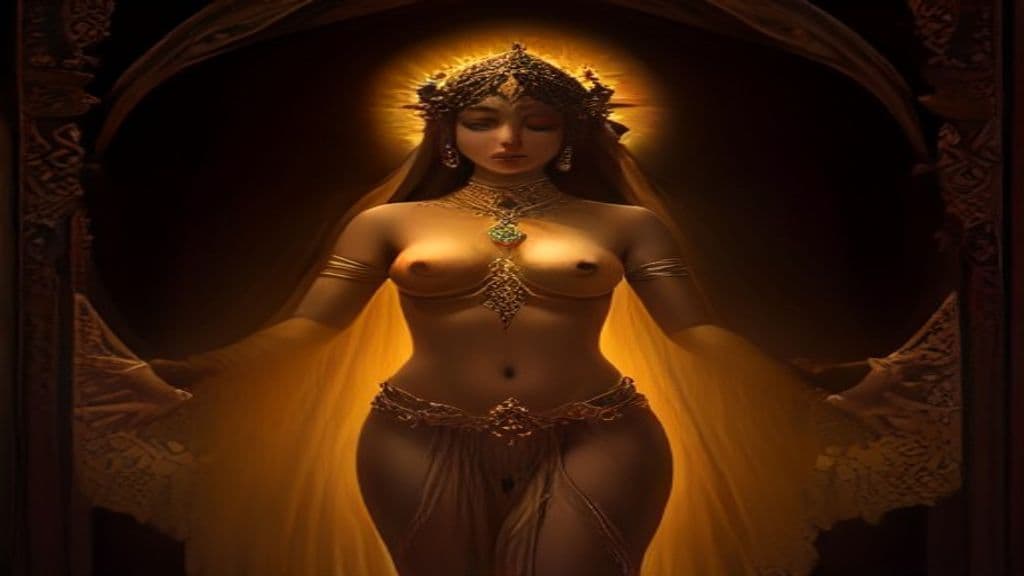
Eguzki Amandrea is the Basque personification of the sun, presented in the cited corpus as a female, familial cosmic figure associated with warmth, growth, and the visible life of the world. Sources frame the sun as an animate, gendered celestial body embedded in a kinship-like cosmology with Earth and the Moon.
Gaizkiñ (Basque Tradition)
In Basque mythology, Gaizkiñ is a malevolent entity believed to cause diseases and harm humans physically. (Note: * Power tier: Primordial seems too high given the limited scope of abilities (causing diseases and physical harm). A Greater power tier might be more fitting. * No sensory cues or weaknesses mentioned)
Community Record
- [1]Atarrabi et Mikelats | Viennale. Viennale film page for Atarrabi et Mikelatsother
- [2]Atarrabi and Mikelats (Film at Film at Lincoln Center). Film at Film at Lincoln Center — Atarrabi and Mikelats film summaryother
- [3]Atarrabi & Mikelats - zxc.wiki. zxc.wiki summary of Atarrabi & Mikelatswiki
- [4]Basque Fact of the Week: Etsai, Axular, and Mikelats | Buber's Basque Page. Buber's Basque Page summary noting Etsai's cave teaching and the brothers Axular/Atarrabi and Mikelatfolk
- [5]GIGANTES MENDILLORRI 03092023 (archive item 1). Archive captions documenting a Mendillorri giant named Mikelats in 2023 fiestasother
- [6]GIGANTES MENDILLORRI 03092023 (archive item 4). Archive captions documenting a Mendillorri giant named Mikelats in 2023 fiestasother
- [7]GIGANTES MENDILLORRI 03092023 (archive item 5). Archive captions documenting a Mendillorri giant named Mikelats in 2023 fiestasother
- [8]Reverse Shot review: Atarrabi & Mikelats. Review discussing the sacred/profane framing of the brothersother
- [9]New Pollution #3: NYFF Guys Finish Last - by Keith Uhlich. Festival writeup referencing Atarrabi and Mikelatsother
- [10]Wikipedia: 2020 New York Film Festival (mentioning film). Wikipedia page referencing the film's screeningwiki