
In the standard mythic frame Pasiphaë is placed in the generation of early kings and heroes: she is commonly named a daughter of the sun-god Helios and becomes wife of Minos of Crete. The best-known episode links her to Minos's failure to sacrifice the Cretan Bull and the resultant divine retaliation that produces her unnatural passion for the bull, leading to the birth of the Minotaur. Variants and later retellings differ on particulars: some traditions implicate Poseidon as the agent of the compulsion, others suggest Aphrodite or obscurely Zeus in variant lines. Different sources also vary in treating Pasiphaë as immortal/divine-born or as a mortal queen subject to human judgment.
Ancient sources supplied in the present corpus do not preserve a sustained iconographic description of Pasiphaë beyond her status as queen of Crete and daughter of Helios. Narrative detail records one striking corporeal episode: she took part in a contrivance (with the craftsman Daedalus) that concealed her inside a hollow wooden cow covered with cowskin in order to mate with the Cretan Bull; this episode is described as a method rather than an account of personal physiognomy. Other accounts emphasize her royal dress and courtly position but offer few consistent physical attributes.
The tradition as preserved links Pasiphaë to knowledge or use of magical and herbal arts: she is grouped in the same imaginative register as figures like Medea because she is said in some sources to employ charms (the Bibliotheke account attributes a fidelity charm to the narrative context). Pasiphaë is portrayed both as recipient of a god-sent madness or passion (her own defence in a surviving Euripidean fragment insists her behaviour was due to divine-induced madness) and as an active agent who commissions Daedalus to construct the hollow cow that enabled the union with the bull. Some fragmentary reports also claim she nursed the Minotaur “like an infant,” indicating maternal involvement with the monstrous offspring. The corpus shows variation and debate about where agency lies between divine compulsion and human action.
Weaknesses
- otherNarrative remedies targeting Minos's affliction rather than Pasiphaë: a protective 'circean' herb
- otherPhysical containment (goat's bladder) used in the narrative to receive harmful creatures emitted by Minos
Wards
- substanceProtective herb (described as 'circean' in the narrative involving Procris) — used so Procris could lie with Minos without harm
- otherGoat's bladder (used as a receptacle to contain the serpents/scorpions in the Bibliotheke-linked tradition)

Daedalus
Daedalus (Greek Δαίδαλος) is a legendary master craftsman, architect, and inventor of Greek mythic tradition credited with complex constructions (the Labyrinth), ingenious devices (a wooden cow), and mechanical inventions (wings for flight). He functions as an archetypal artisan whose skill alters human affairs and whose pride produces moral and social consequences.
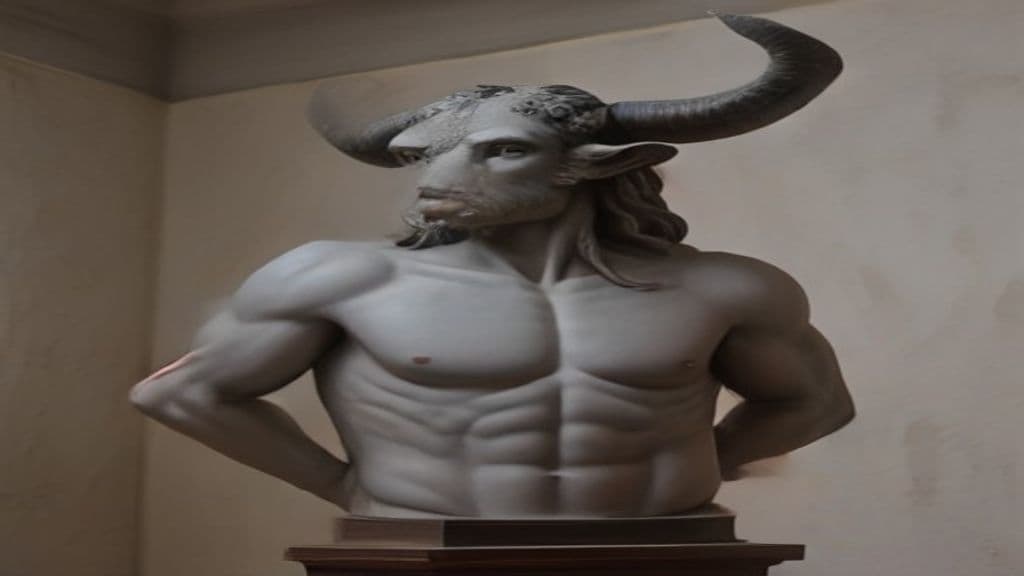
Minotaur
A singular monstrous offspring in classical Greek myth, born of a union between a human woman and a bull, confined at the center of Daedalus's Labyrinth at Knossos and fed on human tribute until slain by the hero Theseus with Ariadne's aid.

Poseidon
Poseidon is a principal deity of the ancient Greek pantheon, counted among the Twelve Olympians; he presides over the sea, storms, earthquakes and horses and functions as protector of seafarers and guardian of cities and colonies.
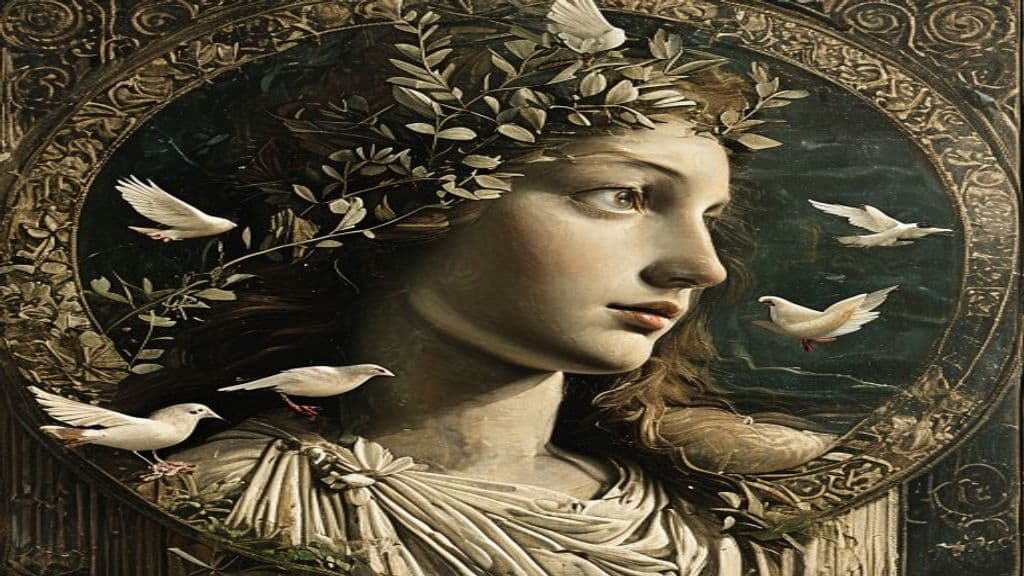
Aphrodite
Aphrodite is a major ancient Greek goddess associated with love, lust, beauty, pleasure, passion, procreation, and related social and cosmic forces. She is counted among the principal Olympian deities with major cult-centers (Cythera, Cyprus, Corinth, Athens), celebrated annually at the Aphrodisia, and syncretized with the Roman Venus.
*Péh₂usōn (reconstructed)
Péh₂usōn is a hypothetical Proto‑Indo‑European pastoral guardian reconstructed by comparative scholars from parallels in Greek and Vedic traditions. Proposed as a Graeco‑Aryan ancestor‑figure, the reconstruction describes a protector of flocks, roads, and travellers rather than an attested historical cultic personality.
Aba (disambiguation / name-form)
Aba is a polyvalent name-form attested across many unrelated contexts (place names, personal names, animal names, and brief mythological listings). The provided sources do not support a single, coherent supernatural entity called "Aba" and offer no descriptive or ritual material for such a being.
Abarbarea
Abarbarea is a name attested in classical Greek and Roman sources for freshwater nymphs (naiads). The name appears for at least two individual mythic figures — a naiad wife of Bucolion and a naiad counted among ancestors of the Tyrians — and Hesychius records plural forms that may indicate the name was also used as a class-name (Abarbareai / Abarbalaiai).
Abas
Abas (Ancient Greek: Ἄβας, gen.: Ἄβαντος) is not a single mythic being but a recurring personal name borne by multiple mortals and minor mythic figures in Greek epic and genealogical traditions — kings, founders, seers, warriors, attendants, a centaur, and a youth transformed by a goddess. The name is glossed in the sources as 'guileless' or 'good-hearted' and appears across Argive, Theban, Trojan, Euboean, and other local cycles.
Abderus
Abderus (Ancient Greek: Ἄβδηρος, romanized Ábdēros) is a mortal heroic figure in Greek myth closely associated with Heracles, remembered as the youth left in charge of the Mares of Diomedes who was killed by them. He functions as an eponymous local/divine-hero ancestor for the city of Abdera and received funerary commemoration and athletic agones at his tomb.
Abomination of Desolation
An apocalyptic prophetic phrase originating in the Book of Daniel designating a profaning thing or act that renders the Jerusalem Temple cult desolate; later reused in the Synoptic Gospels as an eschatological sign prompting urgent flight. The term denotes ritual/cultic impurity (Hebrew shiqquts) and is variously interpreted as pagan offerings or altar, a foreign cult statue, or (in some New Testament readings) an acting agent.
Absyrtus
Absyrtus (Ancient Greek: Ἄψυρτος) is a Colchian prince in the Greek Argonautic cycle, son of King Aeëtes and brother or half-brother of Medea. He appears in variant traditions either as a companion taken by Medea during her flight with Jason and murdered/dismembered to delay pursuit, or as a pursuer sent by Aeëtes who is overtaken and slain by Jason; his death functions as a key narrative device in the escape from Colchis.
Acacallis
Acacallis (Ancient Greek: Ἀκακαλλίς; also Acalle) is a mythological princess of Crete in Greek tradition, daughter of King Minos and Pasiphae. She functions primarily as a dynastic and etiological figure: in varying accounts she is mother, by gods such as Hermes (Mercury) or Apollo, of eponymous or founder-figures like Cydon (founder of Cydonia), Miletus, or Lydon/ Lydus.
Acacus
Acacus (Ancient Greek: Ἄκακος) is, in Arcadian Greek tradition, a mortal eponymous founder-king of Acacesium and is remembered as the foster-father who reared the infant Hermes (Mercury) in that local tradition. He is presented in genealogies as a son of Lycaon and functions as a local ancestral/onomastic figure rather than a supernatural spirit.
Academus
Academus (Greek: Akádemos / Hekádemos) is an Attic hero-eponym tied to a sacred grove (Akademeia) on the Cephissus near Athens. In myth he revealed where Helen was hidden to the Dioskouroi, an act said to have saved the city, and the place bearing his name became a long-lived sacred precinct, later the site of Plato's Academy.
Acamas
Acamas (Ancient Greek: Ἀκάμας) is a personal name recurrent in ancient Greek narrative traditions applied to multiple human characters (warriors, princes, suitors), once to a Cyclops, and once as a hound's name. Rather than a single supernatural entity, bearers of the name appear episodically across the Trojan War, Theseid, and Theban cycles as mortal actors whose deeds intersect with gods and fate.
Acantha
Acantha (Ancient Greek: Ἀκάνθα, 'thorn') is a late or secondary mythological figure known from modern retellings as a nymph transformed into the acanthus plant. The tale that she scratched Apollo and was changed into a spiny-leaved plant is not attested in surviving classical corpora and appears to be a modern compilation or invention rather than a firmly documented ancient myth.
Community Record
- [1]Pasiphaë — Wikipedia. Wikipedia entry 'Pasiphaë' (summary of ancient sources including Bibliotheke and Euripides fragments).wiki
- [2]Wikidata: Pasiphaë. Wikidata item for Pasiphaë (authority record linking variant names and identifiers).other
- [3]The Greek Myths (retellings/compilation). Graves, Robert, The Greek Myths (archive entry used as a general retelling reference listed in the supplied materials).literary