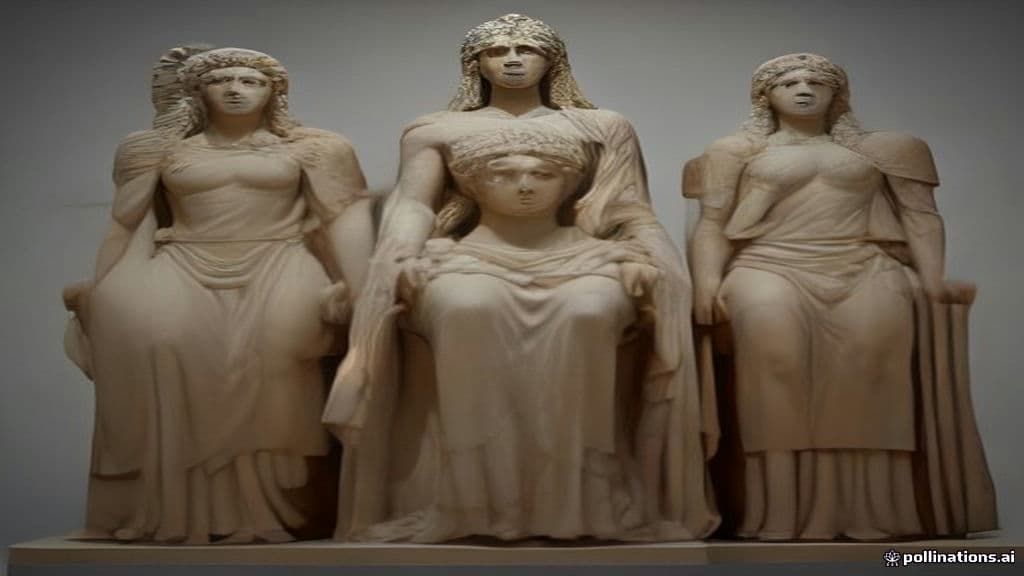
In Homeric epic the Phaeacians are presented as the native inhabitants of Scheria (also called Phaeacia or Scherie). They appear in the Odyssey as an established island people ruled by King Alcinous who live in a prosperous maritime society; their origin is treated as a narrative given of a distinct, hospitable people within the epic world rather than the account of a single progenitor figure in the provided sources.
Homeric and later summaries do not give a single ethnographic physical description of the Phaeacian population. Descriptions focus on their social life and setting: a royal court (king Alcinous), noble youths (e.g., Laodamas, Halius), and organized public entertainments including dance, ball-play, and bardic song (Odyssey Book 8). Scheria itself is depicted as a benign, well-ordered island—often characterized in modern commentary as utopian—whose harbor, palace, and ships form the primary visible milieu of the Phaeacians.
Sources emphasize exceptional seamanship and navigation: the Phaeacians are described as 'great sailors' who habitually escort those who reach their coasts and ultimately carry Odysseus to Ithaca. They exemplify idealized hospitality (xenia): receiving shipwrecked strangers, lodging and feeding them, listening to their tales, and providing safe passage. They also maintain courtly cultural refinement—public dance, competitive games, and bardic performance—and are notable within the Odyssey for being communities visited openly by gods, a trait that marks them as liminal or closely allied with the divine in the epic imagination.
Weaknesses
- otherNo specific vulnerabilities are recorded in the provided sources; however Homeric narrative shows that aiding Odysseus could draw divine notice (e.g., Poseidon's anger elsewhere in the epic tradition) — sources do not give explicit material weaknesses.
Wards
- otherSources do not describe wards or protective charms directed against the Phaeacians; they are depicted as hospitable rather than threatening.
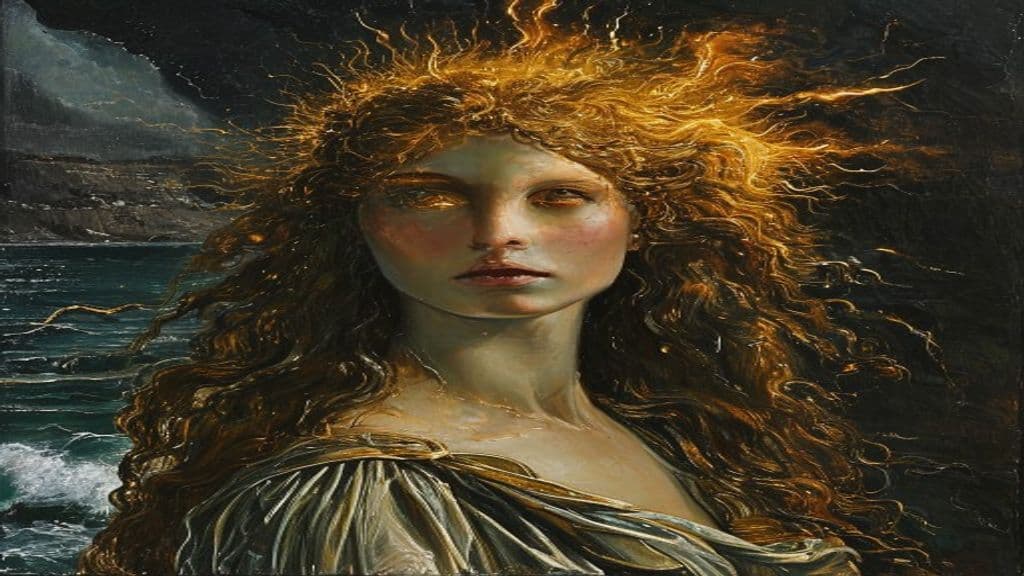
Circe
Circe is a figure of Greek myth known as a practitioner of potent pharmacological and ritual arts who occupies a liminal status between goddess, nymph, and witch. She is famed for her knowledge of herbs and potions, her ability to transform humans into animals in narrative episodes, and for performing ritual purification in at least one classical source.
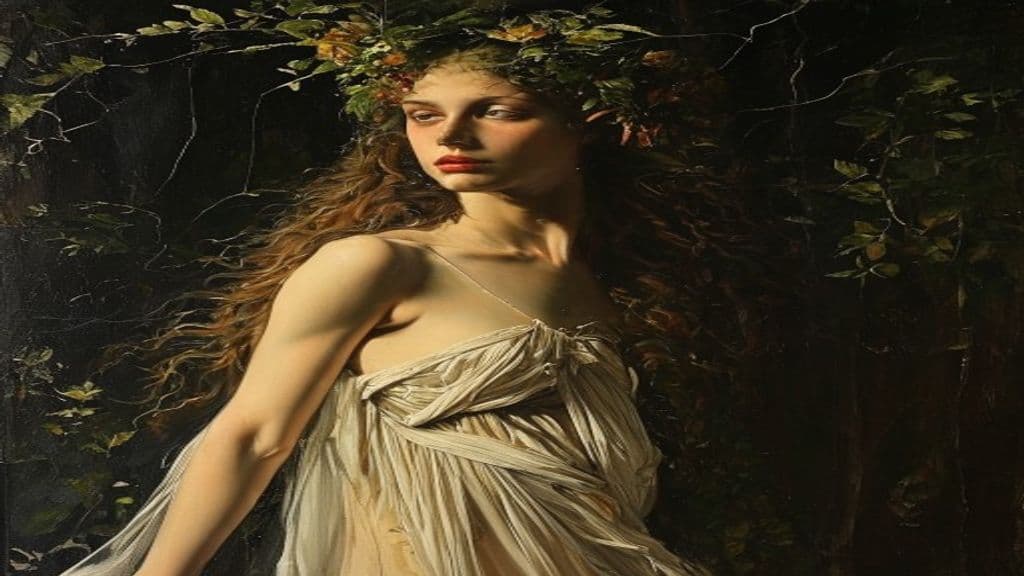
Calypso
Calypso is a name attested across many cultural registers; within classical-mythological mention in the supplied sources it appears as a nymph who detained Odysseus for seven years. The provided materials are primarily a disambiguation of uses (places, music, taxa, media) rather than a sustained folkloric dossier on a single spirit-entity.

Sirens
In Greek myth, Sirens are female-associated supernatural beings whose enchanting music lures sailors to ruin; they appear in epic voyages (notably the Odyssey) as maritime hazards and are depicted in early art as hybrid bird-women. Their role is chiefly as temptresses whose song causes the downfall or shipwreck of those who hear it.

Scylla
A six-headed sea monster lurking in a narrow strait, snatching sailors from passing ships — the original origin of the phrase 'between Scylla and Charybdis.'

Charybdis
In Greek myth, Charybdis is a sea-associated monstrous force localized to the Strait of Messina, treated in sources either as an anthropomorphized sea-monster or as a violent whirlpool/stream that three times a day swallows and belches the sea. Paired with Scylla, she functions as an unavoidable maritime hazard and proverbial dilemma for voyagers.
*Péh₂usōn (reconstructed)
Péh₂usōn is a hypothetical Proto‑Indo‑European pastoral guardian reconstructed by comparative scholars from parallels in Greek and Vedic traditions. Proposed as a Graeco‑Aryan ancestor‑figure, the reconstruction describes a protector of flocks, roads, and travellers rather than an attested historical cultic personality.
Aba (disambiguation / name-form)
Aba is a polyvalent name-form attested across many unrelated contexts (place names, personal names, animal names, and brief mythological listings). The provided sources do not support a single, coherent supernatural entity called "Aba" and offer no descriptive or ritual material for such a being.
Abarbarea
Abarbarea is a name attested in classical Greek and Roman sources for freshwater nymphs (naiads). The name appears for at least two individual mythic figures — a naiad wife of Bucolion and a naiad counted among ancestors of the Tyrians — and Hesychius records plural forms that may indicate the name was also used as a class-name (Abarbareai / Abarbalaiai).
Abas
Abas (Ancient Greek: Ἄβας, gen.: Ἄβαντος) is not a single mythic being but a recurring personal name borne by multiple mortals and minor mythic figures in Greek epic and genealogical traditions — kings, founders, seers, warriors, attendants, a centaur, and a youth transformed by a goddess. The name is glossed in the sources as 'guileless' or 'good-hearted' and appears across Argive, Theban, Trojan, Euboean, and other local cycles.
Abderus
Abderus (Ancient Greek: Ἄβδηρος, romanized Ábdēros) is a mortal heroic figure in Greek myth closely associated with Heracles, remembered as the youth left in charge of the Mares of Diomedes who was killed by them. He functions as an eponymous local/divine-hero ancestor for the city of Abdera and received funerary commemoration and athletic agones at his tomb.
Abomination of Desolation
An apocalyptic prophetic phrase originating in the Book of Daniel designating a profaning thing or act that renders the Jerusalem Temple cult desolate; later reused in the Synoptic Gospels as an eschatological sign prompting urgent flight. The term denotes ritual/cultic impurity (Hebrew shiqquts) and is variously interpreted as pagan offerings or altar, a foreign cult statue, or (in some New Testament readings) an acting agent.
Absyrtus
Absyrtus (Ancient Greek: Ἄψυρτος) is a Colchian prince in the Greek Argonautic cycle, son of King Aeëtes and brother or half-brother of Medea. He appears in variant traditions either as a companion taken by Medea during her flight with Jason and murdered/dismembered to delay pursuit, or as a pursuer sent by Aeëtes who is overtaken and slain by Jason; his death functions as a key narrative device in the escape from Colchis.
Acacallis
Acacallis (Ancient Greek: Ἀκακαλλίς; also Acalle) is a mythological princess of Crete in Greek tradition, daughter of King Minos and Pasiphae. She functions primarily as a dynastic and etiological figure: in varying accounts she is mother, by gods such as Hermes (Mercury) or Apollo, of eponymous or founder-figures like Cydon (founder of Cydonia), Miletus, or Lydon/ Lydus.
Acacus
Acacus (Ancient Greek: Ἄκακος) is, in Arcadian Greek tradition, a mortal eponymous founder-king of Acacesium and is remembered as the foster-father who reared the infant Hermes (Mercury) in that local tradition. He is presented in genealogies as a son of Lycaon and functions as a local ancestral/onomastic figure rather than a supernatural spirit.
Academus
Academus (Greek: Akádemos / Hekádemos) is an Attic hero-eponym tied to a sacred grove (Akademeia) on the Cephissus near Athens. In myth he revealed where Helen was hidden to the Dioskouroi, an act said to have saved the city, and the place bearing his name became a long-lived sacred precinct, later the site of Plato's Academy.
Acamas
Acamas (Ancient Greek: Ἀκάμας) is a personal name recurrent in ancient Greek narrative traditions applied to multiple human characters (warriors, princes, suitors), once to a Cyclops, and once as a hound's name. Rather than a single supernatural entity, bearers of the name appear episodically across the Trojan War, Theseid, and Theban cycles as mortal actors whose deeds intersect with gods and fate.
Acantha
Acantha (Ancient Greek: Ἀκάνθα, 'thorn') is a late or secondary mythological figure known from modern retellings as a nymph transformed into the acanthus plant. The tale that she scratched Apollo and was changed into a spiny-leaved plant is not attested in surviving classical corpora and appears to be a modern compilation or invention rather than a firmly documented ancient myth.
Community Record
- [1]Scheria (Wikipedia: Phaeacians). Wikipedia contributors, 'Scheria,' Wikipedia, The Free Encyclopedia.wiki
- [2]Wikidata: Phaeacians Q128693. Wikidata entry Q128693, Phaeacians / Scheria.other
- [3]The Odyssey by Homer — Books 5–8 (Odysseus among the Phaeacians). Homer, Odyssey, Books 5–8 (Bibliomania / Internet Classics Archive texts referenced).literary
- [4]The Odyssey by Homer — Book 8 (ball-play and dance passage). Homer, Odyssey, Book 8 (Internet Classics Archive).literary
- [5]Show Caves of Greece: Spílaio Nymfón (touristic citation of Homeric passage). Show Caves of Greece, citation referencing Phaeacians as 'great sailors' who escort those reaching their coasts.other
- [6]Textkit forum: Phaeacian dance / Odyssey Book 7 discussion. Textkit Greek and Latin Forums discussion noting Phaeacians and gods visiting them undisguised; commentary on dance and court life.folk
- [7]No man's lands: one man's odyssey through The Odyssey (modern commentary). Modern commentary and travel-essay treating Scheria as tentatively linked with places such as Corfu and framing Scheria as utopian.other
- [8]Archive: Homeric underworld passages and related summaries. Archive items and summaries referencing Odysseus's tales told to the Phaeacians (e.g., Book 11 references as recounted to the court).literary