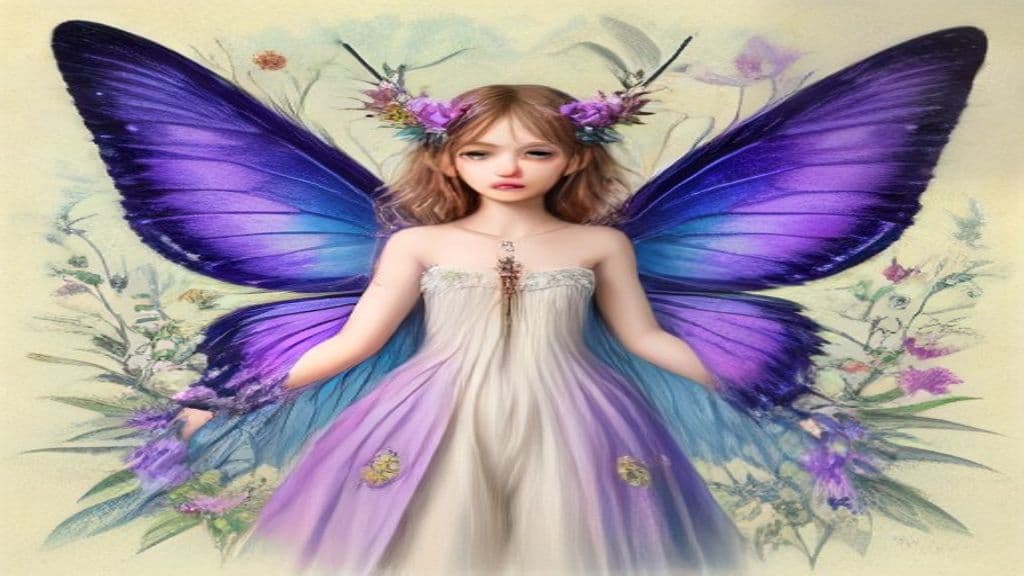
The modern name Pillywiggin (plural pillywiggins) appears in late-20th-century folkloric compilations; Nancy Arrowsmith's 1977 Field Guide to the Little People is cited in available sources as the first documented printed appearance and Arrowsmith suggested (as a hypothesis) a Dorset origin for the name. Compilers and modern authors place pillywiggins within the broader British and Irish 'little people' tradition as a class of very small flower-fairies or nature-spirits that personify the 'divine essence of plants.' Later esoteric writers have incorporated the pillywiggin concept into elemental fairy taxonomies and fictional elaborations, but these are presented in the sources as modern expansions rather than as demonstrably older folk belief.
In the compiled descriptions pillywiggins are consistently characterised as very small, winged fae associated with flowers. Modern accounts and illustrations emphasize butterfly- or dragonfly-like wings and antennae, multicoloured/butterfly attributes, and portrayals that allow for variability in size (some modern sources note they are tiny and may be comparable to the size of a bee or subject to change). Pierre Dubois and other recent compilers describe them as 'wonderfully beautiful' and often depict them in children's plates and storybooks as diminutive, winged flower-spirits rather than as humanoid giants.
Folkloric and modern-compilation sources attribute largely ecological, social and seasonal behaviours rather than overt magical powers: pillywiggins eat dew and pollen, live in trooping groups, frolic and dance among wildflowers, and act as guardians or personifications of small flowering plants. They are described as indifferent to humans—ignoring people for the most part though sometimes joining human celebrations such as weddings. Some modern esoteric authors classify them among 'elemental fairies' and add narrative details (for example a named queen 'Ariel' or bat-riding) but such elements are treated in the sources as later additions and not as core traditional attributes.

Domovoi
The house spirit of Slavic tradition — a small, invisible guardian of the home bound to a specific dwelling and its family. Protective when respected; dangerous when insulted or forgotten.
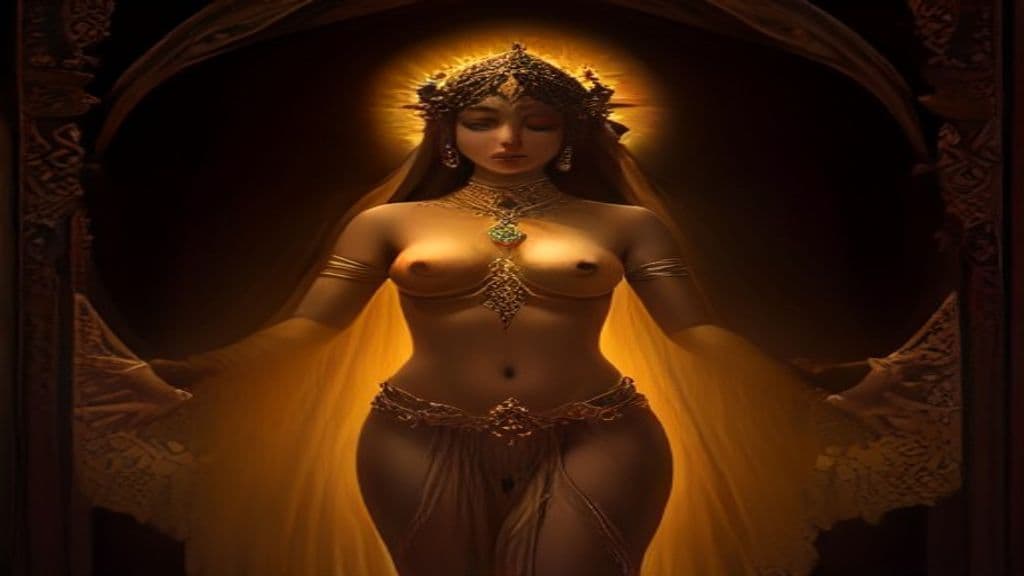
Apsara
Celestial dancers and water nymphs of Hindu cosmology — beautiful semi-divine beings who dance at the court of Indra and, by his command, descend to earth to distract sages from excessive asceticism.
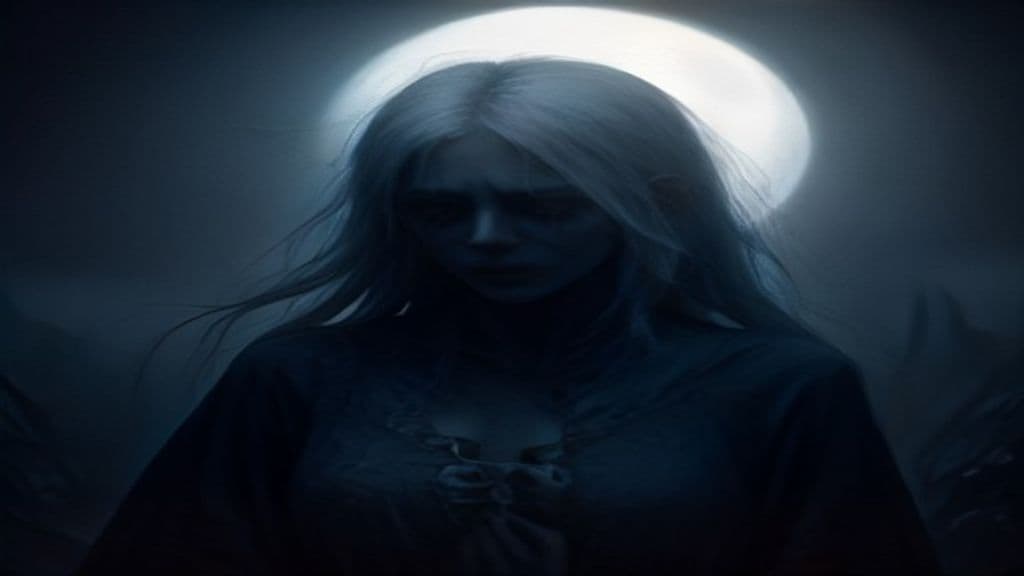
Banshee
A female spirit of Irish and Scottish folklore whose wail heralds an impending death in a family of Gaelic descent. Not a cause of death — a witness to it.

Nisse (tomte / tomtenisse / tonttu)
A Scandinavian household and farmstead spirit tied to a particular homestead; a small, human‑like custodian who performs chores, protects livestock and property in return for annual ritual food offerings (notably Yule porridge), and who can become dangerous if offended or neglected.
57 Mnemosyne
57 Mnemosyne is a large main-belt asteroid (S-type) discovered in 1859 and named after the Greek Titaness Mnemosyne. It is a non-sentient astronomical body studied for its orbital and rotational properties and has been used in dynamical measurements related to Jupiter.
Aamon
Aamon (also Amon) is a named spirit in early modern Western grimoire tradition (Pseudomonarchia Daemonum; the Ars Goetia / Lesser Key of Solomon). He is presented as a high-ranking infernal officer (Marquis/Prince) who governs forty legions and is credited with knowledge of past and future and with affecting human relationships (reconciling or procuring feuds and favor).
Abandinus
Abandinus is a locally attested Romano‑Celtic theonym known from a single inscribed bronze feather (votive object) dedicated at Godmanchester (the Roman fort Durovigutum) in Cambridgeshire. Scholars interpret him as a local god or male spirit tied to a specific place and possibly associated with a nearby spring or stream; this association is tentative and based on etymological readings of the name.
Abarta (Ábartach)
Abarta (also Ábartach) is a figure of Irish myth who, in surviving accounts, tricks Fionn mac Cumhaill's warriors by giving them a supernatural grey horse that bears them into the Otherworld. Sources variably identify him as a member of the Tuatha Dé Danann or as a Fomorian; after the incident he is compelled to release the captured warriors and is refused entry to the Fianna.
Abcán (Abhcán)
Abcán (modern spelling Abhcán) is a named dwarf poet and musician of the Tuatha Dé Danann in Irish myth. He appears in a small number of narratives as a musician whose art has soporific power and as the ferryman who brings the goddess Ruad from the Otherworld to the human world.
Abdiel
Abdiel (Hebrew עֲבְדִּיאֵל) is primarily a theophoric Hebrew personal name meaning "servant of El/servant of God," attested once in the Hebrew Bible (1 Chronicles 5:15). In later literature—most notably John Milton's Paradise Lost—Abdiel is reimagined as a faithful seraph who opposes Satan's revolt. The provided sources do not treat Abdiel as an autonomous folkloric spirit type or record rituals or wards associated with the name.
Abhean
Abhean is a named poet of the Tuatha Dé Danann in medieval Irish literature, described as a poet in particular of Lugh and recorded as having been killed by Óengus before Midir in a poem by Fland Mainistreach preserved in the Lebor Gabála Érenn.
Abiel
Abiel is attested in the supplied sources only as a male given name — borne by several historical American individuals and listed as two minor biblical figures. The provided materials contain no evidence presenting Abiel as a supernatural, mythological, or folkloric entity.
Abigail
Abigail is a female figure in the Hebrew Bible portrayed in 1 Samuel 25 as the intelligent and beautiful wife of Nabal who intervenes to prevent David from committing violence; later tradition regards her as one of the Tanakh's seven female prophets and as a model of beauty and wisdom.
Abnoba
Abnoba is a Gaulish theonym and toponym attested in Roman-era sources and inscriptions: a localized deity associated with woods, springs and the sources of rivers (notably the Danube) and simultaneously the name applied to a mountain or mountain range in the Black Forest/Baar/Odenwald region. Roman altars equate her with Diana, reflecting syncretic cult practice in frontier provinces.
Abrahel
Abrahel is a demonological entity attested in early modern sources (notably Nicholas Rémy's Demonolatria as summarized in modern reference) portrayed as a female sexual spirit who seduced a man in 1581, induced him to kill his son, then restored the child to life in exchange for worship; the revival produced a diminished, foul-smelling corpse that later died again.
Abraxas
Abraxas (Abrasax) is a late‑antique Gnostic and magical name attested as a high-ranking cosmic power in heresiological summaries and as a potent name engraved on amulets (so-called Abraxas stones) in the Greco‑Roman magical milieu. Heresiologists associate Abraxas with rulership of 365 heavens and note the name's numerological value, while archaeological and papyrological contexts show its use as an amuletic formula.
Community Record
- [1]Pillywiggin (Wikipedia). Wikipedia: 'Pillywiggin are tiny goblins and fairies, guardians of the flora... personify the "divine essence of plants"... tiny in size, antennae and wings of a butterfly or dragonfly... no particular interest in human beings... may participate in some of their activities.'wiki
- [2]Pillywiggin (Wikidata). Wikidata entry summarising modern references to pillywiggins as tiny fairies in English and Irish folklore.other
- [3]Field Guide to the Little People (Nancy Arrowsmith, 1977) — cited in secondary sources. Nancy Arrowsmith (1977) cited by later compilers as the first documented printed appearance of the name; Arrowsmith 'believes that the name... comes from the English county of Dorset.'folk
- [4]Pierre Dubois — modern compilation notes (cited in Wikipedia). Pierre Dubois groups pillywiggins among the tiniest of the 'elven gentry,' calls them 'wonderfully beautiful' and notes seasonal hibernation 'from November to April, until the cuckoo chirps.'folk
- [5]Edain McCoy — Elemental fairies note (1994) (cited in Wikipedia). Edain McCoy classifies pillywiggins among 'elemental fairies,' citing preference for the shade of great oaks and offering modern/esoteric additions (a queen named Ariel who 'rides bats'); presented in sources as a later esoteric elaboration.other
- [6]Various modern cultural and gaming uses (compiled citations). Modern fantasy and gaming adaptations (e.g. D&D 5e SRD entries) that adapt pillywiggins as tiny fey creatures; treated in the scholarly notes as contemporary fictional analogues rather than traditional lore.literary