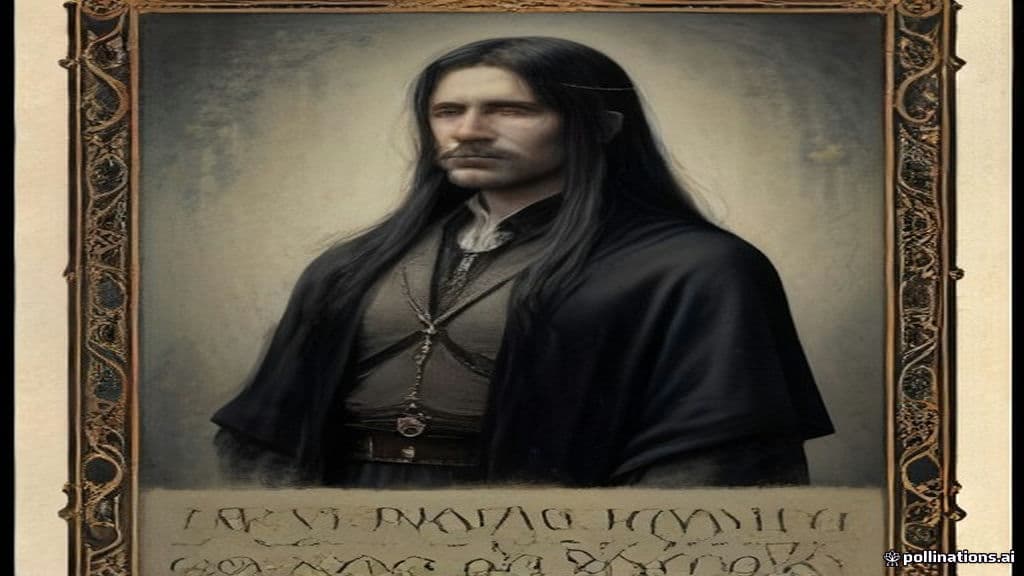
Sigar is a legendary human in Norse folklore, from Scandinavia. Sigar is an Old Norse personal name borne by several human figures in medieval Scandinavian legendary material. The name functions as an eponymic marker for a dynasty (the Siklings) and appears in saga cycles (notably the Völsung cycle) and in Saxo Grammaticus's Gesta Danorum as mortal kings and feudants whose violent deeds shape lineage and succession.
In the corpus of Norse legendary history, Sigar is not a single unified figure but a personal name recurring across genealogies and feud-narratives. Snorri Sturluson links an attested Sigarr as an eponym — “the ninth, Sigarr, whence come the Siklings” — tying the name to the origin of the Sikling house. Hversu Noregr byggðist distinguishes a Sigar the elder, father of Sigmund and Siggeir (the latter being the killer of Völsung), and a Sigar the younger, grandson of Sigmund, who is credited with hanging Hagbard. Saxo's Latinized Sygarus appears as a legendary Danish king in Gesta Danorum book 7, whose household tragedies (the hanging of Hagbard, Signy's self-immolation) and wartime deaths of his sons figure in the restoration of the royal line through his surviving daughter. The textual record thus presents variant, sometimes divergent, legendary-historical placements rather than a single originating myth.
The sources present bearers of the name Sigar as human noblemen or kings within saga narratives; no supernatural or otherworldly physical traits are described in the provided material. Descriptions are conventional: Sigar appears as an ancestor in genealogical lists, as a royal householder in Saxo, and as a violent kin-member in the Völsung-related sagas. Specific narrative episodes emphasize actions (kidnapping, burning, hanging) rather than distinctive bodily features.
The Sigars' significance derives from their social roles and deadly actions rather than any supernatural abilities. Chronicle and saga passages attribute to them ordinary human capacities for rulership, warfare, and violent crime: Sigar the elder fathers sons whose deeds include the killing of Völsung; Sigar the younger hangs Hagbard and commits or instigates kidnapping and burning of women related to feud episodes; Saxo's Sygarus wages war in which he and his sons die defending Danish subjects and orders harsh punishments such as burying a maid alive. Their power in the narrative world is social and dynastic — affecting lineage, vengeance, and succession — not magical.

Siggeir
Siggeir is a human king of Gautland in the Völsunga saga and related retellings. In the narrative he functions as an antagonistic royal whose wounded pride and treachery — inviting his in-laws as guests and then attacking and imprisoning them — set in motion a cycle of vengeance that shapes the fate of the Völsung family.
Hagbard (Hagbarðr)
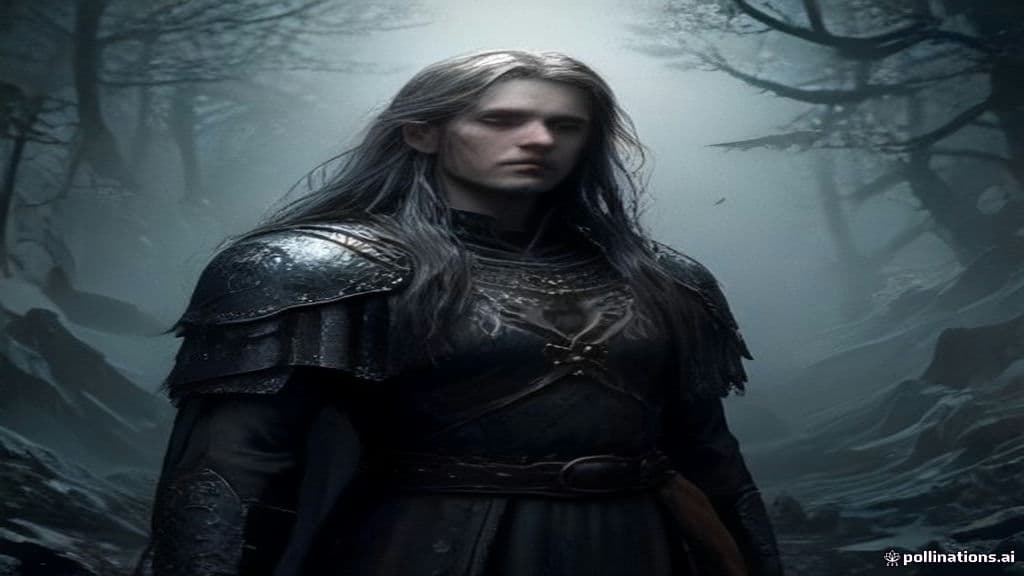
Hagbard (Old Norse Hagbarðr) is a legendary Scandinavian sea-king and heroic figure in Old Norse saga and skaldic tradition, best known for the tragic love-and-feud narrative with Signy that ends in his hanging. He appears as a human martial leader associated with kin-groups, raiding, and the heroic age preserved in medieval Icelandic compilations.
Haki
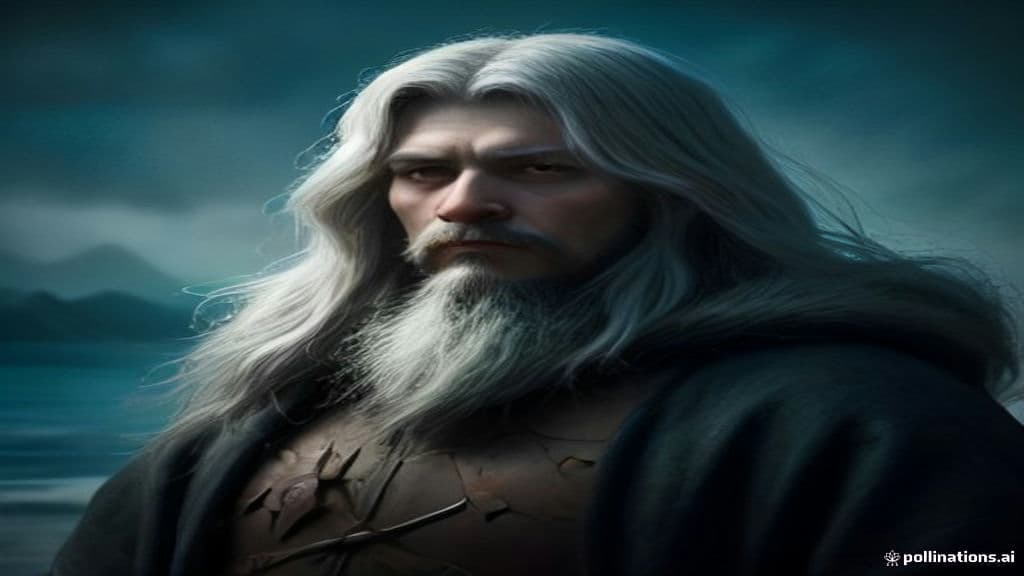
Haki (also attested Hake, Haco, Hako) is a legendary Scandinavian sea‑king and heroic war‑leader attested in medieval saga and saga‑historical texts. He is portrayed as a brutal and successful raider who assembled a band of champions (including Starkad), briefly gained the Swedish kingship, defeated rival champions on the Fyrisvellir, and died in a staged burning ship‑funeral that secured his fame.
3-D Man
3-D Man is a Marvel Comics superhero identity associated with a 1950s-era origin in which the body of Chuck Chandler can materialize in three-dimensional existence when activated by his brother Hal via a pair of glasses. The mantle was later assumed by Delroy Garrett (formerly Triathlon) in modern continuity.
5 Ronin
5 Ronin is a 2011 Marvel Comics five-issue limited series that reimagines five Marvel superhero archetypes as rōnin (masterless samurai) in a fictionalized post‑Sekigahara feudal Japan. The work places Wolverine, Hulk, Punisher, Psylocke, and Deadpool analogues into period roles to explore displacement, revenge, and identity in an era of political upheaval.
A Elbereth Gilthoniel
An Elvish hymn in Sindarin addressed to Elbereth (Varda) from J. R. R. Tolkien's legendarium. Presented in The Lord of the Rings and later musical and dramatic adaptations, the hymn functions as devotional poetic language that evokes Elvish reverence for the star-kindler rather than an independent supernatural agent.
A.R.G.U.S.
A.R.G.U.S. is a fictional clandestine United States government agency in the DC Comics universe that investigates, contains, and manages superhuman, meta-human, and supernatural incidents and assets. Introduced in The New 52 continuity, it functions as an institutional actor providing intelligence, logistical support, covert task forces (notably Task Force X / the Suicide Squad), and a dedicated magic division across comics and media adaptations.
Abin Sur
Abin Sur is a fictional extraterrestrial Green Lantern from the planet Ungara in DC Comics. A former history professor turned Green Lantern of Space Sector 2814, he discovered and investigated a prophecy tied to the "Blackest Night," died wounded on Earth and chose Hal Jordan as his ring-successor, and was later reanimated as a Black Lantern in the Blackest Night storyline.
Abraun
Abraun is an attested name in German-language plant-legend scholarship (Der abraun, ein beitrag zur pflanzensagenkunde, 1916) and a short database entry (Wikidata) labels it as a spirit from German mythology. Surviving accessible documentation is extremely limited: the principal academic treatment is a 1916 contribution to pflanzensagenkunde (plant-saga studies), but the excerpts available here contain only bibliographic metadata and do not record tales, descriptions, or rituals.
Absolute Green Lantern (tradition)
A modern comic-book reinterpretation in DC's Absolute Universe in which a giant green lantern-shaped vessel appears above Evergreen, Nevada, generates an impenetrable green dome, judges townspeople and sends the judged into the Lantern to await further adjudication in OA (Omega‑Alpha). The story reframes Green Lantern mythos as cosmic/religious horror with an "Enlightenment Spectrum" of flames (Qard, Rao, Sur, Aur) stewarded by Oans such as Abin Sur.
Absorbing Man
A fictional Marvel Comics character (Carl "Crusher" Creel) whose body acquires the physical properties of materials or energies he touches. Debuting in Journey into Mystery #114 (March 1965), created by Stan Lee and Jack Kirby, he is presented as a mortal supervillain/occasional antihero who challenges heroes such as Thor, Hulk, Spider-Man, and the Avengers.
Ace West
Ace West (Wallace Daniel "Ace" West) is a contemporary American comic-book character in DC Comics continuity, a young speedster who channels the metaphysical Speed Force and occupies legacy-hero roles such as Kid Flash and Ace. Introduced in New 52-era stories as a biracial reinterpretation of Wally West and later retconned in DC Rebirth as a distinct Wallace West, son of Daniel West (Reverse-Flash), he appears across present-day and alternate/future timelines and participates in team and sacrifice narratives tied to the Speed Force.
Acheron
Acheron is a mythological river of the Ancient Greek Underworld, portrayed in classical literature as a boundary or entrance to Hades across which the dead are conveyed. It is also a real river in Epirus whose landscape and nearby cult sites (notably a Necromanteion) were mapped onto the literary river; later Western authors use Acheron metonymically for Hell or the infernal realm.
Achilles and Patroclus
A central heroic dyad in the Homeric Trojan War tradition: two mortal Greek warriors whose close bond—portrayed as deep companionship in the Iliad—drives key events of the epic when Patroclus' death provokes Achilles' rage, return to battle, and the slaying of Hector.
Acoetes
Acoetes is a proper name applied to multiple mortal figures in classical Greco‑Roman mythic narratives. Most famously, an Acoetes is a fisherman who recognizes and testifies to the divinity of Bacchus/Dionysus and recounts how blasphemous sailors were transformed into dolphins; other bearers of the name appear as a Trojan genealogical figure (father of Laocoön), an aged former squire of Evander, and a frightened soldier in Statius' Thebaid.
Community Record
- [1]Sigar — Wikipedia. Wikipedia entry 'Sigar' summarizing Snorri Sturluson, Hversu Noregr byggðist, Völsunga saga, Háleygjatal/Ynglinga saga quotations, and Saxo Grammaticus's Gesta Danorum.wiki
- [2]Wikidata: Sigar. Wikidata entry for Sigar (identifier record consulted).other
- [3]Gesta Danorum (summary reference in secondary sources). Summary of Saxo Grammaticus's Gesta Danorum book 7 as provided in the cited secondary source compilation.literary