
Similar to the Greek Cyclops in Homer's Odyssey, suggesting a possible connection between Basque and Mediterranean mythologies.
Physical description: A one-eyed giant living in caves in the mountains (Source 1).
Tartalo allegedly catches young people to eat them and also eats sheep in some accounts, utilizing his enormous strength (Source 1). His abilities and behaviors are limited to these physical actions.
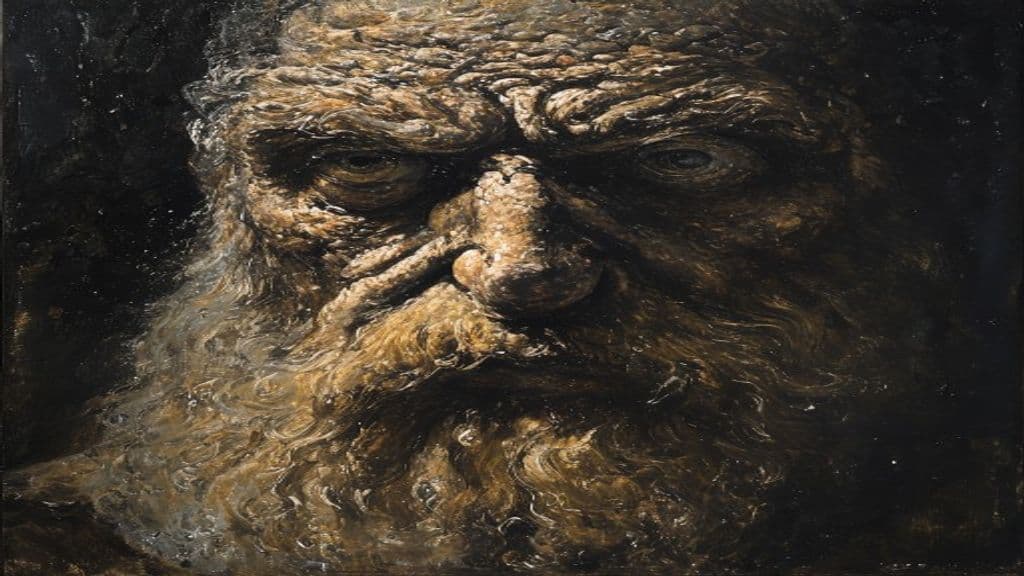
Aatxe
In Basque folk mythology, Aatxe is a spirit that exists alongside humans and other entities, protecting the law-abiding and punishing malevolent individuals. (Note: 1. Power tier: The source material does not explicitly mention Aatxe as a deity-level entity, so Greater is plausible but could be clarified. 2. Abilities: While it's mentioned that Aatxe attacks male)
Akelarre (Basque Witches' Sabbath)
In Basque tradition, Akelarre is a gathering of witches presided over by a goat-like entity. (Note: - Power tier: Primordial (given it's a cosmic event and not a specific entity with supernatural power, but rather an event presided over by another entity) - Summary: In Basque tradition, the Akelarre)
Akerbeltz
Malevolent Basque spirit associated with sexual abuses and seductive powers, likely tied to the natural environment. (Note: - Power tier: Greater (Akerbeltz's abilities are more regional in scope and do not match the description of an Ancient entity) - Abilities: While source material mentions "sexual abuses" and "seductiv)
Arquetu
A Cantabrian popular-belief figure depicted as an old man marked with a green cross and seven keys on his forehead who intervenes in human economic affairs by lending money to prodigals and punishing repeat wastefulness with a curse of eternal poverty.
Artahe
Tutelary deity of Southern Gaul and Aquitania, providing protection and care to her associated group or place. (Note: - Power tier: Lower than Ancient (consider Greater, as she's a regional deity) - Sensory cues and weaknesses and wards are missing; add relevant information from source material - Abilities should inc)
Baian
A semi-divine water spirit or mermaid-like creature in Basque mythology, associated with fertility and aquatic phenomena. (Note: Power tier should be "Lesser" or possibly "Primordial", as the entity is described as semi-divine and associated with fertility and aquatic phenomena. Summary needs more detail, e.g., "Semi-divine wat)
Basajaun
A huge, hairy hominid in Basque mythology that protects flocks and teaches humans skills. (Note: * Power tier: should be "Greater" instead of "Ancient", as Basajaun's abilities suggest regional power but not deity-level. * Origin story: it is actually mentioned in the source that the origin story)
Basque Primordial Entity
Very little is known about Basque mythology due to the lack of surviving texts from the pre-Christian worldview. (Note: 1. Summary: Add that most knowledge comes from indirect sources such as legends and place names. 2. Power tier: Remove or change Primordial, as there is no information about its abilities or powers. 3)
Eacus (God)
Weather god associated with forces of nature in Basque tradition. (Note: * Power tier should be Ancient, not Primordial, as Eacus is described as a specific god associated with a particular region (Iberian Spain) rather than a cosmic entity. * The article should indicate t)
Eate, Storm God in Basque Tradition
Eate is a storm god worshipped by the ancient Basques, associated with powerful weather events and control over fire and ice. (Note: - Power tier should be Ancient, as the source describes Eate as a "storm god", implying a more deity-level power. - Abilities: add "possibly" is unnecessary; rephrase to make it clear that control ove)
Eguzki Amandrea (Sun Mother)
Eguzki Amandrea is the Basque personification of the sun, presented in the cited corpus as a female, familial cosmic figure associated with warmth, growth, and the visible life of the world. Sources frame the sun as an animate, gendered celestial body embedded in a kinship-like cosmology with Earth and the Moon.
Gaizkiñ (Basque Tradition)
In Basque mythology, Gaizkiñ is a malevolent entity believed to cause diseases and harm humans physically. (Note: * Power tier: Primordial seems too high given the limited scope of abilities (causing diseases and physical harm). A Greater power tier might be more fitting. * No sensory cues or weaknesses mentioned)
Community Record
- [1]