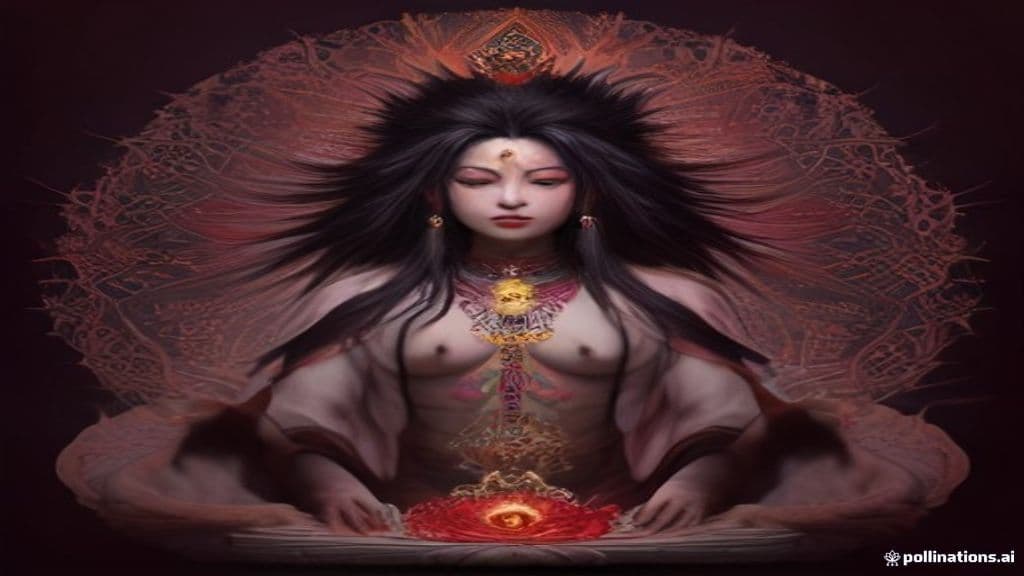
In Tibetan cosmological and ritual vocabulary, the lu and srin are indigenous/local classes of non-human spirits tied to specific places such as mountains, springs, and subterranean realms. Scholarship records them among the locally recognized orders of spirit-beings — for example, Dreyfus cites the phrase lha srin sde brgyad (‘eight classes of gods and spirits’) placing srin alongside other local gods — and contemporary overviews describe the lu as sharing subterranean realms with sadag spirits (Buddhistdoor Global). Traditional tantric narratives further relate that eminent adepts (notably Padmasambhava in later hagiography) subjugated many local deities including lha srin, binding them by oath and transforming some into guardians within a Buddhist ritual universe (Buddhistdoor Global). Forum and ethnographic notes also describe lu/srin as ancestral or household spirits in shamanic contexts, indicating an origin as pre-Buddhist, place-bound powers integrated through ritual negotiation (Dharmapaths; Cabezon).
Primary sources in the provided material do not preserve a uniform anthropomorphic phenotype for lu or srin; descriptions focus on their locales (mountains, springs, subterranean realms) rather than consistent physical form. A modern interpretive source characterizes certain mountain female deities associated with a ‘Srin clan’ as a 'hideous' or 'bloodthirsty' figure (Trimondi citing Hummel), but this is an interpretive claim rather than a widely documented traditional physical description. Overall, appearance is therefore uncertain in the cited record and varies with local lore and later literary portrayals (Trimondi; Cabezon; Buddhist Written Images).
Across the sources, lu/srin are represented as potent local agents over place-based fortunes: they govern springs and subterranean waters, affect local wellbeing (including crops and sickness), and function as household or ancestral spirits whose favor or anger shapes community welfare (Buddhistdoor Global; Dharmapaths; Cabezon). They are ambivalent — capable of beneficence when propitiated and of causing disorder or affliction when neglected — and are frequently addressed through ritual oaths, propitiation, or tantric subjugation. Tantric narratives emphasize that specialist ritual authority can bind, oath-sworn, or convert these beings into protective functionaries (Buddhistdoor Global; Dreyfus).
Weaknesses
- ritualoath-binding/subjugation by tantric adepts
Wards
- ritualpropitiation at site shrines (lha tshang) / offerings and local cult maintenance
- ritualbinding and oath-taking performed by lamas or tantric specialists (as in Padmasambhava subjugation narratives)
Acala
Acala (Sanskrit: अचल, 'The Immovable') is a wrathful protective deity (dharmapala) in Vajrayāna and East Asian esoteric Buddhism, classed among the Wisdom Kings (Vidyārāja). He functions as a ritual focus for visualization and mantra practice intended to remove obstacles and bind or destroy hostile forces.
Acalanātha (Acala / Achala)
Acalanātha (also Acala or Achala) is a wrathful deity and dharmapāla — a protector of the Dharma — prominent in Vajrayana and East Asian Mahayana Buddhist contexts. Presented as a fierce, non‑human or semi‑divine protector-figure, Acalanātha functions to defend the teaching and practitioners by removing obstacles and confronting threats to the transmission and practice of Buddhism.
Agni
Agni is the Vedic personification of fire in Hindu tradition: a sacred, mediating principle that manifests as terrestrial fire, atmospheric lightning, and celestial sun, and that receives and conveys sacrificial offerings. Prominent in the Rigvedic corpus, Agni functions as sanctifier, witness of rites of passage, and a transformational inner principle in later Upanishadic literature.
Aizen Myō-ō (Rāgarāja)
Aizen Myō-ō corresponds to the deity Rāgarāja, a wrathful/transformation-oriented figure venerated in Esoteric and Vajrayāna Buddhist traditions. The figure is especially revered in Chinese Esoteric Buddhism in Chinese communities and in the Japanese Esoteric schools Shingon and Tendai.
Akhu Tönpa
A Tibetan trickster figure, sent by Chenrezig to teach the art of being shrewd and witty, while championing the common man against social hierarchies. (Note: - Power tier should be Lesser or Minor Spirit, not Ancient, as it's more aligned with local spirit level of trickster figures. - The ability to outwit those in positions of power suggests Greater or P)
Akshobhya
Akshobhya is a transcendent buddha of Mahāyāna and Vajrayāna Buddhism, one of the Five Wisdom (Dhyāni) Buddhas. He personifies 'mirror knowledge' (ādarśa-jñāna), is conventionally placed in the East, and is lord of the eastern Pure Land Abhirati; in esoteric texts he is associated with the eastern Vajra division and invoked in mantra/mandala ritual contexts.
Akuma
Akuma (悪魔/あくま) in Japanese sources is an evil spirit, devil, or demon associated with misfortune and mental disturbance. The term appears in Buddhist texts and Heian-period literature and was later used to translate the Christian figure of Satan, as well as the Buddhist Mara.
Amanojaku
Amanojaku (天邪鬼 / あまのじゃく) is a Japanese yōkai-type being portrayed as a contrarian, heart-reading trickster. Treated in different contexts as a small ogre (ko-oni), a wicked demon (jaki) in Buddhist iconography, and a folkloric spirit that provokes human vice, it appears across regional tales with variable roles from malicious kidnapper to household oddity.
Amida Nyorai
Amida Nyorai (Amitābha / Amitāyus) is a principal Mahayana Buddha venerated across East Asia as the embodiment of Infinite Light and Infinite Life who presides over a Western Pure Land and is invoked as the savior who receives the dying into rebirth there.
Amitābha
Amitābha is a central celestial Buddha of Mahayana Buddhism who presides over the western Pure Land called Sukhāvatī. Devotional practices invoking his 'measureless' light and life (nianfo/nembutsu) are presented in Pure Land traditions as a path by which beings may be reborn in his buddhafield and quickly attain Buddhahood.
Amitābha Buddha
Amitābha is a principal Mahayana Buddha who presides over the Western Pure Land (the Land of Ultimate Bliss). Devotional practices—most centrally recitation of his name and chanting of Pure Land sutras—are presented in sources as the means by which Amitābha welcomes practitioners for rebirth in his hindrance-free realm.
Amoghapāśa
Amoghapāśa is recorded in the supplied sources as a named manifestation or form of the bodhisattva Avalokiteśvara/Lokeśvara attested in Mahāyāna and Vajrayāna contexts. The evidence in the provided material is archival and bibliographic (sūtra/dhāraṇī/maṇḍala filenames and database entries) rather than descriptive narrative or doctrinal exposition.
Community Record
- [1]The Predicament of Evil: The Case of Dorje Shukden (excerpt on lha srin sde brgyad). Dreyfus — notes Tibetan classification 'lha srin sde brgyad' (eight classes of gods and spirits).academic
- [2]Haunting the Himalayas: Spirits, Demons, and Gods in Tibetan Buddhism. Buddhistdoor Global — describes lu sharing subterranean realms with sadag and records narratives of subjugation by Padmasambhava.other
- [3]Tibetan Ritual (Jose Ignacio Cabezon). Cabezon — treats lu as mountain/site deities and discusses ritual roles and local shrine contexts (lha tshang).academic
- [4]TYPES OF SPIRITS - Dharma Paths (forum excerpt). Dharmapaths forum excerpt — describes lu/srin as 'original household gods of the Tibetan shamans' and spirits of ancestral lineage (folk/interpretive source).folk
- [5]Tibetan Written Images: A Study of Imagery in the Writings of Dhondup Gyal. Tibetan Written Images — notes the owl 'srin bya' is regarded as an omen of death.academic
- [6]The Shadow of the Dalai Lama — Part II (Trimondi citing Hummel). Trimondi (citing Hummel) — modern interpretive claim describing a 'descendent of the Srin clan' as a violent mountain female deity (interpretive/controversial).other
- [7]Among Tibetan Materialities. Among Tibetan Materialities — discusses lha tshang/site shrine contexts and material cult practice relevant to lu as site deities.academic
- [8]Tibet Archaeology (blog index July 2017). Supplementary material on local cults and sacred landscapes (contextual reference included in research notes).other