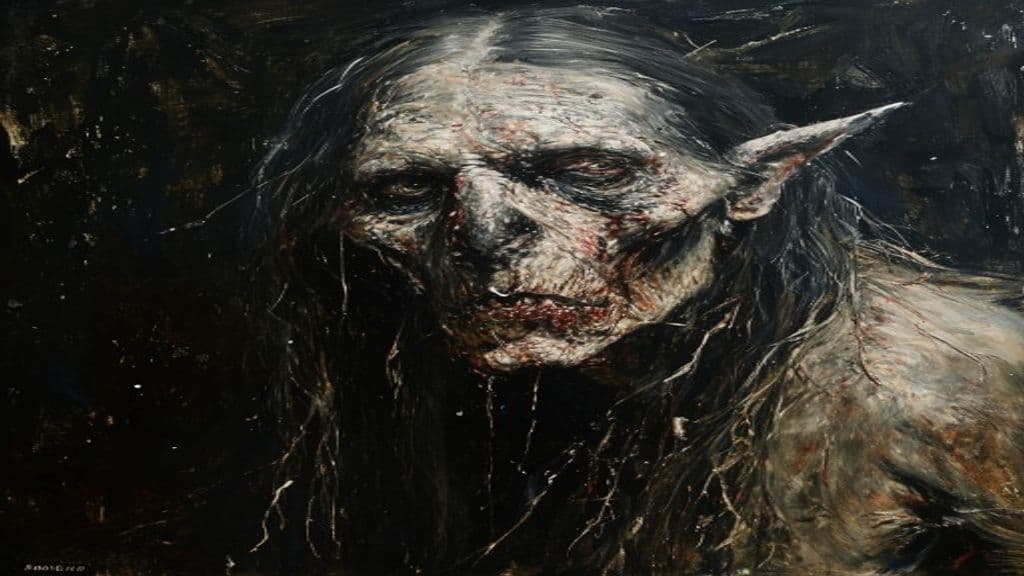
Within Algonquian-language cultural contexts, the wendigo is a morally charged phenomenon rather than a single uniform creature: some traditions describe humans becoming wendigos after committing cannibalism during famine, others link transformation to extreme greed or prolonged contact with the being, and possession by an outside spirit is also reported. Regional variation is strong—some groups emphasize the being's role as a punishment for taboo transgression (e.g., cannibalism, hoarding), while others stress possession or psychosocial collapse. The concept functions as an explanatory and normative force tied to survival pressures such as northern winter and starvation.
Descriptions collected in ethnographic and popular summaries portray the wendigo as emaciated and gaunt with desiccated skin pulled tight over bone, ash-gray complexion, pushed-back eyes, tattered and bloody lips, and an odor of decay (description attributed to Ojibwe account quoted via Basil H. Johnston). In several Algonquian traditions (notably Ojibwe, Eastern Cree, Westmain Swampy Cree, Naskapi, and Innu) it is described as a giant many times larger than humans; other accounts omit the giant aspect. Folktales also record behaviors such as tool use (e.g., knives) and extraordinary physical resilience in particular stories.
Core abilities and behaviors reported in the sources include an insatiable hunger for human flesh and the capacity to cause or compel cannibalism, the power to possess or transform humans into wendigos, retained human cognition and speech in some depictions, and growth after consuming humans (each meal causes the creature to grow yet never be satisfied). Specific folktales (e.g., a tale collected by Lottie Chicogquaw Marsden) describe survival of severe injury and autocannibalism; sources note that such capacities vary by account. Atmospheric and sensory signs such as a foul stench and sudden unseasonable chill are also associated with the being's presence.
Weaknesses
- otherphysical disabling and communal killing
Wards
- ritualwiindigookaanzhimowin (taboo-reinforcement ceremonial dance)
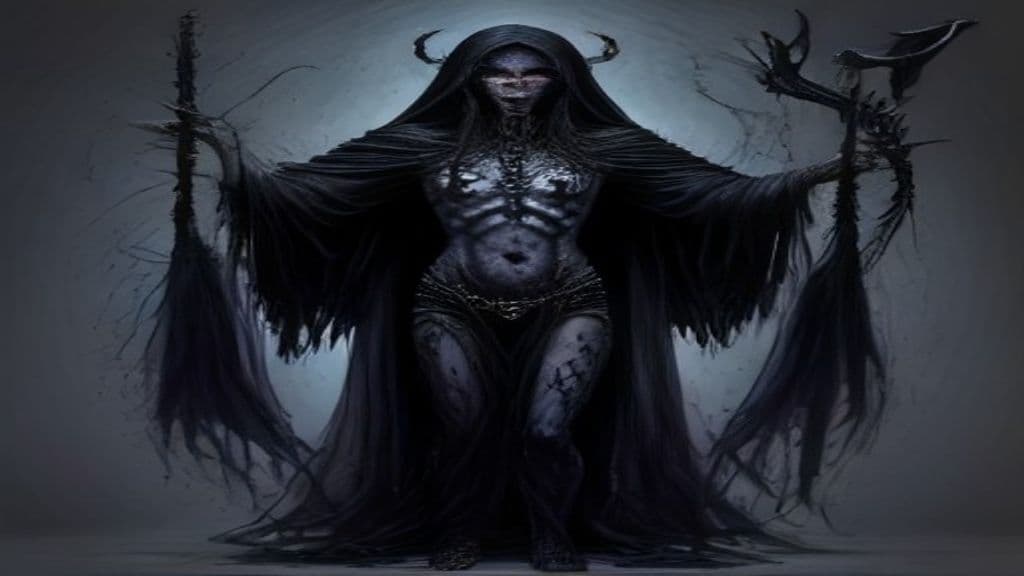
Aba (disambiguation / name-form)
Aba is a polyvalent name-form attested across many unrelated contexts (place names, personal names, animal names, and brief mythological listings). The provided sources do not support a single, coherent supernatural entity called "Aba" and offer no descriptive or ritual material for such a being.
Adekagagwaa
Adekagagwaa is a Haudenosaunee sun deity associated with summer who is described as exercising authority over other weather spirits and participating in an annual cycle of departure and return tied to the seasons.
Agent Liberty
Agent Liberty is a fictional human operative persona in DC Comics and its television adaptation (Arrowverse). The identity—most prominently used by Benjamin 'Benjy/Ben' Lockwood—functions as a costumed, paramilitary/enforcer role tied to political movements (Sons/Children of Liberty) or official security details, driven by ideological 'liberty' rhetoric rather than supernatural agency.
Agropelter
A North American "fearsome critter" of lumbercamp tall-tale tradition said to dwell in hollow conifer trees and hurl broken branches and splinters at unwary people; presented in folklore as an animal-like, mischievous or predatory woodland creature rather than a deity or spirit of formal cosmology.
Alexander the Great (legend)
A pan-cultural legendary hero-king whose historical career was transformed into a body of miraculous and etiological tales (the Alexander Romance). In these traditions he is alternately a divinely sanctioned conqueror, boundary-builder credited with the Gates of Alexander, and a questing culture-hero associated with oracles, votive dedications, and tests of loyalty.
Alfred Bulltop Stormalong
A New England maritime tall-tale hero and giant seafarer, Stormalong functions in sailors' oral tradition and early-20th-century tall-tale collections as a repository for exaggerated seamanship, prodigious physical size, and impossible nautical exploits rather than as a literal supernatural being.
All-Flash
All-Flash (originally All-Flash Quarterly) is a Golden Age American comic-book magazine series published 1941–1947 that served as the first solo magazine vehicle for Jay Garrick, the original Flash. The title is a commercial/branding name later used as an English lexical phrase in unrelated technical and web contexts.
Altamaha-ha
The Altamaha-ha (also called "Altie") is a named legendary creature from coastal Georgia folklore, localized to the mouth of the Altamaha River, nearby marshes, streams, and abandoned rice fields around Darien and McIntosh County. Sources describe it as a place-linked water-associated creature that figures in local storytelling, tourist displays, and contemporary popular culture rather than as a widely attested pan-cultural spirit.
Amikuk
Amikuk is a Yup'ik / Alaskan Inuit spirit-creature associated with the ground and coastal waters; sources describe it as a shapeshifter that lives within the earth, can swim through earth and water, may take human form, and is dangerous to hunters and travelers.
Angak (Angak'china)
Angak, or Angak'china, is a male Hopi kachina spirit represented both by spirit dancers in village ceremonies and by carved kachina dolls. He is a rain‑bringing, fertility, healing, and protective figure whose songs and slow dances are intended to bring rain and flowers to Hopi villages.
Annie Christmas
Annie Christmas is a tall-tale character from Louisiana folklore, portrayed as a supernaturally strong keelboat (flatboat) captain who in many collected versions is an African-American woman. She functions as a folk-heroic exemplar of exceptional strength, seamanship, and defiance of conventional gender roles within Southern U.S. tall-tale tradition.
Anog Ite
In Lakota mythology, Anog Ite is a complex entity associated with emotional pain and chaos. She is punished for attempting to disrupt balance. (Note: 1. Power tier should be revised based on the entity's abilities described in the source material (Primordial=cosmic, Ancient=deity-level, Greater=powerful regional, Lesser=local spirit, Minor Spirit=w)
Community Record
- [1]Wendigo - Wikipedia. Wikipedia contributors, 'Wendigo', Wikipedia, The Free Encyclopediawiki
- [2]BRAVE (PS2) — Archive entry (example of modern adaptation). Archive.org, 'BRAVE (PS2)'other
- [3]Sudden Storm: A Wendigo Reader — Glass Eye Pix / Larry Fessenden Collection (modern cultural adaptations). Glass Eye Pix, 'Sudden Storm: A Wendigo Reader'other