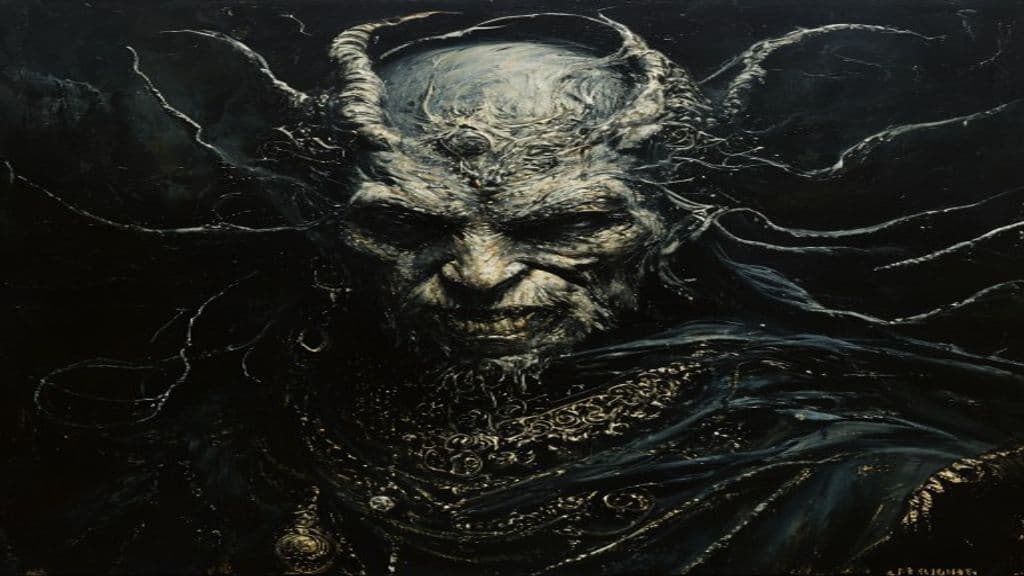
No description of physical appearance is provided.
Zanam Zindé's powers and behaviors are limited to its role as a king, creator of government positions (Dalun, Premier, and Anben), implying significant authority and influence in the Tibetan kingdom.
Amoghapāśa
Amoghapāśa is recorded in the supplied sources as a named manifestation or form of the bodhisattva Avalokiteśvara/Lokeśvara attested in Mahāyāna and Vajrayāna contexts. The evidence in the provided material is archival and bibliographic (sūtra/dhāraṇī/maṇḍala filenames and database entries) rather than descriptive narrative or doctrinal exposition.
Amoghasiddhi
Amoghasiddhi is one of the Five Tathāgatas (Five Wisdom Buddhas) in Mahayana and Vajrayana/Esoteric Buddhism, representing the Karma family and the quality of "unfailing accomplishment". He functions as an archetypal, protective, and contemplative buddha-body within tantric mandalas, presiding over the northern quarter and invoked in mantras and ritual iconography.
Arunachal macaque (Macaca munzala)
A biological species of high‑altitude macaque native to the Eastern Himalaya, treated in the sources as a natural history and conservation subject rather than a supernatural being. It is a compact, brown, short‑tailed macaque found in deep montane forests of Arunachal Pradesh, Bhutan and adjacent China, and is considered endangered.
Asura
Asura (Sanskrit: असुर) are a class of supernatural beings in Indian religious traditions. In Hinduism they are described as power-seeking beings related to, and often oppositional toward, the Deva; in Buddhist cosmology they form a demigod/titan class characterized by passions such as wrath and envy. Individual asura figures (notably the asura Svarbhānu) appear in myths that produce the eclipse-entities Rahu and Ketu.
Beyul Guardian Spirits
Place‑bound guardian spirits associated with beyul (Tibetan sBas yul), the concealed or hidden valleys of the Himalayas and Tibetan plateau. They function as protectors and gatekeepers of these sacred, fortress‑like lands and are integrated into Nyingma treasure (terton) traditions and local Himalayan ritual practice.
Bhairava
Bhairava is a fierce Shaivite deity and tantric figure—an intense manifestation of Shiva—worshipped across Hindu and Vajrayāna Buddhist traditions as executor of divine punishment, guardian of sacred sites, and a tantric teacher/meditational yidam.
Bhaisajyaguru
Bhaisajyaguru (Bhaiṣajya‑guru; Medicine Buddha) is a Mahāyāna buddha associated with healing, medicine, and a pure land called Vaiḍūryanirbhāsa (Pure Lapis Lazuli). He functions as a therapeutic savior whose remedies operate through the "medicine of his teachings," vows, devotional practice, and radiance associated with lapis‑lazuli light.
Bhīṣmagarjitasvararāja
Bhīṣmagarjitasvararāja is attested in the provided sources as an ancient buddha named in the Lotus Sūtra. The Sanskrit compound of the name emphasizes majestic or imposing sound and sovereignty.
Black wolf
A melanistic colour variant of the gray wolf (Canis lupus) documented in zoological and regional observational sources. The term is used both for living black-coated wolves—whose coloration is now known to trace to a dog-origin mutation in some populations—and as a modern cultural label (titles, team names, etc.). The provided sources do not document a discrete supernatural being called “Black Wolf.”
Bönpo Lu (local mountain spirits)
A research label for local mountain-associated spirits situated in Himalayan/Tibetan ritual worlds; the term as presented is not documented in detail in the supplied sources. The available materials place such landscape spirits within a broader Bön and Tibetan Buddhist milieu where mountains and local non-human agents are engaged through offerings and ritual specialists.
Dayan Deerh
Dayan Deerh (also Dayan Degereki) is a locally venerated shamanic and protective divinity of Khövsgöl Province, Mongolia, associated with fertility (granting cattle and children), shamanic patronage, and communal protection. His cult occupies a syncretic position between indigenous shamanism and Tibetan Buddhist (Yellow) practice and is centered around sites such as Tsagaannuur, a cave shrine near the Russia–Mongolia border, and communities around Lake Khövsgöl.
Five Tathāgatas
A canonical group of five principal celestial Buddhas in Mahāyāna and Vajrayāna Buddhism, treated as inseparable co-equals and used as meditative foci and mandalic deities in tantric initiation and practice.
Community Record
- [1]Zanam Zindéwiki