
In secondary folkloric summaries, Zenki (前鬼) and Goki (後鬼) appear as a paired set of oni-like figures in narratives linked to early Japan. Some legends say that during the era associated with Emperor Tenmu they were violent bandit Onis whom the emperor neutralized by guile; these tellings relate that they reformed and became attendants of En no Ozuno (the semi-legendary founder of Shugendō). This account is preserved in fandom and popular summaries rather than in a single cited classical primary text, and the storyline functions as an example of dangerous local powers being incorporated into a religious founder's retinue in the Shugendō milieu.
Classical, detailed iconography is not provided in the available sources. Secondary summaries variously describe them as oni-like or tengu-like in some legends, but no consistent traditional physical description is documented in the cited materials; modern manga and anime portrayals supply visual depictions that are separate from the traditional summaries.
Traditional summaries emphasize their prior behavior as violent bandits or oni; some secondary sources and modern adaptations attribute magical abilities to them, while other accounts stress that after reformation they functioned as devout attendants or ascetic practitioners within the circle of En no Ozuno. The provided materials do not give a consistent catalogue of supernatural powers from primary classical texts.
Weaknesses
- othersubjugation or conversion by an authoritative actor (legendary motif)
Wards
- otherNo specific traditional wards documented in the supplied sources
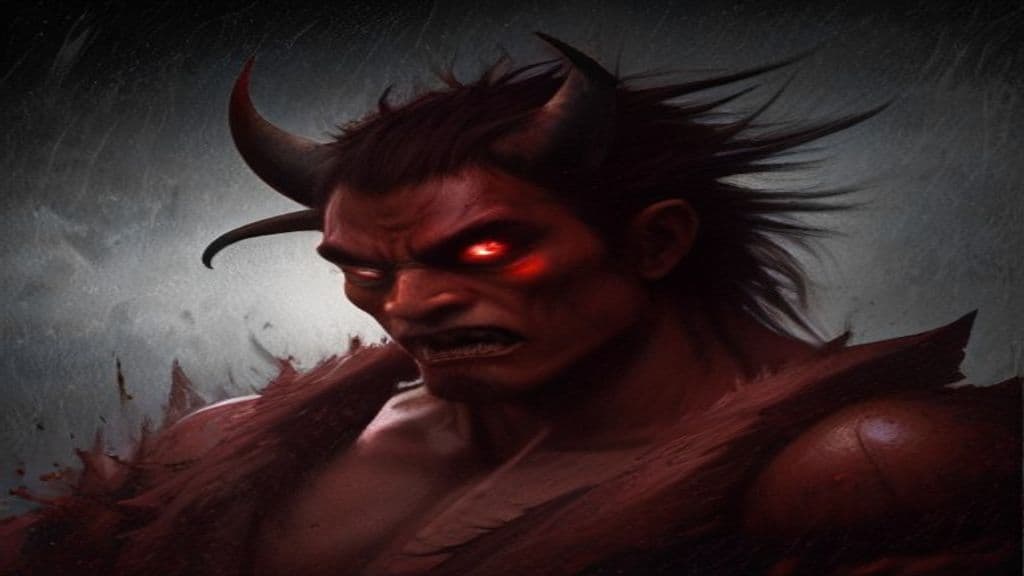
Oni
Powerful supernatural beings of Japanese folklore — associated with misfortune, disease, and the punishment of sinners in hell. Fearsome, often depicted as guardians of the underworld.
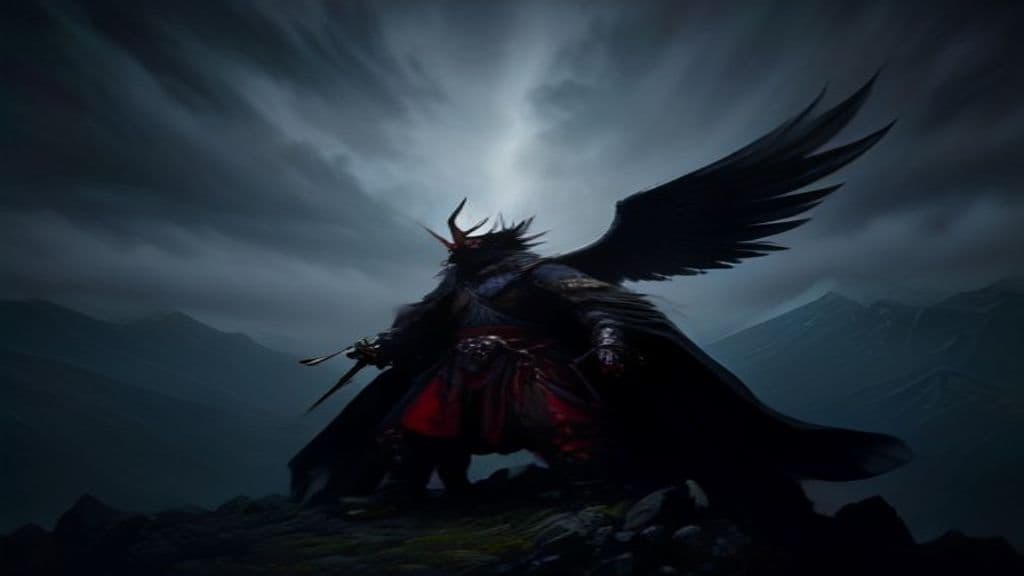
Tengu
Proud, warrior-like mountain spirits of Japan, associated with martial arts, pride, and the wild mountains. Neither fully good nor evil — they test and train warriors and monks, but punish the arrogant.
3-D Man
3-D Man is a Marvel Comics superhero identity associated with a 1950s-era origin in which the body of Chuck Chandler can materialize in three-dimensional existence when activated by his brother Hal via a pair of glasses. The mantle was later assumed by Delroy Garrett (formerly Triathlon) in modern continuity.
5 Ronin
5 Ronin is a 2011 Marvel Comics five-issue limited series that reimagines five Marvel superhero archetypes as rōnin (masterless samurai) in a fictionalized post‑Sekigahara feudal Japan. The work places Wolverine, Hulk, Punisher, Psylocke, and Deadpool analogues into period roles to explore displacement, revenge, and identity in an era of political upheaval.
58 Concordia
58 Concordia is a fairly large main-belt asteroid orbiting the Sun, discovered in 1860 and named after the Roman goddess Concordia. Astronomical sources classify it as a C-type (carbonaceous) body with a multi-year orbital period and measurable rotation and pole orientations.
9MOTHER9HORSE9EYES9
An anonymous Reddit screen name and online persona used by the author of the Interface series, a multipart speculative-horror narrative posted in short installments across Reddit in 2016. The name functions as the signature of an authorial identity and as a focal label for a fandom that created archives, a subreddit, and a wiki documenting the story and its fictional phenomena (notably entities called "flesh interfaces").
A.R.G.U.S.
A.R.G.U.S. is a fictional clandestine United States government agency in the DC Comics universe that investigates, contains, and manages superhuman, meta-human, and supernatural incidents and assets. Introduced in The New 52 continuity, it functions as an institutional actor providing intelligence, logistical support, covert task forces (notably Task Force X / the Suicide Squad), and a dedicated magic division across comics and media adaptations.
Abena Mansa
A name attested in a single contemporary Ghanaian blog anecdote as a 'mysterious being'; available sources do not establish Abena Mansa as a coherent, traditional supernatural figure or provide corroborating ethnographic detail.
Abin Sur
Abin Sur is a fictional extraterrestrial Green Lantern from the planet Ungara in DC Comics. A former history professor turned Green Lantern of Space Sector 2814, he discovered and investigated a prophecy tied to the "Blackest Night," died wounded on Earth and chose Hal Jordan as his ring-successor, and was later reanimated as a Black Lantern in the Blackest Night storyline.
Abishai
Abishai is a personal name attested in several distinct sources: a biblical individual described as the eldest son of Zeruiah (sister of King David); a Semitic chief named in an inscription at Beni-Hasan in Middle Egypt; and modern cultural uses including a named monster in Dungeons & Dragons and as an artist/stage name. The supplied materials do not present Abishai as a supernatural being within a living cosmology.
Abraham Cornelius
Abraham Cornelius is a fictional human scientist in Marvel Comics, a senior Weapon X technician who helped develop the technique to bond adamantium to bone and who features in Wolverine's origin and later storylines, including Death of Wolverine.
Absorbing Man
A fictional Marvel Comics character (Carl "Crusher" Creel) whose body acquires the physical properties of materials or energies he touches. Debuting in Journey into Mystery #114 (March 1965), created by Stan Lee and Jack Kirby, he is presented as a mortal supervillain/occasional antihero who challenges heroes such as Thor, Hulk, Spider-Man, and the Avengers.
Abumi-guchi
A Japanese yōkai classed as a tsukumogami: an animated stirrup (abumi) depicted in Sekien Toriyama's Gazu Hyakki Tsurezure Bukuro. Traditional accounts say it is formed from a stirrup that belonged to a soldier who fell in battle and that it waits where the stirrup lies for its dead owner to return.
Abura-akago
An Edo-period yōkai depicted as an oil‑licking infant or a ball of flame. First recorded in illustrated compendia (notably Toriyama Sekien's Konjaku Gazu Zoku Hyakki), the Abura-akago is tied to tales of oil‑stealing fires and functions in part as an etiological warning about wasting or stealing oil.
Community Record
- [1]Zenki (Wikipedia). Wikipedia entry summarizing modern manga/anime reuse of the name Zenki and related media adaptations.wiki
- [2]Zenki Goki | Megami Tensei Wiki. Fandom summary describing folkloric accounts that present Zenki and Goki as a paired duo of bandit Onis who reformed to serve En no Ozuno; notes oni/tengu-like descriptions and magical attributions in some legends.folk
- [3]Kishin Dōji Zenki (fan/neocities page). Fan page summarizing the manga/anime series Kishin Dōji Zenki and modern cultural reuse of the name.other
- [4]Shugendo - Japanese Mountain Ascetism (Onmark Productions). Overview of En no Gyōja (En no Ozuno) and Shugendō context referenced in secondary summaries linking Zenki and Goki to En no Ozuno's attendants and mountain ascetic milieu.other
- [5]Anime.Stackexchange discussion: reference to Zenki in Japanese mythology. Question and answers noting use of the name Zenki in anime/manga and discussing its folkloric origins as summarized in fandom resources.other