Canaanite Supernatural Beings

70 documented Canaanite supernatural beings from the Evil Eye grimoire, including 45 ancient and 14 lesser in power tier.

page 2 of 2

Nikkal
Ancient

Nikkal

Nikkal is a Near Eastern goddess attested in Hurrian, Hittite and Ugaritic sources as the consort of local lunar deities (Kušuḫ/Umbu/Yarikh). She appears in Hurro‑Hittite offering lists and cultic processions and is derived from the Mesopotamian goddess Ningal.
Qetesh
Ancient

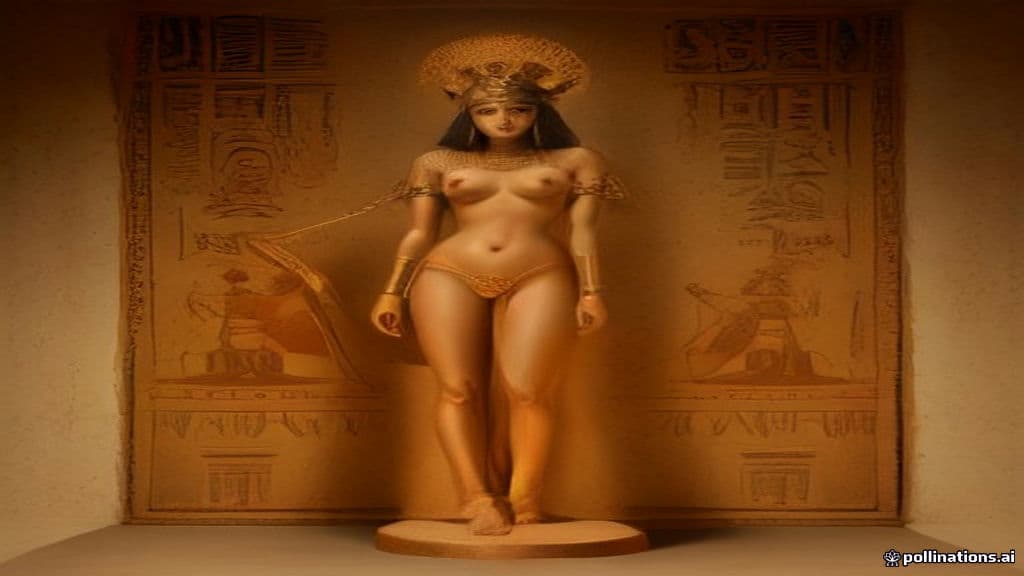
Qetesh

Qetesh is a goddess incorporated into ancient Egyptian religion in the late Bronze Age, attested in Egyptian iconography and inscriptions and bearing a Semitic-derived name (from Q-D-Š). Her epithets and imagery link her to celestial motifs, magic, and major Egyptian gods, while modern scholarship treats her as an Egyptian-developed deity influenced by Canaanite/Syro-Palestinian elements rather than a direct import.

Qudšu-wa-Amrur
Minor Spirit

Qudšu-wa-Amrur

A minor servant-level divine figure in the Ugaritic pantheon, attested in the Baal Cycle and a single ritual prayer (RS 24.271). Described as Athirat’s fisherman and messenger, the name may denote one double-named deity or a paired duo; sources are fragmentary and interpretations vary.

Rephaite (Rephaim)
Ancient

Rephaite (Rephaim)

A Northwest Semitic lexical and cultural cluster referring both to an ancient people of unusually great stature remembered in the landscape of Canaan and to the long-dead or netherworld inhabitants (shades) invoked in funerary and ritual contexts; the same root and related terms appear in Ugaritic and Hebrew texts and carry overlapping meanings of ancestral dead and legendary giants.

Resheph
Ancient

Resheph

Resheph is an ancient Near Eastern deity attested from the third millennium BCE onward and associated primarily with war and plague/fever. He was worshiped across Ebla, Ugarit, Mari, Hurrian and Hittite contexts, adopted into Egyptian religion (ršp/ršpw), and appears in Phoenician/Cypriot inscriptions; in some contexts he is also petitioned as a protective healer.

Sea serpent
Ancient

Sea serpent

A large serpentine marine creature attested across many mythologies and sailors' reports. It functions both as a cosmological adversary of storm/sky deities in ancient myth cycles and as a localized monstrous threat in coastal and seafaring folklore and eyewitness accounts.

Tannin (Jewish Tradition)
Primordial

Tannin (Jewish Tradition)

A sea monster from Jewish tradition, representing chaos and evil in Canaanite and Hebrew mythology. (Note: - Power tier: Should be Lesser, as the entity is described as a "sea monster" which implies a local, regional threat rather than cosmic or deity-level. - Abilities: The source does not describe specif)

Teshub
Ancient

Teshub

Teshub is the Hurrian storm and sky god, head of the Hurrian pantheon whose domain includes winds, lightning, thunder and rain. He functions as both a destructive storm-force and a life-giving fertility deity, a divine king who features centrally in myths of succession and combat (the Kumarbi Cycle).

Zakar-Baal
Minor Spirit

Zakar-Baal

Zakar-Baal is attested in modern scholarship as a named actor in Late Bronze Age Near Eastern diplomatic and exchange contexts. The name appears in discussions (notably by Mario Liverani) that use Zakar-Baal alongside Un-Amón to examine whether inter-polity transfers were ceremonial gifts or commercial transactions.

ʿAmm
Ancient

ʿAmm

ʿAmm (Sabaean: 𐩲𐩣, romanized ʿm; Arabic: عمّ) is attested in the Old South Arabian record as a moon god worshipped in the kingdom of Qataban (ancient Yemen) who also bears weather attributes, notably lightning. He figures in Qatabanite cult life with a named consort, Asherah, and an associated oracle-judge, Anbay; the population identified itself as the Banu ʿAmm (“Children of ʿAmm”).