Canaanite Supernatural Beings

70 documented Canaanite supernatural beings from the Evil Eye grimoire, including 45 ancient and 14 lesser in power tier.

page 1 of 2

Abadir
Lesser

Abadir

Abadir is a polysemous name attested in distinct cultural contexts: a legendary founding saint and clan ancestor in eastern Ethiopia (Sheikh Abadir Umar Al‑Rida / Aw Abadir), a term applied to cone‑shaped cult stones in Phoenician religious description, and a personal name of a martyr (Abadir/Apater) in the Coptic Synaxarium. The attestations are independent usages of the same name rather than a single supernatural being.
Abī-simtī
Lesser

Abī-simtī

Abī-simtī (also rendered Abi-simti, Abisimti) is a named woman attested in third-millennium BCE Mesopotamian documentary and literary texts. She appears in administrative account records as a provider of animals and donor to temple cults and in Sumerian love-song literature as the named beloved/consort addressed by a royal speaker.

Acerbas
Lesser

Acerbas

Acerbas (also recorded as Sychaeus, Sycharbas, Zacherbas) is a figure in classical Greco‑Roman accounts of Phoenician/Tyrian tradition: a wealthy priest of Melqart (the Tyrian Hercules) whose concealed riches and murder by King Pygmalion precipitate Elissa/Dido's flight from Tyre and the foundation of Carthage. He is presented as a human priestly figure of high social rank rather than as a supernatural being.

Adad
Ancient

Adad

Adad (also Hadad, Haddad; Sumerian Iškur) is the storm- and rain-deity attested in ancient Mesopotamian and Canaanite religious contexts. Sources identify him as a principal weather god whose domain is storms and rainfall and whose name appears across multiple Near Eastern languages and sites, including Ebla (as Hadda, c. 2500 BCE).

Adamma
Ancient

Adamma

Adamma is an ancient north‑Syrian goddess attested in Eblaite palace records ca. 2400 BCE and later incorporated into Hurrian and Emar contexts. She functioned as a named cultic deity with an institutional priesthood, a month and festival bearing her name, and documented offerings from the royal palace.

Adonis
Lesser

Adonis

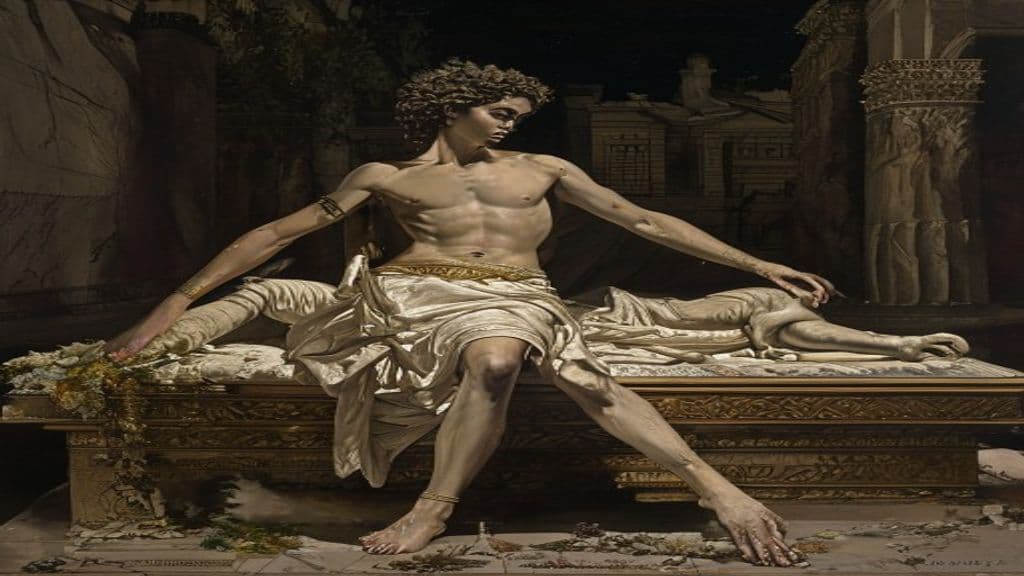
Adonis is a mythic mortal youth in ancient Greek tradition, beloved by goddesses (notably Aphrodite and Persephone) whose death and seasonal return are the focus of the women’s midsummer festival Adonia. The cultic practices—planting short-lived 'gardens of Adonis' on rooftops, ritual lamentation, and casting an effigy and withered plants into the sea—symbolically link him to vegetation cycles and Near Eastern dying-and-regenerating god traditions.

Adrammelech
Lesser

Adrammelech

Adrammelech is attested in ancient Semitic textual tradition as a local god of 'Sepharvaim.' The name is commonly glossed as "Magnificent king." In modern times the name has been reused in diverse fictional, musical, and online contexts, but those are creative reworkings rather than continuations of the brief ancient attestation.

Agasaya
Lesser

Agasaya

Agasaya is presented in modern secondary sources as a little-attested Semitic war goddess who, according to some summaries, was later absorbed as the warrior aspect of the major Mesopotamian goddess Ishtar. The attestation in available materials is sparse and much inferences about her name, attributes, and later influence are explicitly marked speculative in those sources.

Agenor of Argos
Lesser

Agenor of Argos

Agenor is a mythic royal figure in Greek heroic‑age genealogies who functions as a dynastic ancestor and narrative node. In different traditions he appears as an Argive king in the house of Phoroneus or as a son of Poseidon associated with Phoenicia and Libya; an Agenor also appears as a warrior in Homeric epic.

Aglibol
Ancient

Aglibol

Aglibol is the moon god of ancient Palmyra, attested in inscriptions and reliefs from the late Hellenistic through Roman Imperial periods. He appears in civic cult contexts, often paired with the solar deity Malakbel and included in Palmyrene triads and public sanctuary imagery such as the Sacred Garden.

Allatum (Allani / Allatu)
Ancient

Allatum (Allani / Allatu)

Allani (Hurrian) or Allatu/Allatum (Akkadian/Mesopotamian) is a Near Eastern underworld goddess associated with rulership of the land of the dead and with determination of fate. She appears across Hurrian, Mesopotamian and Hittite/Anatolian contexts and is closely linked with other chthonic deities such as Išḫara and Ereshkigal.

Al‑Qaum
Ancient

Al‑Qaum

Al‑Qaum (Arabic: القوم) is a major Nabataean deity associated with war, the night, and the protection of caravans and clans. Attested in numerous inscriptions and later compared by commentators to Greek/Roman war gods, he functioned as a protector of travelers and as a guardian of souls during nocturnal journeys.

Ammarik
Ancient

Ammarik

Ammarik (also Ammarig, Hammarigu; later Armaruk/‘lord of Armaruk’) is an ancient Eblaite deity most likely representing a deified mountain attested in third-millennium BCE Eblaite texts and later Hurrian and Hittite sources. He appears in Eblaite offering lists and an incantation context allied with weather cults and apotropaic ritual action.

Ammon (tradition)
Lesser

Ammon (tradition)

In the provided sources, 'Ammon' is primarily attested as the ethnonym and toponym of the ancient kingdom and people known as the Ammonites (centered on Rabbah/Rabbat Ammon, modern Amman) and as a component in later theonyms (e.g., 'Jupiter Ammon'). The corpus supplied contains etymological, geographic, biblical, and modern onomastic information but does not document 'Ammon' as a discrete folkloric spirit or supernatural being with a ritual corpus.

Anat
Ancient

Anat

Anat is a Bronze Age Levantine goddess best known from Ugaritic texts, associated primarily with warfare and hunting. She is a major divine figure in the Ugaritic pantheon who regularly received offerings, appears as an active agent in mythic narratives (notably the Baal Cycle), and was attested across the Levant, into Egypt, Cyprus, Hurrian ritual contexts, and later in Suhum.

Anath (Anat, Anatu)
Ancient

Anath (Anat, Anatu)

Anath (also Anat, Anatu, classically Anath) is a Bronze Age Levantine goddess associated with warfare and hunting, best known from the Ugaritic texts. Scholars commonly trace her origin to Amorite culture of upper Mesopotamia and identify a forerunner, the goddess Ḫanat, in Mari and a city in Suhum.

Arsay
Lesser

Arsay

Arsay is a goddess attested in the late Bronze Age Ugaritic corpus. She appears as one of the daughters of the storm god Baal in the Baal Cycle and is known from a small number of offering-list and god-list documents; interpretations of her function range between associations with the underworld and with subterranean or meteorological waters, but the textual evidence is ambiguous.

Asherah
Ancient

Asherah

Asherah is a major ancient Northwest Semitic mother-and-fertility divine figure closely associated with sacred trees and wooden cult poles. Attested across Ugarit, Canaanite/Phoenician, Israelite, Akkadian and related Levantine contexts, her cultic presence is debated in later Israelite texts where references are often recast as objects (asherah poles, groves) and subject to iconoclastic reform.

Ashima
Lesser

Ashima

Ashima is an ancient West Semitic goddess personifying fate — the portion, name, or allotted lot — attested in West Semitic onomastic and textual contexts. She appears in Iron Age Samaritan cult lists and in the wider Near Eastern lexical field of deities and terms for 'fate' (cognate with Akkadian shimti and South Semitic Manāt).

Ashtart
Ancient

Ashtart

Ashtart (also Astarte, Athtart, ʿAṯtart) is a major Northwest Semitic goddess of the Ancient Near East attested from the Bronze Age through classical antiquity. She functions in regional pantheons alongside deities such as Baal, Anat, and the East Semitic parallel Ishtar, and is evidenced in Ugaritic mythic texts and Levantine temple archaeology (notably a 4th-century BCE chapel at Sidon).

Ashteroth Karnaim
Minor Spirit

Ashteroth Karnaim

Ashteroth Karnaim is an ancient place-name in the biblical and Near Eastern record—a city or paired cities in the region of Bashan (Transjordan) associated with the goddess Astarte (Ashtoreth) and described in some sources as the ‘abode of the Rephaim.’ It is attested in Bronze‑ and Iron‑Age texts and later Hellenistic traditions, and is identified with several proposed archaeological sites (e.g., Tell Ashtara, al‑Shaykh Saad) though the exact location remains debated.

Astarte
Ancient

Astarte

Astarte (Ancient Northwest Semitic ʿAṯtart; Hellenized Ἀστάρτη) is a major Bronze–Iron Age Levantine goddess worshipped in Canaanite and Phoenician contexts and widely syncretized across the ancient Mediterranean. Sources portray her with martial, erotic, and civic associations and attest organized cultic worship (temples, shrines, coin iconography) rather than folkloric anti‑spirit traditions.

Atargatis
Ancient

Atargatis

Atargatis (Greek Atargatis / Derceto) is the chief goddess of northern Syria in classical antiquity, worshipped as a civic mistress (baalat) and fertility deity who protects the city and people and functions as an ancestor/founder figure for ruling houses. Her cult shows continuity with Bronze‑ and Iron‑Age Levantine goddesses and appears in variable iconography ranging from fully anthropomorphic to ichthyomorphic (fish‑tailed) forms.

Athirat (Asherah)
Ancient

Athirat (Asherah)

Athirat, also rendered Asherah (Ašerdu(š)/Ašertu(š) in Hittite), is a principal goddess of the ancient Northwest Semitic (Canaanite/Ugaritic) pantheon, attested in Ugaritic texts as the consort of ʾEl and associated in the sources with fertility, motherhood, sacred trees, and the sea (and in some summaries with sky).

Attar (ʿAṯtar)
Lesser

Attar (ʿAṯtar)

ʿAṯtar (Attar) is an ancient Near Eastern masculine theonym attested among Aramaean contexts and discussed in comparative scholarship on West Semitic and Mesopotamian religions. Sources record a cultic formulation Attar-qamu, glossed 'Attar is the baetyl', linking the deity to a standing sacred stone as the locus of veneration.

Awarikus (Warikas)
Greater

Awarikus (Warikas)

Awarikus (also rendered Warikas) was a historical king of the Neo‑Hittite/Luwian polity Ḫiyawa (Adanawa/ancient Adana in Cilicia) who reigned in the mid–late 8th century BCE (c. 738–709 BCE). He is attested in Hieroglyphic Luwian, Phoenician, and Neo‑Assyrian (Akkadian) sources as a local ruler who entered vassalage and treaty relations with the Neo‑Assyrian Empire and undertook fortification and administrative projects within his realm.

Aštabi
Ancient

Aštabi

Aštabi is an ancient Near Eastern deity attested in Eblaite, Hurrian, Ugaritic, and Hittite contexts. In later Hurrian and Hittite sources he functions as a war god and participant in divine assemblies and mythic combat; in the earliest Eblaite documents his precise original character is unresolved though he had named cult centers and cultic statues.

Baal
Ancient

Baal

Baal (bāʿal) is a Northwest Semitic title meaning 'owner' or 'lord' that served as a theonym in the ancient Levant; in Ugaritic and Canaanite texts it appears as the name/title of a prominent storm and fertility god (often rendered Baʿal Haddu) who features centrally in the Baal Cycle and in regional cults tied to rain, fertility, and kingship. In later monotheistic literatures the term becomes a polemical label for rival or foreign deities and is reinterpreted in various receptions.

Baal Ḥamon
Ancient

Baal Ḥamon

Baal Ḥamon (Baal Hammon) is the chief god of ancient Carthage in the Punic religious framework, venerated as a male deity associated with weather, fertility of vegetation, and regarded as king among the gods. He is cultically paired with the principal female deity Tanit and is attested in archaeological and textual traditions as an authoritative lordly divine figure.

Baal-berith
Ancient

Baal-berith

Baal-berith (also attested in some reference works as El Berith) is a named deity-title from ancient Canaanite religion, attested in Biblical sources and later reference literature as a local god or title worshiped at Shechem and associated with covenants—commonly glossed as "Baal of the Covenant." Later reception reuses the name polemically or in modern occult and cultural contexts.

Baalat Gebal
Ancient

Baalat Gebal

Baalat Gebal (Phoenician bʿlt gbl, "Lady of Byblos") is the tutelary goddess and principal civic deity of the ancient Phoenician city of Byblos. Her long-lived temple at the city's center and attestations in Egyptian, Akkadian (Amarna), and later Greek sources show her role as city-protector, focal point of royal veneration, and an object of cross-cultural identification with foreign goddesses.

Baalshamin
Ancient

Baalshamin

Baalshamin (literally "Lord of Heaven[s]") is a Northwest Semitic theonym/title used across the Levant and adjacent regions to denote a supreme sky/heavenly lord. Depending on time and place it functions as an epithet of other deities (notably Hadad/Baal) or as a distinct civic/sky deity associated with weather, lightning, and sometimes solar aspects; attested in inscriptions from Ugarit, Phoenicia, Safaitic Arabia, Palmyra, Nabataea, and in treaty and stele texts.

Balaam
Ancient

Balaam

Balaam (Hebrew Bīlʿām) is a non‑Israelite seer/diviner attested in the Hebrew Bible and in an extra‑biblical West Semitic inscription (Deir Alla). He is portrayed as a liminal prophetic figure who receives divine visions and utters oracular poems but is morally contested in later traditions for his alleged role in leading Israel to transgression.

Baʿal Hammon
Ancient

Baʿal Hammon

Baʿal Hammon is the chief male deity of the Punic (Carthaginian) pantheon, associated principally with vegetation fertility, communal prosperity, and kingly supremacy. He is syncretized with North African/Egyptian Ammon (Amun) and, in Greco‑Roman interpretatio, with Cronus/Saturn. Classical authors accuse his cult of child sacrifice, a claim debated by modern scholars and archaeologists.

Baʿal Zephon
Ancient

Baʿal Zephon

An epithet/localized form of the Canaanite storm god Baʿal (Hadad) associated with Mount Zaphon (Jebel Aqra) and with the north; worship of Baʿal Zephon served protective and maritime functions and was widely syncretized in neighboring cultures.

Bene Elohim
Ancient

Bene Elohim

Bene Elohim (בני־אֱלֹהִים) is a Hebrew phrase used in the Hebrew Bible and related literature to denote "sons of God" or "sons of the gods." It functions as a collective designation for divine or semi-divine beings associated with a heavenly council or, in some interpretive traditions, as a flexible category that can include angelic ranks or, alternatively, human groups (e.g., descendants of Seth or judges).

Beor
Lesser

Beor

Beor (Hebrew Bor) is a personal name attested in biblical and extrabiblical sources chiefly as the father of the non‑Israelite seer Balaam. He functions as a patronymic identifier that locates Balaam within ancient Near Eastern genealogical and onomastic networks; sources do not present Beor as an independent supernatural agent.

Bethel (House of El)
Ancient

Bethel (House of El)

Bethel (Hebrew: Bēṯ ʾĒl, "House of El" or "House of God") is primarily a sacred place-name in the Hebrew Bible denoting a sanctuary, an anointed cult-stone (baetyl), and—in some interpretive traditions—a localized manifestation or hypostasis of the divine associated with that site.

Dagan (Dagon)
Ancient

Dagan (Dagon)

Dagan (also rendered Dagon) is listed in the supplied sources as the name of a Semitic fertility god and as a homograph used for people and places; the materials provided are a disambiguation-style collection and do not include mythological narratives, iconography, or ritual detail for the deity beyond the label "Semitic fertility god."

Dawn deities
Greater

Dawn deities

A cross-cultural category of divine figures associated with dawn, morning, or the morning star; these figures personify the transition from night to day and may be integrated into local pantheons or syncretized with solar deities in some traditions.

Dione
Minor Spirit

Dione

Dione is primarily a proper name attested in ancient Greek myth (Διώνη, 'she who is under the authority of Zeus') borne by multiple mythological women, and is also used in modern taxonomy and astronomy (notably a moon of Saturn). The supplied sources do not present Dione as a single, consistent folkloric supernatural being with rituals or warding traditions.

Dumuzi
Ancient

Dumuzi

Dumuzi (Dumuzid; Tammuz/Adon/Adonis in Levantine reception) is an ancient Mesopotamian pastoral and fertility deity, shepherd and consort of the goddess Inanna/Ishtar, whose death/abduction and seasonal absence are tied to vegetation cycles and annual cultic mourning and renewal.

Dumuzid (Tammuz)
Ancient

Dumuzid (Tammuz)

Dumuzid (Sumerian Dumuzi; Akkadian Duʾūzu/Dûzu; later Tammuz) is an ancient Mesopotamian deity associated with shepherding, plant fertility, and seasonal renewal. He functions as the primary consort of the goddess Inanna/Ishtar, an etiological figure for summer barrenness and autumnal return, and appears in king lists as an antediluvian/early ruler.

El
Ancient

El

El (ʼEl, ʾil, ʾilu) is a Northwest Semitic term meaning 'god' that also functions as the proper name and title of a senior, patriarchal deity in Canaanite/Ugaritic and related West Semitic traditions. He is portrayed in surviving texts as the father of the gods, presiding over a divine council, a progenitor of major deities and humankind, and a figure whose attributes were later conflated with those of Yahweh in Israelite religion according to scholarly reconstructions.

Elagabal/El‑Gabal (Elagabalus, Heliogabalus)
Ancient

Elagabal/El‑Gabal (Elagabalus, Heliogabalus)

Elagabal (El‑Gabal), Latinized as Elagabalus and syncretized as Heliogabalus, is the Emesene mountain and sun god represented by a sacred cult‑stone (baetyl). A local Baal‑type deity of Emesa (modern Homs), the cult was historically notable for its transplantation and promotion to Rome during the reign of the emperor commonly called Elagabalus (218–222 CE).

Elyon
Ancient

Elyon

Elyon (ʻElyōn, עֶלְיוֹן) is an ancient Northwest Semitic divine title/name meaning “the Upper/Most High.” In Israelite and neighboring Levantine texts it functions variably as an epithet of the God of Israel, as a high deity in regional treaty and mythic lists, and as a theological/poetic term emphasizing divine supremacy and cosmic height.

Ezekiel
Minor Spirit

Ezekiel

Ezekiel is a human prophet and priest of the Hebrew Bible whose recorded prophetic activity during the Babylonian exile includes vivid visionary encounters (notably the merkabah or chariot-throne and four living creatures) and symbolic enacted prophecies addressing judgment and restoration for Judah and Jerusalem.

Hadad (Haddu / Adad / Iškur)
Ancient

Hadad (Haddu / Adad / Iškur)

Hadad is the ancient Near Eastern storm and rain deity attested across Levantine and Mesopotamian traditions (Ugaritic Haddu, Akkadian Adad, Sumerian Iškur). He is a high-ranking weather-lord associated with rain, thunder, fertility of fields, and a dual capacity to nourish crops and to unleash destructive storms; he plays central roles in temple cult, royal ideology, and mythic battles (notably the Ugaritic Baal Cycle).

Hauron (Haurun / Horon / Hawran)
Ancient

Hauron (Haurun / Horon / Hawran)

Hauron (also Haurun, Horon, Hawran) is an ancient Near Eastern deity attested in Egyptian sources (worshiped at Giza) and identified by scholarship as the Egyptian form of a West Semitic god worshiped in Canaan and at Ugarit. In Egypt his name was closely associated with Harmachis and could be used as a designation of the Great Sphinx of Giza.

Hilkiah
Minor Spirit

Hilkiah

Hilkiah (Hebrew: Ḥilqiyyā(hu), "my portion is Yahweh") is attested in biblical and epigraphic sources as a kohen (priest) and, in the biblical narrative, the High Priest of the Jerusalem Temple during King Josiah's reign. He is chiefly remembered for finding the 'Book of the Law' in the Temple and delivering it to royal officials, an act that precipitated Josiah's religious reforms.

Ilib
Ancient

Ilib

Ilib (Ugaritic ‘l’b) is an ambivalent ancient Ugaritic term attested as both a primordial ancestral theogonic figure placed before El in ritual lists and as a generic designation for household ancestor-spirits honored by families. Evidence for Ilib is primarily ritual and onomastic: the name occurs early in offering lists, in temple sacrificial contexts, and in literary instruction about filial memorials.

Iškur / Adad / Hadad
Ancient

Iškur / Adad / Hadad

Iškur (Sumerian), Adad (Akkadian/Mesopotamian) and Hadad/Hadda (Canaanite/Eblaite) are the cognate ancient Near Eastern storm- and rain-deities attested from the Early Bronze Age onward; they are cultic figures invoked in hymns and worshipped at temple centers such as Karkar and Ebla.

Išḫara
Greater

Išḫara

Išḫara is a polyvalent ancient Near Eastern goddess first attested at Ebla in the third millennium BCE, later incorporated into Mesopotamian, Hurrian, Hittite and other regional religious traditions. She functioned as a tutelary royal deity, an authority over love and the institution of marriage, an oath- and divination-linked divine figure, and was associated symbolically with reptiles and, in some Mesopotamian contexts, scorpions.

Jehoshaphat
Lesser

Jehoshaphat

Jehoshaphat (Hebrew: יְהוֹשָׁפָט, Yəhōšāpāṭ, "Yahweh has judged") is presented in the biblical tradition as a historical king of Judah—son of Asa—known for judicial and religious reforms, organizing priests and Levites, and appearing in genealogical lists. Some textual traditions also preserve the name in priestly genealogies, producing scholarly disputes about whether a High Priest by this name appears in some lists.

Kothar-wa-Khasis
Ancient

Kothar-wa-Khasis

Kothar‑wa‑Khasis is the principal divine craftsman of the Ugaritic pantheon, attested in Late Bronze Age Ugaritic myths and ritual texts. Rendered as “skilled and wise” (or a hendiadys “wise craftsman”), he functions as architect, smith, musician and maker of ritual implements whose works serve other gods in mythic narratives.

Kotharat
Ancient

Kotharat

A collective of Northwest Semitic goddesses attested in Bronze Age texts (chiefly at Ugarit, Mari and Emar) associated with conception, pregnancy, birth and the blessing of marriages; conventionally treated as a heptad and etymologically linked to a Semitic root meaning 'skill' or 'to achieve.'

Melqart
Ancient

Melqart

Melqart is the principal tutelary deity of the Phoenician city of Tyre, venerated as the city's divine patron, protector of its colonies, and a central figure in Phoenician/Punic civic religion. He is associated in the sources with an annual 'awakening' festival often interpreted as a dying-and‑rising motif, and his name was invoked to sanction oaths and protect settlements.

Moon god (lunar deity)
Ancient

Moon god (lunar deity)

A lunar deity is a divine figure representing the Moon or aspects of it; across cultures such deities personify the Moon, its phases, and its governance of the night and may perform varied functions depending on local tradition.

Mot
Greater

Mot

Mot is the Ugaritic/Phoenician personification and divine power of death; in mythic texts he appears as a son of ’El whose residence is a pit and whose appetite for the living brings sterility and conflict with the storm-god Baal.

Mīšaru
Lesser

Mīšaru

Mīšaru is the Mesopotamian divine hypostasis of justice and rectitude. Named from the Akkadian root ešēru, he functions both as the abstract concept of correct rulings and as an active cultic deity invoked in temple worship, divination, and state ritual lists across Mesopotamia.