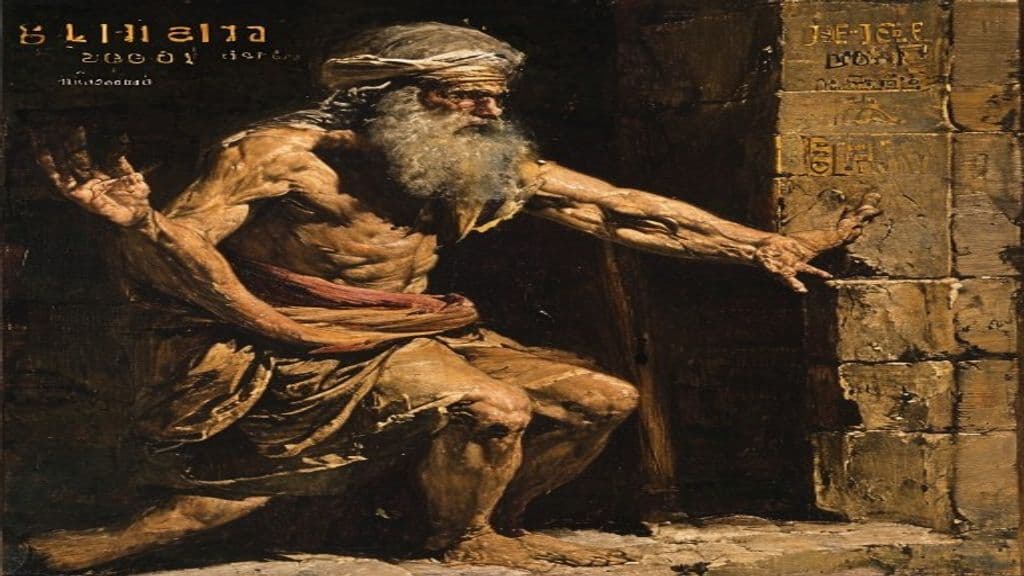
In the biblical narrative (Numbers 22–24) Balaam is a non‑Israelite diviner from Pethor whom Balak, king of Moab, summons to curse the advancing Israelites. The narrative recounts Balaam’s journey, an episode in which his donkey perceives and speaks after avoiding an angelic figure, and a sequence of ritualized visits in which Balaam builds altars and offers sacrifices on high places; over the course of seven pronouncements he unexpectedly blesses Israel under constraint that he speak only what Yahweh commands. An extra‑biblical West Semitic text from Deir Alla (c. 840–760 BCE) attests to Balaam son of Beor receiving visions from multiple deities, placing him within a broader Levantine prophetic/visionary milieu. Later Israelite, rabbinic, and Christian traditions interpret and expand the story, attributing to Balaam counsel that led to Israelite idolatry and sexual sin (the so‑called Heresy of Peor) and recording his death among those killed in post‑narrative punitive actions.
The canonical and extra‑biblical sources provide no sustained physical description of Balaam. Textual witnesses focus on his role, locale (Pethor), ritual actions (building altars, offering sacrifices), and visionary experiences rather than bodily features; the Deir Alla text portrays him in visionary trance. Later commentaries likewise emphasize character and vocation over physical portraiture.
Sources consistently describe Balaam as a skilled seer/prophet and diviner who receives revelations or visions and composes oracular poems (the Book of Numbers records seven prophetic oracles). He performs divinatory rites—building altars on high places and offering sacrifices—and engages in practices associated with trance or visionary reception (the Deir Alla inscription describes him receiving messages from multiple deities). Narrative material also depicts him negotiating with his patron (Balak) and being constrained by divine command to speak only what he is told.
Weaknesses
- conditiondivine constraint
- conditionmoral culpability as judged by later traditions
Wards
- otherdivine control / restriction on speech
- othercommunal/legal memory and punitive action (texts that record culpability and subsequent killing)
Aaron
Aaron is a central human figure in Israelite sacred literature: the elder brother of Moses, the first high priest (progenitor of the Aaronide priesthood), and a spokesman/prophet who mediates between Israel and God in Exodus–Deuteronomy narratives. His role in the texts establishes hereditary priestly authority, ritual functions (sacrifices, blessing, use of Urim and Thummim), and institutional norms for Israelite cultic life.
Abaddon
In Hebrew scripture Abaddon is primarily a noun meaning 'destruction' or a section/condition of the underworld paired with Sheol; in the New Testament Book of Revelation Abaddon is personified as an angelic figure (Greek Apollyon) described as the king of an army of locusts released from the abyss during the apocalypse.
Abadir
Abadir is a polysemous name attested in distinct cultural contexts: a legendary founding saint and clan ancestor in eastern Ethiopia (Sheikh Abadir Umar Al‑Rida / Aw Abadir), a term applied to cone‑shaped cult stones in Phoenician religious description, and a personal name of a martyr (Abadir/Apater) in the Coptic Synaxarium. The attestations are independent usages of the same name rather than a single supernatural being.
Abadiu of Antinoe
Abadiu of Antinoe was a fourth‑century bishop of Antinoe (Antinoopolis, in Roman Egypt) commemorated as a martyr and saint in the Coptic Orthodox Church, with a feast day on 26 December. Sources record that he was killed during a theological dispute with Arian opponents and reference him in collections of Egyptian martyrs.
Abagtha
Abagtha (Hebrew: אבגתא, ’Ǎḇaḡṯā) is a named human court official in the Hebrew Bible’s Book of Esther, listed among seven chamberlains who ministered before King Ahasuerus and were commanded to bring Queen Vashti before the king. He is attested only in Esther 1:10 and is presented as an institutional palace attendant rather than a supernatural being.
Abanoub
Abanoub is a 4th‑century Egyptian Christian child martyr venerated in the Coptic tradition. Remembered for his public confession of Christ, miraculous healings associated with his passion, and the translation and veneration of his relics, his feast is observed on July 31 (Epip 24) and his cult centers include Nehisa and Samanoud.
Abaskhiron the Soldier
A Coptic Orthodox martyr venerated for refusing imperial idolatry during the Diocletian persecution; reputedly healed by the Archangel Michael, preserved in monastery relics, and commemorated on 14 June (7 Paoni).
Abdel Messih El-Makari
Abdel Messih El-Makari (1892–1963) was a Coptic Orthodox monk and priest venerated as a 20th‑century Coptic saint. Associated with the Monastery of Saint Samuel the Confessor and the Monastery of Saint Macarius (Scetes/Wadi El‑Natrun), he is remembered for humility, asceticism, charity, and reported spiritual gifts such as prescience, discerning of spirits, and healing.
Abdiel
Abdiel (Hebrew עֲבְדִּיאֵל) is primarily a theophoric Hebrew personal name meaning "servant of El/servant of God," attested once in the Hebrew Bible (1 Chronicles 5:15). In later literature—most notably John Milton's Paradise Lost—Abdiel is reimagined as a faithful seraph who opposes Satan's revolt. The provided sources do not treat Abdiel as an autonomous folkloric spirit type or record rituals or wards associated with the name.
Abel
Abel is the second son of Adam and Eve in the Genesis narrative, a shepherd whose accepted offering and subsequent murder by his brother Cain form the biblical account of the first death. Later interpretive traditions expand his role, treating him as an archetypal righteous victim, a postmortem avenging or adjudicating figure, and in some systems (notably Mandaean) identifying him with an angelic lightbeing.
Abiathar
Abiathar (Hebrew: אֶבְיָתָר, ʾEḇyāṯār) is a named human priestly figure in the Hebrew Bible. He is presented as a survivor of the Nob massacre who fled to David with priestly regalia, served as a priest and counselor in David's court, and was later deposed and sent to Anathoth by Solomon for supporting Adonijah.
Abib and Apollo
Abib and Apollo are Christian ascetics and hagiographic saints of Akhmim (Upper Egypt) attested in Coptic sources and the Historia Monachorum. Remembered for extreme asceticism, monastic leadership, angelic encounters, and inclusion in the Coptic Synaxarion (feast day November 4).
Community Record
- [1]Balaam — Wikipedia. Wikipedia, 'Balaam'wiki
- [2]Balaam — Wikidata. Wikidata entry for Balaamother
- [3]Balaam — Biblical Cyclopedia. Biblical Cyclopedia entry on Balaam; etymological proposalsother
- [4]Numbers 22–24 (Balak Summons Balaam). Textual summary of Numbers 22–24 (Balaam narrative)literary
- [5]Deir Alla inscription (summary). Summary of Deir Alla inscription attesting Balaam son of Beor (c. 840–760 BCE)wiki
- [6]Legends of the Jews — Balaam. Legends of the Jews, chapter on Balaam (later rabbinic expansions and interpretation)literary