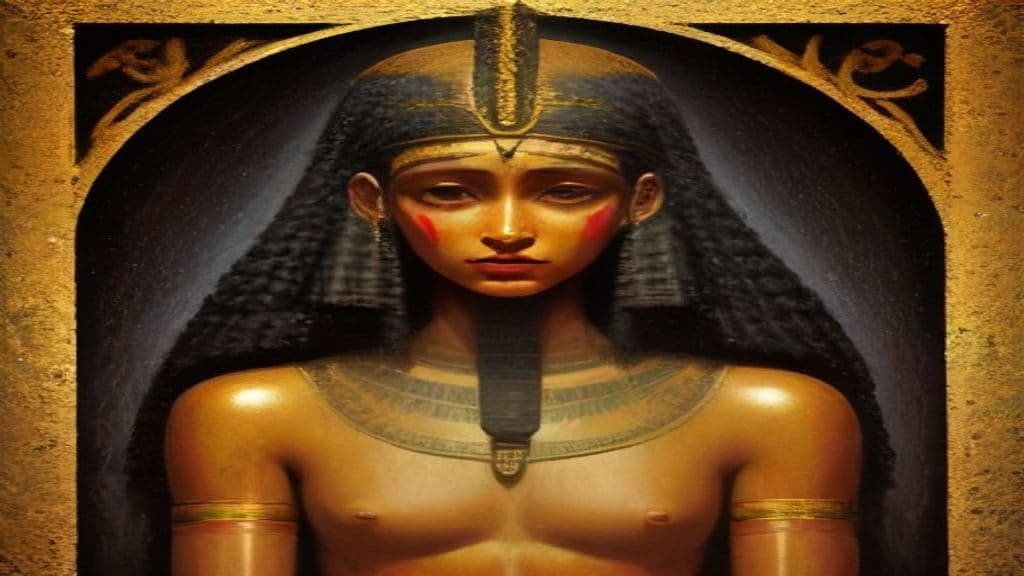
In the Ugaritic corpus Hauron appears as a named divine figure connected with ritual magic and healing; scholarship treats the Egyptian ḥwrwnꜣ as an adopted form of this north Levantine god. His name is preserved in Levantine toponyms (e.g., Beth‑Horon) and persists into later Phoenician/Punic practice (a second‑century BCE inscription from Delos records worship in Jamnia). Egyptian sources reflect cultural assimilation, including use of his name in association with Harmachis/the Great Sphinx at Giza.
The attested sources do not provide a consistent anthropomorphic or iconographic portrait of Hauron in the Ugaritic mythic texts. In Egyptian contexts his name became linked with Harmachis and therefore could be used as a designation of the Great Sphinx, but no direct, detailed physical description of Hauron as a distinct body‑form is preserved in the cited textual materials.
Hauron functions as an exorcistic and healing specialist in the textual record: Ugaritic incantatory and mythic material names him in rituals to counter snakes and related harms, and Egyptian magical papyri invoke him for healing and to neutralize dangerous animals (an example in the Egyptian corpus invokes him to render a wolf harmless together with Anat and a third deity rendered as Arsaphes/Resheph in variant translations). In Ugaritic text he is addressed with the specialist term ḥbr(m), understood as a spellcaster or ritual expert comparable to Mesopotamian mašmāšu/āšipu. He is also described as protector of fields and livestock and associated in Egyptian reception with the desert and with shepherd‑protector functions. Some scholars have argued for an ambivalent or darker aspect in certain passages (e.g., contested readings of a so‑called “tree of death”), but other readings treat those passages as lists of medicinal plants or apotropaic woods used in cures and exorcisms.
Aani
Aani (ancient Egyptian jꜥnr) is the lexical term for the baboon in ancient Egyptian language and functions in religious contexts as an animal icon and theophoric epithet. Attested repeatedly in Egyptian texts and images, the baboon image is used to represent or denote aspects of gods such as Thoth, Hapy, Khonsu, and Osiris rather than implying the animal itself is an independent deity.
Aati
Aati (also rendered Ati) is one of the 42 judges of the dead in ancient Egyptian funerary literature, attested in the Book of the Dead tradition (notably the Papyrus of Nebsemy). Described as originating 'from Heliopolis', Aati's documented function is to question the deceased about a specific moral accusation during the Duat judgment; the funerary texts supply a formulaic denial the soul must recite.
Abadir
Abadir is a polysemous name attested in distinct cultural contexts: a legendary founding saint and clan ancestor in eastern Ethiopia (Sheikh Abadir Umar Al‑Rida / Aw Abadir), a term applied to cone‑shaped cult stones in Phoenician religious description, and a personal name of a martyr (Abadir/Apater) in the Coptic Synaxarium. The attestations are independent usages of the same name rather than a single supernatural being.
Abadiu of Antinoe
Abadiu of Antinoe was a fourth‑century bishop of Antinoe (Antinoopolis, in Roman Egypt) commemorated as a martyr and saint in the Coptic Orthodox Church, with a feast day on 26 December. Sources record that he was killed during a theological dispute with Arian opponents and reference him in collections of Egyptian martyrs.
Abaset
Abaset is a localized ancient Egyptian goddess attested in tomb decoration at El‑Bawiti in the Bahariya Oasis during the 26th Dynasty. She is depicted anthropomorphically with a hedgehog motif incorporated into her headdress and appears on the walls of Qarat Qasr Salim, including twice in the Tomb of Bannentiu. No cult texts, myth narratives, or ritual prescriptions for her are recorded in the cited corpus.
Abib and Apollo
Abib and Apollo are Christian ascetics and hagiographic saints of Akhmim (Upper Egypt) attested in Coptic sources and the Historia Monachorum. Remembered for extreme asceticism, monastic leadership, angelic encounters, and inclusion in the Coptic Synaxarion (feast day November 4).
Abyzou
Abyzou is a female malignant supernatural figure in Near Eastern and medieval European magico-medical and demonological traditions, blamed especially for miscarriages, stillbirths, and infant mortality. She appears in literary sources (notably the Testament of Solomon) and on Byzantine and medieval amulets where her flight or subjugation is commanded by names, images, and saints/archangels.
Abāmūn of Tarnūt
A fourth‑century Coptic Christian presented in later hagiography as a martyr from the city of Tarnūt (Therenuti). Known primarily from a single late medieval Synaxarion notice, he is commemorated liturgically for his voluntary confession and violent martyrdom.
Abī-simtī
Abī-simtī (also rendered Abi-simti, Abisimti) is a named woman attested in third-millennium BCE Mesopotamian documentary and literary texts. She appears in administrative account records as a provider of animals and donor to temple cults and in Sumerian love-song literature as the named beloved/consort addressed by a royal speaker.
Acerbas
Acerbas (also recorded as Sychaeus, Sycharbas, Zacherbas) is a figure in classical Greco‑Roman accounts of Phoenician/Tyrian tradition: a wealthy priest of Melqart (the Tyrian Hercules) whose concealed riches and murder by King Pygmalion precipitate Elissa/Dido's flight from Tyre and the foundation of Carthage. He is presented as a human priestly figure of high social rank rather than as a supernatural being.
Adad
Adad (also Hadad, Haddad; Sumerian Iškur) is the storm- and rain-deity attested in ancient Mesopotamian and Canaanite religious contexts. Sources identify him as a principal weather god whose domain is storms and rainfall and whose name appears across multiple Near Eastern languages and sites, including Ebla (as Hadda, c. 2500 BCE).
Adamma
Adamma is an ancient north‑Syrian goddess attested in Eblaite palace records ca. 2400 BCE and later incorporated into Hurrian and Emar contexts. She functioned as a named cultic deity with an institutional priesthood, a month and festival bearing her name, and documented offerings from the royal palace.
Community Record
- [1]Hauron (Wikipedia). Wikipedia, entry 'Hauron' — summary noting worship at Giza, association with Harmachis, and identification with a Canaanite/Ugaritic god conventionally called Horon; notes scholarly establishment in the 1930s that the deity originated outside Egypt.wiki
- [2]Wikidata: Haurun. Wikidata item for Haurun, broadly classifying the entity as an Egyptian deity.other
- [3]W. F. Albright — Papers on God Ḥaurôn (Ḥôrôn). Collection referencing W. F. Albright's papers on the Canaanite & Egyptian god Horon/Hauron; cited as focused scholarly study of the deity.academic
- [4]Modern/name usages and cultural references (examples). Examples of modern cultural uses of the name 'Haurun' (music releases, band names, and other contemporary usages) included in the research notes; these reflect modern appropriation of the name but do not provide ancient-source information about the deity.other
- [5]Wikidata: Hauron. Wikidata entry Q2310356 (Hauron).other