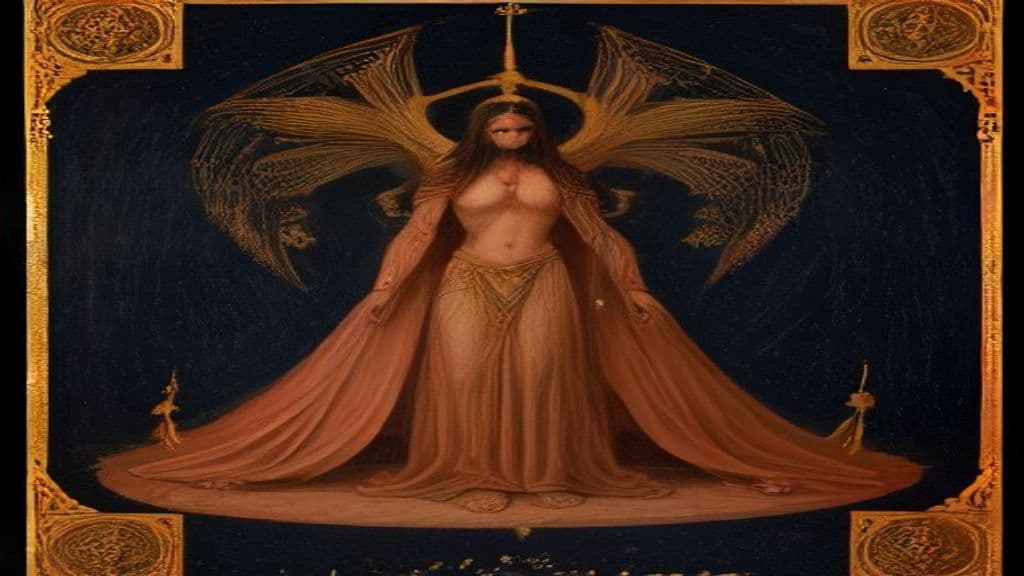
The extant account — preserved in the Synaxarion of Mikhail of Atrib (c. 1240) — presents Abāmūn as a man from the city of Tarnut (Arabic طرنوط, Coptic ⲑⲉⲣⲉⲛⲟⲩϯ, Therenuti) who came to Upper Egypt during the persecutions of the fourth century. According to that late hagiographical notice, he publicly declared himself a Christian before Arianus, governor of Ansena, endured severe tortures, was sent to Alexandria, and inspired others to confess and accept martyrdom. The narrative is a later compilation and the sources explicitly record Abāmūn only through this Synaxarion entry; the fourth‑century setting is the traditional chronology of the martyrdom rather than a contemporaneous documentary attestation. The personal name Abāmūn is noted in the sources as etymologically related to the ancient Egyptian god Amun, indicating a theophoric linguistic residue in a Christian Egyptian name.
No stable iconographic or physical description of Abāmūn is supplied in the available sources beyond the wounds and mutilations recorded in the martyr notice. The Synaxarion account lists the tortures he endured: blows, nails driven into the body, combing with iron combs, suspension by ropes (stringing up), amputation of limbs, and eventual beheading. The sources provide no information on stature, clothing, or conventional attributes, and note that local dedications bearing the name 'Saint Abamūn' may conflate this Abāmūn with other martyrs of the same name (e.g., Abāmūn of Tukh), which complicates any later visual identification.
The sources attribute no supernatural powers to Abāmūn; he is presented as a human martyr whose notable 'abilities' are moral and exemplary: voluntarily confessing the Christian faith before a pagan governor, enduring extreme physical torture without recantation, and inspiring other Christians (including the young woman Theophila) to confess and accept martyrdom. No post‑mortem miracles, exorcistic roles, or other supernatural interventions are recorded in the provided materials.
Aani
Aani (ancient Egyptian jꜥnr) is the lexical term for the baboon in ancient Egyptian language and functions in religious contexts as an animal icon and theophoric epithet. Attested repeatedly in Egyptian texts and images, the baboon image is used to represent or denote aspects of gods such as Thoth, Hapy, Khonsu, and Osiris rather than implying the animal itself is an independent deity.
Aati
Aati (also rendered Ati) is one of the 42 judges of the dead in ancient Egyptian funerary literature, attested in the Book of the Dead tradition (notably the Papyrus of Nebsemy). Described as originating 'from Heliopolis', Aati's documented function is to question the deceased about a specific moral accusation during the Duat judgment; the funerary texts supply a formulaic denial the soul must recite.
Abaddon
In Hebrew scripture Abaddon is primarily a noun meaning 'destruction' or a section/condition of the underworld paired with Sheol; in the New Testament Book of Revelation Abaddon is personified as an angelic figure (Greek Apollyon) described as the king of an army of locusts released from the abyss during the apocalypse.
Abadir
Abadir is a polysemous name attested in distinct cultural contexts: a legendary founding saint and clan ancestor in eastern Ethiopia (Sheikh Abadir Umar Al‑Rida / Aw Abadir), a term applied to cone‑shaped cult stones in Phoenician religious description, and a personal name of a martyr (Abadir/Apater) in the Coptic Synaxarium. The attestations are independent usages of the same name rather than a single supernatural being.
Abadiu of Antinoe
Abadiu of Antinoe was a fourth‑century bishop of Antinoe (Antinoopolis, in Roman Egypt) commemorated as a martyr and saint in the Coptic Orthodox Church, with a feast day on 26 December. Sources record that he was killed during a theological dispute with Arian opponents and reference him in collections of Egyptian martyrs.
Abagtha
Abagtha (Hebrew: אבגתא, ’Ǎḇaḡṯā) is a named human court official in the Hebrew Bible’s Book of Esther, listed among seven chamberlains who ministered before King Ahasuerus and were commanded to bring Queen Vashti before the king. He is attested only in Esther 1:10 and is presented as an institutional palace attendant rather than a supernatural being.
Abanoub
Abanoub is a 4th‑century Egyptian Christian child martyr venerated in the Coptic tradition. Remembered for his public confession of Christ, miraculous healings associated with his passion, and the translation and veneration of his relics, his feast is observed on July 31 (Epip 24) and his cult centers include Nehisa and Samanoud.
Abaset
Abaset is a localized ancient Egyptian goddess attested in tomb decoration at El‑Bawiti in the Bahariya Oasis during the 26th Dynasty. She is depicted anthropomorphically with a hedgehog motif incorporated into her headdress and appears on the walls of Qarat Qasr Salim, including twice in the Tomb of Bannentiu. No cult texts, myth narratives, or ritual prescriptions for her are recorded in the cited corpus.
Abaskhiron the Soldier
A Coptic Orthodox martyr venerated for refusing imperial idolatry during the Diocletian persecution; reputedly healed by the Archangel Michael, preserved in monastery relics, and commemorated on 14 June (7 Paoni).
Abdel Messih El-Makari
Abdel Messih El-Makari (1892–1963) was a Coptic Orthodox monk and priest venerated as a 20th‑century Coptic saint. Associated with the Monastery of Saint Samuel the Confessor and the Monastery of Saint Macarius (Scetes/Wadi El‑Natrun), he is remembered for humility, asceticism, charity, and reported spiritual gifts such as prescience, discerning of spirits, and healing.
Abel
Abel is the second son of Adam and Eve in the Genesis narrative, a shepherd whose accepted offering and subsequent murder by his brother Cain form the biblical account of the first death. Later interpretive traditions expand his role, treating him as an archetypal righteous victim, a postmortem avenging or adjudicating figure, and in some systems (notably Mandaean) identifying him with an angelic lightbeing.
Abib and Apollo
Abib and Apollo are Christian ascetics and hagiographic saints of Akhmim (Upper Egypt) attested in Coptic sources and the Historia Monachorum. Remembered for extreme asceticism, monastic leadership, angelic encounters, and inclusion in the Coptic Synaxarion (feast day November 4).
Community Record
- [1]Abāmūn of Tarnūt. Wikipedia, 'Abāmūn of Tarnūt' entry (notes citing Synaxarion of Mikhail of Atrib)wiki
- [2]Wikidata: Abāmūn of Tarnūt (Q4670808). Wikidata entry for Abāmūn of Tarnūtwiki
- [3]Abāmūn of Tukh (related name entry). Wikipedia, 'Abāmūn of Tukh' (noting possible conflation of local dedications)wiki