
Ashtart is attested in Bronze Age and later sources as a named goddess of Northwest Semitic-speaking communities and their diasporas; her name appears in Ugaritic literature as Athtart and is Hellenized in antiquity as Astarte. Comparative scholarship in the provided sources treats ʿAṯtart as the Northwest Semitic equivalent of the East Semitic Ishtar/Inanna, placing her within a shared semantic field of prominent Near Eastern goddesses associated with aspects of war, fertility, and sovereignty. Archaeological and epigraphic continuity from Bronze Age Ugarit through Phoenician cities into the classical era indicates long-term cultic presence and cultural transmission.
Direct anthropomorphic description is not preserved in the supplied excerpts, but archaeological context supplies concrete cultic imagery: a 4th-century BCE chapel to Ashtart at Sidon contained a sculptured throne for the goddess, and lion-throne motifs attested on scarabs and temple art are associated with goddess temples in the region. In Ugaritic mythic texts Ashtart appears as a speaking divine actor rather than via a stable literary iconographic description; thus our image of her combines temple statuary (thrones, sculptured seats) and lion-throne iconography known from Levantine archaeological contexts.
Textual evidence from the Ugaritic Baal cycle records Athtart (Ashtart) as an active participant in divine politics: she petitions Baal to scatter the sea-god Yamm after Baal's victory and on other occasions acts in concert with the goddess Anat to restrain Baal. These narrative actions demonstrate roles in conflict, counsel, and the negotiation of divine authority rather than enumerated magical 'powers' in the supplied sources. Comparative summaries equate her functional space with Ishtar/Inanna — encompassing martial, sovereign, and fertility-associated roles — and archaeological evidence of temples and thrones attests to organized cultic functions and ritual seating in worship contexts.

Ishtar (Inanna)
Major ancient Mesopotamian goddess of love, fertility/sexuality, and war, worshipped originally in Sumer as Inanna and later in East Semitic cultures as Ishtar. She is a principal divine figure associated with political power, divine law, and seasonal cycles, and appears prominently in myths such as The Descent of Inanna/Ishtar.
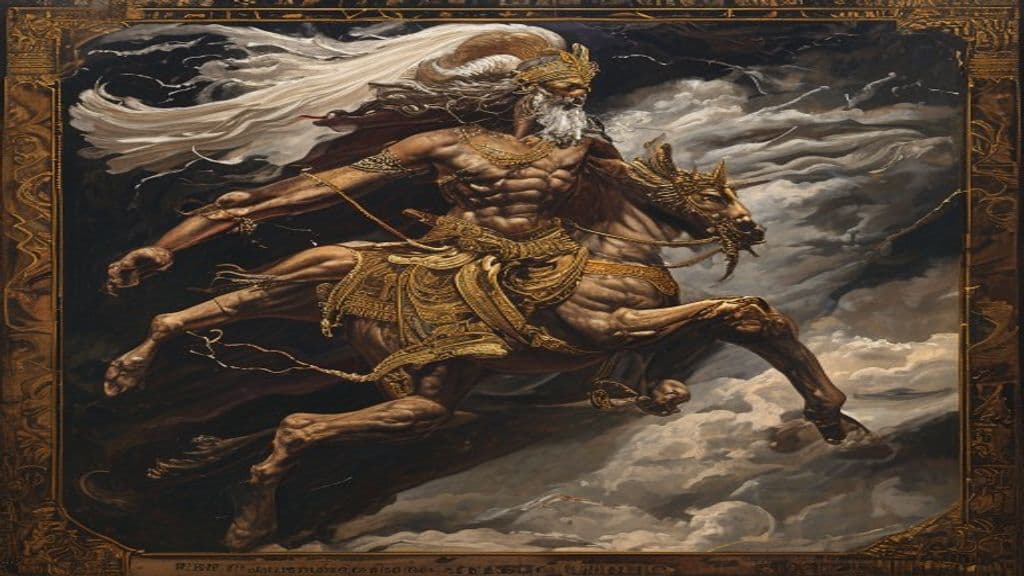
Baal
Baal (bāʿal) is a Northwest Semitic title meaning 'owner' or 'lord' that served as a theonym in the ancient Levant; in Ugaritic and Canaanite texts it appears as the name/title of a prominent storm and fertility god (often rendered Baʿal Haddu) who features centrally in the Baal Cycle and in regional cults tied to rain, fertility, and kingship. In later monotheistic literatures the term becomes a polemical label for rival or foreign deities and is reinterpreted in various receptions.
*Péh₂usōn (reconstructed)
Péh₂usōn is a hypothetical Proto‑Indo‑European pastoral guardian reconstructed by comparative scholars from parallels in Greek and Vedic traditions. Proposed as a Graeco‑Aryan ancestor‑figure, the reconstruction describes a protector of flocks, roads, and travellers rather than an attested historical cultic personality.
Aba (disambiguation / name-form)
Aba is a polyvalent name-form attested across many unrelated contexts (place names, personal names, animal names, and brief mythological listings). The provided sources do not support a single, coherent supernatural entity called "Aba" and offer no descriptive or ritual material for such a being.
Abadir
Abadir is a polysemous name attested in distinct cultural contexts: a legendary founding saint and clan ancestor in eastern Ethiopia (Sheikh Abadir Umar Al‑Rida / Aw Abadir), a term applied to cone‑shaped cult stones in Phoenician religious description, and a personal name of a martyr (Abadir/Apater) in the Coptic Synaxarium. The attestations are independent usages of the same name rather than a single supernatural being.
Abarbarea
Abarbarea is a name attested in classical Greek and Roman sources for freshwater nymphs (naiads). The name appears for at least two individual mythic figures — a naiad wife of Bucolion and a naiad counted among ancestors of the Tyrians — and Hesychius records plural forms that may indicate the name was also used as a class-name (Abarbareai / Abarbalaiai).
Abas
Abas (Ancient Greek: Ἄβας, gen.: Ἄβαντος) is not a single mythic being but a recurring personal name borne by multiple mortals and minor mythic figures in Greek epic and genealogical traditions — kings, founders, seers, warriors, attendants, a centaur, and a youth transformed by a goddess. The name is glossed in the sources as 'guileless' or 'good-hearted' and appears across Argive, Theban, Trojan, Euboean, and other local cycles.
Abderus
Abderus (Ancient Greek: Ἄβδηρος, romanized Ábdēros) is a mortal heroic figure in Greek myth closely associated with Heracles, remembered as the youth left in charge of the Mares of Diomedes who was killed by them. He functions as an eponymous local/divine-hero ancestor for the city of Abdera and received funerary commemoration and athletic agones at his tomb.
Abomination of Desolation
An apocalyptic prophetic phrase originating in the Book of Daniel designating a profaning thing or act that renders the Jerusalem Temple cult desolate; later reused in the Synoptic Gospels as an eschatological sign prompting urgent flight. The term denotes ritual/cultic impurity (Hebrew shiqquts) and is variously interpreted as pagan offerings or altar, a foreign cult statue, or (in some New Testament readings) an acting agent.
Absyrtus
Absyrtus (Ancient Greek: Ἄψυρτος) is a Colchian prince in the Greek Argonautic cycle, son of King Aeëtes and brother or half-brother of Medea. He appears in variant traditions either as a companion taken by Medea during her flight with Jason and murdered/dismembered to delay pursuit, or as a pursuer sent by Aeëtes who is overtaken and slain by Jason; his death functions as a key narrative device in the escape from Colchis.
Abī-simtī
Abī-simtī (also rendered Abi-simti, Abisimti) is a named woman attested in third-millennium BCE Mesopotamian documentary and literary texts. She appears in administrative account records as a provider of animals and donor to temple cults and in Sumerian love-song literature as the named beloved/consort addressed by a royal speaker.
Acacallis
Acacallis (Ancient Greek: Ἀκακαλλίς; also Acalle) is a mythological princess of Crete in Greek tradition, daughter of King Minos and Pasiphae. She functions primarily as a dynastic and etiological figure: in varying accounts she is mother, by gods such as Hermes (Mercury) or Apollo, of eponymous or founder-figures like Cydon (founder of Cydonia), Miletus, or Lydon/ Lydus.
Acacus
Acacus (Ancient Greek: Ἄκακος) is, in Arcadian Greek tradition, a mortal eponymous founder-king of Acacesium and is remembered as the foster-father who reared the infant Hermes (Mercury) in that local tradition. He is presented in genealogies as a son of Lycaon and functions as a local ancestral/onomastic figure rather than a supernatural spirit.
Academus
Academus (Greek: Akádemos / Hekádemos) is an Attic hero-eponym tied to a sacred grove (Akademeia) on the Cephissus near Athens. In myth he revealed where Helen was hidden to the Dioskouroi, an act said to have saved the city, and the place bearing his name became a long-lived sacred precinct, later the site of Plato's Academy.
Community Record
- [1]Astarte - Wikipedia. Wikipedia, 'Astarte' (Ashtart/Astarte overview; Hellenized form and equivalence to Ishtar; chronology of worship)wiki
- [2]Astarte - Wikidata. Wikidata entry for Astarte (linked data reference for attestations and identifiers)other
- [3]Goddess Temples in Western Asia I – Veleda. Discussion of goddess temple architecture and cult contexts including Sidon chapel evidence (4th-century BCE throne reference).other
- [4]Lion-Throned Goddesses of West Asia – Veleda. Treatment of lion-throne imagery in goddess temples and scarab iconography relevant to Ashtart's temple contexts.other
- [5]Anat - Wikipedia. Overview of Anat and her appearances alongside Ashtart/Athtart in Ugaritic literature and ritual scenes (banquets, joint actions).wiki
- [6]Ugaritic Baal Cycle (summaries cited in compiled notes). Summaries and citations noting Athtart's speech to Baal, her petition to scatter Yamm, and joint actions with Anat in Ugaritic texts (KTU corpus references as summarized in the research notes).literary
- [7]New World Encyclopedia: Astarte. Modern reference summarizing historical worship from the Bronze Age through classical antiquity and Hellenization.other
- [8]Hermeneutics Stack Exchange discussion: Is Asherah related to Ashtoreth?. Discussion and scholarly caution concerning conflation of Ashtart/Astarte with other mother-goddess figures (Athirat/Asherah); cites scholarly disagreement (e.g., Wiggins).other
- [9]Archive: Yada Yahowah Observations (selected reception reference). Included among the provided source URLs as an example of later reception/polemical references connecting goddess cults (used cautiously in notes on later receptions such as 'Queen of Heaven' polemic).other