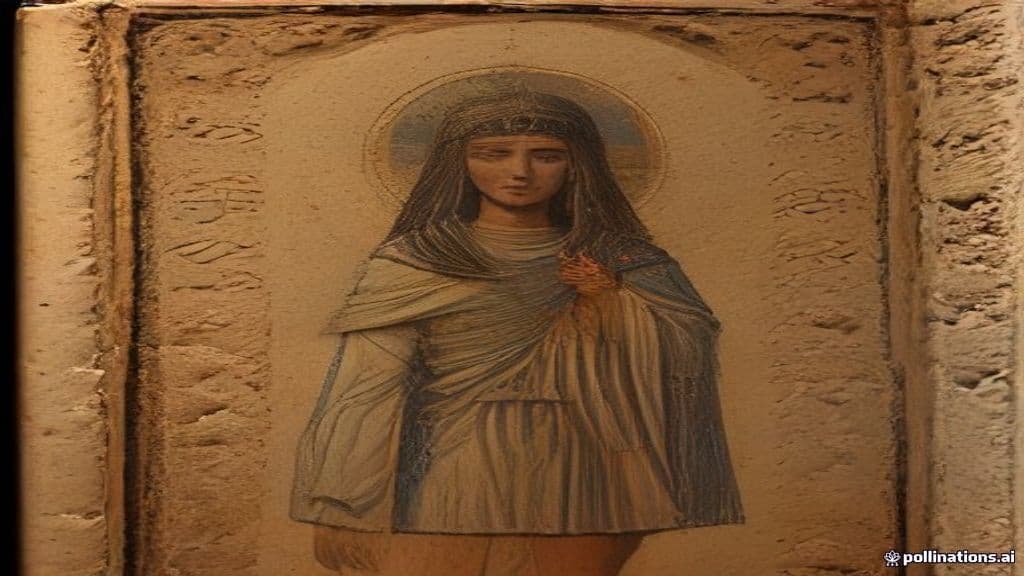
The term Baalshamin is primarily a theonymic title meaning "Lord of Heaven(s)" (Aramaic/Phoenician/ Hebrew/Safaitic forms attested) that was applied variably in the ancient Near East. In earlier second-millennium contexts it often served as an epithet of the storm god Hadad/Baal; by about 1000 BCE the title in some regions appears to have developed into a distinct named deity while in others it continued as a high-title applied to local chief gods. Its use across inscriptions, stele texts (e.g., the Stele of Zakkur), treaty curses, and Safaitic meteorological prayers shows both deep antiquity and regional evolution rather than a single unified origin narrative.
Iconography is mainly symbolic rather than detailed anthropomorphic description in the supplied sources. In Palmyra Baalshamin is associated with the eagle and the lightning bolt as attributes (Getty Research Institute summary; Palmyra material). Nabataean Greek and Syriac testimonia equate or associate him with Zeus/Zeus Helios, indicating solar shining imagery in some contexts, but no consistent statue-type or full anthropomorphic description is preserved in the provided summaries.
Across source corpora Baalshamin functions as a lord of the heavens with meteorological agency: in the Safaitic inscriptions he holds near-exclusive control over precipitation and is invoked in meteorological prayers where blood sacrifice is offered to induce him to release rain; rain can be conceived as a direct manifestation of the god. In political and diplomatic contexts (Assyrian-era treaty citations) his power is invoked in curse formulas to unleash destructive winds and seas on transgressors. In civic inscriptions (e.g., the Stele of Zakkur) he appears as a city god and protector. Greek and Roman-era identifications sometimes equate him with Zeus or Zeus Helios, reflecting solar or shining aspects in some traditions; sources vary regionally on whether he is primarily rain-bringer or associated with drought/shining sun.
Weaknesses
- otherNo specific mythic vulnerabilities attested in supplied sources
Wards
- ritualBlood sacrifice to induce rain (Safaitic meteorological practice)
- ritualInvocation in treaty curse formulas (use of Baal-names to effect destructive winds)
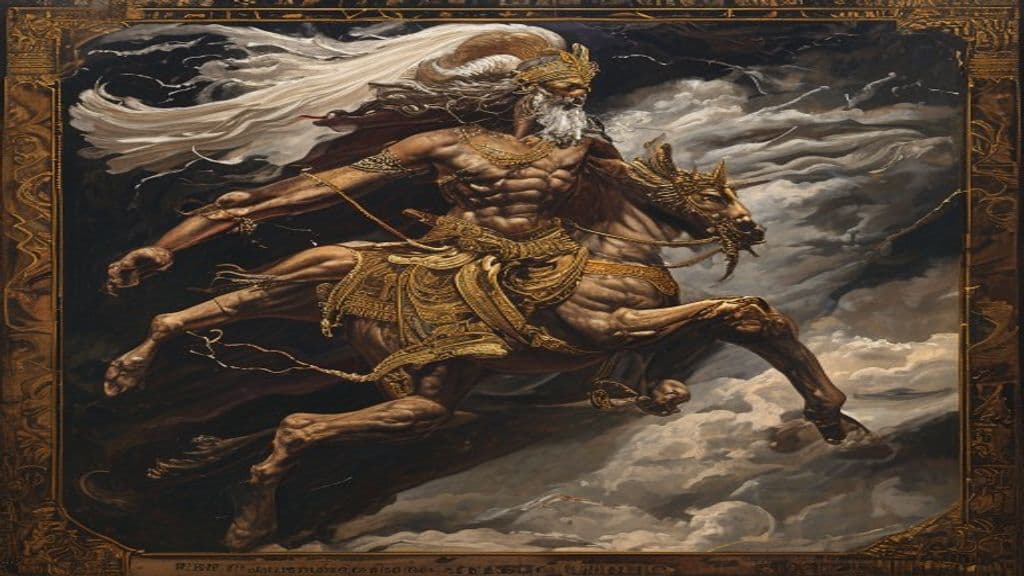
Baal
Baal (bāʿal) is a Northwest Semitic title meaning 'owner' or 'lord' that served as a theonym in the ancient Levant; in Ugaritic and Canaanite texts it appears as the name/title of a prominent storm and fertility god (often rendered Baʿal Haddu) who features centrally in the Baal Cycle and in regional cults tied to rain, fertility, and kingship. In later monotheistic literatures the term becomes a polemical label for rival or foreign deities and is reinterpreted in various receptions.

Hadad (Haddu / Adad / Iškur)
Hadad is the ancient Near Eastern storm and rain deity attested across Levantine and Mesopotamian traditions (Ugaritic Haddu, Akkadian Adad, Sumerian Iškur). He is a high-ranking weather-lord associated with rain, thunder, fertility of fields, and a dual capacity to nourish crops and to unleash destructive storms; he plays central roles in temple cult, royal ideology, and mythic battles (notably the Ugaritic Baal Cycle).

Aglibol
Aglibol is the moon god of ancient Palmyra, attested in inscriptions and reliefs from the late Hellenistic through Roman Imperial periods. He appears in civic cult contexts, often paired with the solar deity Malakbel and included in Palmyrene triads and public sanctuary imagery such as the Sacred Garden.

Zeus
Zeus (Ancient Greek: Ζεύς) is the supreme deity of the classical Greek pantheon, a sky-and-thunder god who rules as king of the gods on Mount Olympus and functions as a sky‑father who assigns roles among the immortals.
*Perkʷūnos
*Perkʷūnos is the reconstructed Proto-Indo-European thunder‑god hypothesized by comparative linguistics and mythology. Scholarly reconstructions portray him as a storm or thunder figure associated with fructifying rain and as the combatant who fights a multi‑headed water‑serpent to release life‑giving waters; no direct attestations from the Proto‑Indo‑European period survive and the figure is inferred from later Indo‑European traditions.
*Péh₂usōn (reconstructed)
Péh₂usōn is a hypothetical Proto‑Indo‑European pastoral guardian reconstructed by comparative scholars from parallels in Greek and Vedic traditions. Proposed as a Graeco‑Aryan ancestor‑figure, the reconstruction describes a protector of flocks, roads, and travellers rather than an attested historical cultic personality.
57 Mnemosyne
57 Mnemosyne is a large main-belt asteroid (S-type) discovered in 1859 and named after the Greek Titaness Mnemosyne. It is a non-sentient astronomical body studied for its orbital and rotational properties and has been used in dynamical measurements related to Jupiter.
A'ra
No reliable sources in the supplied material establish A'ra as a distinct supernatural entity. The token "A'ra" appears in the dataset as (a) part of general references to pre-Islamic Arabian deities, (b) a modern Korean female given name (A-ra/아라), and (c) an Arabic toponym (A'ra, one village merged into Ar'ara).
Abaddon
In Hebrew scripture Abaddon is primarily a noun meaning 'destruction' or a section/condition of the underworld paired with Sheol; in the New Testament Book of Revelation Abaddon is personified as an angelic figure (Greek Apollyon) described as the king of an army of locusts released from the abyss during the apocalypse.
Abadir
Abadir is a polysemous name attested in distinct cultural contexts: a legendary founding saint and clan ancestor in eastern Ethiopia (Sheikh Abadir Umar Al‑Rida / Aw Abadir), a term applied to cone‑shaped cult stones in Phoenician religious description, and a personal name of a martyr (Abadir/Apater) in the Coptic Synaxarium. The attestations are independent usages of the same name rather than a single supernatural being.
Aban Yasht
The Aban Yasht is a hymn from the Persian tradition that praises Anahita, a goddess associated with water, fertility, and wisdom. It consists of 132 stanzas and is part of the 21 Yashts collection. (Note: - Power tier should be "Primordial" or possibly "Cosmic", given that it's a hymn of great spiritual significance and associated with a goddess. - The article incorrectly states that Anahita is associa)
Abath
No corroborated folkloric entity named "Abath" is documented in the provided sources. The string appears in the supplied material only as a surname/personal name in Aruban/Dutch-Caribbean archival records and as an unrelated taxonomic or encyclopedic hit; no mythic attributes, origin stories, rituals, or apotropaic practices for an entity called Abath are present in the documents reviewed.
Abatur
Abatur is an uthra (celestial emanation) in Mandaeism described as the 'father of the Uthras' and called the Ancient (ʿattīqā). He resides on the boundary between the World of Light and lower regions, functions as a judge who weighs souls (Abatur Muzania), and supplies instructions and materials to the demiurgic uthra Ptahil in accounts from the Diwan (Scroll) of Abatur.
Abatwa (Twa / Batwa)
Abatwa (also recorded as Twa, Batwa, Mutwa; singular forms Barhwa or Murhwa in some transcriptions) are indigenous hunter‑gatherer peoples of the Great Lakes region of Central Africa, historically identified as some of the earliest inhabitants of the area. The available sources treat them as human ethnic groups whose livelihoods, lands, and populations have been severely affected by conservation policies and modern violence.
Abellio
Abellio is a theonym attested in Roman‑period inscriptions from the Comminges area of the Pyrenees and reported as worshipped in the Garonne Valley of ancient Gallia Aquitania. Surviving evidence is limited to a small number of inscriptions; scholars have variously hypothesized solar or arboreal associations and compared the name to forms of Apollo or to Celtic Belenus, but the deity's precise role in local cosmology remains uncertain.
Abgal
Abgal (Arabic: أبغال) is a pre‑Islamic local tutelary figure attested in the Palmyrene cultural sphere (c. 154–270 AD), primarily venerated by nomadic Arab groups in the Syrian desert. He appears in inscriptions and reliefs as one of a constellation of armed, mounted protective deities associated with caravan and nomadic protection, though no ritual texts survive in the cited sources.
Community Record
- [1]Baalshamin — Wikipedia. Wikipedia, article 'Baalshamin' (used for compilation of attestations, etymology, Safaitic summary, Palmyra attributes, and treaty quotations).wiki
- [2]Getty Research Institute — The Legacy of Ancient Palmyra: Temple of Baalshamin. Getty Research Institute summary on Palmyra temple and iconographic attributes (eagle, lightning bolt) and civic cultic context.other
- [3]Stele of Zakkur — Wikipedia. Wikipedia entry on the Stele of Zakkur noting Baalshamin's role as city god in the inscription.wiki
- [4]Assyrian treaty curse excerpt (Esarhaddon–Baʿal I). Treaty curse quotation cited in the Wikipedia article, e.g., 'May Baal‑sameme, Baal‑malage, and Baal‑saphon raise an evil wind against your ships...'.wiki
- [5]Safaitic inscriptions summary (meteorological prayers). Summary in the Wikipedia article describing Baʿal‑Samīn's near-exclusive control over precipitation in the Safaitic corpus and the role of blood sacrifice.wiki
- [6]Palmyra photographic and news sources (Temple destruction coverage; UNESCO statement). References to the Temple of Baalshamin at Palmyra and its modern destruction (Getty Research Institute; UNESCO and news coverage cited in research notes).other