Abellio is not known from mythic narrative but from epigraphic evidence: the theonym appears in inscriptions discovered in Comminges in the Pyrenees and is reported as a deity worshipped in the Garonne Valley of Gallia Aquitania. The primary attestation is epigraphic rather than literary; modern summaries note the name in a small number of Roman‑period inscriptions (see cited sources). Scholarly discussion of origin focuses on comparative etymology: some have linked the name to Greek or Italic forms of Apollo (Greek Abelios / Apello) and others have compared it to Celtic solar names such as Belenus. These etymological proposals are offered as hypotheses to situate the obscure theonym within broader Mediterranean and Celtic name‑patterns, but the sources emphasize that Abellio is attested only among the Aquitani, a people neither Greek nor Celtic, and thus caution against equating the local theonym uncritically with better‑known gods.
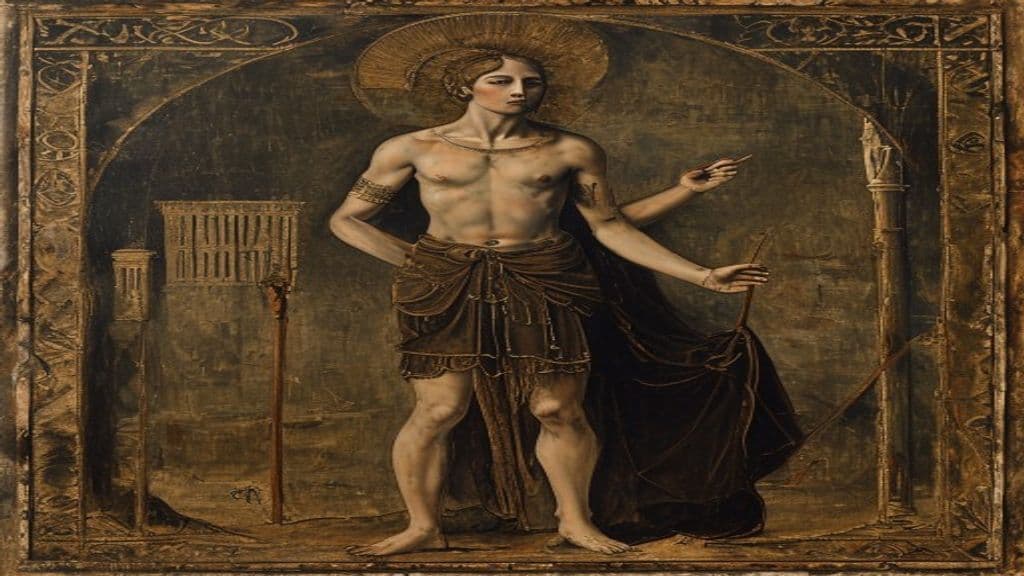
No primary source provides an iconographic or descriptive portrayal of Abellio. The inscriptions record the name forms Abellio and Abelio (and the variant Abelionni in some summaries), but contain no surviving depiction or detailed epithet preserved in the reviewed material. Consequently, there is no attested costume, emblem, or statue description in the supplied sources; the absence of pictorial or literary description in the inscriptional record leaves appearance undocumented.
Direct statements of powers or deeds are not preserved in the available inscriptions. Scholarly conjecture, grounded in name comparison and patterns of local syncretism in the Roman world, suggests possible domains: some scholars have postulated solar associations by linking Abellio to Abelios/Apello (Apollo) and to Celtic solar/healing deities such as Belenus; other commentators have proposed an agrarian or arboreal function, specifically a possible connection to apple trees. These proposals are explicitly hypothetical in the sources and derive from onomastic similarity and comparative religion rather than from ritual texts or narrative accounts that document the deity's actions or capabilities.
Weaknesses
- othernone attested in sources
Wards
- othernone attested in sources
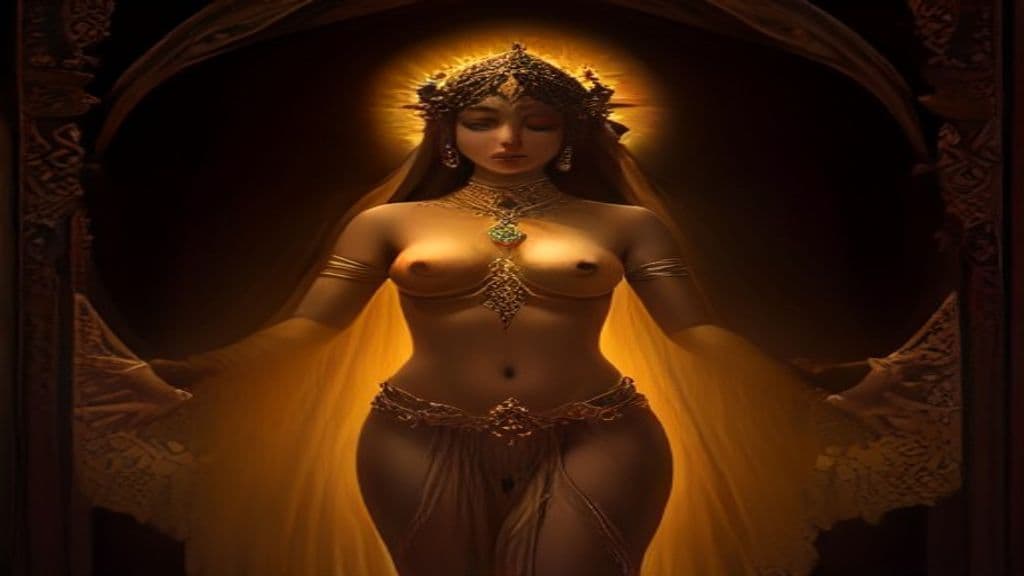
Apsara
Celestial dancers and water nymphs of Hindu cosmology — beautiful semi-divine beings who dance at the court of Indra and, by his command, descend to earth to distract sages from excessive asceticism.
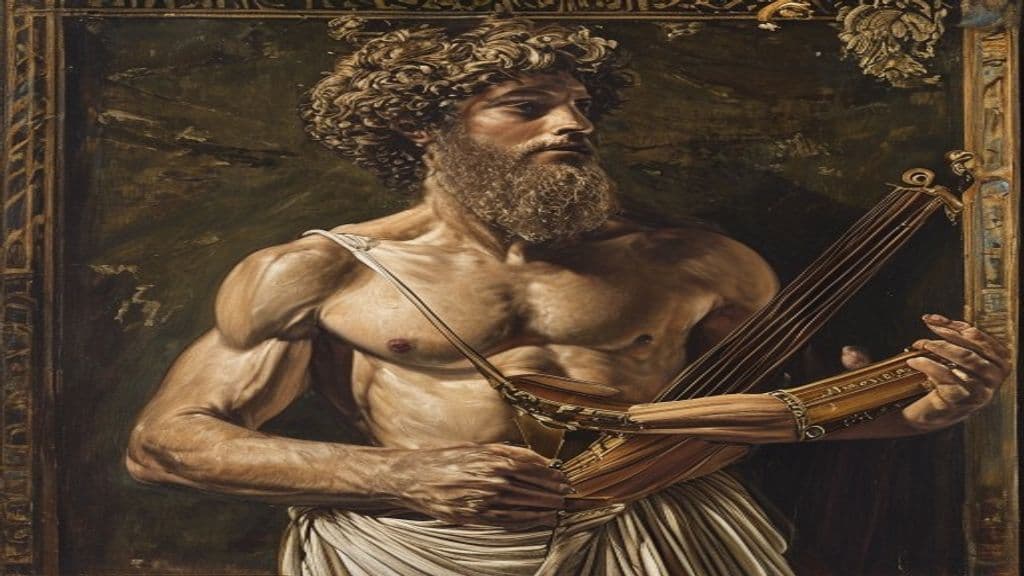
Apollo
Olympian deity of ancient Greek religion associated with prophecy, healing, music, archery, purification, and civic order. Principal patron of the Delphic oracle, protector of youth and flocks, and ambivalently both healer and bringer of plague.
*Perkʷūnos
*Perkʷūnos is the reconstructed Proto-Indo-European thunder‑god hypothesized by comparative linguistics and mythology. Scholarly reconstructions portray him as a storm or thunder figure associated with fructifying rain and as the combatant who fights a multi‑headed water‑serpent to release life‑giving waters; no direct attestations from the Proto‑Indo‑European period survive and the figure is inferred from later Indo‑European traditions.
*Péh₂usōn (reconstructed)
Péh₂usōn is a hypothetical Proto‑Indo‑European pastoral guardian reconstructed by comparative scholars from parallels in Greek and Vedic traditions. Proposed as a Graeco‑Aryan ancestor‑figure, the reconstruction describes a protector of flocks, roads, and travellers rather than an attested historical cultic personality.
57 Mnemosyne
57 Mnemosyne is a large main-belt asteroid (S-type) discovered in 1859 and named after the Greek Titaness Mnemosyne. It is a non-sentient astronomical body studied for its orbital and rotational properties and has been used in dynamical measurements related to Jupiter.
Abaddon
In Hebrew scripture Abaddon is primarily a noun meaning 'destruction' or a section/condition of the underworld paired with Sheol; in the New Testament Book of Revelation Abaddon is personified as an angelic figure (Greek Apollyon) described as the king of an army of locusts released from the abyss during the apocalypse.
Aban Yasht
The Aban Yasht is a hymn from the Persian tradition that praises Anahita, a goddess associated with water, fertility, and wisdom. It consists of 132 stanzas and is part of the 21 Yashts collection. (Note: - Power tier should be "Primordial" or possibly "Cosmic", given that it's a hymn of great spiritual significance and associated with a goddess. - The article incorrectly states that Anahita is associa)
Abandinus
Abandinus is a locally attested Romano‑Celtic theonym known from a single inscribed bronze feather (votive object) dedicated at Godmanchester (the Roman fort Durovigutum) in Cambridgeshire. Scholars interpret him as a local god or male spirit tied to a specific place and possibly associated with a nearby spring or stream; this association is tentative and based on etymological readings of the name.
Abarbarea
Abarbarea is a name attested in classical Greek and Roman sources for freshwater nymphs (naiads). The name appears for at least two individual mythic figures — a naiad wife of Bucolion and a naiad counted among ancestors of the Tyrians — and Hesychius records plural forms that may indicate the name was also used as a class-name (Abarbareai / Abarbalaiai).
Abas
Abas (Ancient Greek: Ἄβας, gen.: Ἄβαντος) is not a single mythic being but a recurring personal name borne by multiple mortals and minor mythic figures in Greek epic and genealogical traditions — kings, founders, seers, warriors, attendants, a centaur, and a youth transformed by a goddess. The name is glossed in the sources as 'guileless' or 'good-hearted' and appears across Argive, Theban, Trojan, Euboean, and other local cycles.
Abath
No corroborated folkloric entity named "Abath" is documented in the provided sources. The string appears in the supplied material only as a surname/personal name in Aruban/Dutch-Caribbean archival records and as an unrelated taxonomic or encyclopedic hit; no mythic attributes, origin stories, rituals, or apotropaic practices for an entity called Abath are present in the documents reviewed.
Abatur
Abatur is an uthra (celestial emanation) in Mandaeism described as the 'father of the Uthras' and called the Ancient (ʿattīqā). He resides on the boundary between the World of Light and lower regions, functions as a judge who weighs souls (Abatur Muzania), and supplies instructions and materials to the demiurgic uthra Ptahil in accounts from the Diwan (Scroll) of Abatur.
Abatwa (Twa / Batwa)
Abatwa (also recorded as Twa, Batwa, Mutwa; singular forms Barhwa or Murhwa in some transcriptions) are indigenous hunter‑gatherer peoples of the Great Lakes region of Central Africa, historically identified as some of the earliest inhabitants of the area. The available sources treat them as human ethnic groups whose livelihoods, lands, and populations have been severely affected by conservation policies and modern violence.
Abnoba
Abnoba is a Gaulish theonym and toponym attested in Roman-era sources and inscriptions: a localized deity associated with woods, springs and the sources of rivers (notably the Danube) and simultaneously the name applied to a mountain or mountain range in the Black Forest/Baar/Odenwald region. Roman altars equate her with Diana, reflecting syncretic cult practice in frontier provinces.
Community Record
- [1]Abellio - Wikipedia. Wikipedia, 'Abellio' (entry summarizing inscriptional attestations and scholarly hypotheses).wiki
- [2]Abellio - Wikidata. Wikidata entry for Abellio (theonym attestation and name variants).other
- [3]Greater Anglia Complaints Leaflet 2016. Archive item present in user-supplied materials (not relevant to deity beyond being among provided documents).other
- [4]Het winnen van de aanbesteding in Limburg door Abellio. Archive item present in user-supplied materials (not relevant to deity beyond being among provided documents).other
- [5]NOS-NTR Nieuwsuur 2023-02-28. Archive item present in user-supplied materials (not relevant to deity beyond being among provided documents).other