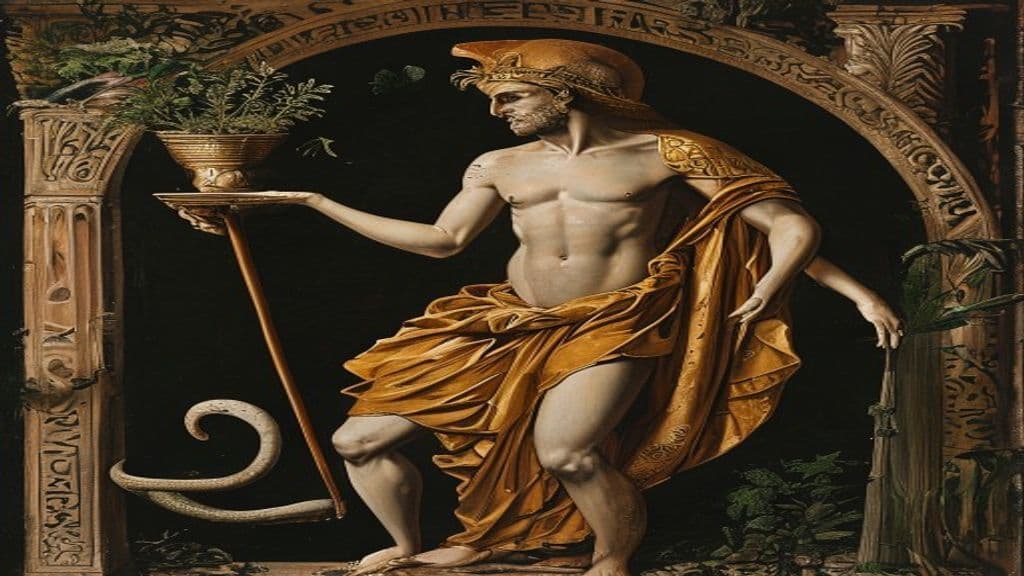
The term ἀγαθός δαίμων (agathós daímōn, 'noble' or 'good spirit') denotes originally a lesser divine presence in classical Greek religion associated with household wellbeing. Sources attest domestic cult practice by at least the fifth century BC. In Ptolemaic Alexandria the figure develops a prominent serpentine civic role and a class of serpentine household protectors (the Agathoi Daimones). Late antique evidence shows syncretic identifications or associations with Egyptian gods linked to fate and protection (examples named in sources include Šai, Khnum, Knephis/Kneph, Soknopis, and Serapis); scholars dispute whether the Alexandrian serpent image was a Greek import later equated with Egyptian deities or a Hellenized native Egyptian household god, so the exact origin of the serpentine civic form remains contested.
In classical Greek domestic contexts the Agathos Daimon was typically not depicted as a serpent and is attested in iconography as a youthful figure bearing a cornucopia and a bowl in one hand and poppy and an ear of grain in the other. By contrast, in Ptolemaic Alexandria the Agathos Daimon is abundantly represented in serpentine form, both as a prominent civic protector of the city and as a genus of household serpentine guardians (Agathoi Daimones). Late antique gems present composite iconography in which a lion‑headed or snake form (Chnum–Agathodaemon–Aion) surrounds other syncretic deities.
Attested functions emphasize protection, beneficence, and the securing of fortune and wellbeing: in Greek households the Agathos Daimon received a portion of wine after meals, indicating a role in blessing and sustaining household prosperity; as companion or spouse of Tyche Agathe ('Good Fortune') it is associated with abundance (cornucopia, grain). In Alexandria it serves as a special civic protector of the city. Late antique syncretic contexts align the Agathodaemon with Egyptian deities of fate and protection, implying roles at the level of security, luck, and civic destiny. The available sources focus on these protective, beneficent functions and do not record hostile, possession, or exorcistic behaviors for this figure.
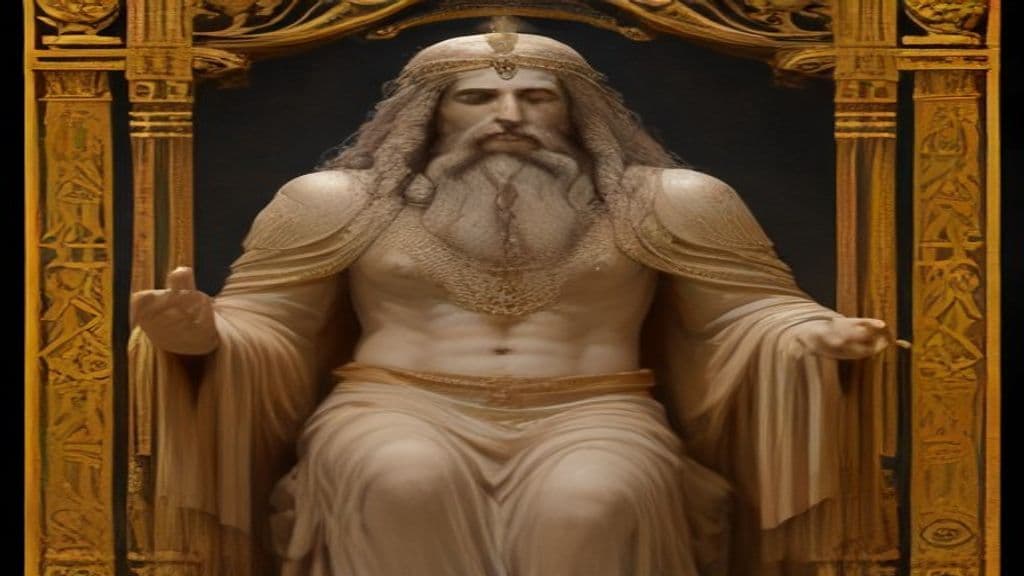
Serapis
Serapis is a deliberately syncretic Graeco‑Egyptian deity formed from the fusion of the Egyptian Osiris‑Apis cult (Demotic wsjr‑ḥp / Coptic Userhapi) with Greek divine elements. Promoted in the Ptolemaic period as a civic cult figure, Serapis embodied chthonic rulership, healing, protection/asylum, and themes of abundance and resurrection, and his cult spread through the Hellenistic and Roman worlds.
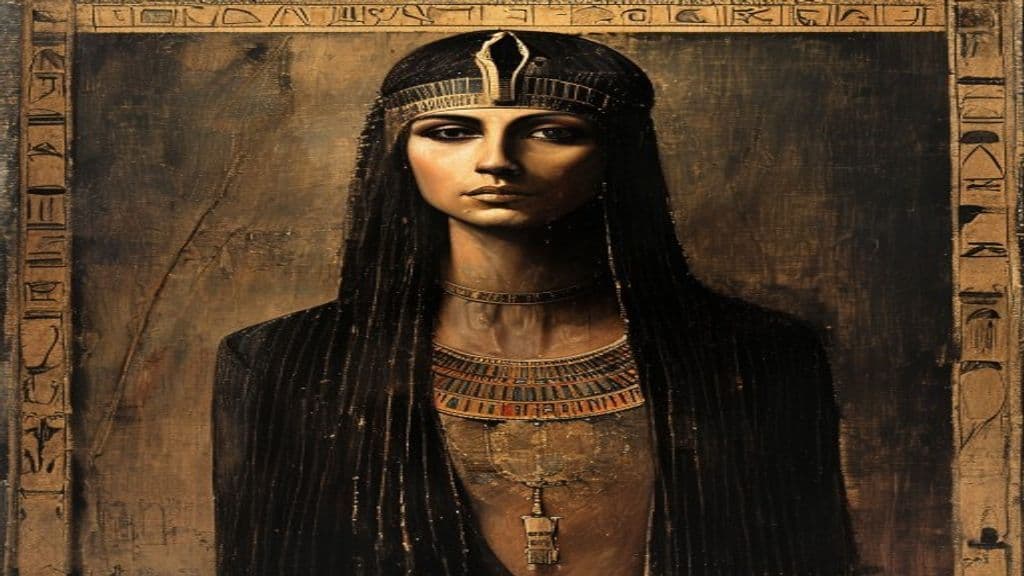
Shai
Shai (also Sai, Shay; Greek Psais) is the Egyptian deification of fate, especially the ordained allotment of a person's lifespan. Present from an individual's birth and accompanying them until final judgment before Osiris, Shai functions as a theological principle integrated with birth goddesses, royal titulary, and, in the Hellenistic period, Greco-Egyptian syncretism.
*Péh₂usōn (reconstructed)
Péh₂usōn is a hypothetical Proto‑Indo‑European pastoral guardian reconstructed by comparative scholars from parallels in Greek and Vedic traditions. Proposed as a Graeco‑Aryan ancestor‑figure, the reconstruction describes a protector of flocks, roads, and travellers rather than an attested historical cultic personality.
57 Mnemosyne
57 Mnemosyne is a large main-belt asteroid (S-type) discovered in 1859 and named after the Greek Titaness Mnemosyne. It is a non-sentient astronomical body studied for its orbital and rotational properties and has been used in dynamical measurements related to Jupiter.
Aamon
Aamon (also Amon) is a named spirit in early modern Western grimoire tradition (Pseudomonarchia Daemonum; the Ars Goetia / Lesser Key of Solomon). He is presented as a high-ranking infernal officer (Marquis/Prince) who governs forty legions and is credited with knowledge of past and future and with affecting human relationships (reconciling or procuring feuds and favor).
Aani
Aani (ancient Egyptian jꜥnr) is the lexical term for the baboon in ancient Egyptian language and functions in religious contexts as an animal icon and theophoric epithet. Attested repeatedly in Egyptian texts and images, the baboon image is used to represent or denote aspects of gods such as Thoth, Hapy, Khonsu, and Osiris rather than implying the animal itself is an independent deity.
Aati
Aati (also rendered Ati) is one of the 42 judges of the dead in ancient Egyptian funerary literature, attested in the Book of the Dead tradition (notably the Papyrus of Nebsemy). Described as originating 'from Heliopolis', Aati's documented function is to question the deceased about a specific moral accusation during the Duat judgment; the funerary texts supply a formulaic denial the soul must recite.
Aba (disambiguation / name-form)
Aba is a polyvalent name-form attested across many unrelated contexts (place names, personal names, animal names, and brief mythological listings). The provided sources do not support a single, coherent supernatural entity called "Aba" and offer no descriptive or ritual material for such a being.
Abadiu of Antinoe
Abadiu of Antinoe was a fourth‑century bishop of Antinoe (Antinoopolis, in Roman Egypt) commemorated as a martyr and saint in the Coptic Orthodox Church, with a feast day on 26 December. Sources record that he was killed during a theological dispute with Arian opponents and reference him in collections of Egyptian martyrs.
Abarbarea
Abarbarea is a name attested in classical Greek and Roman sources for freshwater nymphs (naiads). The name appears for at least two individual mythic figures — a naiad wife of Bucolion and a naiad counted among ancestors of the Tyrians — and Hesychius records plural forms that may indicate the name was also used as a class-name (Abarbareai / Abarbalaiai).
Abas
Abas (Ancient Greek: Ἄβας, gen.: Ἄβαντος) is not a single mythic being but a recurring personal name borne by multiple mortals and minor mythic figures in Greek epic and genealogical traditions — kings, founders, seers, warriors, attendants, a centaur, and a youth transformed by a goddess. The name is glossed in the sources as 'guileless' or 'good-hearted' and appears across Argive, Theban, Trojan, Euboean, and other local cycles.
Abaset
Abaset is a localized ancient Egyptian goddess attested in tomb decoration at El‑Bawiti in the Bahariya Oasis during the 26th Dynasty. She is depicted anthropomorphically with a hedgehog motif incorporated into her headdress and appears on the walls of Qarat Qasr Salim, including twice in the Tomb of Bannentiu. No cult texts, myth narratives, or ritual prescriptions for her are recorded in the cited corpus.
Abderus
Abderus (Ancient Greek: Ἄβδηρος, romanized Ábdēros) is a mortal heroic figure in Greek myth closely associated with Heracles, remembered as the youth left in charge of the Mares of Diomedes who was killed by them. He functions as an eponymous local/divine-hero ancestor for the city of Abdera and received funerary commemoration and athletic agones at his tomb.
Abib and Apollo
Abib and Apollo are Christian ascetics and hagiographic saints of Akhmim (Upper Egypt) attested in Coptic sources and the Historia Monachorum. Remembered for extreme asceticism, monastic leadership, angelic encounters, and inclusion in the Coptic Synaxarion (feast day November 4).
Community Record
- [1]Wikipedia: Agathodaemon. Wikipedia contributors, 'Agathodaemon,' Wikipedia, The Free Encyclopediawiki
- [2]Wikidata: Agathodaemon. Wikidata entry Q391553, 'Agathodaemon'wiki
- [3]Late antique gem description and syncretic identifications (excerpted). Description in provided research notes summarising late antique gem imagery associating Serapis, Osiris, Chnum–Agathodaemon–Aion, and Harpocratesother
- [4]Cartographic/archive references to 'Agathodaemon Alexandrinus' (historical usage). Archive material referencing Agathodaemon Alexandrinus (cartographic/historical reproduction)other