
The primary account appears in the Tishtar (Tishtrya) Yasht (Yt. 8.21–29) in which Apaosha, named with the Avestan noun apaoša- ('not thriving'), confronts the star-divinity Tishtrya as Tishtrya rushes toward the cosmic sea Vourukhasha. They fight for three days and nights until Apaosha overcomes Tishtrya. Tishtrya complains to Ahura Mazda that human failure to give proper prayers and sacrifices weakened him; Ahura Mazda's sacrificial action enables Tishtrya to reengage and defeat Apaosha, after which rains fall. Later Middle Persian works (e.g., Bundahishn, Dadistan i denig as summarized in the provided material) integrate Apaosha into the broader creation-era war over waters, describe his allies and opponents, and in some later strands associate him astrologically (a specific Bundahishn tradition links him with the planet Mercury).
In the Avesta (Tishtar Yasht) Apaosha is personified as a 'horrible black horse with black ears and black tail' who opposes Tishtrya's 'mighty white horse with golden ears and golden tail.' The Avesta explicitly treats him as a Daeva. Later Middle Persian tradition maintains his personified, malign character but the supplied sources do not add a consistent alternate physical description beyond continuity of the adversarial figure.
Apaosha's primary role is as the active agent of drought—he can repel or overpower Tishtrya, prevent rains, and thereby cause failure of growth and prosperity. The Yasht recounts him defeating Tishtrya for several days; after being subsequently routed (following Ahura Mazda's sacrifice and Tishtrya's strengthened return), later tradition (Dadistan i denig 93) records an attempt by Apaosha to pervert rains into harm. Bundahishn narratives place him among the forces arrayed against the guardians of creation and name allies (e.g., Spenjagr) who act on his side; these allies can themselves be defeated by beneficent powers (e.g., by lightning). The mythic efficacy of Apaosha is explicitly influenced by human ritual behavior: omission of proper prayers and sacrifices weakens Tishtrya and thereby favors Apaosha's success.
Weaknesses
- ritualproper prayers and sacrifices to Tishtrya (and to beneficent order)
- otherdivine intervention by Ahura Mazda (sacrificial action restoring Tishtrya's strength)
- otheropposition by beneficent cosmic allies (e.g., Verethragna, Haoma, Apam Napat, fravashis, Vayu) as narrated in Bundahishn
Wards
- ritualcorrect worship (sacrifice and praise) of Tishtrya
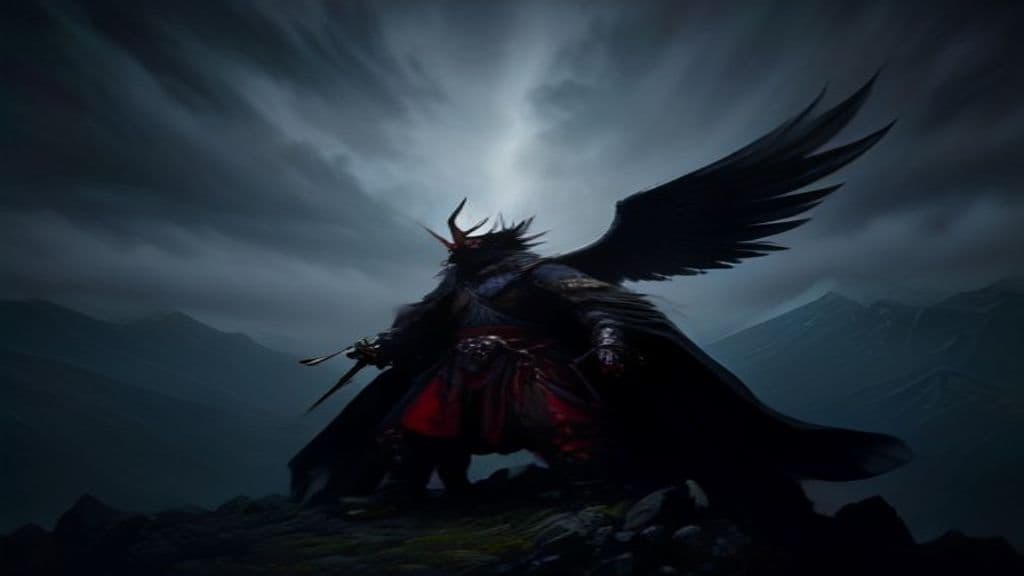
Tengu
Proud, warrior-like mountain spirits of Japan, associated with martial arts, pride, and the wild mountains. Neither fully good nor evil — they test and train warriors and monks, but punish the arrogant.

Apsara
Celestial dancers and water nymphs of Hindu cosmology — beautiful semi-divine beings who dance at the court of Indra and, by his command, descend to earth to distract sages from excessive asceticism.
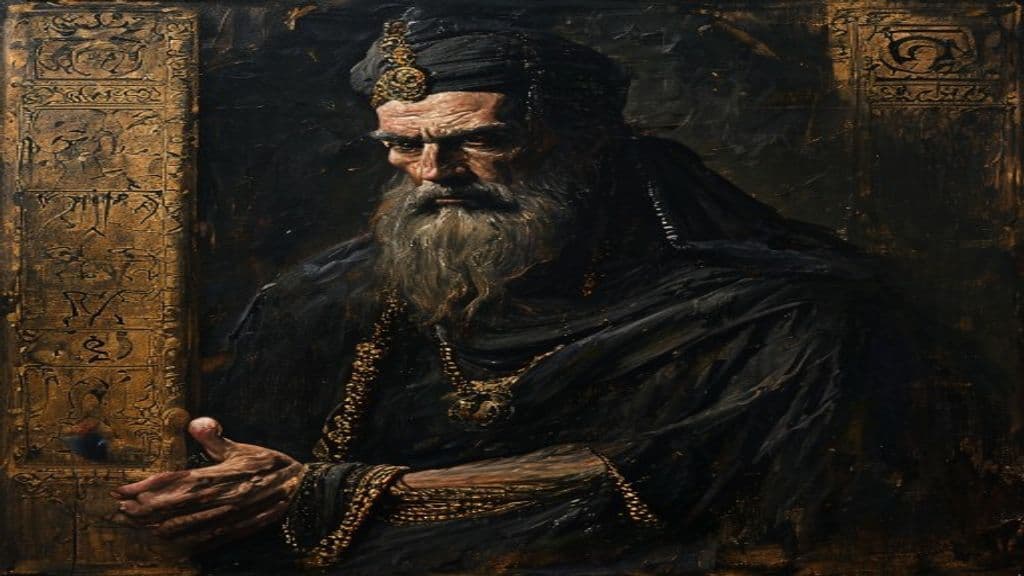
Apam Napat
Persian deity associated with water, creation, and the natural world. (Note: 1. Power tier: Apam Napat is mentioned in the Rig Veda, which is an Indo-Iranian text, but he is not described as a cosmic creator figure; rather, he is specifically credited with creating all things.)
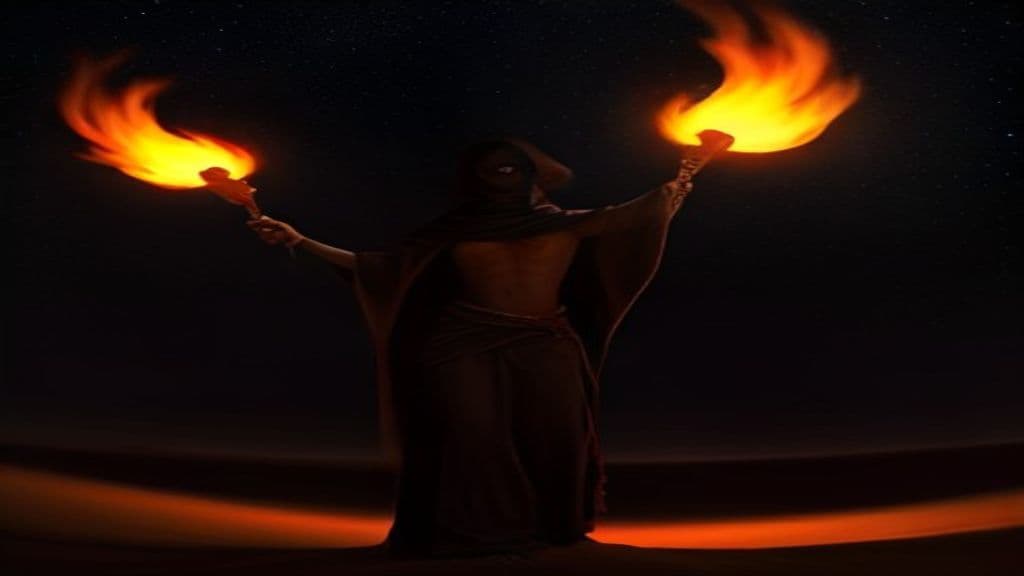
Djinn
The class of supernatural beings created from smokeless fire in Islamic cosmology — a parallel civilization to humanity, capable of belief or unbelief, with their own prophets, society, and judgment before God.
Ab-Zohr
Ab-Zohr is the culminating rite of the Zoroastrian Yasna service: a formal offering to the waters (Aban/Apas) that creates the consecrated liquid parahaoma and functions to purify, strengthen, and atone for damage done to waters. It is a ritual action rather than an independent supernatural being.
Aban (Āb/Ābān)
Aban (Avestan apas; Middle Persian āb/ābān) is the collective, sacred principle of the waters in Zoroastrian cosmology — both the element water and its personified hypostases (the Apas/Ahuranis). Aban functions as a primordial, life-giving creation, a calendrical and liturgical focus (day-name, month-name, Abanagan feast), and a ritual object of veneration (ape zaothra, Aban Yasht) rather than a malign force to be expelled.
Aban Yasht
The Aban Yasht is a hymn from the Persian tradition that praises Anahita, a goddess associated with water, fertility, and wisdom. It consists of 132 stanzas and is part of the 21 Yashts collection. (Note: - Power tier should be "Primordial" or possibly "Cosmic", given that it's a hymn of great spiritual significance and associated with a goddess. - The article incorrectly states that Anahita is associa)
Abtin
Abtin (Persian: آبتین), attested also as Athwya, is a mythic ancestral figure in Iranian tradition described in Avestan and later epic literature as one of a small set of formative human-like figures involved in preparing the corporeal world and as the father of the epic hero-king Fereydun in the Shahnama.
Adur Burzen-Mihr
Adur Burzen-Mihr is a consecrated Atash Behram — one of the three Great Fires of late antique Sasanian Zoroastrianism — historically associated with the farmer social estate and with a cultic location in northeastern Iran. Medieval texts (e.g., the Bundahishn) and later summaries record it as a major pilgrimage fire with legendary associations of protection and miraculous efficacy; its documentary history after the early Islamic period is unclear.
Adur Farnbag
Adur Farnbag is one of the three Great or Royal fires in the Zoroastrian ritual/topographical system of pre‑Islamic Iran. Presented in the sources as a continuously tended sacred fire housed in a temple, it is attested in secondary accounts as a focus of cultic activity, miracle stories, and association with elite ritual geography in the Parthian–Sasanian eras.
Adur Gushnasp
Adur Gushnasp (Middle Persian: Ādur ī Gušnasp; New Persian: Āzargušnasp) is a pre-Islamic Zoroastrian Great Fire — one of the three highest grade sacred temple fires (Atash Behram) of Sasanian-era Iran. Housed at the temple-site historically called Shiz (modern Takht-e Soleymān, Adurbadagan), it functioned as a continuously tended cultic fire, a pilgrimage destination, and a focal point of royal patronage and warrior-class identity.
Aeshma
Aeshma is the Zoroastrian hypostasis of wrath — a fiendish being who personifies rage and functions as an ontological opponent to Ahuric principles and ritual discipline. In scripture and later tradition he distracts worship, foments violence and drunkenness, can be driven off by prayer or by divine agents such as Sraosha and Mithra, and will be overthrown or flee at the final renovation.
Afrasiab
Afrasiab is the legendary king and arch-enemy of Iran in Iranian epic and Zoroastrian-influenced tradition. Attested from the Avestan Fraŋrasyan through Middle Persian and the Shahnameh, he functions as a powerful Turanian ruler associated with sorcery, subterranean dwellings, and opposition to Iranian heroes and divine agencies.
Aghrirat
Aghrirat is a named Turanian noble and peacemaker in the Shahnameh and Iranian mythic tradition, presented as a son of Pashang and brother of Afrasiab and Garsivaz. He is notable for his kind and gentle character and for attempting, largely unsuccessfully, to end the hostilities between Iran and Turan.
Ahriman (Angra Mainyu)
Angra Mainyu (Middle Persian Ahriman) is the hypostasis or personification of destructive, deceitful, and disordering mentality in Zoroastrian tradition. In the earliest (Gathic) layer it is presented as a choiceful destructive mainyu opposed to the constructive Spenta Mainyu; in later Pahlavi exegesis it becomes a personified cosmic antagonist who nevertheless is described as ontologically deficient and non-divine.
Ahura
Ahura is an Avestan term that designates a class of divinities in the Indo‑Iranian and Zoroastrian tradition, marking the sacred ‘lords’ who are to be reverenced and opposed to the rejected class of daevas. In Zoroastrian scripture the label functions as both a technical category and an honorific applied to high divine figures such as Ahura Mazda, Mithra, and Apam Napat.
Community Record
- [1]Apaosha — Wikipedia. Wikipedia entry 'Apaosha' — summary of Avesta and later tradition, etymology discussion (as provided in research notes).wiki
- [2]AVESTA: KHORDA AVESTA (English): Yasht 8 - Hymn to Sirius. English text/translation of the Tishtar (Tishtrya) Yasht (Yt. 8) containing the account of the contest between Tishtrya and Apaosha.literary
- [3]Darmesteter — The Origin of the Avesta Religion (commentary). James Darmesteter's commentary summarizing the Yasht paraphrase in which Tishtrya complains Ahura Mazda that 'men do not worship me with sacrifice and praise.'academic
- [4]Bundahishn and Dadistan i denig (summaries referenced). Summaries (as collated in the provided material) describing later Middle Persian tradition situating Apaosha in the creation-era war over waters, his allies (e.g., Spenjagr) and opponents (Verethragna, Haoma, Apam Napat, fravashis, Vayu), and the reported attempt in Dadistan i denig 93 to pervert rains into harm.other
- [5]Khorda Avesta transcription (search archive). Textual resource referenced in research notes for Avesta Yasht material.other