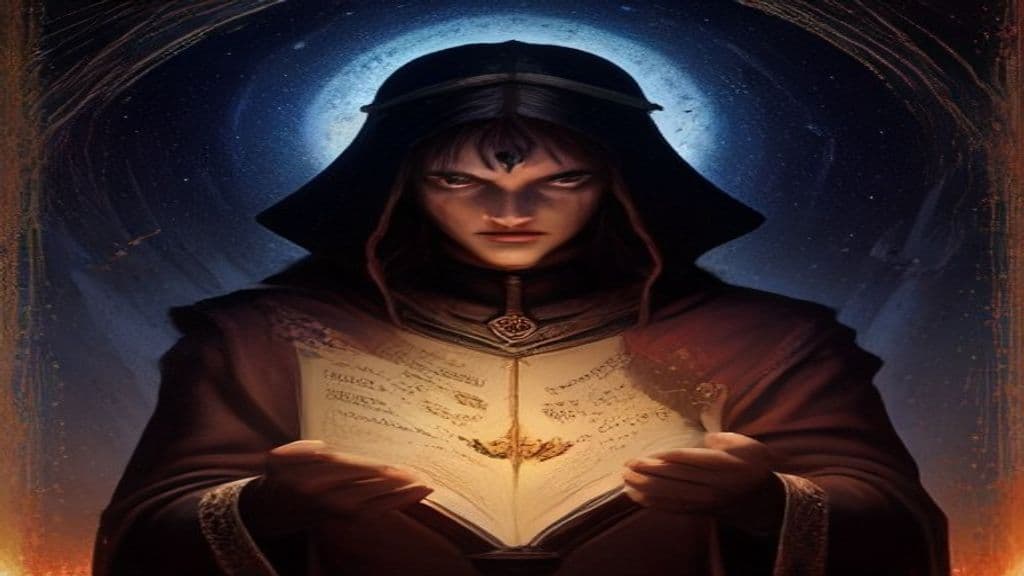
In the materials summarized here, the name Astaroth ultimately derives from the ancient Near Eastern goddess Astarte (and related forms such as Ishtar/Ashtoreth). Christian demonological sources and medieval hagiographic narratives reinterpret and demonize that earlier divine name: the Bible preserves Ashtoreth/Ashtaroth forms, and later Christian writers and demonological catalogues recast that nomenclature as the name of a hostile spirit or high-ranking infernal officer. This literature treats Astaroth as theologically significant evidence of idolatry rather than presenting a single linear 'transformation' event; instead, Christian polemic and cataloguing practices reframed formerly venerated names within an antagonistic spiritual hierarchy.
Descriptions differ by period and genre. A medieval sermon attributed to Ælfric (c. 10th–11th c., quoted in the summaries) portrays Astaroth as an "immense Ethiop, with sharp visage and ample beard" (interpreted by a cited translator as a "black-faced devil"). Later occult and artistic conventions (noted in modern thelemic/occult summaries) commonly depict Astaroth as a male humanoid figure with draconic or bat-like wings and partly bestial attributes; such imagery appears in occult illustration and modern popular-culture art. The sources present these portrayals as variant traditions rather than a single authoritative iconography.
In medieval legendary narratives (for example the Passion of Bartholomew and its retellings in the Golden Legend and Ælfric's sermon), Astaroth appears in the motif of a deceptive healing-deity: inflicting illness on worshippers and then promising cures conditional on offerings or adoration. Demonological catalogues and occult sources additionally present Astaroth as a high-ranking infernal officer who commands attendants and holds a place of authority among hostile spirits (described as a "Great Duke" or "Grand Duke"). Some medieval moral diagrams associate Astaroth with particular vices (for example sloth in Ulrich von Lilienfeld's chart). Occult material links Astaroth with adversarial esoteric categories such as the qlippoth in certain traditions.
Weaknesses
- conditionrenunciation of idol worship / refusal of offerings (as recorded in hagiographic narratives)
- ritualmissionary/clerical denunciation and saintly intervention (as in Saint Bartholomew narratives)
Wards
- ritualauthoritative Christian proclamation and removal of idols (hagiographic model)
- conditionavoidance of idolatrous worship and maintenance of orthodox Christian practice (preventive theological strategy in polemical sources)

Aswang
The most feared supernatural being in Philippine folklore — a shape-shifting monster that appears human by day but transforms at night to prey on pregnant women and children.

Apsara
Celestial dancers and water nymphs of Hindu cosmology — beautiful semi-divine beings who dance at the court of Indra and, by his command, descend to earth to distract sages from excessive asceticism.
Iblis
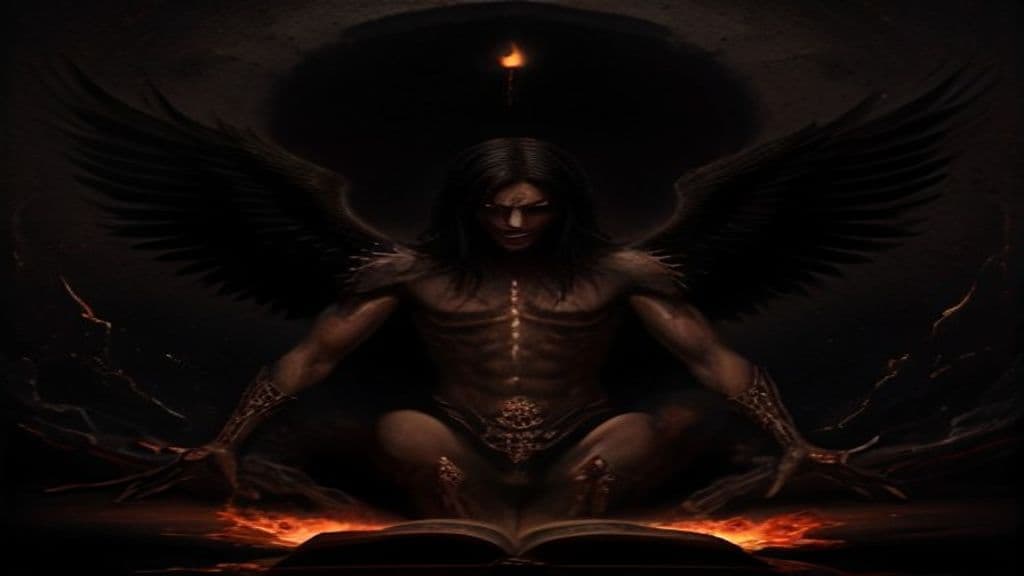
The primordial deceiver in Islamic theology; a jinn who refused God's command to bow before Adam and was expelled from heaven. The source of all temptation and whispered suggestion.
Ifrit
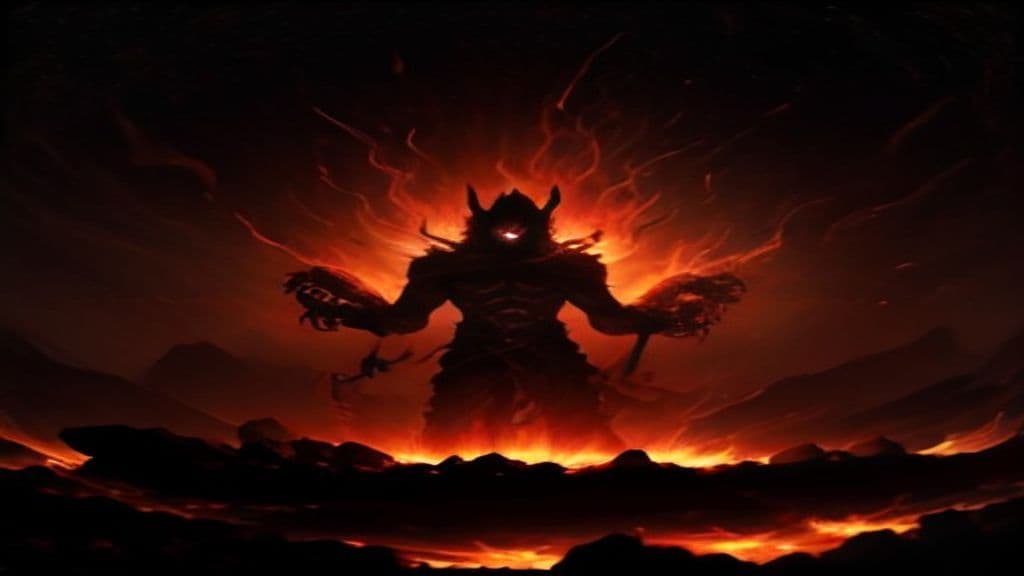
One of the most powerful classes of jinn in Islamic and pre-Islamic Arab tradition — a fire-born being of immense strength and cunning, capable of great works of engineering and terrible violence.

Marid
The most powerful class of jinn in Islamic tradition — beings of the sea, associated with the deep ocean, storms, and the granting of wishes at terrible cost. The classic genie of the Arabian Nights.

Pishacha
Flesh-eating spirits of Hindu mythology that haunt cremation grounds and are associated with disease, madness, and possession. The lowest class of demon in the Vedic hierarchy.
Rakshasa (Himalayan variants)
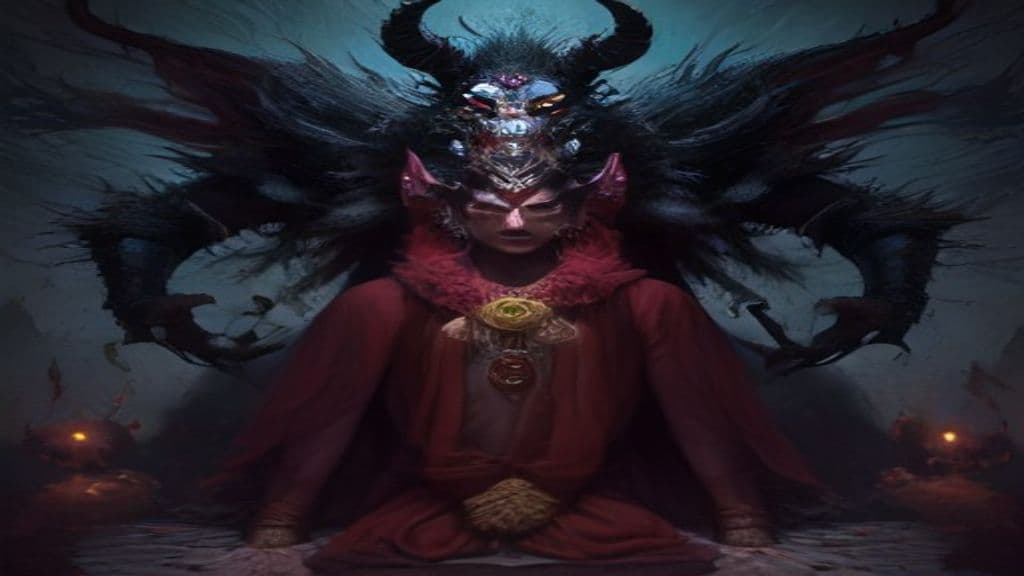
A Himalayan reception of the pan-Indian rakshasa motif: hostile or disruptive non‑human beings known from Sanskrit epic and Puranic literature, here noted where Himalayan sources and discussions intersect with the broader epic tradition. The supplied sources do not document distinct, well‑attested Himalayan folklore variants; the entry therefore presents primarily the epic/legendary profile as transmitted into Himalayan contexts in general references.

Preta (Hungry Ghost)
A post-mortem supernatural being associated with extreme, unremitting hunger and thirst. In Hindu usage the Sanskrit term can mean a deceased person, while Buddhist traditions develop the category into a distinct realm of hungry spirits whose condition illustrates karmic consequences for demeritorious action.

Baba Yaga
Baba Yaga is an ambivalent female figure of East Slavic folktale tradition, depicted variously as a fearsome, child-eating crone or as a helpful, maternal donor. She is associated with the deep forest, a hut described as standing on chicken legs, and the motific accoutrements of a mortar and pestle.

Lamia
In ancient Greek mythology, Lamia is described as a child-eating monster who, in later tradition, came to be regarded as a type of night-haunting spirit or 'daimon'. The supplied sources do not provide a full physical description or detailed mythic genealogy, and some modern fictional portrayals recast her with serpentine features which are not attested in the provided classical summary.
3-D Man
3-D Man is a Marvel Comics superhero identity associated with a 1950s-era origin in which the body of Chuck Chandler can materialize in three-dimensional existence when activated by his brother Hal via a pair of glasses. The mantle was later assumed by Delroy Garrett (formerly Triathlon) in modern continuity.
5 Ronin
5 Ronin is a 2011 Marvel Comics five-issue limited series that reimagines five Marvel superhero archetypes as rōnin (masterless samurai) in a fictionalized post‑Sekigahara feudal Japan. The work places Wolverine, Hulk, Punisher, Psylocke, and Deadpool analogues into period roles to explore displacement, revenge, and identity in an era of political upheaval.
57 Mnemosyne
57 Mnemosyne is a large main-belt asteroid (S-type) discovered in 1859 and named after the Greek Titaness Mnemosyne. It is a non-sentient astronomical body studied for its orbital and rotational properties and has been used in dynamical measurements related to Jupiter.
58 Concordia
58 Concordia is a fairly large main-belt asteroid orbiting the Sun, discovered in 1860 and named after the Roman goddess Concordia. Astronomical sources classify it as a C-type (carbonaceous) body with a multi-year orbital period and measurable rotation and pole orientations.
9MOTHER9HORSE9EYES9
An anonymous Reddit screen name and online persona used by the author of the Interface series, a multipart speculative-horror narrative posted in short installments across Reddit in 2016. The name functions as the signature of an authorial identity and as a focal label for a fandom that created archives, a subreddit, and a wiki documenting the story and its fictional phenomena (notably entities called "flesh interfaces").
A.R.G.U.S.
A.R.G.U.S. is a fictional clandestine United States government agency in the DC Comics universe that investigates, contains, and manages superhuman, meta-human, and supernatural incidents and assets. Introduced in The New 52 continuity, it functions as an institutional actor providing intelligence, logistical support, covert task forces (notably Task Force X / the Suicide Squad), and a dedicated magic division across comics and media adaptations.
Aamon
Aamon (also Amon) is a named spirit in early modern Western grimoire tradition (Pseudomonarchia Daemonum; the Ars Goetia / Lesser Key of Solomon). He is presented as a high-ranking infernal officer (Marquis/Prince) who governs forty legions and is credited with knowledge of past and future and with affecting human relationships (reconciling or procuring feuds and favor).
Abaddon
In Hebrew scripture Abaddon is primarily a noun meaning 'destruction' or a section/condition of the underworld paired with Sheol; in the New Testament Book of Revelation Abaddon is personified as an angelic figure (Greek Apollyon) described as the king of an army of locusts released from the abyss during the apocalypse.
Abadir
Abadir is a polysemous name attested in distinct cultural contexts: a legendary founding saint and clan ancestor in eastern Ethiopia (Sheikh Abadir Umar Al‑Rida / Aw Abadir), a term applied to cone‑shaped cult stones in Phoenician religious description, and a personal name of a martyr (Abadir/Apater) in the Coptic Synaxarium. The attestations are independent usages of the same name rather than a single supernatural being.
Abadiu of Antinoe
Abadiu of Antinoe was a fourth‑century bishop of Antinoe (Antinoopolis, in Roman Egypt) commemorated as a martyr and saint in the Coptic Orthodox Church, with a feast day on 26 December. Sources record that he was killed during a theological dispute with Arian opponents and reference him in collections of Egyptian martyrs.
Abagtha
Abagtha (Hebrew: אבגתא, ’Ǎḇaḡṯā) is a named human court official in the Hebrew Bible’s Book of Esther, listed among seven chamberlains who ministered before King Ahasuerus and were commanded to bring Queen Vashti before the king. He is attested only in Esther 1:10 and is presented as an institutional palace attendant rather than a supernatural being.
Abanoub
Abanoub is a 4th‑century Egyptian Christian child martyr venerated in the Coptic tradition. Remembered for his public confession of Christ, miraculous healings associated with his passion, and the translation and veneration of his relics, his feast is observed on July 31 (Epip 24) and his cult centers include Nehisa and Samanoud.
Community Record
- [1]Astaroth - Wikipedia. Wikipedia: Astaroth (summary of demonological tradition, etymology, medieval accounts and later occult imagery).wiki
- [2]Wikidata: Astaroth. Wikidata entry for Astaroth (identifier and linked data on demonological attributions).wiki
- [3]Thelemapedia: Astaroth. Thelemapedia (occult/modern esoteric summary noting later artistic depictions, seals, and attendant spirits).other
- [4]Archive: Pixelated Audio Episode 61 - Astaroth. Popular-culture reference collected in the provided materials (demonstrating modern media usage of the name).other
- [5]Archive: Games and cultural mentions listed in research notes. Examples of modern popular-culture uses of the name Astaroth drawn from the provided research-note links.other