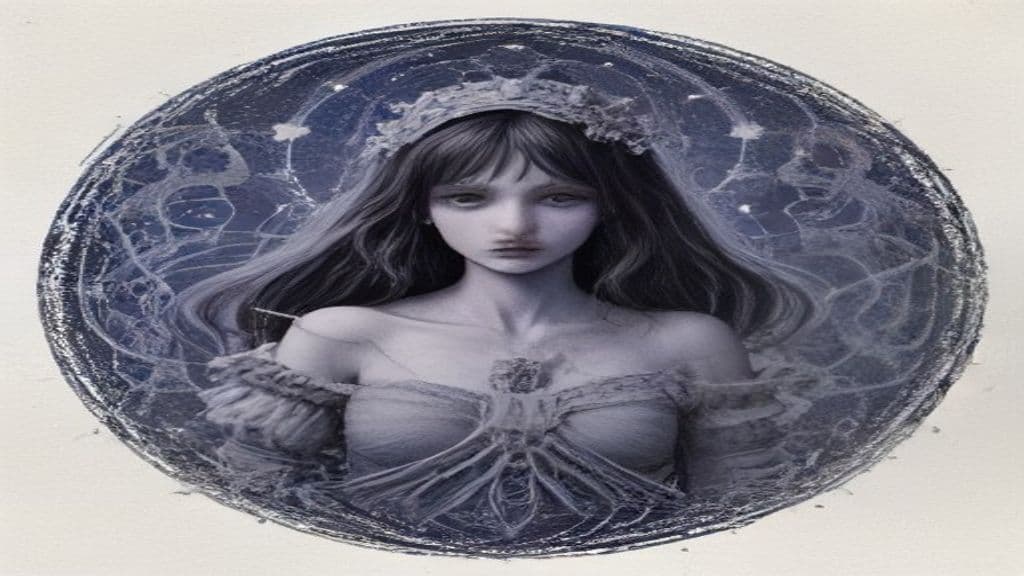
The provided sources do not record a coherent mythic origin story for the bubota. In the material available the term appears as a label applied to feminine specters (Wikidata) and is used as a title or motif in contemporary creative works (Leiden Shorts film summary; Joana Gomila listings), but no origin narrative, genealogy, or cosmological account is supplied in these excerpts. Consequently, within this source set there is no documented traditional account of how bubotas originate, become spirits, or relate to ancestors, saints, or other spirit classes.
Descriptions of physical appearance are not provided in the documentary material assembled here. A Wikidata label classifies bubota as a "feminine ghost," implying female-associated spectral identity, and an archival note references a drawing titled "The bubota (=ghost) Joanaina" (useless-catalanfacts Tumblr) without reproducing descriptive detail. Contemporary artistic uses (film, music, blog imagery) suggest the term functions evocatively rather than referring to a fixed, standardized visual type in the available sources.
The sources offer only fragmentary hints about behaviors. Wikidata briefly labels the bubota a "feminine ghost associated with smuggling," indicating at least one attestation linking the figure to clandestine economic activity, but the nature of that association (whether the spirit aids, haunts, or symbolizes smugglers) is not specified in the source. Creative materials use the name in narrative or evocative contexts—e.g., a track title "I played Chess with a Bubota" (archive TEFE025Source) and a film titled "Bubota (Ghosts)" that treats the term as a way to explore memory and roots (Leiden Shorts)—but these are artistic uses and do not document consistent supernatural powers, rules of engagement, or standardized behaviors in the folkloric record provided.
Alicanto
A nocturnal, flightless bird-like being from Chilean Atacama desert folklore whose glowing wings indicate the presence of underground ores; it can guide a stealthy prospector to a mother lode or, if offended or detected, extinguish its light and mislead or endanger the seeker.
Aloja
Aloja is listed in available sources as a named figure in Catalan legend; beyond a brief disambiguation listing, traditional folkloric details are absent in the consulted material. A contemporary commercial design note reinterprets Aloja as a Mediterranean/sea goddess with energetic yet tender character, but this is explicitly a modern creative description rather than documented folk belief.
Ascalapha odorata (Hawaiian)
A nocturnal moth associated with death or misfortune in Hawaiian tradition, possibly tied to Central and South American folklore. (Note: - Summary should note that Ascalapha odorata's association with death/misfortune is found in Central and South American folklore, not explicitly mentioned in Hawaiian tradition. - Power tier: Primordi)
Ayizan
Ayizan is a racine (root loa) in Haitian Vodou and related West African-derived Vodoun traditions, functioning as the archetypal mambo (priestess) and a guardian of ritual order, initiation (kanzo), and the transmission of sacerdotal implements such as the asson. She is also associated with the marketplace and commerce and is syncretized with the Catholic Saint Clare.
Badalona giants
The Badalona giants (Catalan: gegants de Badalona) are eight large, anthropomorphic effigies used in the civic festival life of Badalona, Catalonia. Constructed of wood, plaster and carton, they represent locally prominent historical or mythological figures and are carried and made to 'dance' in processions during the city's spring festival (May), its principal festival around 15 August, and other municipal occasions.
Basilisco chilote
A Chilote household parasite: a rooster-crested, serpentine creature hatched from a chicken's egg that lives beneath houses and feeds on inhabitants' phlegm and saliva, causing dehydration and death. Preventive measures call for burning the egg and killing the laying hen; once hatched the documented remedy is to burn the afflicted house.
Birongo
Birongo (also bilongo) is an Afro‑Venezuelan magico‑religious tradition and folk‑healing repertoire derived from Kongo‑area concepts and syncretized with Catholic saint veneration and local Venezuelan ritual forms. It functions as a lived system of diagnosis, healing, mediumship, and communal ritual practice rather than as an individual supernatural being.
Bizango
Bizango refers to secret societies in Haiti associated with Vodou practice and rural social governance. Sources portray them as local arbiters with contested reputations, variously remembered as community enforcers, makers of ritual objects, and — in folklore and some ethnographic accounts — practitioners of coercive or secretive magical acts.
Boitatá
Boitatá is a supernatural guardian creature from Brazilian folklore, originating in Tupi–Guarani tradition and preserved in wider Brazilian popular tradition. Commonly rendered as a fiery serpent that protects forests and fields by punishing people who burn, cut, or otherwise destroy nature, the legend also appears in brief variants that liken it to a will-o'-the-wisp or (less commonly) a bull-like creature.
Bolas
Bolas are a physical throwing weapon consisting of weights connected by cords, used historically and traditionally to entangle the legs of animals (and occasionally humans) at a distance. They appear in multiple regional traditions—notably in southern South America among Tehuelche and gauchos, in Mapuche and Inca military contexts, and in Inuit bird-hunting practice—under a variety of local names and constructions.
Bonadona i Altemir
Bonadona i Altemir are a pair of processional giants (gegants) associated with the town of Premià de Dalt in Catalonia. They function as civic effigies carried in public processions and local festivals, part of the municipality's intangible cultural traditions.
Cadejo
A dog‑shaped nocturnal spirit from Central American and adjacent Mexican popular belief, the cadejo appears on lonely roads as a protective or dangerous companion. Rooted in Mesoamerican ideas of animal companions and psychopomps, modern accounts present white (benevolent) and black (malevolent) variants with regionally variable features.
Community Record
- [1]Catalan myths and legends (Wikipedia). Wikipedia, "Catalan myths and legends" (entry listing bubota among named figures)wiki
- [2]Bubota (Wikidata entry Q8253232). Wikidata entry for Bubota (labelled "feminine ghost associated with smuggling")wiki
- [3]TEFE025Source (archive) — track listing includes "I played Chess with a Bubota". Archive.org TEFE025Source (track listing contains "I played Chess with a Bubota")other
- [4]The bubota (=ghost) Joanaina, drawn by Marc Bou... (Tumblr). Tumblr post referencing a drawing titled "The bubota (=ghost) Joanaina"other
- [5]Bubota | Leiden Shorts (film summary). Leiden Shorts film descriptor: '"Bubota" (Ghosts) is a review of one's own history, my roots and belonging...'; presents Bubota parenthetically as "Ghosts"literary
- [6]Joana Gomila | MUTEK listings (artist references using Bubota). Artist listings referencing Joana Gomila and the album/label use of the term Bubotaother
- [7]The legend of the Bubotas Negras - Blog Record Go. Record Rent a Car blog: headline and short tourist-style piece titled "The legend of the Bubotas Negras" (excerpted; content in source set is fragmentary)other