
Linguistically the term derives from Ancient Greek κακοδαίμων (kakodaimōn), literally 'evil spirit', formed from κακό- (kako-, 'bad/evil') + δαίμων (daimōn, 'spirit' or intermediary being). In Greek thought the term designates the malign subset of daimons rather than a single mythic progenitor. Modern sources repurpose the label in varied ways: as a clinical label for a delusional belief of possession (cacodemonia), as an iconographic figure in later literature, and as a name applied to fictional monsters in videogames and role-playing media (a usage that sometimes invents in-game origin myths such as lingering demon souls becoming cacodemons in fantasy lore).
Classical/iconographic summaries describe a cacodemon in mythic imagery as a horned or winged-browed youth with exaggerated genitalia trailing between his legs. In modern popular-culture and videogame contexts the cacodemon is frequently rendered as a floating, round or semi-gaseous monstrous head or globe (notably the DOOM series' floating head-like enemy), often bulky with a large mouth or single eye in fan models, toys, and sprites. The sources emphasize these as distinct iconographic traditions rather than a single consistent appearance.
In classical-language summaries the cacodemon is defined as a malevolent spirit and is reported in some accounts as capable of shapeshifting; the term can also be applied pejoratively to morally malign persons. Psychiatric usage (cacodemonia/cacodemonomania) denotes a delusional belief of being possessed by an evil spirit (a clinical belief state) rather than describing abilities of an external being. In modern gaming and role-playing lore cacodemons act as mobile antagonists: in DOOM-family texts they are semi-gaseous, floating attackers; in some RPG/fan paraphrases a cacodemon can be the lingering soul of a powerful demon after death. Such game-derived abilities are part of fictional worldbuilding rather than historical tradition.
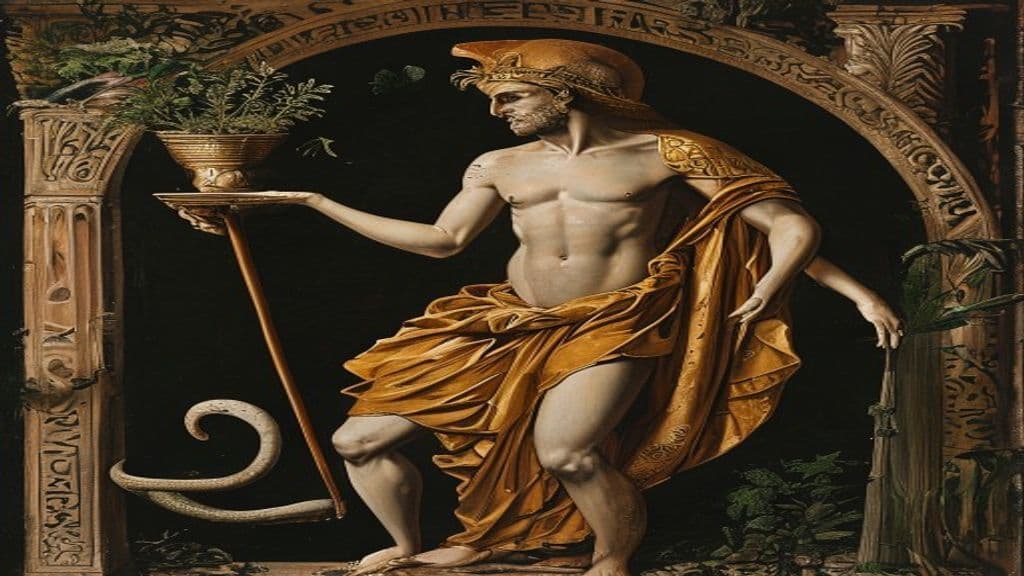
Agathos Daimon (Agathodaemon)
A beneficent household and civic daemon attested in classical Greek and Graeco‑Egyptian religion. In domestic Greece it is a household spirit honored with post‑meal libations; in Ptolemaic Alexandria it appears prominently in serpentine civic and household forms and is syncretised with various Egyptian protective and fate deities in late antiquity.
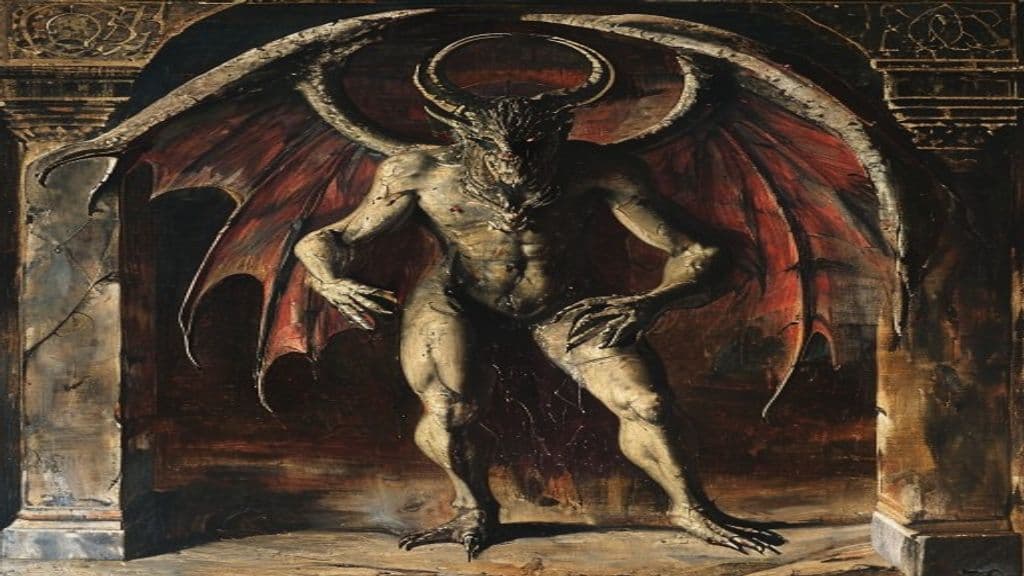
Demon (tradition)
A broadly attested category of harmful or malevolent supernatural beings found across many cultures, used to explain illness, death, misfortune, temptation, and social disruption. The concept is historically flexible, ranging from neutral intermediary spirits in ancient contexts to negatively valenced agents in many later religious traditions, and is the object of ritual responses such as exorcism or magical conjuration in some traditions.
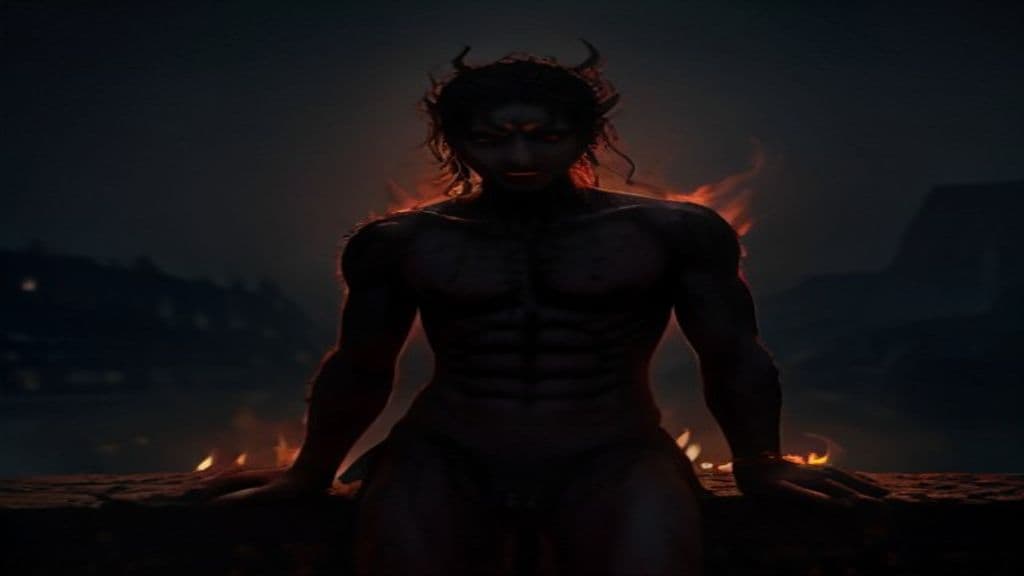
Pishach
Among the oldest classified demon-types in Hindu tradition — flesh-eating entities of the cremation ground first named in the Atharva Veda. The Pishach inhabits fresh corpses and possesses the living, causing the specific Ayurvedic condition of 'pishachabadha': madness, speaking in unknown languages, consuming impure things.
*Perkʷūnos
*Perkʷūnos is the reconstructed Proto-Indo-European thunder‑god hypothesized by comparative linguistics and mythology. Scholarly reconstructions portray him as a storm or thunder figure associated with fructifying rain and as the combatant who fights a multi‑headed water‑serpent to release life‑giving waters; no direct attestations from the Proto‑Indo‑European period survive and the figure is inferred from later Indo‑European traditions.
*Péh₂usōn (reconstructed)
Péh₂usōn is a hypothetical Proto‑Indo‑European pastoral guardian reconstructed by comparative scholars from parallels in Greek and Vedic traditions. Proposed as a Graeco‑Aryan ancestor‑figure, the reconstruction describes a protector of flocks, roads, and travellers rather than an attested historical cultic personality.
3-D Man
3-D Man is a Marvel Comics superhero identity associated with a 1950s-era origin in which the body of Chuck Chandler can materialize in three-dimensional existence when activated by his brother Hal via a pair of glasses. The mantle was later assumed by Delroy Garrett (formerly Triathlon) in modern continuity.
5 Ronin
5 Ronin is a 2011 Marvel Comics five-issue limited series that reimagines five Marvel superhero archetypes as rōnin (masterless samurai) in a fictionalized post‑Sekigahara feudal Japan. The work places Wolverine, Hulk, Punisher, Psylocke, and Deadpool analogues into period roles to explore displacement, revenge, and identity in an era of political upheaval.
57 Mnemosyne
57 Mnemosyne is a large main-belt asteroid (S-type) discovered in 1859 and named after the Greek Titaness Mnemosyne. It is a non-sentient astronomical body studied for its orbital and rotational properties and has been used in dynamical measurements related to Jupiter.
58 Concordia
58 Concordia is a fairly large main-belt asteroid orbiting the Sun, discovered in 1860 and named after the Roman goddess Concordia. Astronomical sources classify it as a C-type (carbonaceous) body with a multi-year orbital period and measurable rotation and pole orientations.
9MOTHER9HORSE9EYES9
An anonymous Reddit screen name and online persona used by the author of the Interface series, a multipart speculative-horror narrative posted in short installments across Reddit in 2016. The name functions as the signature of an authorial identity and as a focal label for a fandom that created archives, a subreddit, and a wiki documenting the story and its fictional phenomena (notably entities called "flesh interfaces").
A.R.G.U.S.
A.R.G.U.S. is a fictional clandestine United States government agency in the DC Comics universe that investigates, contains, and manages superhuman, meta-human, and supernatural incidents and assets. Introduced in The New 52 continuity, it functions as an institutional actor providing intelligence, logistical support, covert task forces (notably Task Force X / the Suicide Squad), and a dedicated magic division across comics and media adaptations.
Aba (disambiguation / name-form)
Aba is a polyvalent name-form attested across many unrelated contexts (place names, personal names, animal names, and brief mythological listings). The provided sources do not support a single, coherent supernatural entity called "Aba" and offer no descriptive or ritual material for such a being.
Abaddon
In Hebrew scripture Abaddon is primarily a noun meaning 'destruction' or a section/condition of the underworld paired with Sheol; in the New Testament Book of Revelation Abaddon is personified as an angelic figure (Greek Apollyon) described as the king of an army of locusts released from the abyss during the apocalypse.
Aban Yasht
The Aban Yasht is a hymn from the Persian tradition that praises Anahita, a goddess associated with water, fertility, and wisdom. It consists of 132 stanzas and is part of the 21 Yashts collection. (Note: - Power tier should be "Primordial" or possibly "Cosmic", given that it's a hymn of great spiritual significance and associated with a goddess. - The article incorrectly states that Anahita is associa)
Abarbarea
Abarbarea is a name attested in classical Greek and Roman sources for freshwater nymphs (naiads). The name appears for at least two individual mythic figures — a naiad wife of Bucolion and a naiad counted among ancestors of the Tyrians — and Hesychius records plural forms that may indicate the name was also used as a class-name (Abarbareai / Abarbalaiai).
Community Record
- [1]Cacodemon - Wikipedia. Wikipedia: 'The word cacodemon comes through Latin from the Ancient Greek κακοδαίμων kakodaimōn, meaning an "evil spirit"... A cacodemon is depicted as a horned (or winged browed) youth with oversized genitalia... In psychology, cacodemonia (or cacodemonomania) is a form of insanity in which the patient believes that they are possessed by an evil spirit.'wiki
- [2]Cacodemon (Doom2.net single entry). doom2.net: 'The Cacodemon is a member of the Narereperea family, which is the classification for creatures which have a semi-gaseous body and whose only mobility is through floating above the ground.'other
- [3]How powerful does a demon need to be to leave a Cacodemon upon death? (RPG.SE paraphrase of Demonomicon). RPG.StackExchange paraphrase referencing Demonomicon lore: 'When a particularly powerful demon perishes, its soul might persist for a time as a cacodemon.'other
- [4]Cacodemon coin bank - The Doom Wiki. DoomWiki product blurb quoted on doom2.net: promotional copy describing a merchandise sculpt of the DOOM cacodemon.other
- [5]Thingiverse / Archive: Cacodemon - Split with arms (fan model). Archive item: fan-made 3D model and related description showing modern creative depiction of the videogame cacodemon.other
- [6]Minecraft Mob Battles Mods: ORC SHAMAN VS CACODEMON, MUTANTS, & MAGE (Archive). Archive: video example of cacodemon used as a modded game monster in modern gaming communities.other
- [7]Axayacatl: Cacodemon Brita Gnosis / Triarchic Cacodemon Hypothesis (archived fragments). axayacatl fragments: modern occult/esoteric appropriation and essayistic fragments invoking 'cacodemonic' language (fragmentary, not ritual scripts).other
- [8]Glorious Trainwrecks: 'Cacodemon Saves The Christmas' (indie game page). Indie game listing using cacodemon as a character in a modern creative narrative.other