Cambion is a demon in Christian folklore, from medieval Europe. A cambion is a hybrid offspring associated with demonic or fiendish parentage and, in earlier usage, with the changeling concept of an exchanged infant. The term covers a range of overlapping ideas from medieval demonological debate about incubus/succubus issues to modern fantasy and role‑playing depictions of half‑demon characters.
In medieval and early modern European demonological writings the cambion is presented in two overlapping senses: (1) an infant exchanged or substituted (interchangeable with changeling in early uses) and (2) progeny tied to sexual unions involving demonic agents. Some demonological accounts (e.g., summaries of the Malleus Maleficarum) argued that devils cannot generate life directly and described a multi-stage process in which a succubus obtains and preserves human seed, passes it to an incubus, and the incubus transmits it to a human woman, producing what later sources labeled a cambion. Nineteenth‑century works such as Dictionnaire Infernal record another sense in which cambions are described as children born of incubus-and-succubus exchange, and from the 19th–20th centuries onward the term broadened into modern literature and gaming as a stock category for half‑demon characters.
Descriptions vary by period and genre. Medieval scholastic and folkloric accounts associate cambions with changeling-like infants (notably insatiable wailing for milk in some sources). Nineteenth‑century occult compilations describe "hideous children" and attribute striking physiological oddities in specific accounts (e.g., alleged absence of breath or pulse until age seven and exceptional heaviness noted in an occult encyclopedia entry). Modern fantasy and role‑playing sources present cambions inconsistently: some fictional wikis note newborns born with eyes open and unusually alert or not crying, while game sources commonly treat them as humanoid with possible fiendish traits; there is no single unified physical portrait across the materials.
Medieval demonological texts focus on origin theories rather than a canonical set of powers; the Malleus Maleficarum and related writings discuss mechanisms of semen transfer and theological questions about the possibility of demonic procreation. Modern fantasy, novels, comics, and role‑playing game sources characteristically imbue cambions with supernatural abilities reflecting fiendish parentage (stat blocks, spell-like abilities, resistances, or innate attacks in various game systems), but the specific powers vary by setting and are products of contemporary fictional worldbuilding rather than medieval folklore.

Wechselbalg
The Changeling of Germanic and Norse tradition — a fairy or demonic child substituted for a stolen human infant, identifiable by its voracious appetite, failure to thrive, and uncanny behavior.

Incubus (Jewish Tradition)
A male demon that preys on female humans in their dreams, seducing them and leading to physical interactions. (Note: 1. Power tier should be Primordial (cosmic) is too high; a more fitting power tier would be Greater (deity-level), given its ability to manipulate humans' dreams and lead to physical interactions. 2. )
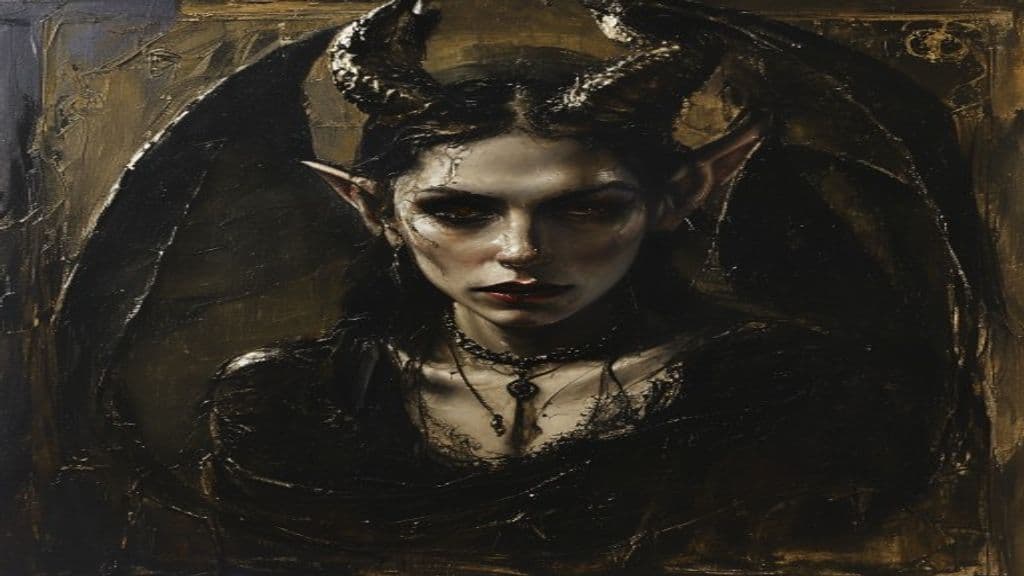
Succubus (Jewish Tradition)
Female demon that seduces male humans through dreams, potentially leading to a hybrid child and the man's decline. (Note: 1. Power tier should be Ancient, not Primordial (Primordial powers are cosmic, while Ancient powers are deity-level). 2. No information on physical appearance is missing because it's simply not mentio)

Nephilim
Enigmatic figures from the Hebrew Bible and later Jewish and Christian writings, the Nephilim are described in brief, ambiguous passages as ancient, exceptional beings associated with the antediluvian world and with later memory of formidable inhabitants; traditions variously render them as 'giants,' 'fallen ones,' or legendary elite warriors.

Dhampir
A figure from Balkan folk belief described as the offspring of a vampire and a human. Dhampirs occupy an intermediate social and ontological position — generally living among humans while inheriting certain capacities or markers associated with vampire-kind, and in many traditions are associated with the role of specialist vampire-hunters.
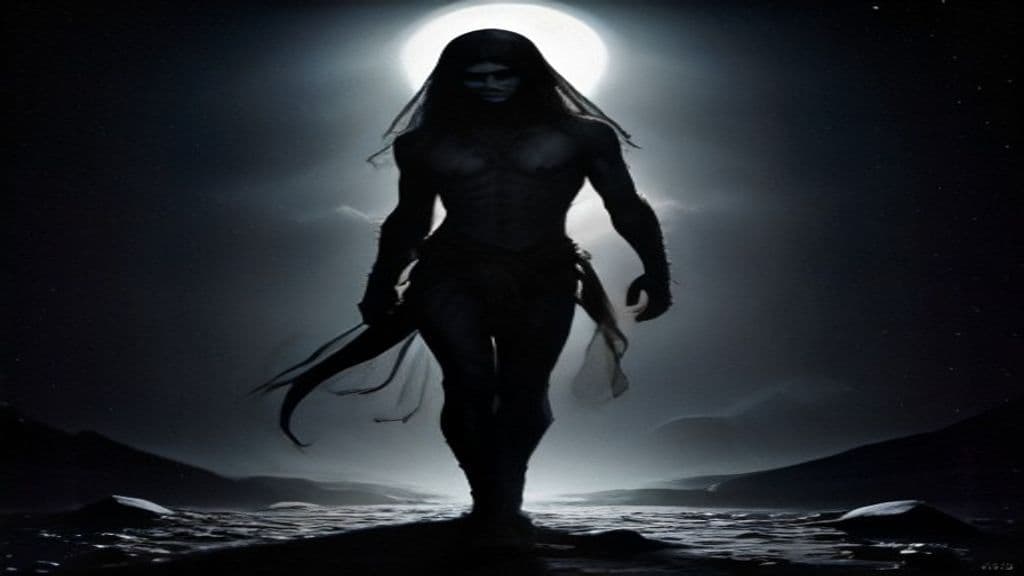
Nasnas
A half-human djinn creature of Arab folklore — possessing only half a face, one arm, one leg, and half a torso — descended from the union of a shaitan and a human, moving by leaping and highly dangerous to encounter.
3-D Man
3-D Man is a Marvel Comics superhero identity associated with a 1950s-era origin in which the body of Chuck Chandler can materialize in three-dimensional existence when activated by his brother Hal via a pair of glasses. The mantle was later assumed by Delroy Garrett (formerly Triathlon) in modern continuity.
5 Ronin
5 Ronin is a 2011 Marvel Comics five-issue limited series that reimagines five Marvel superhero archetypes as rōnin (masterless samurai) in a fictionalized post‑Sekigahara feudal Japan. The work places Wolverine, Hulk, Punisher, Psylocke, and Deadpool analogues into period roles to explore displacement, revenge, and identity in an era of political upheaval.
57 Mnemosyne
57 Mnemosyne is a large main-belt asteroid (S-type) discovered in 1859 and named after the Greek Titaness Mnemosyne. It is a non-sentient astronomical body studied for its orbital and rotational properties and has been used in dynamical measurements related to Jupiter.
58 Concordia
58 Concordia is a fairly large main-belt asteroid orbiting the Sun, discovered in 1860 and named after the Roman goddess Concordia. Astronomical sources classify it as a C-type (carbonaceous) body with a multi-year orbital period and measurable rotation and pole orientations.
9MOTHER9HORSE9EYES9
An anonymous Reddit screen name and online persona used by the author of the Interface series, a multipart speculative-horror narrative posted in short installments across Reddit in 2016. The name functions as the signature of an authorial identity and as a focal label for a fandom that created archives, a subreddit, and a wiki documenting the story and its fictional phenomena (notably entities called "flesh interfaces").
A.R.G.U.S.
A.R.G.U.S. is a fictional clandestine United States government agency in the DC Comics universe that investigates, contains, and manages superhuman, meta-human, and supernatural incidents and assets. Introduced in The New 52 continuity, it functions as an institutional actor providing intelligence, logistical support, covert task forces (notably Task Force X / the Suicide Squad), and a dedicated magic division across comics and media adaptations.
Aamon
Aamon (also Amon) is a named spirit in early modern Western grimoire tradition (Pseudomonarchia Daemonum; the Ars Goetia / Lesser Key of Solomon). He is presented as a high-ranking infernal officer (Marquis/Prince) who governs forty legions and is credited with knowledge of past and future and with affecting human relationships (reconciling or procuring feuds and favor).
Abaddon
In Hebrew scripture Abaddon is primarily a noun meaning 'destruction' or a section/condition of the underworld paired with Sheol; in the New Testament Book of Revelation Abaddon is personified as an angelic figure (Greek Apollyon) described as the king of an army of locusts released from the abyss during the apocalypse.
Abadir
Abadir is a polysemous name attested in distinct cultural contexts: a legendary founding saint and clan ancestor in eastern Ethiopia (Sheikh Abadir Umar Al‑Rida / Aw Abadir), a term applied to cone‑shaped cult stones in Phoenician religious description, and a personal name of a martyr (Abadir/Apater) in the Coptic Synaxarium. The attestations are independent usages of the same name rather than a single supernatural being.
Abadiu of Antinoe
Abadiu of Antinoe was a fourth‑century bishop of Antinoe (Antinoopolis, in Roman Egypt) commemorated as a martyr and saint in the Coptic Orthodox Church, with a feast day on 26 December. Sources record that he was killed during a theological dispute with Arian opponents and reference him in collections of Egyptian martyrs.
Abagtha
Abagtha (Hebrew: אבגתא, ’Ǎḇaḡṯā) is a named human court official in the Hebrew Bible’s Book of Esther, listed among seven chamberlains who ministered before King Ahasuerus and were commanded to bring Queen Vashti before the king. He is attested only in Esther 1:10 and is presented as an institutional palace attendant rather than a supernatural being.
Abanoub
Abanoub is a 4th‑century Egyptian Christian child martyr venerated in the Coptic tradition. Remembered for his public confession of Christ, miraculous healings associated with his passion, and the translation and veneration of his relics, his feast is observed on July 31 (Epip 24) and his cult centers include Nehisa and Samanoud.
Community Record
- [1]Wikipedia: Cambion. Wikipedia entry 'Cambion' (summarizes medieval and modern usages, etymology, and sources including Malleus Maleficarum and Dictionnaire Infernal).wiki
- [2]Dictionnaire Infernal (entry: Cambion). Dictionnaire Infernal (1825) entry cited in Source 1 describing cambions as 'Children of Demons' and noting Delancre and Bodin's account of incubus-succubus exchange producing 'hideous children'.literary
- [3]Malleus Maleficarum (summarized). Quoted summary in Source 1 discussing theological argument that devils cannot bestow life and describing a semen-preservation and transfer process involving succubi and incubi.academic
- [4]Encyclopedia of Occultism and Parapsychology (entry on cambion). Referenced in Source 1: description attributing absence of breath or pulse until seven years of age and exceptional heaviness to certain cambion accounts.other
- [5]Modern fiction, comics, and gaming sources (selected references). Modern role‑playing and fictional treatments summarized in Source notes and in game/fan wikis; examples include game/manual portrayals and fictional narratives that depict cambions as half-demon characters with varied abilities.wiki
- [6]Profound Decisions / Empire Wiki: Cambion. Example modern game source noted among the provided materials describing cambion as a template/character type in fantasy gaming.wiki