
In Bram Stoker's novel, Dracula is presented as a centuries‑old Transylvanian nobleman—a voivode claimed to be a Székely descendant of Attila—who has become an undead predator. Stoker frames him as possessing a lineage and a history of martial prestige, combined with studies of occult arts (the Scholomance) and alchemical knowledge. Later adaptations (not canonical to Stoker) elaborate or transform this origin into cyclical resurrection myths (e.g., Castlevania's centennial Dark Lord motif).
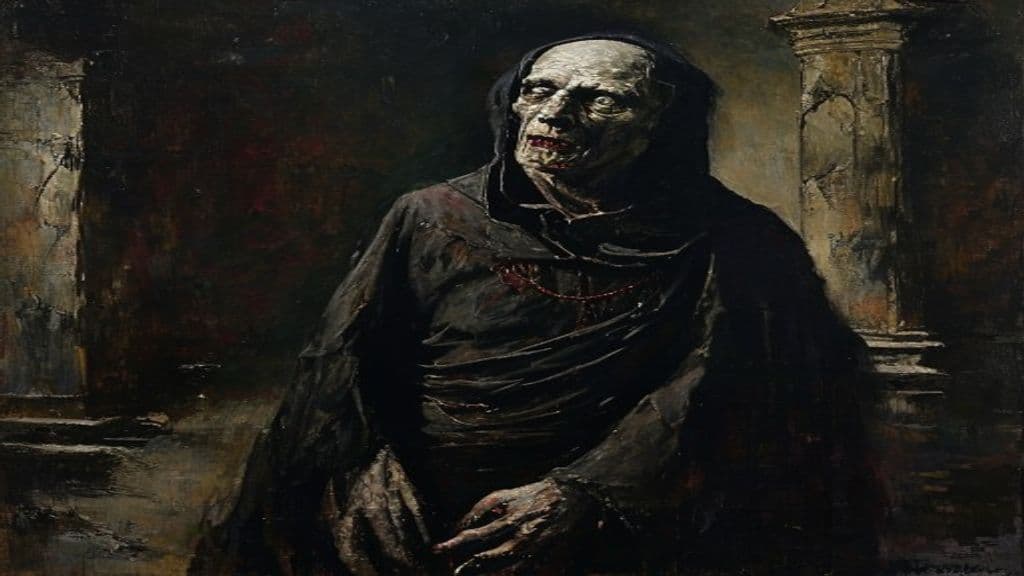
Stoker's depiction emphasizes a deceptively genteel, aristocratic appearance: handsome, charismatic, and well‑educated with the bearing of an ancient nobleman who inhabits a decaying Carpathian castle. The novel contrasts this cultured veneer with Eastern European folkloric vampires' corpse‑like repulsiveness; the supplied sources do not prioritise later visual tropes (prominent fangs, caped silhouette) unless adopted in subsequent adaptations.
Supported by the novel's account, Dracula is undead, capable of creating other vampires by biting them and drinking their blood, and endowed with deep knowledge of the 'black arts' (Scholomance study), alchemy, and magic. He is able to exert influence at a distance and to relocate or send his power from his Transylvanian stronghold to London. Adaptations expand his powers (e.g., cyclical resurrection, augmented dark magic), but such expanded traits are explicitly attributable to those adaptations rather than to Stoker's original text.
Weaknesses
- conditionlimited vulnerability to sunlight (Stoker describes weakening in daylight rather than immediate destruction)
- conditioninability to enter a private residence without invitation (canonical in Stoker)
- symbolreligious symbols and sacramentals (crucifixes, communion wafers/host have aversive effect in Stoker's account)
- ritualphysical destruction by stake or decapitation (methods used in the novel to destroy vampires)
Wards
- substancegarlic (used in Stoker's narrative by characters such as Mina/Harker as a protective measure)
- symbolcrucifix / sacramental bread (host/wafer) (employed by protagonists in Stoker as aversive/defensive items)
- conditionrefusal of invitation (keeping doors closed/uninvited status functions as a barrier in the novel)
3-D Man
3-D Man is a Marvel Comics superhero identity associated with a 1950s-era origin in which the body of Chuck Chandler can materialize in three-dimensional existence when activated by his brother Hal via a pair of glasses. The mantle was later assumed by Delroy Garrett (formerly Triathlon) in modern continuity.
5 Ronin
5 Ronin is a 2011 Marvel Comics five-issue limited series that reimagines five Marvel superhero archetypes as rōnin (masterless samurai) in a fictionalized post‑Sekigahara feudal Japan. The work places Wolverine, Hulk, Punisher, Psylocke, and Deadpool analogues into period roles to explore displacement, revenge, and identity in an era of political upheaval.
58 Concordia
58 Concordia is a fairly large main-belt asteroid orbiting the Sun, discovered in 1860 and named after the Roman goddess Concordia. Astronomical sources classify it as a C-type (carbonaceous) body with a multi-year orbital period and measurable rotation and pole orientations.
9MOTHER9HORSE9EYES9
An anonymous Reddit screen name and online persona used by the author of the Interface series, a multipart speculative-horror narrative posted in short installments across Reddit in 2016. The name functions as the signature of an authorial identity and as a focal label for a fandom that created archives, a subreddit, and a wiki documenting the story and its fictional phenomena (notably entities called "flesh interfaces").
A Elbereth Gilthoniel
An Elvish hymn in Sindarin addressed to Elbereth (Varda) from J. R. R. Tolkien's legendarium. Presented in The Lord of the Rings and later musical and dramatic adaptations, the hymn functions as devotional poetic language that evokes Elvish reverence for the star-kindler rather than an independent supernatural agent.
A.R.G.U.S.
A.R.G.U.S. is a fictional clandestine United States government agency in the DC Comics universe that investigates, contains, and manages superhuman, meta-human, and supernatural incidents and assets. Introduced in The New 52 continuity, it functions as an institutional actor providing intelligence, logistical support, covert task forces (notably Task Force X / the Suicide Squad), and a dedicated magic division across comics and media adaptations.
Abdiel
Abdiel (Hebrew עֲבְדִּיאֵל) is primarily a theophoric Hebrew personal name meaning "servant of El/servant of God," attested once in the Hebrew Bible (1 Chronicles 5:15). In later literature—most notably John Milton's Paradise Lost—Abdiel is reimagined as a faithful seraph who opposes Satan's revolt. The provided sources do not treat Abdiel as an autonomous folkloric spirit type or record rituals or wards associated with the name.
Abena Mansa
A name attested in a single contemporary Ghanaian blog anecdote as a 'mysterious being'; available sources do not establish Abena Mansa as a coherent, traditional supernatural figure or provide corroborating ethnographic detail.
Abiel
Abiel is attested in the supplied sources only as a male given name — borne by several historical American individuals and listed as two minor biblical figures. The provided materials contain no evidence presenting Abiel as a supernatural, mythological, or folkloric entity.
Abigail
Abigail is a female figure in the Hebrew Bible portrayed in 1 Samuel 25 as the intelligent and beautiful wife of Nabal who intervenes to prevent David from committing violence; later tradition regards her as one of the Tanakh's seven female prophets and as a model of beauty and wisdom.
Abin Sur
Abin Sur is a fictional extraterrestrial Green Lantern from the planet Ungara in DC Comics. A former history professor turned Green Lantern of Space Sector 2814, he discovered and investigated a prophecy tied to the "Blackest Night," died wounded on Earth and chose Hal Jordan as his ring-successor, and was later reanimated as a Black Lantern in the Blackest Night storyline.
Abishai
Abishai is a personal name attested in several distinct sources: a biblical individual described as the eldest son of Zeruiah (sister of King David); a Semitic chief named in an inscription at Beni-Hasan in Middle Egypt; and modern cultural uses including a named monster in Dungeons & Dragons and as an artist/stage name. The supplied materials do not present Abishai as a supernatural being within a living cosmology.
Community Record
- [1]Count Dracula — Wikipedia. Wikipedia article 'Count Dracula' (summary and quotes from Bram Stoker's novel)wiki
- [2]Count Dracula — Wikidata. Wikidata item for Count Dracula (entity summary)other
- [3]Castlevania (40th Anniversary Mobile Port) — Archive.org. Castlevania blurb: 'Once every century, the prayers of those with evil in their hearts shall resurrect the Dark Lord Dracula.'other
- [4]Disney's 'Dracula' starring Mickey Mouse (and Friends Read-Along Classics) — Archive.org. Archive listing indicating children's adaptation and cultural reach of the Dracula figure (catalog entry)other
- [5]Pizza Party — Archive.org (contextual listing). Archive listing included in research notes to indicate peripheral cultural references; not a source of primary lore.other