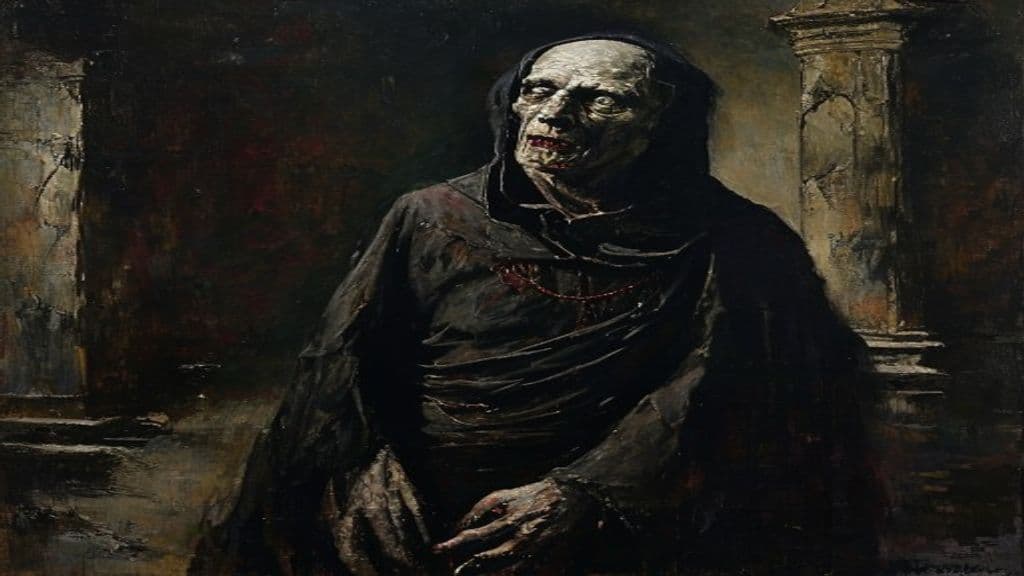
Within the regional folk cosmologies summarized in the sources, vampires are understood primarily as reanimated dead: corpses of persons judged evil in life, suicide victims, witches, or bodies said to be possessed by a malevolent spirit. The modern English term was popularized in Western Europe in the 18th century after reports and moral panics concerning alleged vampirism in southeastern and eastern Europe (for example the widely reported panics of the 1720s–1730s), which brought South Slavic local terms into wider European usage.
Folk accounts from southeastern and eastern Europe typically describe vampires as human-like undead corpses often wearing burial shrouds; older folk descriptions emphasize a bloated form and a ruddy or dark countenance rather than the gaunt, pale image that became common in 19th‑century literature. Exact appearance details vary by locality but the revenant is consistently presented as a corpse returned to activity.
The defining behavior is subsisting on the vital essence of living humans—generally blood—and returning after death to visit kin and neighbours, causing illness or death in the community where it lived. Some traditions recorded in the sources also attest that vampirism could be transmitted by the bite of a vampire; other creation motifs include corpses of those who died unnaturally or were thought evil, or bodies inhabited by hostile spirits. Folkloric accounts functioned as explanatory models for unexplained deaths, decomposition, and contagion anxieties in pre-modern communities.
Weaknesses
- ritualexhumation and piercing / staking
Wards
- ritualexhumation and piercing / staking of suspected corpse
Strigoi
The vampire of Romanian folklore — either a living witch (strigoi viu) or an undead blood-drinker (strigoi mort). The source tradition from which the literary vampire emerged.

Vrykolakas
A harmful undead revenant in Greek folklore that returns from the grave to harm the living. Described as a reanimated corpse associated with poltergeist activity, epidemics, nocturnal roaming, and cannibalistic eating of flesh (especially livers); practices to prevent or destroy it are tied to burial rites and community action.

Shakchunni
Bengali ghost of a married Brahmin woman who died before her husband — identifiable by her white sari and conch-shell bangles, she possesses living married women and refuses to relinquish domestic life.
Stree
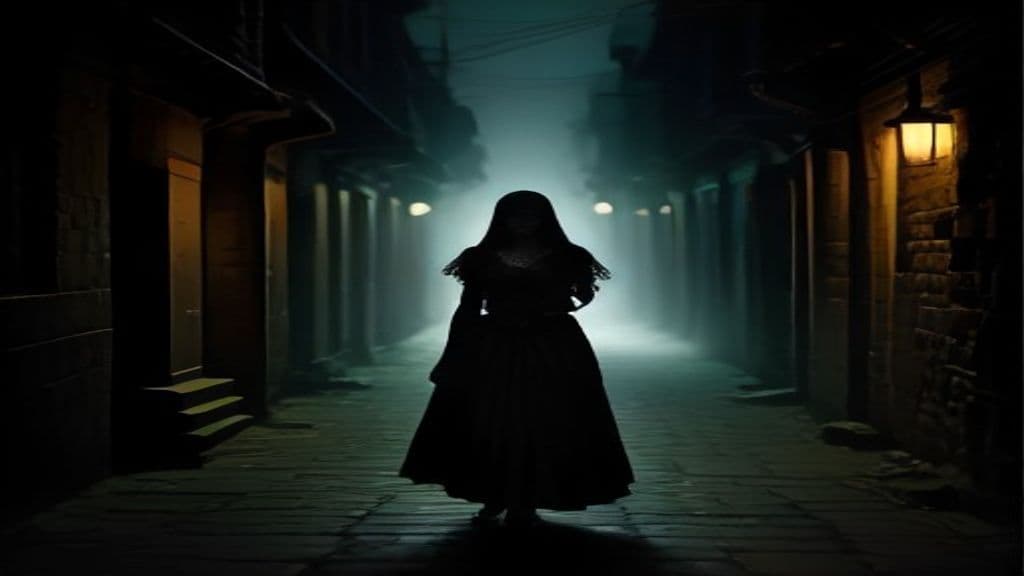
A vengeful female spirit from Chanderi who abducts men during festival nights. Warded off by the inscription 'O Stree, kal aana' — her legend, still practised on walls across Madhya Pradesh, inspired the 2018 Bollywood horror-comedy.
Stree
A vengeful female spirit from Chanderi who abducts men during festival nights. Warded off by the inscription 'O Stree, kal aana' — her legend, still practised on walls across Madhya Pradesh, inspired the 2018 Bollywood horror-comedy.
Adže / Adze
No folkloric entity named 'Adže' is documented in the provided sources. The string appears in heterogeneous, non-folkloric contexts (a Bosnian village name, an English woodworking tool entry, a performer pen name, a CIA document fragment) and one modern podcast episode list that mentions 'the Adze' among other vampire-like beings; none of these supply an ethnographic description of a supernatural being called 'Adže'.
Ala
A female weather-being in South Slavic folk cosmology (Bulgaria, Serbia, North Macedonia) associated with hail, destructive storms, and voracious appetite; she is said to lead hail-producing clouds to destroy crops and is sometimes blamed for eclipses by attempting to devour the Sun or Moon.
Alatyr
A sacred world-stone in East Slavic and wider Slavic folklore, described as the "father to all stones" and the "navel of the earth." Located at the world's center (often on Buyan island), it is associated with a miraculous spring, sacred letters, healing properties, and liminality between the human world and other realms.
Albanian paganism (traditional/customary beliefs)
A persistent stratum of pre-Christian Albanian religious and cosmological notions—ancestor veneration, animism, and totemic identifications—embedded in oral tradition and customary law (the Kanun) and surviving particularly in mountainous, rural Albanian-speaking regions and diasporas.
Alkonost
The Alkonost is a legendary woman-headed bird of East Slavic folklore, depicted as an individual mythic avian figure who lives in the underworld alongside her counterpart Sirin. Her song enchants listeners into forgetfulness or bliss, she is said to bless fruit during the Apple Feast of the Saviour, and her reproductive actions are causally linked in lore to sudden storms at sea.
Alyosha Popovich
Alyosha Popovich (Алёша Попович / Олешко Попович) is a named human hero (bogatyr) of the East Slavic byliny tradition, remembered as the youngest member of the canonical trio of Kievan Rus' warriors. He is chiefly characterized by slyness, mockery, and trickery, and defeats foes by craft often aided by pious petition rather than mere brute strength.
Andrew the Apostle
Andrew the Apostle (Greek Ἀνδρέας, Latin Andreas) is one of the Twelve Apostles in the New Testament, a fisherman from Bethsaida, the brother of Simon Peter, described as the “first-called” who introduced others to Jesus. Post-biblical traditions depict him as an early missionary and founder of Christian communities (notably claims of missions to Thrace, Scythia, and founding the see of Byzantium) and as a martyr crucified at Patras.
Aq Bars
Aq Bars (Tatar: Ак Барс, 'White Leopard') is an ancient Bulgar tribal totem and heraldic emblem historically used in Volga Bulgaria and the Khanate of Kazan and adopted in the modern era as the official symbol of the Republic of Tatarstan (formally since 7 February 1992). It functions as a dynastic/tribal mark of identity (derived from the Barsil tribe) and as a political-state emblem rather than a personal supernatural being.
Aradia
Aradia is a name and motif appearing in late-19th-century folklorist literature (notably Charles G. Leland's Aradia, or the Gospel of the Witches) and in Italian, Sardinian, and adjacent regional folklore where cognate names (Arada, Araja, Erodiade/Irodiada) are attached to a nocturnal female host associated with Diana/Herodias. Sources portray Aradia variously as a messianic teacher of witchcraft (Leland) and as part of a tradition of night-flying female spirits and regional fairy-queen figures (folklore surveys).
August curse
A modern cultural concept in Russia describing a perceived clustering of severe disasters, attacks, and adverse events during the month of August. Treated in sources as an explanatory frame combining statistical observation, seasonal and political factors, and occasional astrological or supernatural interpretation.
Aventinus of Alba Longa
Aventinus of Alba Longa is a legendary king in the Alban/Latial regnal tradition, presented in ancient commentators and later summaries as an eponymous figure whose burial or shrine on the Aventine Hill provided an etiological explanation for that place-name. He appears in king-lists as a successor in the line purportedly descending from Aeneas and is variously dated in later regnal chronologies to the 9th–8th centuries BC.
Azovka (Azov Girl)
Azovka, often called the Azov Girl in English summaries, is a female supernatural figure named in Pavel Bazhov’s Ural skaz tale "Beloved Name." The supplied sources identify her as a character from Ural-region folklore as represented in Bazhov’s miners’ tales but provide no detailed description or independent folkloric tradition beyond that tale reference.
Community Record
- [1]Vampire — Wikipedia. Wikipedia, 'Vampire' article (accessed via provided research notes)wiki
- [2]Vampire — Wikidata entry Q3554350. Wikidata entity Q3554350 (not used for folkloric claims beyond shared label)other
- [3]Truth Take: Constitution Vampire (audio entry). Archive.org audio entry referenced in research notes (not used for folkloric claims)other