
Cynanthropy is not a single origin myth but an academic term and comparative motif. The English term (also kynanthropy) derives from Ancient Greek κύων / kúōn 'dog' + ἄνθρωπος / ánthrōpos 'man; human'. The label has been applied in scholarship to distinct phenomena—psychiatric delusion, folkloric shapeshifting, and accounts of dog-headed peoples—and was used in early 20th-century discussions (by at least 1901) to describe Chinese myths about humans and dogs, as recorded in secondary summaries.
Descriptions vary by context. As a folkloric motif it appears as (a) dog-headed peoples (cynocephali) described as humans with canine heads; (b) weredogs or cynanthropes who alternate between canine and human form or exhibit mixed human–canine anatomy; and (c) literary or fictional shapeshifters whose portrayals (packs, hidden communities) are used in modern fiction. In clinical accounts “appearance” refers to the subjective delusional belief of being a dog rather than a consistent supernatural morphology.
Accounts split by framing: in clinical contexts cynanthropy is a delusional belief (no supernatural powers). In folkloric literature the central ability is therianthropic shape‑shifting between human and dog forms or possessing mixed anatomy. Regional folklore (e.g., Timor, as summarized in comparative sources) attributes to some weredogs the capacity to transform other people into animals (often prey species such as goats) so the cynanthrope may devour them without discovery. Beyond those points, sources treat abilities variably and do not supply a single standardized power set.
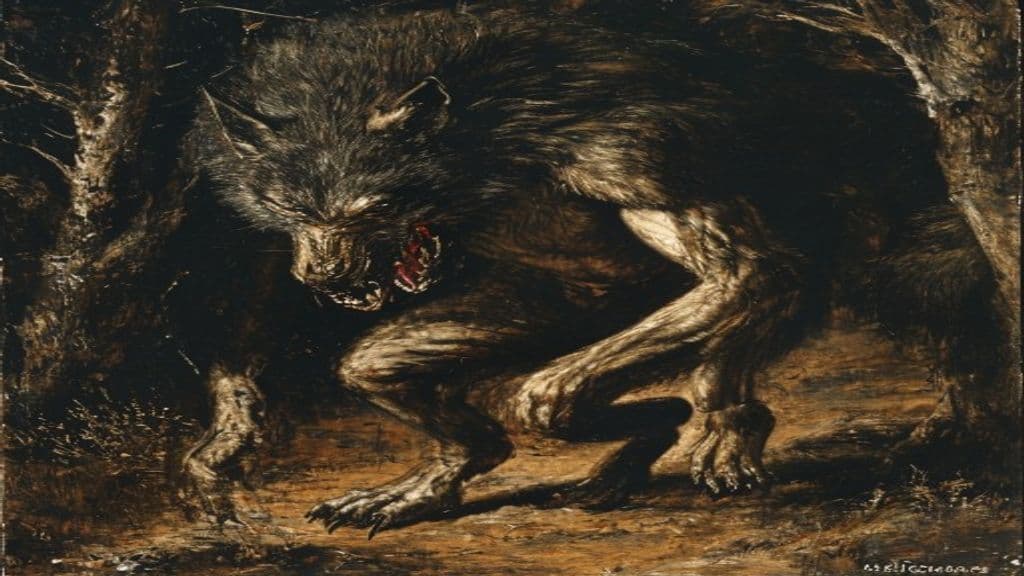
Werewolf
A figure of European folklore of a human who can change into a wolf or wolf–human hybrid, variously portrayed as voluntary shapeshifter, cursed afflicted person, or clinical delusion (lycanthropy). Belief in werewolves was entwined with medieval and early modern witchcraft accusations and persisted into Gothic and popular fiction.

Werehyena
A supernatural being from Central African tradition and the Arabian Peninsula that can shapeshift between human and hyena forms. (Note: 1. Power tier: Should be "Greater" instead of "Ancient", as the source material does not describe the Werehyena as a deity-level entity. 2. Origin story: Should state that the origin is unknown or not)
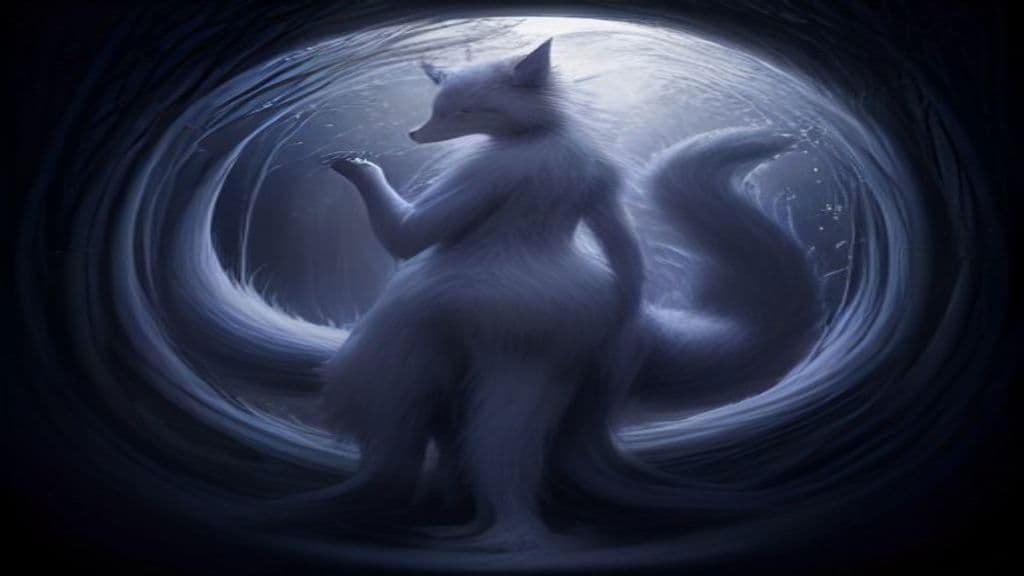
Kitsune
Fox spirits of Japanese mythology — intelligent, long-lived beings who gain additional tails (up to nine) as they age and grow in power. They serve as messengers of the god Inari and as powerful tricksters.

Skinwalker
In Navajo cultural framing, the skinwalker (English label) denotes a harmful witch who can turn into, possess, or disguise themselves as an animal. The English term has also been appropriated in contemporary U.S. paranormal and media contexts (notably the named Skinwalker Ranch), where it labels a cluster of anomalous reports distinct from the Navajo witchcraft meaning.
*Perkʷūnos
*Perkʷūnos is the reconstructed Proto-Indo-European thunder‑god hypothesized by comparative linguistics and mythology. Scholarly reconstructions portray him as a storm or thunder figure associated with fructifying rain and as the combatant who fights a multi‑headed water‑serpent to release life‑giving waters; no direct attestations from the Proto‑Indo‑European period survive and the figure is inferred from later Indo‑European traditions.
*Péh₂usōn (reconstructed)
Péh₂usōn is a hypothetical Proto‑Indo‑European pastoral guardian reconstructed by comparative scholars from parallels in Greek and Vedic traditions. Proposed as a Graeco‑Aryan ancestor‑figure, the reconstruction describes a protector of flocks, roads, and travellers rather than an attested historical cultic personality.
3-D Man
3-D Man is a Marvel Comics superhero identity associated with a 1950s-era origin in which the body of Chuck Chandler can materialize in three-dimensional existence when activated by his brother Hal via a pair of glasses. The mantle was later assumed by Delroy Garrett (formerly Triathlon) in modern continuity.
5 Ronin
5 Ronin is a 2011 Marvel Comics five-issue limited series that reimagines five Marvel superhero archetypes as rōnin (masterless samurai) in a fictionalized post‑Sekigahara feudal Japan. The work places Wolverine, Hulk, Punisher, Psylocke, and Deadpool analogues into period roles to explore displacement, revenge, and identity in an era of political upheaval.
57 Mnemosyne
57 Mnemosyne is a large main-belt asteroid (S-type) discovered in 1859 and named after the Greek Titaness Mnemosyne. It is a non-sentient astronomical body studied for its orbital and rotational properties and has been used in dynamical measurements related to Jupiter.
A Elbereth Gilthoniel
An Elvish hymn in Sindarin addressed to Elbereth (Varda) from J. R. R. Tolkien's legendarium. Presented in The Lord of the Rings and later musical and dramatic adaptations, the hymn functions as devotional poetic language that evokes Elvish reverence for the star-kindler rather than an independent supernatural agent.
A.R.G.U.S.
A.R.G.U.S. is a fictional clandestine United States government agency in the DC Comics universe that investigates, contains, and manages superhuman, meta-human, and supernatural incidents and assets. Introduced in The New 52 continuity, it functions as an institutional actor providing intelligence, logistical support, covert task forces (notably Task Force X / the Suicide Squad), and a dedicated magic division across comics and media adaptations.
Abaddon
In Hebrew scripture Abaddon is primarily a noun meaning 'destruction' or a section/condition of the underworld paired with Sheol; in the New Testament Book of Revelation Abaddon is personified as an angelic figure (Greek Apollyon) described as the king of an army of locusts released from the abyss during the apocalypse.
Aban Yasht
The Aban Yasht is a hymn from the Persian tradition that praises Anahita, a goddess associated with water, fertility, and wisdom. It consists of 132 stanzas and is part of the 21 Yashts collection. (Note: - Power tier should be "Primordial" or possibly "Cosmic", given that it's a hymn of great spiritual significance and associated with a goddess. - The article incorrectly states that Anahita is associa)
Abath
No corroborated folkloric entity named "Abath" is documented in the provided sources. The string appears in the supplied material only as a surname/personal name in Aruban/Dutch-Caribbean archival records and as an unrelated taxonomic or encyclopedic hit; no mythic attributes, origin stories, rituals, or apotropaic practices for an entity called Abath are present in the documents reviewed.
Abatur
Abatur is an uthra (celestial emanation) in Mandaeism described as the 'father of the Uthras' and called the Ancient (ʿattīqā). He resides on the boundary between the World of Light and lower regions, functions as a judge who weighs souls (Abatur Muzania), and supplies instructions and materials to the demiurgic uthra Ptahil in accounts from the Diwan (Scroll) of Abatur.
Abatwa (Twa / Batwa)
Abatwa (also recorded as Twa, Batwa, Mutwa; singular forms Barhwa or Murhwa in some transcriptions) are indigenous hunter‑gatherer peoples of the Great Lakes region of Central Africa, historically identified as some of the earliest inhabitants of the area. The available sources treat them as human ethnic groups whose livelihoods, lands, and populations have been severely affected by conservation policies and modern violence.
Community Record
- [1]Cynanthropy — Wikipedia. Wikipedia, 'Cynanthropy' (summary of etymology, folkloric forms, regional notes including Timor and Central Asia, historical usages to 1901).wiki
- [2]Cynanthropy — Wikidata Q5199884. Wikidata entry summarizing concept as canine–human therianthropy and related uses.wiki
- [3]Cynanthropy (fictional synopsis) — Archive.org. Archive.org item 'Cynanthropy' (fictional summary used as a modern literary illustration of shapeshifter pack motifs).literary
- [4]Clinical lycanthropy — Wikipedia. Wikipedia, 'Clinical lycanthropy' (used as reference for psychiatric/delusional form of canine identity belief).wiki
- [5]Werewolves, Magical Hounds, and Dog-Headed Men in Celtic Literature: A Typological Study of Shape-Shifting. Academic typological study cited in comparative literature on dog-headed men and related therianthropic motifs.academic