
The Dayan is not a ghost but a living woman — or so she appears. In North and Central Indian folk belief, a Dayan is a person, almost always female, who has acquired or inherited supernatural powers through a pact with malevolent forces. She uses these powers to cause illness in children, poison livestock, destroy crops, and bring misfortune to enemies.
Belief in the Dayan is ancient and widespread, but it carries a shadow of real-world violence. Accusations of being a Dayan — often targeting widows, older women, or women who have defied social norms — have led to documented murders, torture, and social expulsion. The National Crime Records Bureau of India reports hundreds of witch-hunting cases annually, the majority from tribal districts of Jharkhand and Odisha.
A Dayan looks like an ordinary woman. The supernatural signs are behavioural and circumstantial: she is seen at crossroads at night, she does not eat with others, her shadow falls wrong in certain lights.
In direct supernatural encounter (as distinct from the social accusation), she is described as able to leave her body at night, her spirit travelling as a flame or an owl.
Dayans are depicted as vengeful, predatory spirits who feed on the life-force or blood of the living, most often attacking male family members (stories describe the youngest male household member being drained of youth and turned prematurely old). They are said to seduce and entrap solitary men by taking the form of a young woman, imprison them and use them sexually until the victim ages and dies, or cause a man who eats the dayan's food to become old by dawn. The braid (choti) functions as an active instrument in attack. Folklore also portrays dayans as worshippers of 'black magic spirits' or as associated with yoginis; in social contexts the label is also used to accuse living women of harmful magic, producing ostracism or violence. Sources note ambiguity between postmortem revenant accounts and accusations applied to living women.
Weaknesses
- otherNo consistently attested folkloric weakness recorded in the provided sources
Wards
- otherSocial usage/accusation (ostracism, labeling, mob action)

Churel (Chudail)
A South Asian female revenant or vengeful ghost associated with women who die cruelly or unpurified; often said to target male relatives and sometimes described as latching onto trees, producing a tree‑attached tree‑spirit variant in local tales.
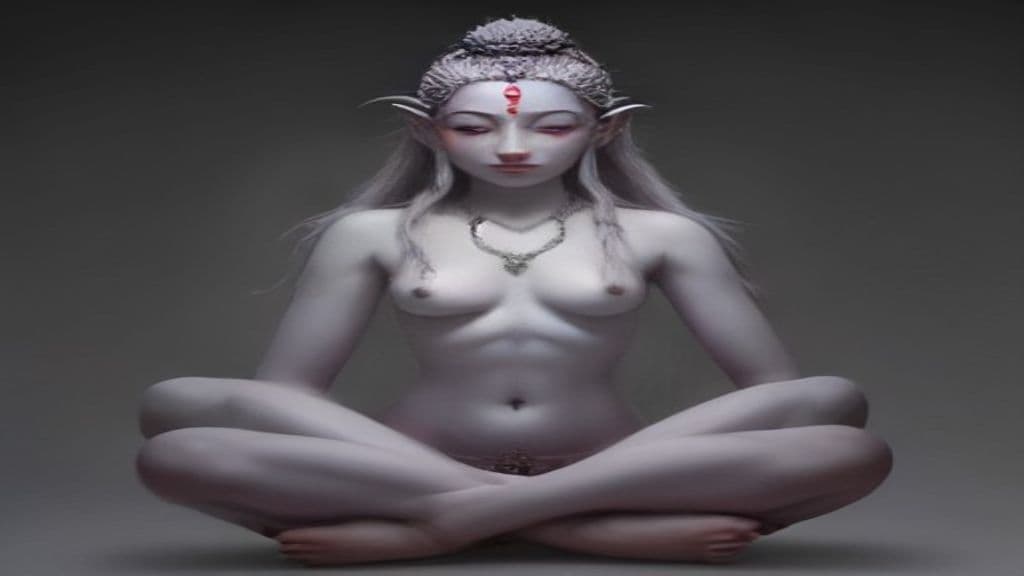
Dakinī
A dakini is a feminine spiritual figure attested in Hindu and Buddhist literature and in Himalayan Vajrayāna cultural contexts; sources in this set characterize the dakini as a type or class of goddess and as a figure embedded in tantric and Himalayan religious landscapes. Specific iconography, powers, and ritual formulas are not documented in the supplied sources.
*Péh₂usōn (reconstructed)
Péh₂usōn is a hypothetical Proto‑Indo‑European pastoral guardian reconstructed by comparative scholars from parallels in Greek and Vedic traditions. Proposed as a Graeco‑Aryan ancestor‑figure, the reconstruction describes a protector of flocks, roads, and travellers rather than an attested historical cultic personality.
Abhimanyu
Abhimanyu is a youthful Kuru/Pandava warrior-hero in the Sanskrit epic Mahābhārata. Son of Arjuna and Subhadra, he is famed for entering the Chakravyuha battle formation on the thirteenth day of the Kurukshetra War and dying at age sixteen; his posthumous son Parikshit continues the Kuru line.
Achyuta
Achyuta (Sanskrit: अच्युत, acyuta) is primarily an epithet/theonym in Vaishnava Hindu tradition applied to Vishnu and Krishna, signifying the divine quality of being 'not fallen' — immutable, infallible, and imperishable. It functions as a devotional name in scripture, liturgy, and Pancharatra lists of divine emanations rather than as an autonomous folkloric spirit.
Acintya
Acintya is an Indonesian Hindu theological-symbolic representation of the ineffable supreme divine principle. In Balinese and Javanese practice it functions as a way to make ultimate reality present in ritual and art—often aniconically as an empty throne (padmasana) or anthropomorphically as a naked, flame-surrounded figure—rather than as a narrative, intervening deity.
Adi (asura)
Adi is attested in modern reference works as the name of an Asura who 'appears in the Matsya Purāṇa.' Beyond this single-line citation in secondary sources, no descriptive material about the figure is provided in the supplied research notes.
Adi Shakti
Adi Shakti (also Adi Parashakti, Mahadevi, Adya Shakti) is the primordial feminine power in Hindu/Shakta theology, regarded as the ultimate reality (Para Brahman) and the source from which all goddesses and gods manifest. She is both an impersonal cosmic principle (Mulaprakriti) and a focus of devotional invocation in temples, mantras, and pilgrimage sites such as Shakti Peethas.
Adi Vinayaka
Adi Vinayaka (Ādi Vināyaka; also called Nara Mukha Vinayaka) is a named iconographic and devotional form of the Hindu god Ganesha portraying the deity with a human head, described in sources as the form before the episode of decapitation by Shiva. It is rarely worshipped and appears in a small number of South Indian shrines and in devotional/musical repertoires.
Aditi
Aditi is a major Vedic goddess in Hindu tradition who personifies the boundless, infinite cosmic principle and functions as the maternal matrix from which many celestial deities (the Ādityas and other groups) are born. In the Vedic hymns she is invoked as a protective liberator who guards petitioners, provides wealth and safety, and frees devotees from hindrances such as sin and sickness.
Agastya
Agastya (also Agathiyar/Agasti) is a revered Vedic and later-period Indian rishi (sage) figure credited in textual traditions as an inspired seer, ascetic, teacher, culture-founder, and attributed author of Vedic, Puranic and Tamil works; in South Indian tradition he is associated with origins of Tamil grammar and Siddha medicine and is identified astronomically with the star Canopus.
Aghasura
Aghasura is an asura from the Vaishnava/Hindu narrative tradition (notably the Srimad‑Bhāgavatam) who, at the command of Kamsa, assumed the form of a vast serpent to ambush Kṛṣṇa and the cowherd boys in Vṛndāvana. The episode demonstrates Kṛṣṇa’s protective, divine power as he enters and destroys the demon from within.
Agiya Baital
The fire-form of the Vetala — a cremation ground spirit of UP and Bihar that manifests as a wandering flame rather than a corpse-inhabitor, leading night travellers off roads and into marshland or flames with a dancing fire that seems always just ahead.
Agneya / Āgneyī
Āgneyī (feminine) or Āgneya (masculine adjective) is a Vedic–Puranic divine figure and ritual principle tied to the fire-god Agni and the southeastern direction. In textual traditions she appears both as a personified daughter/shakti of Agni and as an adjectival/technical term applied to fire-consecrated things (direction, astra, etc.). She also occurs as the name Agneya (or Anala) among items revealed in a Shaiva-Agamic list associated with the Aghora face of Sadashiva.
Community Record
- [1]Dayan (witch) — Wikipedia. Wikipedia contributors. "Dayan (witch)." Wikipedia, The Free Encyclopedia.wiki
- [2]Belapur Ki Dayan — Wikipedia (example media entry). Wikipedia contributors. "Belapur Ki Dayan." Wikipedia, The Free Encyclopedia.wiki
- [3]Dayan of Indian Folklore | Into Horror History | J.A. Hernandez. J. A. Hernandez, "Dayan of Indian Folklore," Into Horror History (blog/summary referencing folkloric motifs).folk
- [4]How are the Dakinis associated with Kali — Hinduism Stack Exchange. Community Q&A discussing dakinis in medieval Hindu texts and associations with Kali.other
- [5]Witch Hunting in India: A Human Rights Perspective. Human Rights Watch. (2009). Witchcraft accusations and violence against women in India. New York: HRW.academic
- [6]Dayan Pratha — witch-hunting in tribal India. Wikipedia contributors. Witch-hunting in India. Wikipedia, 2024.wiki