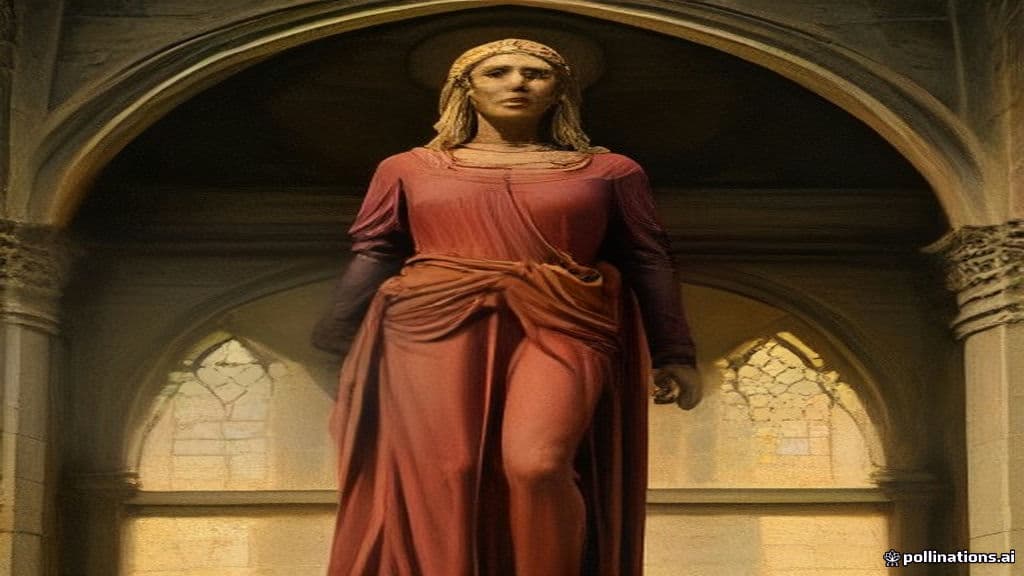
Doon de Mayence is a legendary hero in French folklore, from Mainz (Mayence). Doon de Mayence is a legendary literary hero and eponymous ancestor from the Old French chansons de geste; the name also designates a loosely defined cycle of related epics (the Rebellious Vassal Cycle) whose poems are tied together by invented genealogy and shared themes of rebellious barons opposing Charlemagne.
Doon de Mayence originates as a constructed ancestral hero within the medieval Old French epic tradition. The chanson Doon de Maience was composed to supply a fitting ancestor and genealogical link for a number of otherwise independent rebellious-vassal poems; the first half of that chanson is a romantic childhood narrative dated to the 13th century, while the second half—detailing Doon’s wars in Saxony—may draw on historical events. The name ties the family to the toponym Mayence (Mainz) and was later adapted into prose forms (attested as Doolin de Maience in 1501 and Doolin de Mayence in 1530). Manuscript witnesses for the chanson include a Montpellier 14th-century copy (Montpellier, University of Montpellier School of Medicine Library, H 247, fols. 1r–46v) and two 15th-century Paris copies (BnF français 12563 and français 1637). (Sources: Wikipedia; medieval French literature reader; La Geste francor edition listings.)
The surviving summaries and editions provide no consistent physical description of Doon de Mayence. He is represented primarily through narrative role, genealogy, and deeds across multiple texts rather than through a stable iconography or detailed bodily portrayal; the available sources therefore record no attested details of height, facial features, armor, or other physical markers.
Doon’s 'abilities' are literary and social: he functions as an eponymous progenitor and organizing figure who unifies a set of chansons de geste by providing genealogical coherence. Within the poems, he is portrayed as a warrior-leader engaged in wars (notably campaigns in Saxony in the second half of his chanson) and as patriarch of an extended family whose members—Gaufrey (father of Ogier the Dane), Griffon d’Hauteville, Aymon de Dordone (father of the four sons), Beuves d’Aigremont, Sevin/Seguin, and others—are prominent warriors, rebels, or enchanters. The cycle associated with his name groups narratives around the theme of rebellious vassals opposing 'Charlemagne' (often representing later or weakened royal authority).
3-D Man
3-D Man is a Marvel Comics superhero identity associated with a 1950s-era origin in which the body of Chuck Chandler can materialize in three-dimensional existence when activated by his brother Hal via a pair of glasses. The mantle was later assumed by Delroy Garrett (formerly Triathlon) in modern continuity.
5 Ronin
5 Ronin is a 2011 Marvel Comics five-issue limited series that reimagines five Marvel superhero archetypes as rōnin (masterless samurai) in a fictionalized post‑Sekigahara feudal Japan. The work places Wolverine, Hulk, Punisher, Psylocke, and Deadpool analogues into period roles to explore displacement, revenge, and identity in an era of political upheaval.
A Elbereth Gilthoniel
An Elvish hymn in Sindarin addressed to Elbereth (Varda) from J. R. R. Tolkien's legendarium. Presented in The Lord of the Rings and later musical and dramatic adaptations, the hymn functions as devotional poetic language that evokes Elvish reverence for the star-kindler rather than an independent supernatural agent.
A.R.G.U.S.
A.R.G.U.S. is a fictional clandestine United States government agency in the DC Comics universe that investigates, contains, and manages superhuman, meta-human, and supernatural incidents and assets. Introduced in The New 52 continuity, it functions as an institutional actor providing intelligence, logistical support, covert task forces (notably Task Force X / the Suicide Squad), and a dedicated magic division across comics and media adaptations.
Abin Sur
Abin Sur is a fictional extraterrestrial Green Lantern from the planet Ungara in DC Comics. A former history professor turned Green Lantern of Space Sector 2814, he discovered and investigated a prophecy tied to the "Blackest Night," died wounded on Earth and chose Hal Jordan as his ring-successor, and was later reanimated as a Black Lantern in the Blackest Night storyline.
Absolute Green Lantern (tradition)
A modern comic-book reinterpretation in DC's Absolute Universe in which a giant green lantern-shaped vessel appears above Evergreen, Nevada, generates an impenetrable green dome, judges townspeople and sends the judged into the Lantern to await further adjudication in OA (Omega‑Alpha). The story reframes Green Lantern mythos as cosmic/religious horror with an "Enlightenment Spectrum" of flames (Qard, Rao, Sur, Aur) stewarded by Oans such as Abin Sur.
Absorbing Man
A fictional Marvel Comics character (Carl "Crusher" Creel) whose body acquires the physical properties of materials or energies he touches. Debuting in Journey into Mystery #114 (March 1965), created by Stan Lee and Jack Kirby, he is presented as a mortal supervillain/occasional antihero who challenges heroes such as Thor, Hulk, Spider-Man, and the Avengers.
Accolon
Accolon is a mortal knight of the Arthurian court, presented in the Post-Vulgate Merlin tradition and Malory's Le Morte d'Arthur as Morgan le Fay's paramour and instrument in a plot to supplant King Arthur; his tale centers on enchanted weapons (Excalibur and its scabbard), love-manipulation, and a tragic duel with Arthur.
Ace West
Ace West (Wallace Daniel "Ace" West) is a contemporary American comic-book character in DC Comics continuity, a young speedster who channels the metaphysical Speed Force and occupies legacy-hero roles such as Kid Flash and Ace. Introduced in New 52-era stories as a biracial reinterpretation of Wally West and later retconned in DC Rebirth as a distinct Wallace West, son of Daniel West (Reverse-Flash), he appears across present-day and alternate/future timelines and participates in team and sacrifice narratives tied to the Speed Force.
Acheron
Acheron is a mythological river of the Ancient Greek Underworld, portrayed in classical literature as a boundary or entrance to Hades across which the dead are conveyed. It is also a real river in Epirus whose landscape and nearby cult sites (notably a Necromanteion) were mapped onto the literary river; later Western authors use Acheron metonymically for Hell or the infernal realm.
Achilles and Patroclus
A central heroic dyad in the Homeric Trojan War tradition: two mortal Greek warriors whose close bond—portrayed as deep companionship in the Iliad—drives key events of the epic when Patroclus' death provokes Achilles' rage, return to battle, and the slaying of Hector.
Acionna
Acionna is a local Gallo-Roman water goddess attested by a single votive inscription found at a spring in the Orléanais region. The inscription, discovered by Jollois in 1822 and datable by style to the 2nd century CE, dedicates a portico and ornaments "AUG(ustae) ACIONNAE" and was recovered from the Fontaine de l'Étuvée in Orléans; archaeological work in 2007 uncovered remains of a Gallo-Roman temple and a section of an aqueduct at the site.
Community Record
- [1]Doon de Mayence (Wikipedia). Wikipedia, article 'Doon de Mayence'wiki
- [2]Doon de Mayence (Wikidata). Wikidata entry for the Doon de Mayence cycleother
- [3]Medieval French literature: representative selections in modernized versions. Selected reader providing context for chansons de geste and cycle material (archive.org)literary
- [4]La Geste francor: edition of the Chansons de geste of MS. Marc. Fr. XIII (=256). Edition/reader with listings and notes on the Doon cycle and manuscript witnesses (archive.org)literary