
In the Zoharic mystical corpus Eisheth Zenunim appears as an epithet and feminine personification associated with sexual sin. The Zohar (Introduction 1:5a and related Zoharic commentaries summarized in the sources) names her among a set of female figures described as 'mates of Samael' and glosses her title literally as 'Woman of Whoredom' (אֵשֶׁת זְנוּנִים). The primary medieval presentation frames her role symbolically — as a moral/cosmological category tied to licentiousness and impurity — rather than as a narrated biographical figure. In later Western occult reception (Mathers, Crowley summaries cited in the sources), Eisheth is recontextualized as a Qliphothic princess or queen, an interpretive move that places her within ritual magical schemata absent from the original Zoharic citation.
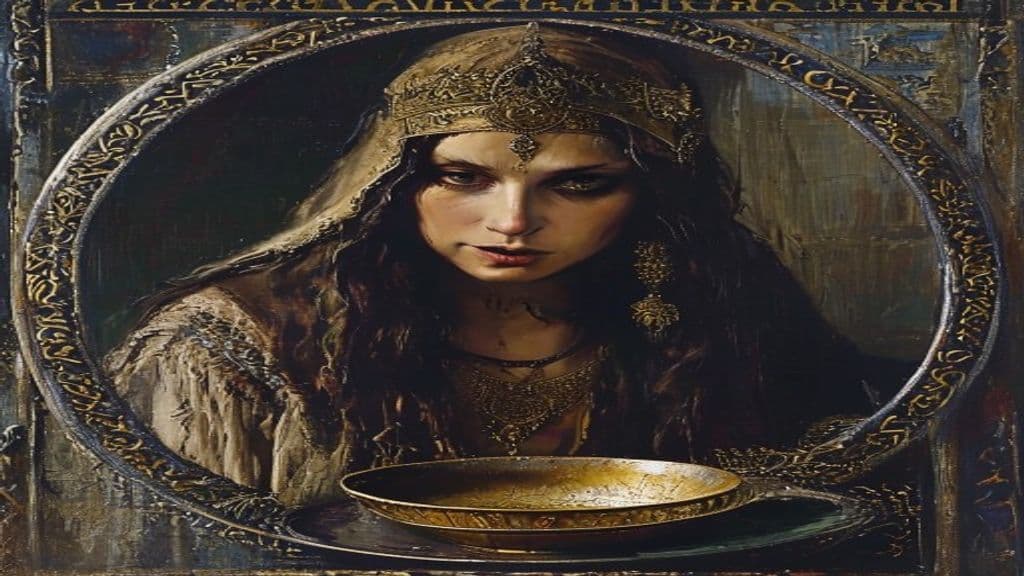
The supplied Zoharic summaries do not provide a detailed physical description of Eisheth; she is named and characterized by role (the 'female of Samael,' 'wife of harlotry') rather than by corporeal features. Derivative and modern sources that assimilate her to succubi or to the 'four queens' sometimes portray her with seductive or fantastical features typical of later demonological and popular imaginings, but such imagery is secondary to and not present in the primary Zoharic passages summarized in the materials.
In the Zoharic framing Eisheth functions as a consort or mate of Samael, implying a symbolic role in seduction, sexual corruption, and the propagation of malign influence within the mystical cosmology. Later occult and popular accounts attribute to her behaviors common to succubus lore (seduction of men, nocturnal visitations, producing demonic offspring, leadership among malignant female spirits), and occult writers place her as a Qliphothic princess with jurisdiction over an aspect of impurity. Specific claims such as 'feeding on souls' or detailed routines of nocturnal visitation are recorded in derivative online and popular sources but are not corroborated in the supplied Zohar citation and are therefore later accretions in the reception history.
3-D Man
3-D Man is a Marvel Comics superhero identity associated with a 1950s-era origin in which the body of Chuck Chandler can materialize in three-dimensional existence when activated by his brother Hal via a pair of glasses. The mantle was later assumed by Delroy Garrett (formerly Triathlon) in modern continuity.
5 Ronin
5 Ronin is a 2011 Marvel Comics five-issue limited series that reimagines five Marvel superhero archetypes as rōnin (masterless samurai) in a fictionalized post‑Sekigahara feudal Japan. The work places Wolverine, Hulk, Punisher, Psylocke, and Deadpool analogues into period roles to explore displacement, revenge, and identity in an era of political upheaval.
57 Mnemosyne
57 Mnemosyne is a large main-belt asteroid (S-type) discovered in 1859 and named after the Greek Titaness Mnemosyne. It is a non-sentient astronomical body studied for its orbital and rotational properties and has been used in dynamical measurements related to Jupiter.
58 Concordia
58 Concordia is a fairly large main-belt asteroid orbiting the Sun, discovered in 1860 and named after the Roman goddess Concordia. Astronomical sources classify it as a C-type (carbonaceous) body with a multi-year orbital period and measurable rotation and pole orientations.
9MOTHER9HORSE9EYES9
An anonymous Reddit screen name and online persona used by the author of the Interface series, a multipart speculative-horror narrative posted in short installments across Reddit in 2016. The name functions as the signature of an authorial identity and as a focal label for a fandom that created archives, a subreddit, and a wiki documenting the story and its fictional phenomena (notably entities called "flesh interfaces").
A.R.G.U.S.
A.R.G.U.S. is a fictional clandestine United States government agency in the DC Comics universe that investigates, contains, and manages superhuman, meta-human, and supernatural incidents and assets. Introduced in The New 52 continuity, it functions as an institutional actor providing intelligence, logistical support, covert task forces (notably Task Force X / the Suicide Squad), and a dedicated magic division across comics and media adaptations.
Aamon
Aamon (also Amon) is a named spirit in early modern Western grimoire tradition (Pseudomonarchia Daemonum; the Ars Goetia / Lesser Key of Solomon). He is presented as a high-ranking infernal officer (Marquis/Prince) who governs forty legions and is credited with knowledge of past and future and with affecting human relationships (reconciling or procuring feuds and favor).
Aaron
Aaron is a central human figure in Israelite sacred literature: the elder brother of Moses, the first high priest (progenitor of the Aaronide priesthood), and a spokesman/prophet who mediates between Israel and God in Exodus–Deuteronomy narratives. His role in the texts establishes hereditary priestly authority, ritual functions (sacrifices, blessing, use of Urim and Thummim), and institutional norms for Israelite cultic life.
Abaddon
In Hebrew scripture Abaddon is primarily a noun meaning 'destruction' or a section/condition of the underworld paired with Sheol; in the New Testament Book of Revelation Abaddon is personified as an angelic figure (Greek Apollyon) described as the king of an army of locusts released from the abyss during the apocalypse.
Abagtha
Abagtha (Hebrew: אבגתא, ’Ǎḇaḡṯā) is a named human court official in the Hebrew Bible’s Book of Esther, listed among seven chamberlains who ministered before King Ahasuerus and were commanded to bring Queen Vashti before the king. He is attested only in Esther 1:10 and is presented as an institutional palace attendant rather than a supernatural being.
Abdiel
Abdiel (Hebrew עֲבְדִּיאֵל) is primarily a theophoric Hebrew personal name meaning "servant of El/servant of God," attested once in the Hebrew Bible (1 Chronicles 5:15). In later literature—most notably John Milton's Paradise Lost—Abdiel is reimagined as a faithful seraph who opposes Satan's revolt. The provided sources do not treat Abdiel as an autonomous folkloric spirit type or record rituals or wards associated with the name.
Abel
Abel is the second son of Adam and Eve in the Genesis narrative, a shepherd whose accepted offering and subsequent murder by his brother Cain form the biblical account of the first death. Later interpretive traditions expand his role, treating him as an archetypal righteous victim, a postmortem avenging or adjudicating figure, and in some systems (notably Mandaean) identifying him with an angelic lightbeing.
Community Record
- [1]Eisheth (Wikipedia summary drawing on Zohar and Mathers/Crowley treatments). Wikipedia: Eisheth (article summarizes Zoharic citations and later occult reception)wiki
- [2]Eisheth (Wikidata entry). Wikidata: structured data identifying Qliphothic princess attributionwiki
- [3]Succubus and 'four queens' summaries (derivative folkloric account cited in research notes). Derivative folkloric summaries identifying Lilith, Eisheth, Agrat bat Mahlat, and Naamah as four succubi who mate with Samael (as noted in the compiled research notes)folk
- [4]Archive and popular culture references (collection noted in research notes). Various modern archive, fandom, and popular-culture items that adapt Eisheth in fiction and gaming (mentioned in the research notes list)other
- [5]Community Q&A on Eisheth feeding on souls. StackExchange discussion recording claims not corroborated in primary Zohar citation (noted as uncertain in research notes)other