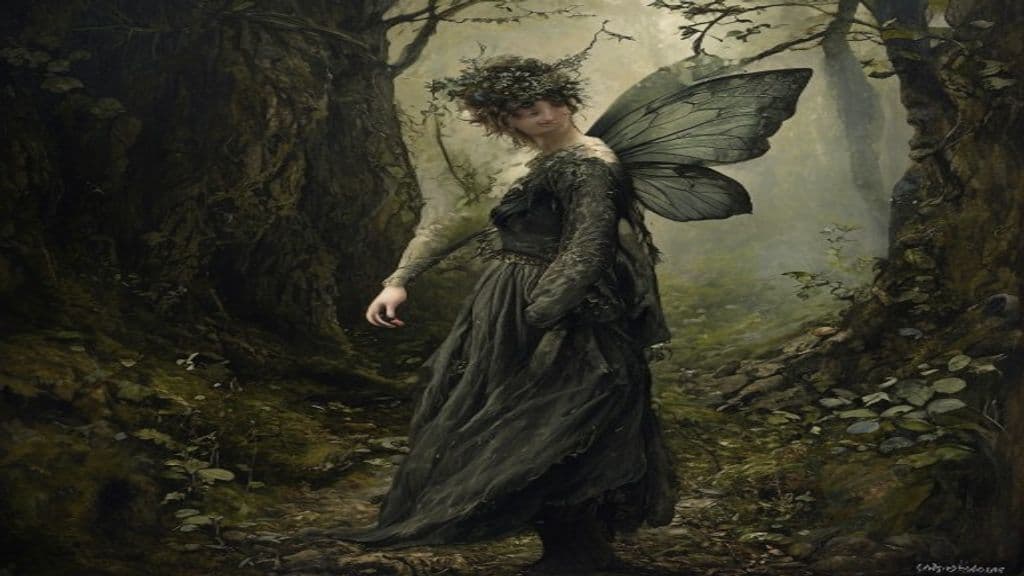
Folkloric and scholarly accounts present fairies as a syncretic category whose presumed origins vary by commentator and region: they have been framed as pagan deities or nature spirits, as spirits of the dead, as an older race of humans or prehistoric peoples, and in Christian-influenced interpretations as demoted angels or demonic-like beings. Historians also note broader cultural exchanges (including suggested influence from Persian peri) and medieval literary developments that together produced the diverse modern concept "fairy." These layered explanations reflect ongoing reinterpretation rather than a single origin narrative.
Generally anthropomorphic and humanlike in appearance, fairies are described in sources as ranging from 'quite tiny' to human-sized; some traditions note small fairies that could magically expand to imitate humans. Regional descriptors include Orkney accounts of short figures dressed in dark grey and sometimes wearing armour, occasional mentions of green eyes, and variability in footwear (some bare, some shod). Wings are common in Victorian and later art but are rare in older oral folklore; flight in traditional accounts is typically by magic rather than anatomical wings.
Fairies possess a range of magical powers in the folkloric record: size-shifting, magical flight, enchantment, and the ability to influence human affairs. They are often tricksters and can be capricious or hostile; historically they were blamed for unexplained misfortunes and illnesses (for example, certain accounts attribute tuberculosis or birth deformities to fairy action). They are associated with leading travellers astray (will-o'-the-wisp motifs), haunting particular locations, and engaging in exchange or boundary-crossing with humans.
Weaknesses
- conditionInversion of clothing (wearing garments inside out as an apotropaic condition)
Wards
- otherChurch bells (sonic Christian boundary marker)
- substanceFour-leaf clover (protective talisman)
- otherFood offerings (propitiation to placate or appease)
- conditionWearing clothing inside out (applied as a protective practice)
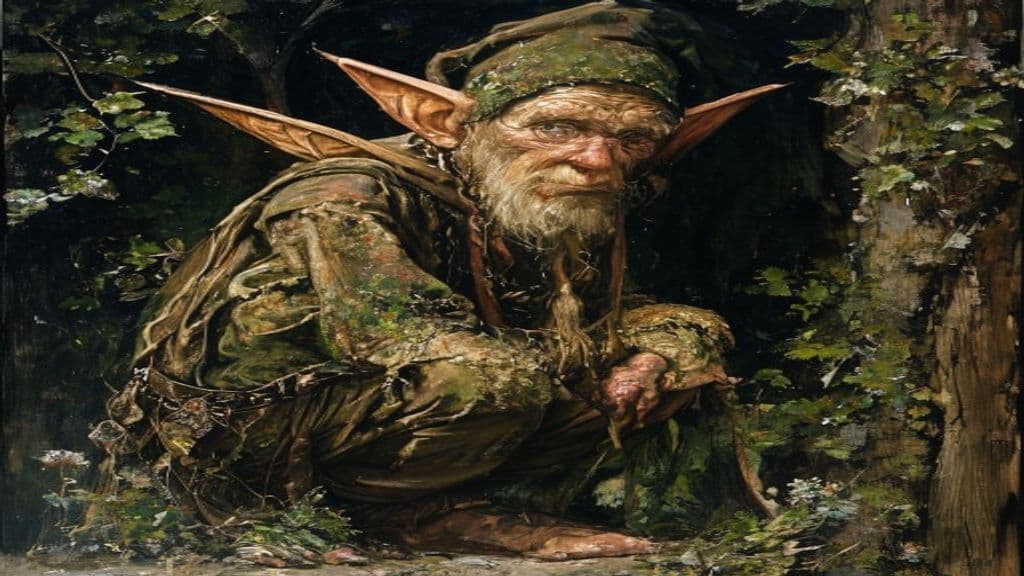
Abandinus
Abandinus is a locally attested Romano‑Celtic theonym known from a single inscribed bronze feather (votive object) dedicated at Godmanchester (the Roman fort Durovigutum) in Cambridgeshire. Scholars interpret him as a local god or male spirit tied to a specific place and possibly associated with a nearby spring or stream; this association is tentative and based on etymological readings of the name.
Abarta (Ábartach)
Abarta (also Ábartach) is a figure of Irish myth who, in surviving accounts, tricks Fionn mac Cumhaill's warriors by giving them a supernatural grey horse that bears them into the Otherworld. Sources variably identify him as a member of the Tuatha Dé Danann or as a Fomorian; after the incident he is compelled to release the captured warriors and is refused entry to the Fianna.
Abcán (Abhcán)
Abcán (modern spelling Abhcán) is a named dwarf poet and musician of the Tuatha Dé Danann in Irish myth. He appears in a small number of narratives as a musician whose art has soporific power and as the ferryman who brings the goddess Ruad from the Otherworld to the human world.
Abdiel
Abdiel (Hebrew עֲבְדִּיאֵל) is primarily a theophoric Hebrew personal name meaning "servant of El/servant of God," attested once in the Hebrew Bible (1 Chronicles 5:15). In later literature—most notably John Milton's Paradise Lost—Abdiel is reimagined as a faithful seraph who opposes Satan's revolt. The provided sources do not treat Abdiel as an autonomous folkloric spirit type or record rituals or wards associated with the name.
Abhean
Abhean is a named poet of the Tuatha Dé Danann in medieval Irish literature, described as a poet in particular of Lugh and recorded as having been killed by Óengus before Midir in a poem by Fland Mainistreach preserved in the Lebor Gabála Érenn.
Abiel
Abiel is attested in the supplied sources only as a male given name — borne by several historical American individuals and listed as two minor biblical figures. The provided materials contain no evidence presenting Abiel as a supernatural, mythological, or folkloric entity.
Abigail
Abigail is a female figure in the Hebrew Bible portrayed in 1 Samuel 25 as the intelligent and beautiful wife of Nabal who intervenes to prevent David from committing violence; later tradition regards her as one of the Tanakh's seven female prophets and as a model of beauty and wisdom.
Abnoba
Abnoba is a Gaulish theonym and toponym attested in Roman-era sources and inscriptions: a localized deity associated with woods, springs and the sources of rivers (notably the Danube) and simultaneously the name applied to a mountain or mountain range in the Black Forest/Baar/Odenwald region. Roman altars equate her with Diana, reflecting syncretic cult practice in frontier provinces.
Abraun
Abraun is an attested name in German-language plant-legend scholarship (Der abraun, ein beitrag zur pflanzensagenkunde, 1916) and a short database entry (Wikidata) labels it as a spirit from German mythology. Surviving accessible documentation is extremely limited: the principal academic treatment is a 1916 contribution to pflanzensagenkunde (plant-saga studies), but the excerpts available here contain only bibliographic metadata and do not record tales, descriptions, or rituals.
Accolon
Accolon is a mortal knight of the Arthurian court, presented in the Post-Vulgate Merlin tradition and Malory's Le Morte d'Arthur as Morgan le Fay's paramour and instrument in a plot to supplant King Arthur; his tale centers on enchanted weapons (Excalibur and its scabbard), love-manipulation, and a tragic duel with Arthur.
Achall
Achall is an eponymous mortal woman in the Ulster Cycle of early Irish literature whose grief-induced death is given as the origin of the hill-name Achall (identified with the modern Hill of Skryne). She appears as a genealogical and etiological figure tied to Tara and later legendary events at the hill, rather than as a recurring supernatural agent.
Achtland
Achtland is a figure from Irish tradition who, according to the surviving account, was a mortal woman famed for rejecting mortal suitors who married a member of the Tuatha Dé Danann and crossed into the síde to become immortal as his wife.
Community Record
- [1]Fairy (Wikipedia). Wikipedia contributors, 'Fairy', Wikipedia, The Free Encyclopediawiki
- [2]Fairy (Wikidata). Wikidata entry Q1393460, 'Fairy'wiki
- [3]Taking a break (Archive reference listing related media). Archive.org collection reference included in research notesother