Ghost-train narratives arise in locales where railways became socially significant; in many traditions the motif appears after the arrival of steam trains and motor cars. In Japan the nisekisha/yūrei-kikansha tales are attested from the late 19th century (earliest instances traced between 1879 and 1887) and were widespread by about 1910, with reports continuing into the mid-20th century; scholars interpret these tales as responses to industrial modernity and the social effects of railway introduction. In Anglo-American contexts some variants link the apparition to particular historical events (for example, a recurring phantom funeral train associated with Abraham Lincoln's death), while other local legends (such as the St. Louis Light in Saskatchewan) arose around abandoned or former railway places and were later subject to scientific investigation.
Descriptions vary by region but consistently present the apparition as a full train or rail vehicle with lights and motion. Canadian accounts include a 1908 story of a ghost train with blinding lights traveling on non-existent tracks. U.S. funeral-train variants are described with spectral details (accounts mention a ghostly band, a flatcar carrying a coffin, and reports that watches and clocks stop as it passes). Japanese nisekisha/yūrei-kikansha are often perceived first as the sound and approach of a steam train; physical sighting may resolve into finding a dead tanuki on the tracks rather than an actual locomotive.
The ghost train manifests as a mobile apparition that travels along routes associated with railways and can produce visual lights and audible train noises. In some U.S. variants it is said to recur around an anniversary (e.g., the Lincoln funeral-train tradition) and to affect timepieces in surrounding areas. Japanese versions function as deliberate illusions: tanuki are said to mimic train sounds and appearances to deceive humans, leading drivers to stop for an apparent oncoming train and later discover the animal. In at least one Canadian case (St. Louis Light) the phenomenon was scientifically replicated and explained as optical diffraction of distant vehicle lights, indicating some sightings have non-supernatural explanations alongside folkloric accounts.
Weaknesses
- conditionscientific explanation
- conditionpractical caution (avoidance by stopping to observe and then proceeding)
Wards
- otherpractical caution (drivers stop to avoid collision)
- otherinvestigation and replication (scientific inquiry as a demystifying ward)

Tanuki
The raccoon-dog spirit of Japanese folklore — a cheerful trickster and master of shape-shifting, less dangerous than the kitsune but far more mischievous. Famous for leaves transformed into money.
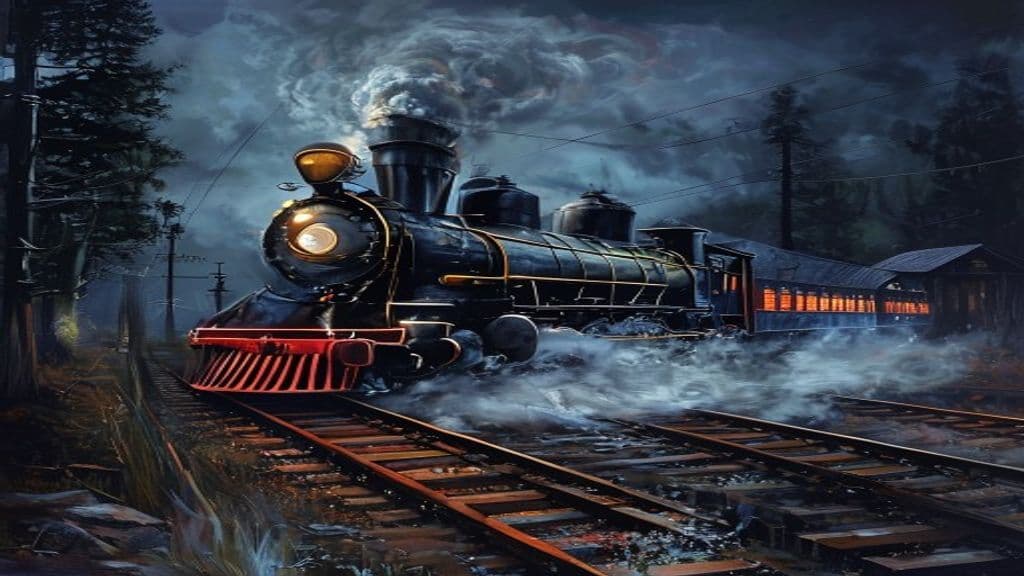
Ghost Train
A folkloric apparition whose visible form is an entire train or rail vehicle rather than a single disembodied human spirit. Reported in multiple regions where railways have been significant, it appears variously as omen, commemorative phantom, or an imitation created by animal tricksters in local tales.
5 Ronin
5 Ronin is a 2011 Marvel Comics five-issue limited series that reimagines five Marvel superhero archetypes as rōnin (masterless samurai) in a fictionalized post‑Sekigahara feudal Japan. The work places Wolverine, Hulk, Punisher, Psylocke, and Deadpool analogues into period roles to explore displacement, revenge, and identity in an era of political upheaval.
Abdiel
Abdiel (Hebrew עֲבְדִּיאֵל) is primarily a theophoric Hebrew personal name meaning "servant of El/servant of God," attested once in the Hebrew Bible (1 Chronicles 5:15). In later literature—most notably John Milton's Paradise Lost—Abdiel is reimagined as a faithful seraph who opposes Satan's revolt. The provided sources do not treat Abdiel as an autonomous folkloric spirit type or record rituals or wards associated with the name.
Abiel
Abiel is attested in the supplied sources only as a male given name — borne by several historical American individuals and listed as two minor biblical figures. The provided materials contain no evidence presenting Abiel as a supernatural, mythological, or folkloric entity.
Abigail
Abigail is a female figure in the Hebrew Bible portrayed in 1 Samuel 25 as the intelligent and beautiful wife of Nabal who intervenes to prevent David from committing violence; later tradition regards her as one of the Tanakh's seven female prophets and as a model of beauty and wisdom.
Abumi-guchi
A Japanese yōkai classed as a tsukumogami: an animated stirrup (abumi) depicted in Sekien Toriyama's Gazu Hyakki Tsurezure Bukuro. Traditional accounts say it is formed from a stirrup that belonged to a soldier who fell in battle and that it waits where the stirrup lies for its dead owner to return.
Abura-akago
An Edo-period yōkai depicted as an oil‑licking infant or a ball of flame. First recorded in illustrated compendia (notably Toriyama Sekien's Konjaku Gazu Zoku Hyakki), the Abura-akago is tied to tales of oil‑stealing fires and functions in part as an etiological warning about wasting or stealing oil.
Abura-sumashi
A yōkai spirit from the Amakusa region of Kumamoto Prefecture, Japan, said to inhabit mountain passes. Traditionally explained as the ghost of a person who stole oil, it appears to surprise travelers and is represented in modern media with a straw-coat body and a potato- or stone-like head.
Aburabō / Abura-bōzu / Aosaginohi (traditions)
Two distinct Japanese traditions appear under related flame imagery: Aosaginohi/Aosagibi is presented as a will-o'-the-wisp type luminous night phenomenon interpreted as reflections from herons; aburabōzu (abura bōzu, "oil monk") appears in a separate anecdote as a reported fire-breathing apparition in a 12th-century Yasaka Shrine tale. The sources treat them as separate portrayals rather than a single unified being.
Acala
Acala (Sanskrit: अचल, 'The Immovable') is a wrathful protective deity (dharmapala) in Vajrayāna and East Asian esoteric Buddhism, classed among the Wisdom Kings (Vidyārāja). He functions as a ritual focus for visualization and mantra practice intended to remove obstacles and bind or destroy hostile forces.
Accolon
Accolon is a mortal knight of the Arthurian court, presented in the Post-Vulgate Merlin tradition and Malory's Le Morte d'Arthur as Morgan le Fay's paramour and instrument in a plot to supplant King Arthur; his tale centers on enchanted weapons (Excalibur and its scabbard), love-manipulation, and a tragic duel with Arthur.
Adsullata
Adsullata is attested as a Continental Celtic river goddess associated with the River Savus (modern Sava) in the Roman province of Noricum. Later traditions record her presence in Brittany as a goddess of hot springs and present her as an antecedent or origin-form of the Anglo‑Celtic sun goddess Sul.
Afaon fab Taliesin
Afaon fab Taliesin is a medieval Welsh warrior-counsellor, named as a son of the bard Taliesin and recorded among Arthur’s retinue in Welsh tradition. He appears in the Welsh Triads and in the tale Breuddwyd Rhonabwy (The Dream of Rhonabwy) as a notable martial figure and proverb-speaker rather than as a supernatural being.
Community Record
- [1]Ghost train. Wikipedia: Ghost train (summary of regional traditions including nisekisha, Lincoln funeral train, St. Louis Light)wiki
- [2]Archive: Haints, Trains, and Automobiles. Archive recording referencing mobile apparition/vehicle legendsother
- [3]VOA Global English (April 24, 2020). Archive item cited in research notesother
- [4]How To Paint a Prairie Ghost Train. Essay/resource referenced in source listother