In surviving summaries of the myth Hyacinth is a mortal youth beloved by Apollo. During athletic games (traditionally a discus-throwing contest) Hyacinth is struck and killed; some retellings present the west wind Zephyrus (Zephyr) as jealous of Apollo's love and as the agent whose jealousy causes the fatal accident. After his death Apollo transforms the drops of Hyacinth's blood into a flower, thereby explaining the origin and name of a spring-blooming plant called ὑάκινθος in Greek sources.
As recounted in the sources Hyacinth is described as an exceptionally beautiful youth, among the most beautiful of mortals. After his death the myth links him to a spring-blooming flower; ancient usages of the term ὑάκινθος refer to at least more than one plant (candidates in scholarship and botanical commentary include small spring bulbs such as Scilla bifolia or other spring flowers, and some later identifications associate the name with forms like larkspur), so the exact botanical referent is ambiguous in the ancient record.
Sources do not attribute specific supernatural powers to Hyacinth beyond his status as a beloved mortal who is commemorated through metamorphosis and cultic/poetic remembrance. His role in myth is primarily relational and etiological: beloved of Apollo, subject of divine rivalry (with Zephyrus), participant in athletic contests with Apollo, and transformed after death into a flower that recurs each spring.
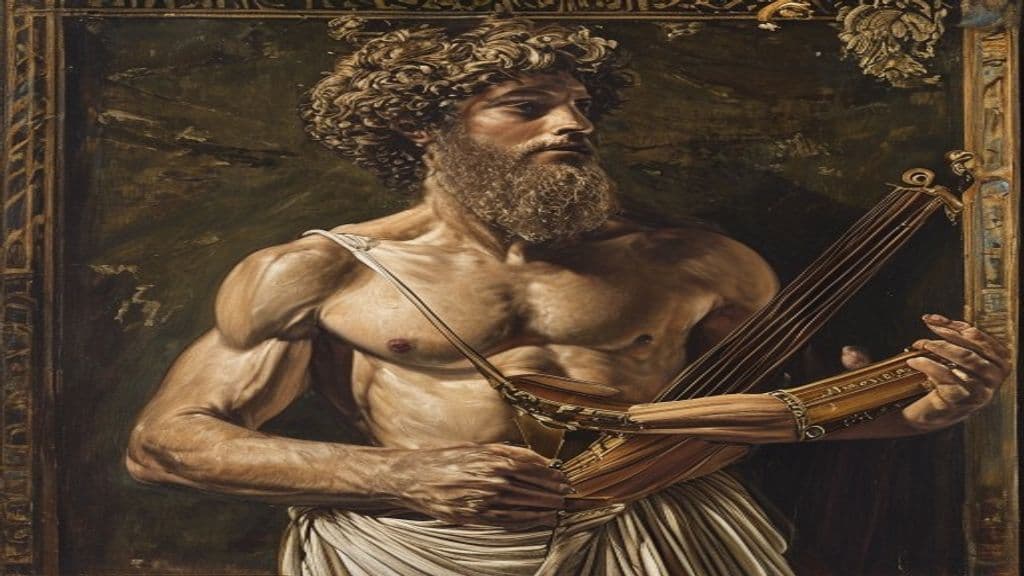
*Péh₂usōn (reconstructed)
Péh₂usōn is a hypothetical Proto‑Indo‑European pastoral guardian reconstructed by comparative scholars from parallels in Greek and Vedic traditions. Proposed as a Graeco‑Aryan ancestor‑figure, the reconstruction describes a protector of flocks, roads, and travellers rather than an attested historical cultic personality.
Aba (disambiguation / name-form)
Aba is a polyvalent name-form attested across many unrelated contexts (place names, personal names, animal names, and brief mythological listings). The provided sources do not support a single, coherent supernatural entity called "Aba" and offer no descriptive or ritual material for such a being.
Abarbarea
Abarbarea is a name attested in classical Greek and Roman sources for freshwater nymphs (naiads). The name appears for at least two individual mythic figures — a naiad wife of Bucolion and a naiad counted among ancestors of the Tyrians — and Hesychius records plural forms that may indicate the name was also used as a class-name (Abarbareai / Abarbalaiai).
Abas
Abas (Ancient Greek: Ἄβας, gen.: Ἄβαντος) is not a single mythic being but a recurring personal name borne by multiple mortals and minor mythic figures in Greek epic and genealogical traditions — kings, founders, seers, warriors, attendants, a centaur, and a youth transformed by a goddess. The name is glossed in the sources as 'guileless' or 'good-hearted' and appears across Argive, Theban, Trojan, Euboean, and other local cycles.
Abderus
Abderus (Ancient Greek: Ἄβδηρος, romanized Ábdēros) is a mortal heroic figure in Greek myth closely associated with Heracles, remembered as the youth left in charge of the Mares of Diomedes who was killed by them. He functions as an eponymous local/divine-hero ancestor for the city of Abdera and received funerary commemoration and athletic agones at his tomb.
Abomination of Desolation
An apocalyptic prophetic phrase originating in the Book of Daniel designating a profaning thing or act that renders the Jerusalem Temple cult desolate; later reused in the Synoptic Gospels as an eschatological sign prompting urgent flight. The term denotes ritual/cultic impurity (Hebrew shiqquts) and is variously interpreted as pagan offerings or altar, a foreign cult statue, or (in some New Testament readings) an acting agent.
Absyrtus
Absyrtus (Ancient Greek: Ἄψυρτος) is a Colchian prince in the Greek Argonautic cycle, son of King Aeëtes and brother or half-brother of Medea. He appears in variant traditions either as a companion taken by Medea during her flight with Jason and murdered/dismembered to delay pursuit, or as a pursuer sent by Aeëtes who is overtaken and slain by Jason; his death functions as a key narrative device in the escape from Colchis.
Acacallis
Acacallis (Ancient Greek: Ἀκακαλλίς; also Acalle) is a mythological princess of Crete in Greek tradition, daughter of King Minos and Pasiphae. She functions primarily as a dynastic and etiological figure: in varying accounts she is mother, by gods such as Hermes (Mercury) or Apollo, of eponymous or founder-figures like Cydon (founder of Cydonia), Miletus, or Lydon/ Lydus.
Acacus
Acacus (Ancient Greek: Ἄκακος) is, in Arcadian Greek tradition, a mortal eponymous founder-king of Acacesium and is remembered as the foster-father who reared the infant Hermes (Mercury) in that local tradition. He is presented in genealogies as a son of Lycaon and functions as a local ancestral/onomastic figure rather than a supernatural spirit.
Academus
Academus (Greek: Akádemos / Hekádemos) is an Attic hero-eponym tied to a sacred grove (Akademeia) on the Cephissus near Athens. In myth he revealed where Helen was hidden to the Dioskouroi, an act said to have saved the city, and the place bearing his name became a long-lived sacred precinct, later the site of Plato's Academy.
Acamas
Acamas (Ancient Greek: Ἀκάμας) is a personal name recurrent in ancient Greek narrative traditions applied to multiple human characters (warriors, princes, suitors), once to a Cyclops, and once as a hound's name. Rather than a single supernatural entity, bearers of the name appear episodically across the Trojan War, Theseid, and Theban cycles as mortal actors whose deeds intersect with gods and fate.
Acantha
Acantha (Ancient Greek: Ἀκάνθα, 'thorn') is a late or secondary mythological figure known from modern retellings as a nymph transformed into the acanthus plant. The tale that she scratched Apollo and was changed into a spiny-leaved plant is not attested in surviving classical corpora and appears to be a modern compilation or invention rather than a firmly documented ancient myth.
Community Record
- [1]Hyacinth (mythology) - Wikipedia. Wikipedia contributors, 'Hyacinth (mythology)', Wikipedia, The Free Encyclopediawiki
- [2]Hyacinth - Wikipedia (genus entry summary referencing myth). Wikipedia contributors, 'Hyacinth', Wikipedia, The Free Encyclopediawiki
- [3]Hyacinth in Greek Mythology - Greek Legends and Myths. Greek Legends and Myths, 'Hyacinth in Greek Mythology'folk
- [4]Hyakinthos (Theoi.com entry). Theoi Project, entry for Hyakinthos (Hyacinth)other
- [5]BoyWiki: Hyacinth (mythology). BoyWiki, 'Hyacinth (mythology)'wiki
- [6]Archive: The door before (reference collection). Archive collection referenced in research notesother