Hyang is rooted in the animistic-dynamic cosmologies of the Indonesian archipelago that predate and persisted alongside later Hindu, Buddhist, and Islamic influences. The term and concept developed in ancient Java and Bali more than a millennium ago as part of indigenous belief in powerful unseen entities; in later syncretic systems the hyang idea was reinterpreted into abstracted supreme principles (for example Sang Hyang Tunggal or Sang Hyang Widhi Wasa) while retaining older senses of ancestral and place spirits. The unseen abode of these beings is called Kahyangan (Old Javanese ka-hyang-an), and place-names and temple types (e.g., Parahyangan, pura kahyangan jagad) record the sacral geography of hyang belief.
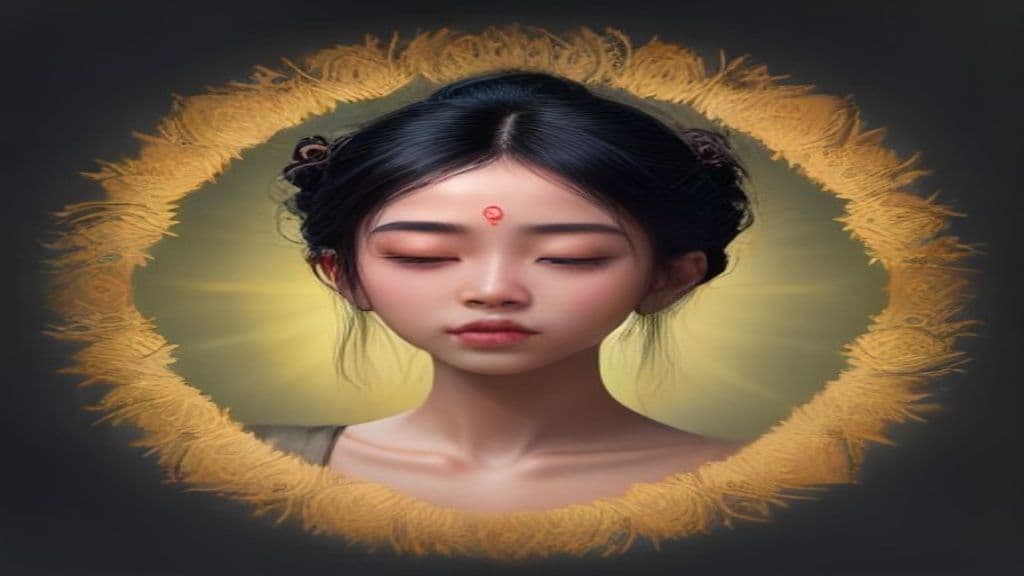
Descriptions emphasize a luminous and sacred personal presence in some contexts, especially within Balinese formulations where the hyang is sometimes "portrayed like the sun in a dream" and often referenced in masculine terms. Elsewhere hyang need not have a fixed anthropomorphic form: they can be deified ancestors, guardian-place spirits attached to trees, stones, mountains, or more abstract divine principles. Old Sundanese nga-hyang carries a sense of disappearance or being unseen, underscoring that hyang are often conceived as invisible or manifesting intermittently.
Hyang possess supernatural power and are variously conceived as sources of blessing, the cause of beauty or worldly welfare, ancestral powers that remain involved in descendants' affairs, or—within some theological formulations—principles connected to the origin of existence. They may be benevolent or malevolent; pre-modern natives are described as believing in unseen entities capable of both help and harm. Hyang are venerated, invoked, and sometimes intentionally summoned in ritual contexts (for example Sanghyang trance dances) and can function as guardian spirits for particular locales or as deified ancestors with ongoing influence.
Weaknesses
None recorded.
Wards
- ritualSembahyang (sembah-hyang)
- ritualLocal shrine and guardian cults (Danghyang / Dhanyang / Danyang)
- ritualKahyangan temple rites (pura kahyangan jagad / mountain shrine ritual practice)
- ritualSanghyang trance dances (e.g., Sanghyang Dedari, Sanghyang Jaran) as controlled ritual engagements

Naga
Divine serpent beings of Hindu, Buddhist, and Jain cosmology — powerful guardians of water, earth, and underground treasures. Revered as deities in South and Southeast Asia.
Apsara
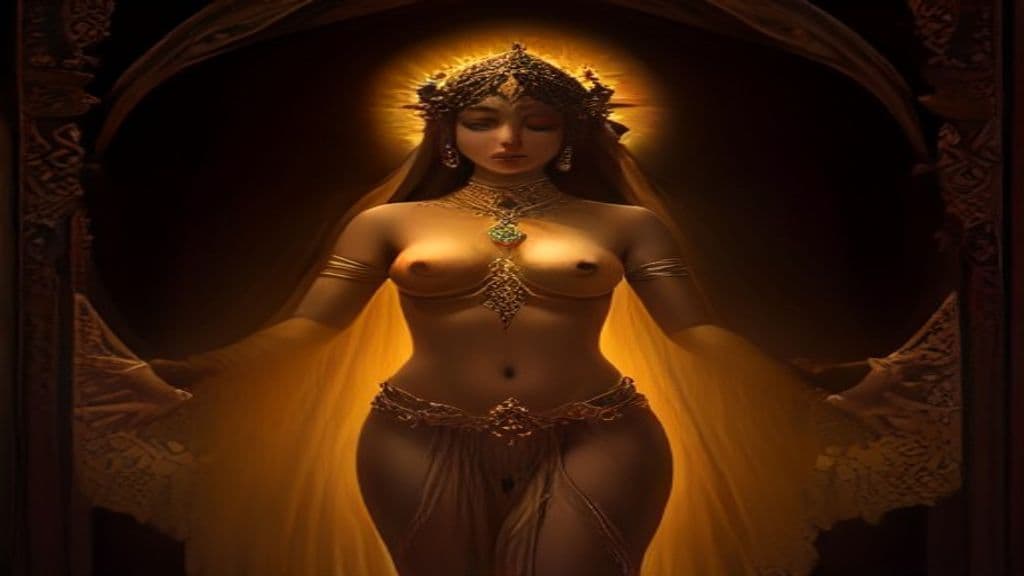
Celestial dancers and water nymphs of Hindu cosmology — beautiful semi-divine beings who dance at the court of Indra and, by his command, descend to earth to distract sages from excessive asceticism.
Djinn
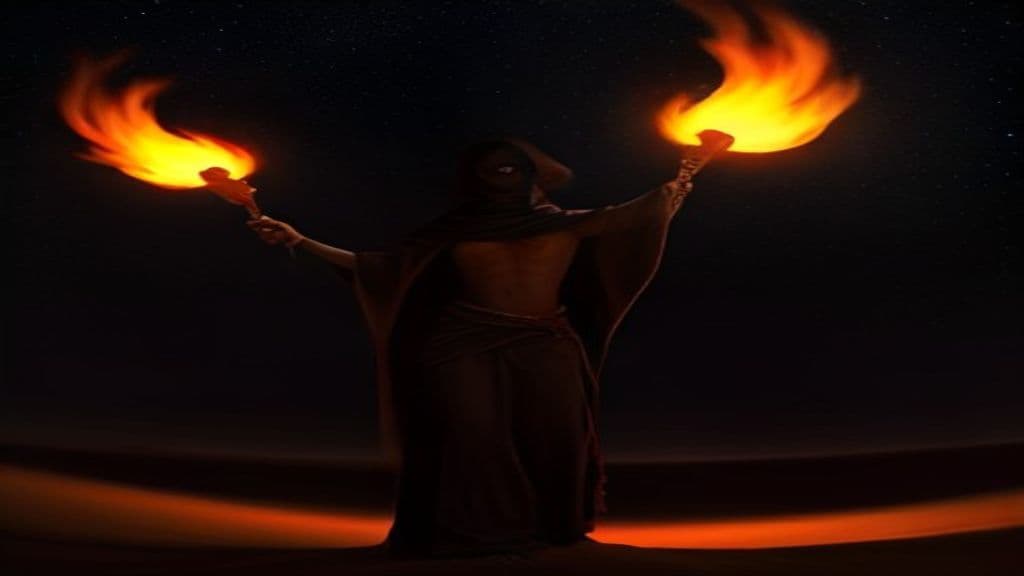
The class of supernatural beings created from smokeless fire in Islamic cosmology — a parallel civilization to humanity, capable of belief or unbelief, with their own prophets, society, and judgment before God.

Jann
The weakest class of djinn in Islamic tradition, associated with desert winds and taking the form of snakes or whirlwinds, dwelling in empty wilderness and posing little threat to those who know the proper invocations.
Anansi
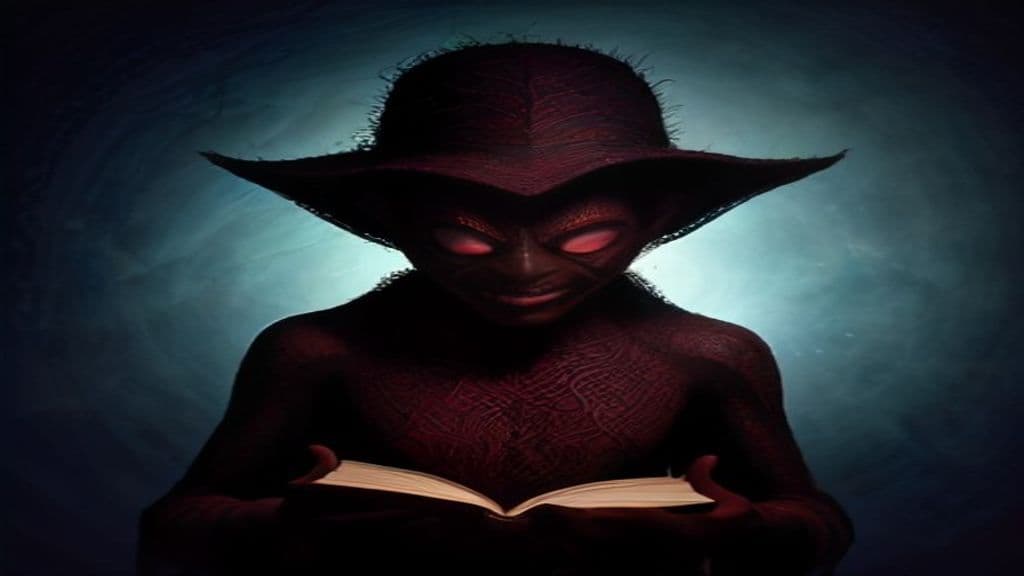
The spider trickster god of Akan folklore — cunning, mischievous, and wise. Keeper of stories and teacher of human beings, brought through the slave trade into Caribbean and African-American tradition.
Acintya
Acintya is an Indonesian Hindu theological-symbolic representation of the ineffable supreme divine principle. In Balinese and Javanese practice it functions as a way to make ultimate reality present in ritual and art—often aniconically as an empty throne (padmasana) or anthropomorphically as a naked, flame-surrounded figure—rather than as a narrative, intervening deity.
Aji Saka
Aji Saka is a legendary Javanese culture-hero and foundational figure credited in tradition with pacifying Java, founding a kingdom at Medang Kamulan, instituting the Saka calendrical era in Java, and composing the hanacaraka mnemonic poem tied to the origin of the Javanese script.
Antaboga
Antaboga is a primordial serpent deity in Javanese and Sundanese traditional beliefs, later incorporated into Balinese Hinduism. Portrayed as an original creative being, Antaboga meditates and brings forth the world turtle Bedawang and other divine figures; its image appears widely in Javanese and Balinese ritual ornament and iconography.
Babi Ngepet
In Indonesian mythology, the Babi Ngepet is a boar demon associated with malevolent intentions towards humans. (Note: * Power tier: Downgrade to Ancient (deity-level) as there's no indication of Primordial powers. * Abilities: Specify what malevolent intentions towards humans implies, e.g., ability to curse or cause )
Barong
In Balinese mythology, the Barong is a panther-like creature and leader of good spirits. (Note: - Power tier: Greater (based on the description as a powerful regional entity, leader of hosts of good spirits) - Abilities: Specify that the Barong opposes Rangda's evil energies, implying a defensiv)
Batara Guru
Batara Guru is a supreme divine figure in multiple Indonesian mythological traditions (Indonesian Hinduism, Batak, Bugis, Javanese). He functions variously as a guru-aspect of Shiva, a creator or world-recoverer in Batak narrative fragments, an ancestor and progenitor in Bugis and Batak genealogies, and a high deity of the kahyangan in Javanese cosmology.
Batara Kala
Batara Kala is a Javanese and Balinese underworld deity associated with death, time, and destruction; feared as an ogre-like devourer of the unlucky, he is also ritually propitiated to avert misfortune, especially for at-risk children.
Batara Sambu
Batara Sambu is a deity in Javanese Hinduized mythology described as the god or patron of teachers, the first-born son of the high god Batara Guru and queen Batari Uma. In wayang (Javanese shadow-play) tradition he is depicted as a ruler of clouds, ancestor of rakshasa (giants), and resident of the southern heavenly realm Kahyangan Swelagringging; his pasaran (Javanese calendar day) is Pa(h)ing and his palace is said to be made of copper.
Bawang Merah dan Bawang Putih
A widely told Malay/Indonesian folktale about two eponymous human stepsisters — Bawang Putih (the humble, patient sister) and Bawang Merah (the vain, cruel sister). The story uses small supernatural motifs (magic pumpkins, a talking fish, a gift-bearing old woman) set in rural liminal spaces to reward virtue and punish vice; it functions as a didactic children's tale rather than an account of a discrete spirit being.
Busang
Busang is not attested as a supernatural being in the supplied sources; rather it is a polyvalent proper name found as a toponym (places in Borneo), a lect name (Busang Kayan), a mining prospect label (Busang deposit in the Bre‑X scandal), and as a personal name. No mythological origin, appearance, powers, or ritual practices directed at a supernatural Busang are recorded in the provided material.
Calon Arang
Calon Arang is a witch figure in Javanese and Balinese folklore, traditionally portrayed as a master of black magic whose cemetery ceremony—including the sacrifice of a young girl to the goddess Durga—brings flood and an incurable plague to the village of Girah. In the tale a royal ritual specialist (Mpu Bharadah) and his disciple (Mpu Bahula) neutralize her by recovering her magic scroll and confronting her in ritual contest.
Chen Fu Zhen Ren
Chen Fu Zhen Ren (陳府真人; Hokkien: Tan Hu Cin Jin) is a deified ancestral/tutelary figure venerated in East Java, Bali, and Lombok. Centered on a historical/legendary migrant craftsman who became a local immortal, his cult is maintained in Chinese temples and by indigenous Kejawen practitioners and functions as a protective, communal ancestor patron.
Community Record
- [1]Hyang. Wikipedia: Hyangwiki
- [2]Sang Hyang Widhi Wasa. Wikipedia: Sang Hyang Widhi Wasawiki
- [3]Hyang (Wikidata). Wikidata: Hyangother