
Inari features in legendary narratives as a divine giver of grain during times of famine: traditional accounts describe Inari as descending from Heaven riding a white fox and carrying sheaves of cereal or grain. Sources present this descent as a mythic, legendary motif connecting Inari to the origin-era provision of food and abundance rather than a literal historical event. The cult of Inari is historically attested in early records (the present-day kanji first recorded in AD 892) and shrine foundations associated with Inari date back in tradition to the early centuries of Japanese shrine history.
Depictions and descriptions of Inari vary. Popular representations include a young female food megami and an old man carrying grains of rice; Inari has been portrayed as female, male, or left unspecified. Inari is closely associated with white foxes (kitsune) which act as messengers; folktales and narrative traditions also report occasional manifestations or disguises in forms such as snake, dragon, or (in some tales) a monstrous spider used in didactic episodes. Common symbolic attributes connected to Inari and its foxes include sheaves or sacks of rice, sickles, swords, scrolls, and wish-fulfilling jewels in narrative contexts.
Sources describe Inari as the patron and protector of rice, fertility, food, agriculture, and related prosperity; worshippers seek Inari's favor for crop success and worldly prosperity. Over time Inari's patronage broadened to include swordsmiths, merchants, entertainers, and various crafts and industries. Inari is served by or associated with white fox messengers (kitsune) in popular belief; narrative materials record shapeshifting and revelatory appearances in different guises, and Inari is syncretically identified with other deities (e.g., Dakiniten, Benzaiten, and food deities such as Uka-no-Mitama) in different historical and local contexts. Sources also attribute various symbolic items (gems, scrolls) to Inari's narrative tradition.
Weaknesses
None recorded.
Wards
- substanceofferings such as red rice and fried bean curd (offered to foxes/Inari in gratitude)
- ritualinstitutional shrine veneration and priestly administration (Shinto and historically Buddhist priests)
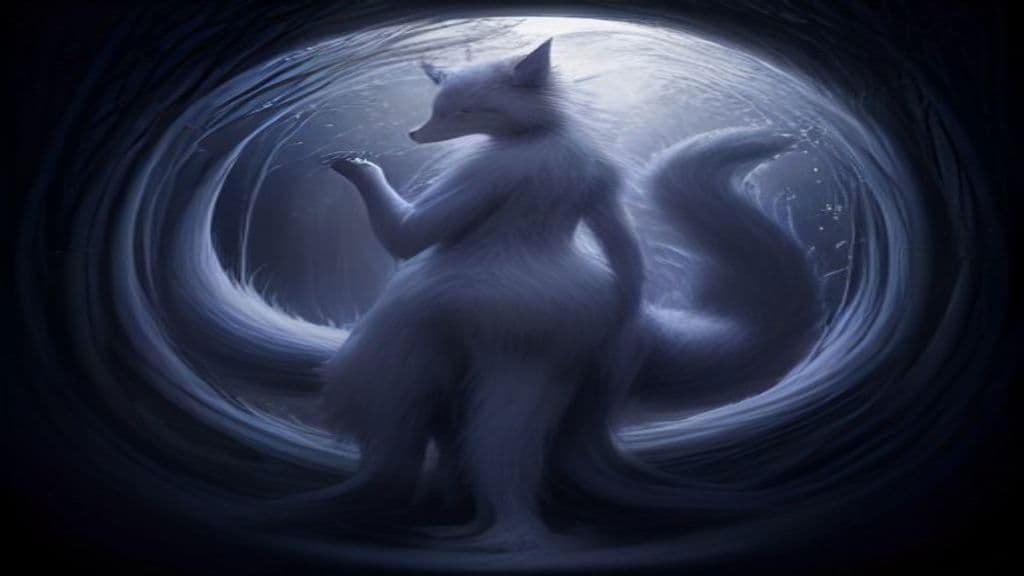
Kitsune
Fox spirits of Japanese mythology — intelligent, long-lived beings who gain additional tails (up to nine) as they age and grow in power. They serve as messengers of the god Inari and as powerful tricksters.
Kitsune
Fox spirits of Japanese mythology — intelligent, long-lived beings who gain additional tails (up to nine) as they age and grow in power. They serve as messengers of the god Inari and as powerful tricksters.
5 Ronin
5 Ronin is a 2011 Marvel Comics five-issue limited series that reimagines five Marvel superhero archetypes as rōnin (masterless samurai) in a fictionalized post‑Sekigahara feudal Japan. The work places Wolverine, Hulk, Punisher, Psylocke, and Deadpool analogues into period roles to explore displacement, revenge, and identity in an era of political upheaval.
Abumi-guchi
A Japanese yōkai classed as a tsukumogami: an animated stirrup (abumi) depicted in Sekien Toriyama's Gazu Hyakki Tsurezure Bukuro. Traditional accounts say it is formed from a stirrup that belonged to a soldier who fell in battle and that it waits where the stirrup lies for its dead owner to return.
Abura-akago
An Edo-period yōkai depicted as an oil‑licking infant or a ball of flame. First recorded in illustrated compendia (notably Toriyama Sekien's Konjaku Gazu Zoku Hyakki), the Abura-akago is tied to tales of oil‑stealing fires and functions in part as an etiological warning about wasting or stealing oil.
Abura-sumashi
A yōkai spirit from the Amakusa region of Kumamoto Prefecture, Japan, said to inhabit mountain passes. Traditionally explained as the ghost of a person who stole oil, it appears to surprise travelers and is represented in modern media with a straw-coat body and a potato- or stone-like head.
Aburabō / Abura-bōzu / Aosaginohi (traditions)
Two distinct Japanese traditions appear under related flame imagery: Aosaginohi/Aosagibi is presented as a will-o'-the-wisp type luminous night phenomenon interpreted as reflections from herons; aburabōzu (abura bōzu, "oil monk") appears in a separate anecdote as a reported fire-breathing apparition in a 12th-century Yasaka Shrine tale. The sources treat them as separate portrayals rather than a single unified being.
Acala
Acala (Sanskrit: अचल, 'The Immovable') is a wrathful protective deity (dharmapala) in Vajrayāna and East Asian esoteric Buddhism, classed among the Wisdom Kings (Vidyārāja). He functions as a ritual focus for visualization and mantra practice intended to remove obstacles and bind or destroy hostile forces.
Acalanātha (Acala / Achala)
Acalanātha (also Acala or Achala) is a wrathful deity and dharmapāla — a protector of the Dharma — prominent in Vajrayana and East Asian Mahayana Buddhist contexts. Presented as a fierce, non‑human or semi‑divine protector-figure, Acalanātha functions to defend the teaching and practitioners by removing obstacles and confronting threats to the transmission and practice of Buddhism.
Agaru
Agaru (attested historically as Agarum) appears in the supplied sources as a Bronze Age Near Eastern toponym—often identified with Failaka Island—and as a modern personal or media name. The provided material contains no evidence that Agaru is a supernatural being in any traditional cosmology.
Agni
Agni is the Vedic personification of fire in Hindu tradition: a sacred, mediating principle that manifests as terrestrial fire, atmospheric lightning, and celestial sun, and that receives and conveys sacrificial offerings. Prominent in the Rigvedic corpus, Agni functions as sanctifier, witness of rites of passage, and a transformational inner principle in later Upanishadic literature.
Aizen Myō-ō (Rāgarāja)
Aizen Myō-ō corresponds to the deity Rāgarāja, a wrathful/transformation-oriented figure venerated in Esoteric and Vajrayāna Buddhist traditions. The figure is especially revered in Chinese Esoteric Buddhism in Chinese communities and in the Japanese Esoteric schools Shingon and Tendai.
Ajisukitakahikone
Ajisukitakahikone is a kami in Japanese mythic literature (Kojiki/Nihon Shoki). He appears in the transfer-of-rule cycle between heaven and earth, is described as a son of Ōkuninushi, associated with the Kamo cult (called Kamo no ōmikami in some modern museum/catalog entries), and features in narratives that explain landscape formation and meteorological genealogy.
Aka Manto
Aka Manto (赤マント, "Red Cloak") is a Japanese urban legend and schoolyard ghost-story about a masked, cloaked figure who appears in public or school toilet stalls and forces occupants to choose between colored toilet paper; each choice in the tale produces a violent supernatural consequence. The legend is part of modern popular folklore recorded in school contexts from the 1930s onward rather than a formal religious myth.
Community Record
- [1]Inari Ōkami. Wikipedia, 'Inari Ōkami'wiki
- [2]Inari (Wikidata). Wikidata entry for Inariother
- [3]Junji City Map (archive). Archive reference containing related collected materialother