
No discrete classical origin story for a named Kameosa is documented in the supplied sources. The term is presented in the provided material chiefly by analogy to tsukumogami — everyday implements or vessels that are said in Japanese folklore to acquire a spirit after long use — and appears in contemporary artworks and media which adapt that broader idea rather than preserving a single traditional origin narrative for Kameosa itself.
The supplied materials do not furnish a consistent traditional appearance for a distinct Kameosa. Modern entertainment references depict Kameosa-themed monsters with jar- or vessel-related motifs (and in one adaptation, associated imagery such as eggs), but these are media-specific visualizations rather than documented classical descriptions.
Classical, specific abilities for a named Kameosa are not recorded in the provided sources. By association, the tsukumogami tradition describes tools and implements that have acquired a spirit and thus can act with agency; this general behavioral pattern is the only folkloric behavior attested in the material. Separately, a contemporary fictional character described as a 'Kameosa-themed Ayakashi' in fan wikis is given media-specific abilities (e.g., placing eggs on humans to induce violence and using eggs offensively), but such traits are adaptations found in modern entertainment rather than classical folklore evidence.
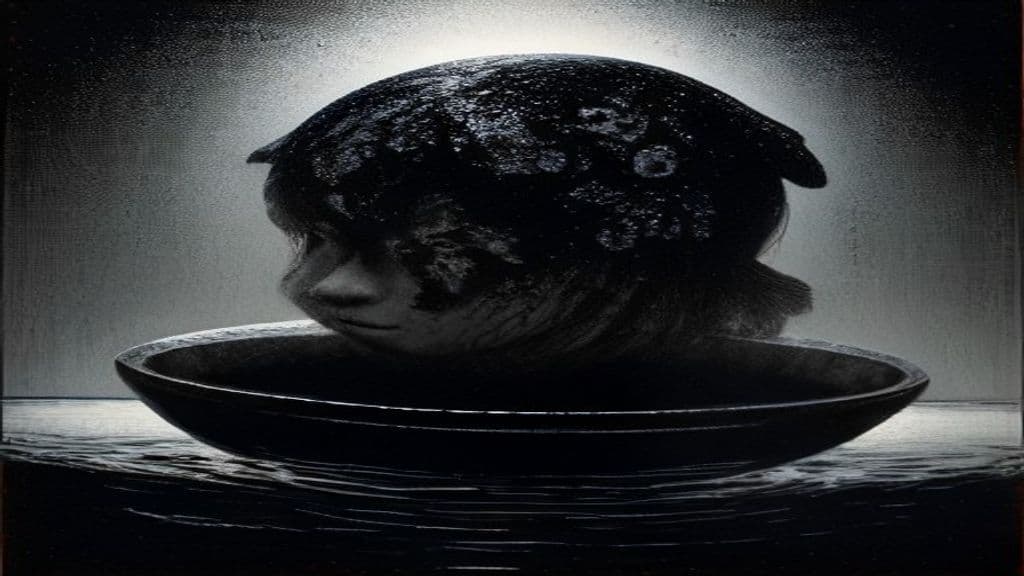
Kappa
A water-dwelling imp of Japanese folklore with a bowl of water on its head. Mischievous but bound by strict codes of politeness; dangerous near rivers.

Tokoloshe (Tokolosh)
A diminutive non-human spirit in Nguni and broader Bantu-speaking Southern African traditions, frequently portrayed as a dwarf-like, sometimes hairy water spirit used by malicious people to harass, frighten, or harm others. It functions both as a bogeyman for social discipline and as an explanatory agent for unexplained illness and death, and communities invoke traditional healers or pastors with an apostolic calling to counter it.
3-D Man
3-D Man is a Marvel Comics superhero identity associated with a 1950s-era origin in which the body of Chuck Chandler can materialize in three-dimensional existence when activated by his brother Hal via a pair of glasses. The mantle was later assumed by Delroy Garrett (formerly Triathlon) in modern continuity.
5 Ronin
5 Ronin is a 2011 Marvel Comics five-issue limited series that reimagines five Marvel superhero archetypes as rōnin (masterless samurai) in a fictionalized post‑Sekigahara feudal Japan. The work places Wolverine, Hulk, Punisher, Psylocke, and Deadpool analogues into period roles to explore displacement, revenge, and identity in an era of political upheaval.
58 Concordia
58 Concordia is a fairly large main-belt asteroid orbiting the Sun, discovered in 1860 and named after the Roman goddess Concordia. Astronomical sources classify it as a C-type (carbonaceous) body with a multi-year orbital period and measurable rotation and pole orientations.
9MOTHER9HORSE9EYES9
An anonymous Reddit screen name and online persona used by the author of the Interface series, a multipart speculative-horror narrative posted in short installments across Reddit in 2016. The name functions as the signature of an authorial identity and as a focal label for a fandom that created archives, a subreddit, and a wiki documenting the story and its fictional phenomena (notably entities called "flesh interfaces").
A.R.G.U.S.
A.R.G.U.S. is a fictional clandestine United States government agency in the DC Comics universe that investigates, contains, and manages superhuman, meta-human, and supernatural incidents and assets. Introduced in The New 52 continuity, it functions as an institutional actor providing intelligence, logistical support, covert task forces (notably Task Force X / the Suicide Squad), and a dedicated magic division across comics and media adaptations.
Abena Mansa
A name attested in a single contemporary Ghanaian blog anecdote as a 'mysterious being'; available sources do not establish Abena Mansa as a coherent, traditional supernatural figure or provide corroborating ethnographic detail.
Abin Sur
Abin Sur is a fictional extraterrestrial Green Lantern from the planet Ungara in DC Comics. A former history professor turned Green Lantern of Space Sector 2814, he discovered and investigated a prophecy tied to the "Blackest Night," died wounded on Earth and chose Hal Jordan as his ring-successor, and was later reanimated as a Black Lantern in the Blackest Night storyline.
Abishai
Abishai is a personal name attested in several distinct sources: a biblical individual described as the eldest son of Zeruiah (sister of King David); a Semitic chief named in an inscription at Beni-Hasan in Middle Egypt; and modern cultural uses including a named monster in Dungeons & Dragons and as an artist/stage name. The supplied materials do not present Abishai as a supernatural being within a living cosmology.
Abraham Cornelius
Abraham Cornelius is a fictional human scientist in Marvel Comics, a senior Weapon X technician who helped develop the technique to bond adamantium to bone and who features in Wolverine's origin and later storylines, including Death of Wolverine.
Absorbing Man
A fictional Marvel Comics character (Carl "Crusher" Creel) whose body acquires the physical properties of materials or energies he touches. Debuting in Journey into Mystery #114 (March 1965), created by Stan Lee and Jack Kirby, he is presented as a mortal supervillain/occasional antihero who challenges heroes such as Thor, Hulk, Spider-Man, and the Avengers.
Abumi-guchi
A Japanese yōkai classed as a tsukumogami: an animated stirrup (abumi) depicted in Sekien Toriyama's Gazu Hyakki Tsurezure Bukuro. Traditional accounts say it is formed from a stirrup that belonged to a soldier who fell in battle and that it waits where the stirrup lies for its dead owner to return.
Abura-akago
An Edo-period yōkai depicted as an oil‑licking infant or a ball of flame. First recorded in illustrated compendia (notably Toriyama Sekien's Konjaku Gazu Zoku Hyakki), the Abura-akago is tied to tales of oil‑stealing fires and functions in part as an etiological warning about wasting or stealing oil.
Community Record
- [1]Tsukumogami. "In Japanese folklore, tsukumogami are tools that have acquired a kami or spirit."wiki
- [2]Synthetic Spirits: Kameosa - Neil Mendoza. "In Japanese folklore, tsukumogami are everyday objects that acquire spirits after long periods of existence, a belief that offers a striking counterpoint to today’s throwaway culture."other
- [3]Sasamatage | RangerWiki. "Sasamatage (ササマタゲ, Sasamatage) is a Kameosa‑themed Ayakashi."wiki
- [4]Sasamatage | Villains Wiki. Fandom/entertainment entry associating a media monster with the label 'Kameosa'.wiki
- [5]Gazu Hyakki Tsurezure Bukuro. Reference to the illustrated yokai tradition (Toriyama Sekien) as part of the broader context of yokai imagery; the supplied excerpts do not identify a classical Sekien depiction of a distinct Kameosa.wiki
- [6]Yokai.com: Kameosa (page). Online yokai reference page listed among supplied URLs (excerpted material was fragmentary and did not supply a full classical account in the provided notes).wiki