
Sources identify the tokoloshe within Nguni and related Bantu mythologies rather than providing a single creation narrative. The name and concept are attested in Xhosa and other Nguni-language contexts (e.g., the Xhosa form uthikoloshe) and the figure appears across Southern African oral and popular traditions as a locally recognized class of small spirit-being. The supplied materials do not record a uniform origin myth or a literal etymological gloss.
Accounts commonly describe the tokoloshe as diminutive or dwarf-like, often hairy and sometimes characterized as bestial in some retellings. Descriptions vary between sources: some portray it in visible, physical terms (short and hairy), while others emphasize its capacity for invisibility. The supplied sources do not give standardized clothing, precise anthropometric details, or a single fixed appearance.
Reported abilities range from mischievous behavior—used to frighten children—to causing sickness and, in some accounts, death. It is frequently described as a water spirit in Nguni mythology in some sources and is said to become invisible by drinking water or swallowing a stone. Many accounts also emphasize that tokoloshes may be summoned, controlled, or deployed by malevolent humans to harm others, placing agency both with the spirit and with those who invoke it.
Weaknesses
- conditionraising beds off the ground
- otherbanishment by spiritual specialists (traditional healers/sangomas or pastors with an apostolic calling)
Wards
- conditionraising beds off the ground
- ritualbanishment by sangoma (traditional healer)
- ritualbanishment by pastors with an apostolic calling

Bogeyman
A folkloric, non‑canonical monster figure invoked across cultures as a disciplinary device to frighten children into compliant behaviour; presented in sources as a flexible category rather than a single, systematized being and often used figuratively as a personification of terror.
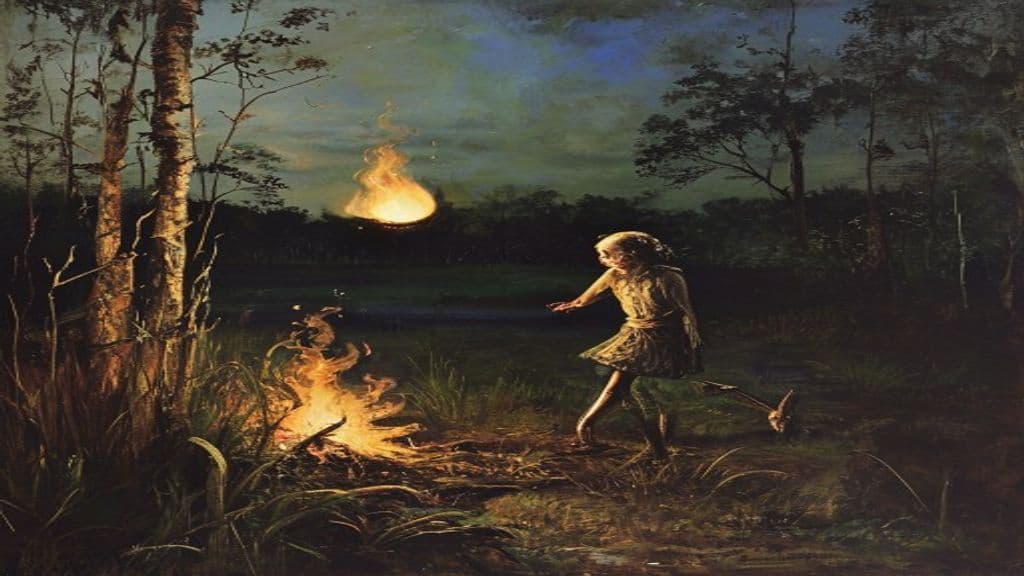
Will-o'-the-wisp
An atmospheric 'ghost light' — a small, mobile, lamp-like light seen at night over marshes, bogs, wet ground, or graveyards. In many cultures the phenomenon is interpreted as a supernatural being or manifestation (wandering nature-spirit, soul of the dead, transformed witch, or treasure-indicator); modern science offers chemiluminescent explanations for some occurrences.
Abada (unicorn)
Mythical creature in Central African tradition with two crooked horns, possessing healing properties. (Note: 1. Power tier: Primordial (Abada has cosmic, deity-level healing properties) 2. Sensory cues: physical presence and possibly an aura or energy emanating from the horns 3. Weaknesses: should be mention)
Aigamuxa
Aigamuxa are legendary humanoid man‑eaters from Khoikhoi‑recorded traditions of southern Africa, described in the available sources as desert‑dwelling predators—especially of Kalahari dunes—notable for having their eyes located on their feet and for needing to invert their bodies to see.
Birongo
Birongo (also bilongo) is an Afro‑Venezuelan magico‑religious tradition and folk‑healing repertoire derived from Kongo‑area concepts and syncretized with Catholic saint veneration and local Venezuelan ritual forms. It functions as a lived system of diagnosis, healing, mediumship, and communal ritual practice rather than as an individual supernatural being.
Bisimbi (Simbi)
Bisimbi (singular Simbi) are water and nature spirits in Bakongo (Kongo) traditional religion. They are associated with waters and natural sites in the Kongo-speaking region and are attested to continue, with transformation, in Atlantic diaspora spiritual systems such as Lowcountry Hoodoo and Cuban Palo.
Chibados
Chibados are a historically attested third‑gender social and ritual role found among the Ndongo and neighboring Angolan cultures: male‑assigned people who lived and presented as women and who served as institutionalized diviners, ritual specialists, and political actors in precolonial court contexts.
Darak
No attested supernatural being named 'Darak' appears in the provided sources. The term 'Darak' is documented as a toponym (places in Cameroon and Iran), as the Tagalog common name for rice bran used in traditional Philippine medicine, and as a personal or fictional proper name in varied modern sources. There is no corroborated ethnographic or mythological description of Darak as a spirit, deity, or monster in the consulted materials.
Guegue (siren)
Guegue is a contemporary urban-legend spirit in the Democratic Republic of the Congo, represented in popular discourse as a supernatural seducer invoked in rumors about singers and pastors. The label is used to explain alleged sexual seduction, immoral influence, or occult affiliation surrounding public figures rather than as a documented traditional spirit with fixed ritual forms.
Ilomba (Lozi mythology)
A malevolent sea snake entity created by witch doctors through dark magic, tied to human sacrifice and control. (Note: * Power tier: Greater (not Lesser) as per power_tier classification system * Appearance change: Sources describe that when seen by its owner, the Ilomba takes on the identity of its owner's face, not )
Imbulu (Mbulu)
Imbulu (also spelled Mbulu) appears in Bantu-language material as a 'fabulous creature' that, in the surviving excerpt, overtakes a girl traveling between settlements. The available sources are fragmentary and provide only a brief narrative mention without detailed attributes, rituals, or cosmological placement.
Impundulu
The Impundulu, commonly called the "lightning bird," is a legendary avian creature from Zulu and wider Nguni folklore. Sources describe it as associated with lightning and as a formidable, fear‑inducing supernatural being that appears in modern retellings and popular culture.
Inkanyamba
A serpent-like water-and-storm spirit in southern African (principally Zulu and Xhosa) oral tradition tied to particular deep pools, rivers, and waterfalls. Folklore associates the inkanyamba with tornadoes, seasonal storms, rain and fertility, and with occasional predation on people and animals.
Jengu
No focused information on Jengu is present in the supplied sources. The materials available discuss water spirits and aquatic spirit traditions generally (including Mami‑Wata) and Bantu religious frameworks, but do not provide primary or detailed descriptions, rituals, or origins specific to Jengu (Sawa sea spirits).
Community Record
- [1]Tokoloshe (Tokolosh) - Wikipedia. Wikipedia contributors. "Tokoloshe." Wikipedia, The Free Encyclopedia.wiki
- [2]South African Myths and Legends - FunkyMunky. FunkyMunky. "South African Myths and Legends."folk
- [3]Tokoloshe : The Water Spirit - Mythlok. Mythlok. "Tokoloshe: The Water Spirit."folk
- [4]TOKOLOSHE TERROR - Pelicanist (Magonia Review blog). Pelicanist. "Tokoloshe Terror." MAGONIA REVIEW blog entry.other
- [5]DSAE entry: tokoloshe. Dictionary of Southern African English (DSAE). Entry: tokoloshe.other
- [6]Soul Safari blog references. Soul Safari blog. "The Bleached Zulu pt 2 - OST ‘Tokoloshe’ Sam Sklair."other
- [7]Bogeymen Around the World - AFAR. AFAR. "13 of the Freakiest Bogeymen From Around the World."other
- [8]Cryptomundo » African Cryptotourism. Cryptomundo. "African Cryptotourism."other
- [9]Zulu Thought-Patterns and Symbolism. Berglund, Axel-Ivar. 1976. Zulu Thought-Patterns and Symbolism. C. Hurst.academic
- [10]African Mythology. Lynch, Patricia Ann. 2010. African Mythology A to Z. Chelsea House.folk
- [11]Tokoloshis Creature (blog label/index). Blog index label: "Tokoloshis Creature" (DragonsFaeriesElves&theUnseen blog listing).folk
- [12]Blog fragment mentioning witchcraft in Zimbabwe (contextual item). Blog fragment: "Witchcraft legalised in Zimbabwe-... in Zimbabwe where witchcraft and wizardry was ban for about 107years has just been legal again..." (excerpt insufficient to tie directly to tokoloshe practices)folk
- [13]GHott – CMash Reads (contextual item). Related blog pages listed among source material; no tokoloshe-specific content in supplied excerpt.folk
- [14]VolcanoCafé comment page (contextual link present in dataset). Listed among supplied URLs; no tokoloshe-specific content in the provided excerpt.other