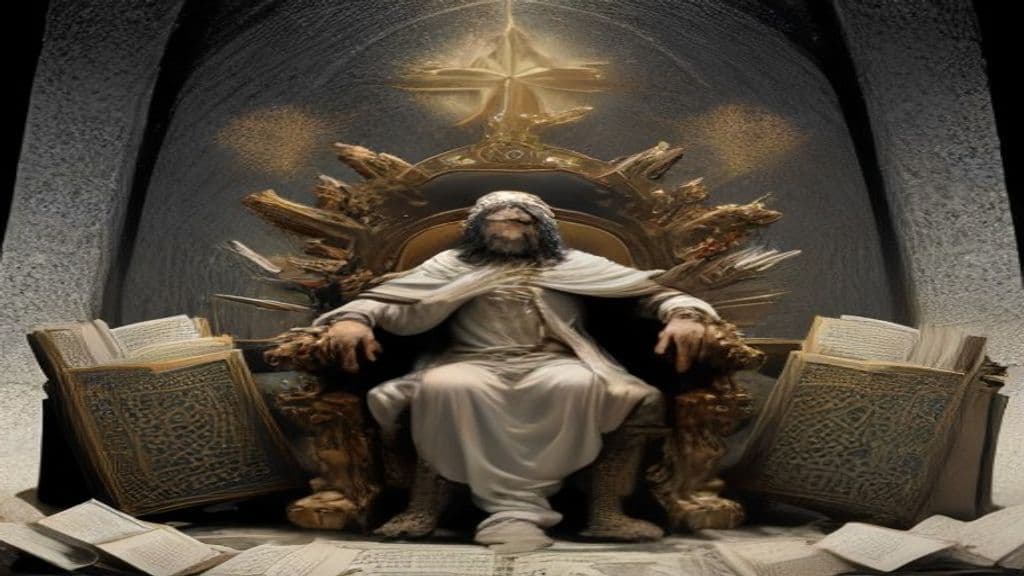
The Last Judgment is presented in scriptural and doctrinal materials as the culmination of history appointed by God. In Nicene Christian accounts it is tied to the Second Coming of Jesus Christ, who returns to judge all humanity (living and resurrected dead); Catholic teaching distinguishes between the particular judgment immediately after death and the general or Last Judgment at history's end, while Eastern Orthodox theology commonly distinguishes a particular judgment and a subsequent final tribunal after the resurrection. Islamic doctrine frames an analogous event (Yawm al-Qiyamah) in which bodily resurrection and account-taking occur, with deeds weighed on a divine scale (Mizan). Wikidata and comparative summaries classify the concept as an eschatological judgment present across Abrahamic-related systems, indicating shared concern with a final accounting rather than a single mythic origin (sources: Wikipedia Last Judgment; Wikidata Day of Judgment; doctrinal summaries).
Scriptural imagery commonly associated with the Last Judgment includes Christ seated upon a "great white throne" (Revelation 20:11), the standing of the dead before the throne, the opening of books containing deeds, and the visible separation of righteous and wicked. Artistic traditions (e.g., Michelangelo's Il Giudizio Universale, medieval cathedral tympana, Bosch triptychs) have elaborated and popularized these motifs—showing resurrected bodies, angels and demons, books, and scenes of reward and punishment—yet such artistic depictions are interpretations of the canonical motifs rather than additional doctrinal claims (sources: Wikipedia Last Judgment; Michelangelo The Last Judgment; art-historical references).
As an event the Last Judgment effects juridical and cosmological consequences: it brings about the general bodily resurrection, publicly reveals the secrets of hearts, and renders the definitive verdict assigning eternal destinies. Christian formulations depict the righteous receiving eternal life in God's presence and the wicked receiving eternal punishment; Catholic teaching adds the doctrinal framework of particular judgment, the possibility of Purgatory for purification, and a final resurrection and judgment. Islamic summaries emphasize that deeds will be weighed on the Mizan and determine entry into Paradise (Jannah) or punishment (Jahannam). The event is thus revelatory, adjudicative, and transformational for creation as a whole (sources: Wikipedia Last Judgment; doctrinal summaries; Wikidata).
Weaknesses
- conditionNone — as an inevitable divine eschatological event it is not wardable or defeatable
Wards
- ritualSacramental and moral preparedness (Christian traditions)
*Perkʷūnos
*Perkʷūnos is the reconstructed Proto-Indo-European thunder‑god hypothesized by comparative linguistics and mythology. Scholarly reconstructions portray him as a storm or thunder figure associated with fructifying rain and as the combatant who fights a multi‑headed water‑serpent to release life‑giving waters; no direct attestations from the Proto‑Indo‑European period survive and the figure is inferred from later Indo‑European traditions.
*Péh₂usōn (reconstructed)
Péh₂usōn is a hypothetical Proto‑Indo‑European pastoral guardian reconstructed by comparative scholars from parallels in Greek and Vedic traditions. Proposed as a Graeco‑Aryan ancestor‑figure, the reconstruction describes a protector of flocks, roads, and travellers rather than an attested historical cultic personality.
57 Mnemosyne
57 Mnemosyne is a large main-belt asteroid (S-type) discovered in 1859 and named after the Greek Titaness Mnemosyne. It is a non-sentient astronomical body studied for its orbital and rotational properties and has been used in dynamical measurements related to Jupiter.
Ababil
Ababil (Arabic: أبابيل, romanized abābīl) are miraculous birds mentioned in the Qur'anic account of Surah Al‑Fil. In Islamic tradition they appear as a divinely sent avian host that defended the Kaaba by pelting an invading army with small clay stones; tradition places the event in the year traditionally given as 570 CE.
Abaddon
In Hebrew scripture Abaddon is primarily a noun meaning 'destruction' or a section/condition of the underworld paired with Sheol; in the New Testament Book of Revelation Abaddon is personified as an angelic figure (Greek Apollyon) described as the king of an army of locusts released from the abyss during the apocalypse.
Abadir
Abadir is a polysemous name attested in distinct cultural contexts: a legendary founding saint and clan ancestor in eastern Ethiopia (Sheikh Abadir Umar Al‑Rida / Aw Abadir), a term applied to cone‑shaped cult stones in Phoenician religious description, and a personal name of a martyr (Abadir/Apater) in the Coptic Synaxarium. The attestations are independent usages of the same name rather than a single supernatural being.
Abadiu of Antinoe
Abadiu of Antinoe was a fourth‑century bishop of Antinoe (Antinoopolis, in Roman Egypt) commemorated as a martyr and saint in the Coptic Orthodox Church, with a feast day on 26 December. Sources record that he was killed during a theological dispute with Arian opponents and reference him in collections of Egyptian martyrs.
Abagtha
Abagtha (Hebrew: אבגתא, ’Ǎḇaḡṯā) is a named human court official in the Hebrew Bible’s Book of Esther, listed among seven chamberlains who ministered before King Ahasuerus and were commanded to bring Queen Vashti before the king. He is attested only in Esther 1:10 and is presented as an institutional palace attendant rather than a supernatural being.
Aban Yasht
The Aban Yasht is a hymn from the Persian tradition that praises Anahita, a goddess associated with water, fertility, and wisdom. It consists of 132 stanzas and is part of the 21 Yashts collection. (Note: - Power tier should be "Primordial" or possibly "Cosmic", given that it's a hymn of great spiritual significance and associated with a goddess. - The article incorrectly states that Anahita is associa)
Abanoub
Abanoub is a 4th‑century Egyptian Christian child martyr venerated in the Coptic tradition. Remembered for his public confession of Christ, miraculous healings associated with his passion, and the translation and veneration of his relics, his feast is observed on July 31 (Epip 24) and his cult centers include Nehisa and Samanoud.
Abaskhiron the Soldier
A Coptic Orthodox martyr venerated for refusing imperial idolatry during the Diocletian persecution; reputedly healed by the Archangel Michael, preserved in monastery relics, and commemorated on 14 June (7 Paoni).
Abath
No corroborated folkloric entity named "Abath" is documented in the provided sources. The string appears in the supplied material only as a surname/personal name in Aruban/Dutch-Caribbean archival records and as an unrelated taxonomic or encyclopedic hit; no mythic attributes, origin stories, rituals, or apotropaic practices for an entity called Abath are present in the documents reviewed.
Community Record
- [1]Last Judgment - Wikipedia. Wikipedia, Last Judgmentwiki
- [2]Day of Judgment - Wikidata. Wikidata, Day of Judgmentwiki
- [3]The Last Judgment (Michelangelo) - Wikipedia. Wikipedia, The Last Judgment (Michelangelo)wiki
- [4]Hieronymus Bosch: The Last Judgment (art reference). VisitingVienna, Hieronymus Bosch: The Last Judgmentother
- [5]Assorted archive and art-historical items referencing Last Judgment imagery. Archive.org materials (art-historical and doctrinal summaries)other