
In the Goetic/grimoire corpus (Ars Goetia) Marchosias is listed as a Marquis of Hell who formerly belonged to the angelic order of Dominations (Dominions) before falling; the grimoire account records that he told Solomon he hoped after 1,200 years to return to Heaven (to the 'Seventh Throne'). Johann Weyer (Pseudomonarchia Daemonum) preserves a variant entry (as 'Marchocias') and records that the being hopes to return but is 'deceived in that hope.' Modern writings and archives treat Marchosias as an emblematic Goetic marquis reused in contemporary occult practice, fiction, and gaming as a martial/ambivalent protective agent or monstrous combatant.
Classical grimoire description (Ars Goetia) depicts Marchosias as a wolf with griffin wings and a serpent's tail, spewing fire from his mouth, and able to assume the form of a man at the magician's request. Weyer (Pseudomonarchia) records a variant as a 'she-wolf' and notes uncertainty about exactly what the creature expels from its mouth. Modern fictional and gaming sources preserve and adapt a lupine, hellhound, or fire-breathing motif (e.g., immense hellhound with red eyes or a fire-breathing wolf).
The Ars Goetia attributes to Marchosias command of thirty legions of spirits, notable martial prowess, the ability to give true answers to all questions, and obedience to a conjuror when bound by ritual; that grimoire context frames him as a combatant, oracle, and obedient summoned agent. Modern interpretations cast Marchosias as a dangerous but sometimes utilitarian ally used against greater threats or as a summoned combatant in games and fiction.
Weaknesses
- ritualSolomonic conjuration and binding (grimoire control)
Wards
- ritualEvocation, binding and seals as recorded in Goetic/Grimoire practice

Pazuzu
The king of the wind demons of ancient Mesopotamia, lord of the southwest wind — paradoxically invoked as a protector against Lamashtu and other demons despite being evil himself.
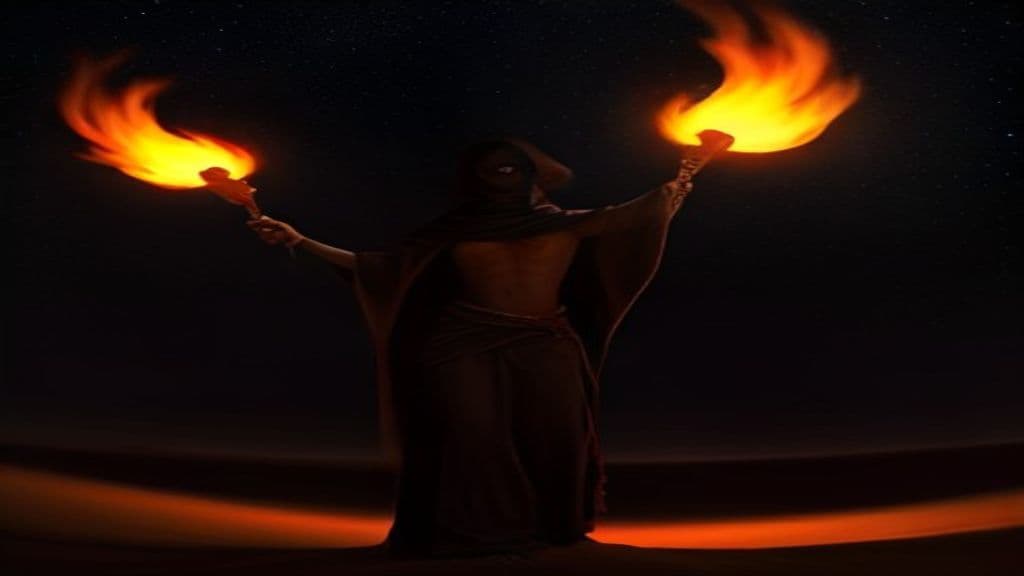
Djinn
The class of supernatural beings created from smokeless fire in Islamic cosmology — a parallel civilization to humanity, capable of belief or unbelief, with their own prophets, society, and judgment before God.
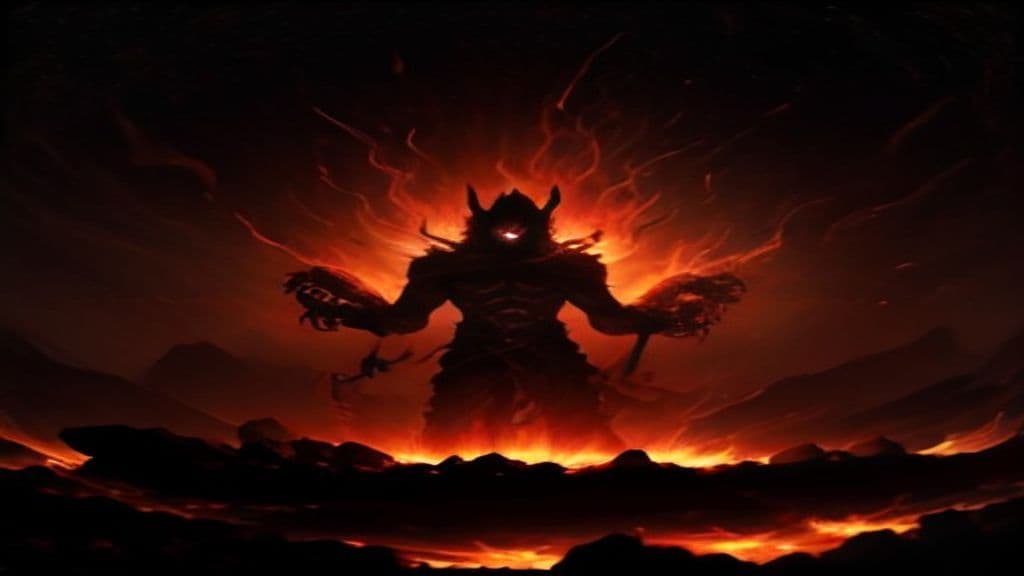
Ifrit
One of the most powerful classes of jinn in Islamic and pre-Islamic Arab tradition — a fire-born being of immense strength and cunning, capable of great works of engineering and terrible violence.
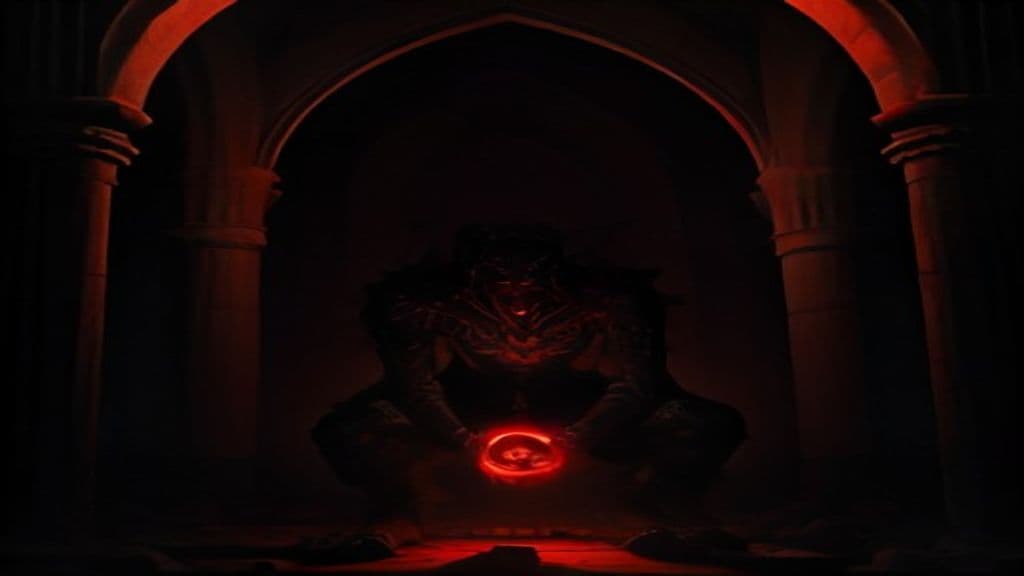
Shaitan
A class of corrupted djinn who follow Iblis and dedicate themselves to leading humans astray — distinct from Iblis himself, the Shayatin are a species of evil djinn who whisper doubts and temptations into the minds of the living.
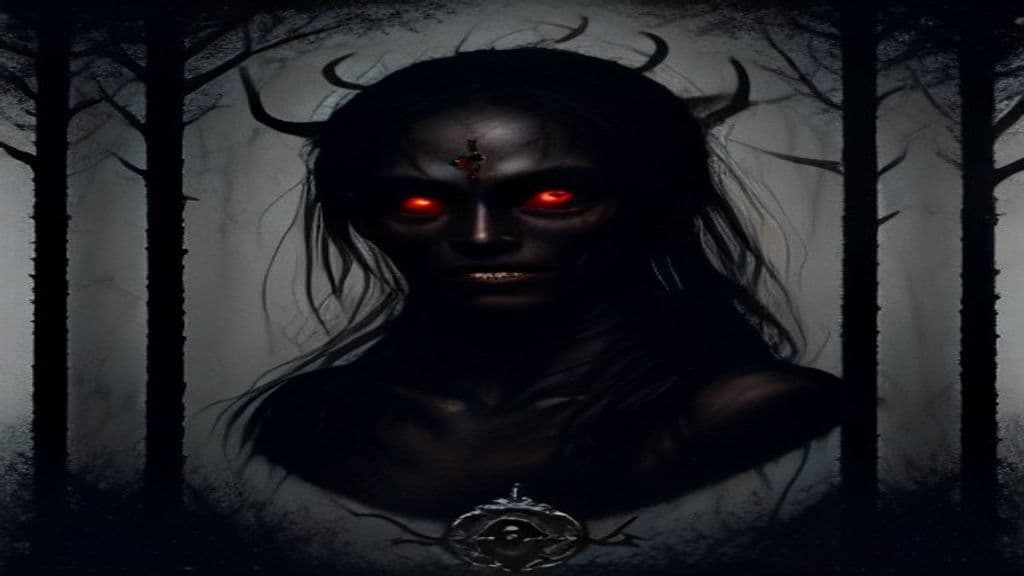
Pishacha
Flesh-eating spirits of Hindu mythology that haunt cremation grounds and are associated with disease, madness, and possession. The lowest class of demon in the Vedic hierarchy.
3-D Man
3-D Man is a Marvel Comics superhero identity associated with a 1950s-era origin in which the body of Chuck Chandler can materialize in three-dimensional existence when activated by his brother Hal via a pair of glasses. The mantle was later assumed by Delroy Garrett (formerly Triathlon) in modern continuity.
5 Ronin
5 Ronin is a 2011 Marvel Comics five-issue limited series that reimagines five Marvel superhero archetypes as rōnin (masterless samurai) in a fictionalized post‑Sekigahara feudal Japan. The work places Wolverine, Hulk, Punisher, Psylocke, and Deadpool analogues into period roles to explore displacement, revenge, and identity in an era of political upheaval.
57 Mnemosyne
57 Mnemosyne is a large main-belt asteroid (S-type) discovered in 1859 and named after the Greek Titaness Mnemosyne. It is a non-sentient astronomical body studied for its orbital and rotational properties and has been used in dynamical measurements related to Jupiter.
A Elbereth Gilthoniel
An Elvish hymn in Sindarin addressed to Elbereth (Varda) from J. R. R. Tolkien's legendarium. Presented in The Lord of the Rings and later musical and dramatic adaptations, the hymn functions as devotional poetic language that evokes Elvish reverence for the star-kindler rather than an independent supernatural agent.
A.R.G.U.S.
A.R.G.U.S. is a fictional clandestine United States government agency in the DC Comics universe that investigates, contains, and manages superhuman, meta-human, and supernatural incidents and assets. Introduced in The New 52 continuity, it functions as an institutional actor providing intelligence, logistical support, covert task forces (notably Task Force X / the Suicide Squad), and a dedicated magic division across comics and media adaptations.
Aamon
Aamon (also Amon) is a named spirit in early modern Western grimoire tradition (Pseudomonarchia Daemonum; the Ars Goetia / Lesser Key of Solomon). He is presented as a high-ranking infernal officer (Marquis/Prince) who governs forty legions and is credited with knowledge of past and future and with affecting human relationships (reconciling or procuring feuds and favor).
Abaddon
In Hebrew scripture Abaddon is primarily a noun meaning 'destruction' or a section/condition of the underworld paired with Sheol; in the New Testament Book of Revelation Abaddon is personified as an angelic figure (Greek Apollyon) described as the king of an army of locusts released from the abyss during the apocalypse.
Abadir
Abadir is a polysemous name attested in distinct cultural contexts: a legendary founding saint and clan ancestor in eastern Ethiopia (Sheikh Abadir Umar Al‑Rida / Aw Abadir), a term applied to cone‑shaped cult stones in Phoenician religious description, and a personal name of a martyr (Abadir/Apater) in the Coptic Synaxarium. The attestations are independent usages of the same name rather than a single supernatural being.
Abadiu of Antinoe
Abadiu of Antinoe was a fourth‑century bishop of Antinoe (Antinoopolis, in Roman Egypt) commemorated as a martyr and saint in the Coptic Orthodox Church, with a feast day on 26 December. Sources record that he was killed during a theological dispute with Arian opponents and reference him in collections of Egyptian martyrs.
Abagtha
Abagtha (Hebrew: אבגתא, ’Ǎḇaḡṯā) is a named human court official in the Hebrew Bible’s Book of Esther, listed among seven chamberlains who ministered before King Ahasuerus and were commanded to bring Queen Vashti before the king. He is attested only in Esther 1:10 and is presented as an institutional palace attendant rather than a supernatural being.
Abanoub
Abanoub is a 4th‑century Egyptian Christian child martyr venerated in the Coptic tradition. Remembered for his public confession of Christ, miraculous healings associated with his passion, and the translation and veneration of his relics, his feast is observed on July 31 (Epip 24) and his cult centers include Nehisa and Samanoud.
Abaskhiron the Soldier
A Coptic Orthodox martyr venerated for refusing imperial idolatry during the Diocletian persecution; reputedly healed by the Archangel Michael, preserved in monastery relics, and commemorated on 14 June (7 Paoni).
Community Record
- [1]Marchosias - Wikipedia. Wikipedia entry summarizing Ars Goetia and Pseudomonarchia Daemonum descriptions of Marchosias, including appearance, rank, legions commanded, and the claim of hope to return after 1,200 years.wiki
- [2]Marchosias - Wikidata. Wikidata item indexing Marchosias as a Goetic entry (Ars Goetia position).wiki
- [3]The Architecture Of Intervention (archive). Modern interpretive/archive source discussing 'The Paradox of the Protective Demon' and using Marchosias as an example of a 'Noble Demon' engaged instrumentally by occult investigators.other
- [4]Dakota Frandsen Vs. The Lord Of Shadows Interior Preview (archive). Archive item referencing Marchosias in a modern narrative/fictional context (example of contemporary reuses of the figure).other
- [5]RPG and fandom references (compiled sources). Examples of gaming and fandom usage cited among the supplied materials; gaming sources treat Marchosias as a martial summoned combatant or vestige in modern systems.other
- [6]All The Tropes - Ars Goetia. Reference noting thematic links among Goetic figures who profess aspiration to return to Heaven; used to situate Marchosias among similar Goetic motifs.other
- [7]Rainverse Wiki - Marchosias. Fictional/wiki entry exemplifying modern adaptations portraying Marchosias as a martial infernal being.other