
In the versions preserved in the sources, Megareus (also called Menoeceus) is a member of the heroic cast associated with Thebes and nearby Boeotian sites. One attestation names him son of Hippomenes and records that he came from Onchestus to assist King Nisus of Megara when Minos attacked; in that episode he was slain by Minos. The sources present him as a mortal figure embedded in royal genealogies and city-conflict narratives rather than as a deity or spirit.
Surviving accounts provide only minimal physical description: Megareus is noted for his large stature. No further consistent iconographic or clothing details, distinguishing marks, or supernatural features are supplied in the cited passages.
The texts portray Megareus as a martial actor — a warrior who rode to the aid of Nisus of Megara and fought in the inter-city conflicts of the heroic age. There are no attestations in the provided sources of supernatural powers, spirit-possession, or mystical abilities; his role is that of a named combatant in mythic-historical narratives. Modern literary commentary cited in the material treats him interpretively (e.g., as embodying a father's pride), but this is an interpretive, not a literal, attribution of power.
Weaknesses
- othernone attested
Wards
- othernone attested
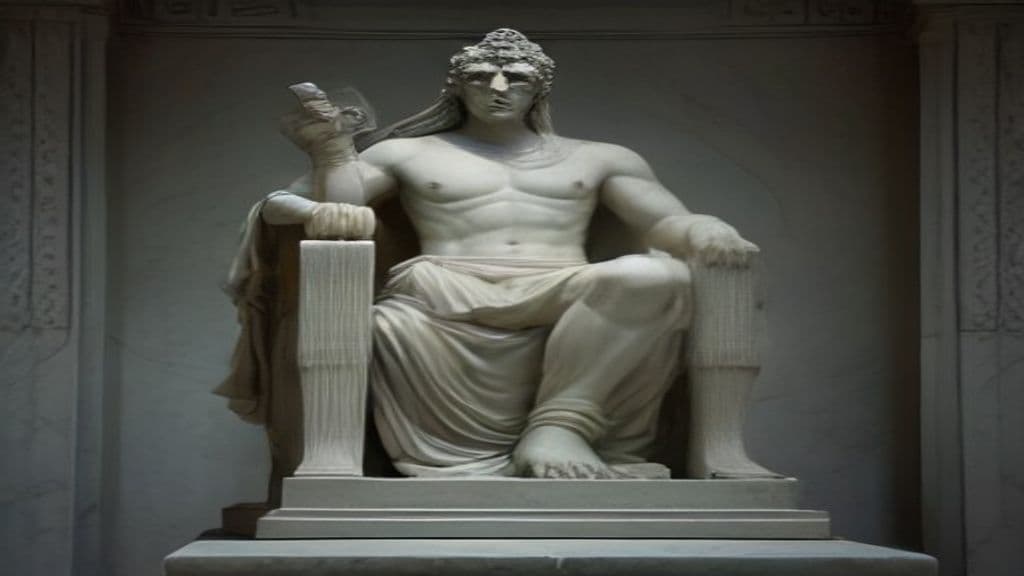
Minos
Minos is a legendary Cretan king in ancient Greek myth, remembered as a lawgiver and founder of Cretan naval power in life and as one of the three judges of the dead in Hades after death. Classical sources present him as a semi-divine, politically powerful mortal (son of Zeus and Europa) whose authority is both terrestrial and judicial in the afterlife.
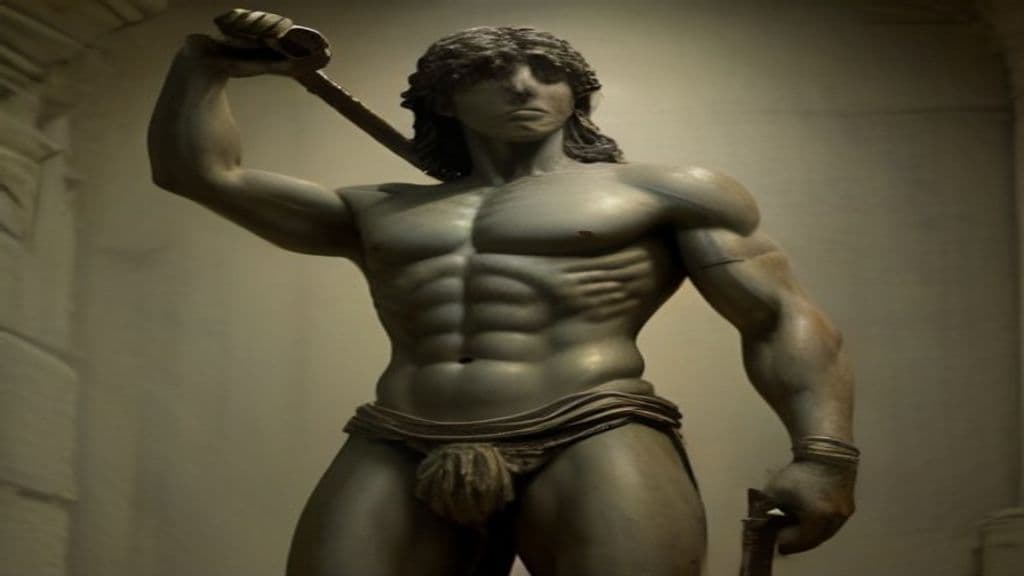
Theseus
Theseus is a legendary hero of Greek myth credited with clearing dangers from Attic roads, slaying the Minotaur, and performing foundational civic acts for Athens (including synoikismos and establishing cult practice). He is portrayed as of mixed mortal and divine parentage and functions as a culture-hero and exemplar in later authors' moralizing biographies.

Eteocles
Eteocles is a mytho-historical Theban king of the Greek tradition, son of Oedipus, who becomes central to the dynastic feud with his brother Polynices that culminates in the war of the Seven against Thebes and the mutual killing of the two brothers.
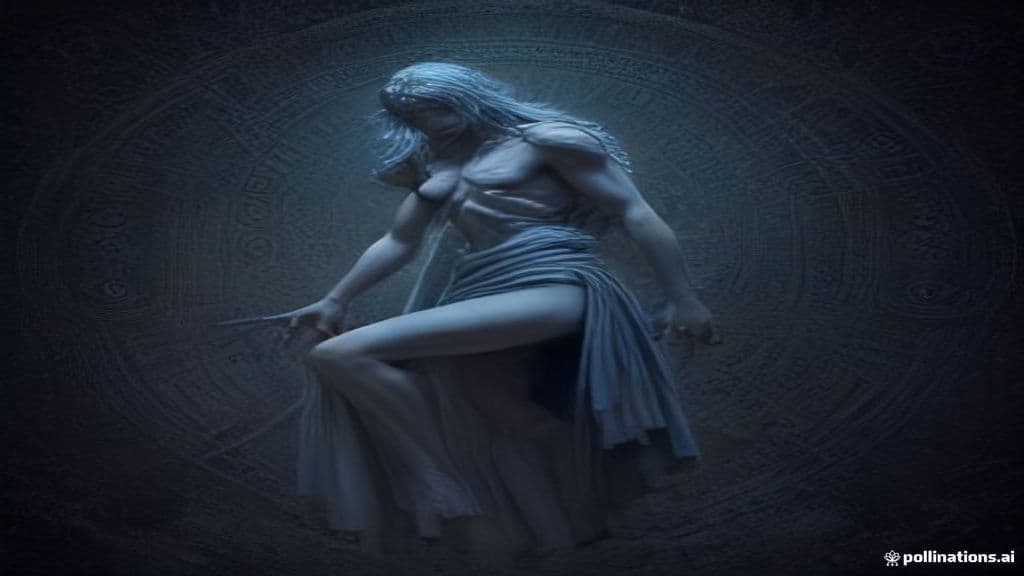
Polynices
Polynices is a mythic human prince of Thebes in the Greek Theban cycle. Son of Oedipus, he contests the throne with his brother Eteocles, leads the Argive expedition known as the Seven against Thebes, dies in single combat with Eteocles, and becomes the focal point of the funerary and legal conflict dramatized in Sophocles' Antigone.
*Péh₂usōn (reconstructed)
Péh₂usōn is a hypothetical Proto‑Indo‑European pastoral guardian reconstructed by comparative scholars from parallels in Greek and Vedic traditions. Proposed as a Graeco‑Aryan ancestor‑figure, the reconstruction describes a protector of flocks, roads, and travellers rather than an attested historical cultic personality.
Aba (disambiguation / name-form)
Aba is a polyvalent name-form attested across many unrelated contexts (place names, personal names, animal names, and brief mythological listings). The provided sources do not support a single, coherent supernatural entity called "Aba" and offer no descriptive or ritual material for such a being.
Abarbarea
Abarbarea is a name attested in classical Greek and Roman sources for freshwater nymphs (naiads). The name appears for at least two individual mythic figures — a naiad wife of Bucolion and a naiad counted among ancestors of the Tyrians — and Hesychius records plural forms that may indicate the name was also used as a class-name (Abarbareai / Abarbalaiai).
Abas
Abas (Ancient Greek: Ἄβας, gen.: Ἄβαντος) is not a single mythic being but a recurring personal name borne by multiple mortals and minor mythic figures in Greek epic and genealogical traditions — kings, founders, seers, warriors, attendants, a centaur, and a youth transformed by a goddess. The name is glossed in the sources as 'guileless' or 'good-hearted' and appears across Argive, Theban, Trojan, Euboean, and other local cycles.
Abderus
Abderus (Ancient Greek: Ἄβδηρος, romanized Ábdēros) is a mortal heroic figure in Greek myth closely associated with Heracles, remembered as the youth left in charge of the Mares of Diomedes who was killed by them. He functions as an eponymous local/divine-hero ancestor for the city of Abdera and received funerary commemoration and athletic agones at his tomb.
Abomination of Desolation
An apocalyptic prophetic phrase originating in the Book of Daniel designating a profaning thing or act that renders the Jerusalem Temple cult desolate; later reused in the Synoptic Gospels as an eschatological sign prompting urgent flight. The term denotes ritual/cultic impurity (Hebrew shiqquts) and is variously interpreted as pagan offerings or altar, a foreign cult statue, or (in some New Testament readings) an acting agent.
Absyrtus
Absyrtus (Ancient Greek: Ἄψυρτος) is a Colchian prince in the Greek Argonautic cycle, son of King Aeëtes and brother or half-brother of Medea. He appears in variant traditions either as a companion taken by Medea during her flight with Jason and murdered/dismembered to delay pursuit, or as a pursuer sent by Aeëtes who is overtaken and slain by Jason; his death functions as a key narrative device in the escape from Colchis.
Acacallis
Acacallis (Ancient Greek: Ἀκακαλλίς; also Acalle) is a mythological princess of Crete in Greek tradition, daughter of King Minos and Pasiphae. She functions primarily as a dynastic and etiological figure: in varying accounts she is mother, by gods such as Hermes (Mercury) or Apollo, of eponymous or founder-figures like Cydon (founder of Cydonia), Miletus, or Lydon/ Lydus.
Acacus
Acacus (Ancient Greek: Ἄκακος) is, in Arcadian Greek tradition, a mortal eponymous founder-king of Acacesium and is remembered as the foster-father who reared the infant Hermes (Mercury) in that local tradition. He is presented in genealogies as a son of Lycaon and functions as a local ancestral/onomastic figure rather than a supernatural spirit.
Academus
Academus (Greek: Akádemos / Hekádemos) is an Attic hero-eponym tied to a sacred grove (Akademeia) on the Cephissus near Athens. In myth he revealed where Helen was hidden to the Dioskouroi, an act said to have saved the city, and the place bearing his name became a long-lived sacred precinct, later the site of Plato's Academy.
Acamas
Acamas (Ancient Greek: Ἀκάμας) is a personal name recurrent in ancient Greek narrative traditions applied to multiple human characters (warriors, princes, suitors), once to a Cyclops, and once as a hound's name. Rather than a single supernatural entity, bearers of the name appear episodically across the Trojan War, Theseid, and Theban cycles as mortal actors whose deeds intersect with gods and fate.
Acantha
Acantha (Ancient Greek: Ἀκάνθα, 'thorn') is a late or secondary mythological figure known from modern retellings as a nymph transformed into the acanthus plant. The tale that she scratched Apollo and was changed into a spiny-leaved plant is not attested in surviving classical corpora and appears to be a modern compilation or invention rather than a firmly documented ancient myth.
Community Record
- [1]Megareus (son of Creon) — Wikipedia. Wikipedia, 'Megareus (son of Creon)'wiki
- [2]Wikidata: Megareus of Thebes. Wikidata entry Q6808829 for Megareus of Thebesother
- [3]The Epitome of Theseus (Apollodorus material) — Archive recording LP0011. Archive LP0011 'The Epitome of Theseus' (Apollodorus passages as provided in notes)literary
- [4]Epitome of Theseus (Apollodorus material) — Archive. Archive 'Epitome of Theseus' (Apollodorus passages as provided in notes)literary
- [5]Loeb Archive: Kings of Athens (Apollodorus context) — LP0102. Archive LP0102 'Kings of Athens' (contextual Apollodorus material)literary