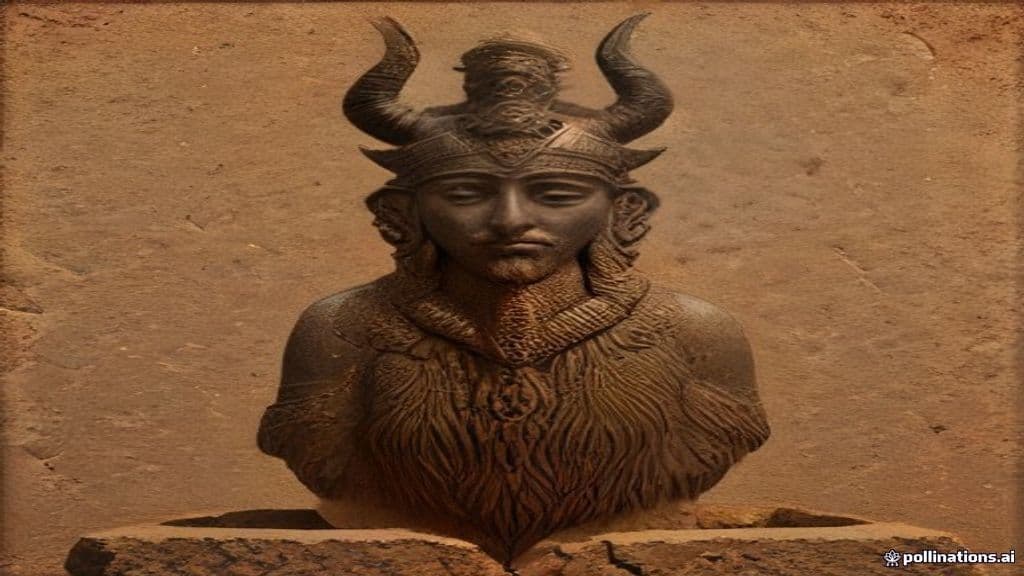
Mesopotamian mythic corpus contains narratives in which deities are primary actors in the ordering of the world and in creation. Scholarly summaries note myths where gods fashion items and humans out of clay, and myth cycles also recount sexual and social interactions among gods (for example, the Enlil–Ninlil and the Enki–Ninhursag narratives are cited in the literature as exemplars of divine sexual relations that have cosmological consequences). These motifs present deities as artisans and progenitors whose acts bring aspects of the human world into being and establish social and cosmic order (see Duke abstract on deities crafting items from clay; bibliotecapleyades summaries of Enlil/Ninlil and Enki/Ninhursag episodes).
Sources emphasize that Mesopotamian deities were almost exclusively anthropomorphic and often envisioned as large in stature. Common iconographic markers include horned caps composed of up to seven superimposed pairs of ox-horns and the wearing of melam, an ambiguous substance that 'covered them in terrifying splendor.' Deities are also depicted in clothes with elaborate gold and silver ornaments sewn into them. Material representations include cult statues or idols, cylinder seals, stelae, and relief panels; some individual panels are subject to scholarly debate in identification (e.g., whether a female figure represents Inanna, Ereshkigal, or other figures).
As a class, deities possess extraordinary powers and take part in creative/cosmogenic actions such as crafting objects and humans from clay. Their presence produces intense physiological and emotional effects on humans — described with terms such as ni ('the physical creeping of the flesh') and puluhtu ('fear') — because of the melam that surrounds them. Deities hold domains or roles in the cosmos in specific cases (for example, Ningishzida is associated with vegetation and the underworld; Ereshkigal rules the underworld), and divine identities could be syncretized or equated across linguistic and cultural boundaries (as in Kassite–Mesopotamian lexical lists), reflecting fluidity in functions and status.
Weaknesses
- otherNo explicit weaknesses attested in provided sources
Wards
- otherNo explicit warding prescriptions recorded in provided excerpts; management of divine presence is implied via cult practice and material representation (idols, temples, iconography) rather than specific wards
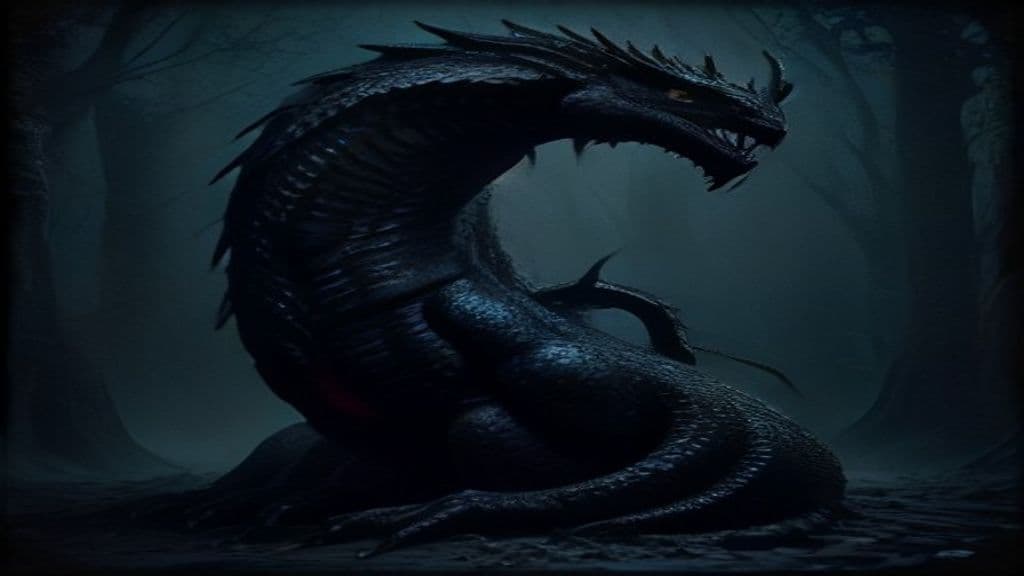
Níðhöggr
The corpse-gnawing dragon coiled around the roots of Yggdrasil, ceaselessly chewing the World Tree — and destined to survive Ragnarök and carry the dead on its wings.

Typhon
The last great monster of Greek mythology — a vast, fire-breathing giant whose shoulders sprouted a hundred serpent heads, nearly toppling Zeus from Olympus.
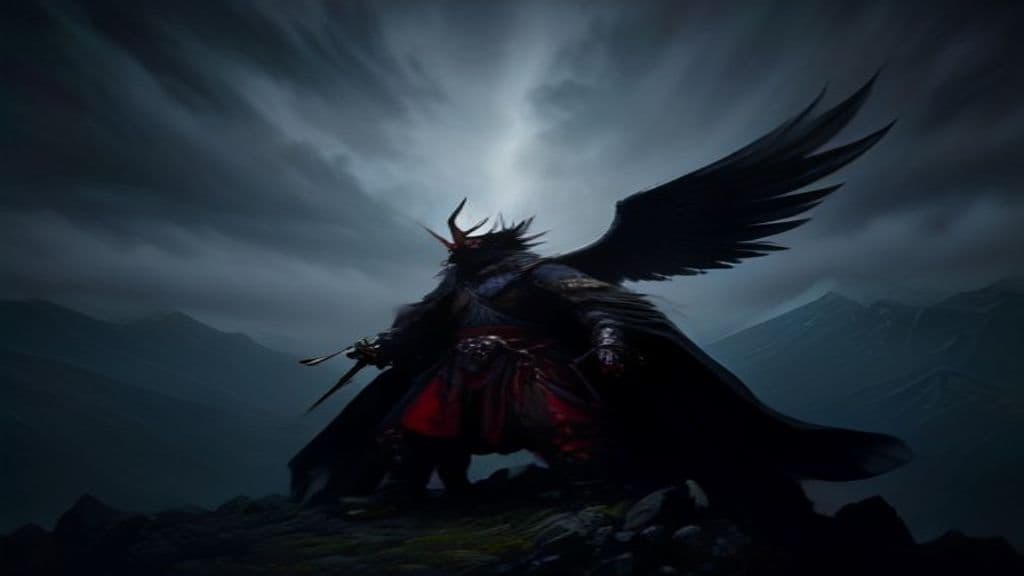
Tengu
Proud, warrior-like mountain spirits of Japan, associated with martial arts, pride, and the wild mountains. Neither fully good nor evil — they test and train warriors and monks, but punish the arrogant.
'Ain Samiya Goblet
Silver cup from the Middle Bronze Age I, discovered in a tomb at Ain Samiya. (Note: 1. Power tier should be "None", but add a note explaining that historical artifacts don't fit into the typical power tier classification. 2. Add a description of its appearance based on it being a sil)
*Perkʷūnos
*Perkʷūnos is the reconstructed Proto-Indo-European thunder‑god hypothesized by comparative linguistics and mythology. Scholarly reconstructions portray him as a storm or thunder figure associated with fructifying rain and as the combatant who fights a multi‑headed water‑serpent to release life‑giving waters; no direct attestations from the Proto‑Indo‑European period survive and the figure is inferred from later Indo‑European traditions.
*Péh₂usōn (reconstructed)
Péh₂usōn is a hypothetical Proto‑Indo‑European pastoral guardian reconstructed by comparative scholars from parallels in Greek and Vedic traditions. Proposed as a Graeco‑Aryan ancestor‑figure, the reconstruction describes a protector of flocks, roads, and travellers rather than an attested historical cultic personality.
57 Mnemosyne
57 Mnemosyne is a large main-belt asteroid (S-type) discovered in 1859 and named after the Greek Titaness Mnemosyne. It is a non-sentient astronomical body studied for its orbital and rotational properties and has been used in dynamical measurements related to Jupiter.
A'annepada
A'annepada (Sumerian cuneiform 𒀀𒀭𒉌𒅆𒊒𒁕; also romanized Aanépàdda) is attested as a historical ruler of the First Dynasty of Ur, flourishing c. 2350 BC. He is recorded in dedicatory and foundation inscriptions as king of Ur and as son of Mesannepada, credited with temple-building and dedication to deities such as Ninhursag and Inanna.
Abaddon
In Hebrew scripture Abaddon is primarily a noun meaning 'destruction' or a section/condition of the underworld paired with Sheol; in the New Testament Book of Revelation Abaddon is personified as an angelic figure (Greek Apollyon) described as the king of an army of locusts released from the abyss during the apocalypse.
Aban Yasht
The Aban Yasht is a hymn from the Persian tradition that praises Anahita, a goddess associated with water, fertility, and wisdom. It consists of 132 stanzas and is part of the 21 Yashts collection. (Note: - Power tier should be "Primordial" or possibly "Cosmic", given that it's a hymn of great spiritual significance and associated with a goddess. - The article incorrectly states that Anahita is associa)
Abath
No corroborated folkloric entity named "Abath" is documented in the provided sources. The string appears in the supplied material only as a surname/personal name in Aruban/Dutch-Caribbean archival records and as an unrelated taxonomic or encyclopedic hit; no mythic attributes, origin stories, rituals, or apotropaic practices for an entity called Abath are present in the documents reviewed.
Abatur
Abatur is an uthra (celestial emanation) in Mandaeism described as the 'father of the Uthras' and called the Ancient (ʿattīqā). He resides on the boundary between the World of Light and lower regions, functions as a judge who weighs souls (Abatur Muzania), and supplies instructions and materials to the demiurgic uthra Ptahil in accounts from the Diwan (Scroll) of Abatur.
Abatwa (Twa / Batwa)
Abatwa (also recorded as Twa, Batwa, Mutwa; singular forms Barhwa or Murhwa in some transcriptions) are indigenous hunter‑gatherer peoples of the Great Lakes region of Central Africa, historically identified as some of the earliest inhabitants of the area. The available sources treat them as human ethnic groups whose livelihoods, lands, and populations have been severely affected by conservation policies and modern violence.
Abellio
Abellio is a theonym attested in Roman‑period inscriptions from the Comminges area of the Pyrenees and reported as worshipped in the Garonne Valley of ancient Gallia Aquitania. Surviving evidence is limited to a small number of inscriptions; scholars have variously hypothesized solar or arboreal associations and compared the name to forms of Apollo or to Celtic Belenus, but the deity's precise role in local cosmology remains uncertain.
Abraham
Abraham (originally Abram) is the foundational patriarchal ancestor in the Hebrew Bible whose life establishes a covenantal relationship between his family/people and God. He functions as an exemplar of faith, the progenitor of promised descendants, and a narrative anchor for claims of land, blessing, and communal identity in later religious traditions.
Community Record
- [1]List of Mesopotamian deities. Wikipedia, 'List of Mesopotamian deities' (statements on anthropomorphism, melam, ni, puluhtu, horned caps, ornaments).wiki
- [2]Ningishzida is a Mesopotamian deity of vegetation and the underworld. Samim.io entry identifying Ningishzida's associations with vegetation and the underworld.other
- [3]Ereshkigal - Ruler of the Sumerian Underworld and Most Feared Deity in Mesopotamian Pantheon. Bibliotecapleyades article discussing Ereshkigal and noting contested iconographic identifications on panels and stelae.folk
- [4]Kassite deities. Wikipedia entry on Kassite deities used to note lexical/equivalence lists and syncretism between Kassite and Mesopotamian pantheons.wiki
- [5]Barrelet (abstract) and myths of deities crafting items from clay. Academic abstract noting Mesopotamian myths in which deities construct items out of clay, including the first humans.academic
- [6]Archive item titled 'Idol of Mesopotamian deity' and related archive material. Archive listing indicating the material presence of cult images/idols among attested evidence.other
- [7]In Ancient Mesopotamia Sex among the Gods shook Heaven and Earth. Bibliotecapleyades summary referencing sexual motifs among deities such as Enlil/Ninlil and Enki/Ninhursag.folk