
The name נַעֲמָה (Naʿămā, "pleasant") appears in the Hebrew Bible as the name of several mortal women (for example, a daughter of Lamech in Genesis and a wife of Solomon in later enumerations). In later interpretive strands—most prominently in Zoharic and related mystical material—the personal name is reinterpreted or redeployed as an otherworldly feminine figure. These later texts and summaries link that mystical Naamah to the roster of female figures allied with or wives of Samael and to narrative motifs in which unions between angelic or fallen males (e.g., Azael/Azazel in some accounts) and Naamah produce classes of spirits (shedim/sedim). The supplied sources present this as a chain of literary and interpretive transformations rather than a single historical lineage.
The supplied summaries do not provide a consistent physical description for the mystical Naamah. Sources identify her by role and genealogy (often conflated with the sister of Tubal‑Cain in some midrashic or later retellings) and emphasize erotic/nocturnal associations in Zoharic contexts rather than fixed iconography. Because primary Zoharic passages and fuller midrashic texts were not included in the source set, no canonical or consistent visual attributes (e.g., form, garments, monstrous features) can be documented from the provided materials.
Within the provided materials Naamah's primary attestations in mystical literature emphasize her status as a consort in angelic/demonic genealogies—named among wives of Samael in Zoharic summary and described in some traditions as having sexual unions with figures such as Azael that lead to the birth of other spirit classes (sedim/shedim). The sources do not ascribe to her a detailed catalogue of magical powers, possession techniques, or specific harmful acts; instead they record her role in erotic/nocturnal temptation motifs and as a progenitress or archetypal feminine presence within the unseen order in Kabbalistic imagination. The narrative claim that she "spawned" or "participated in begetting" sedim/shedim appears in some archival and secondary summaries but is not presented as universally attested across all texts.
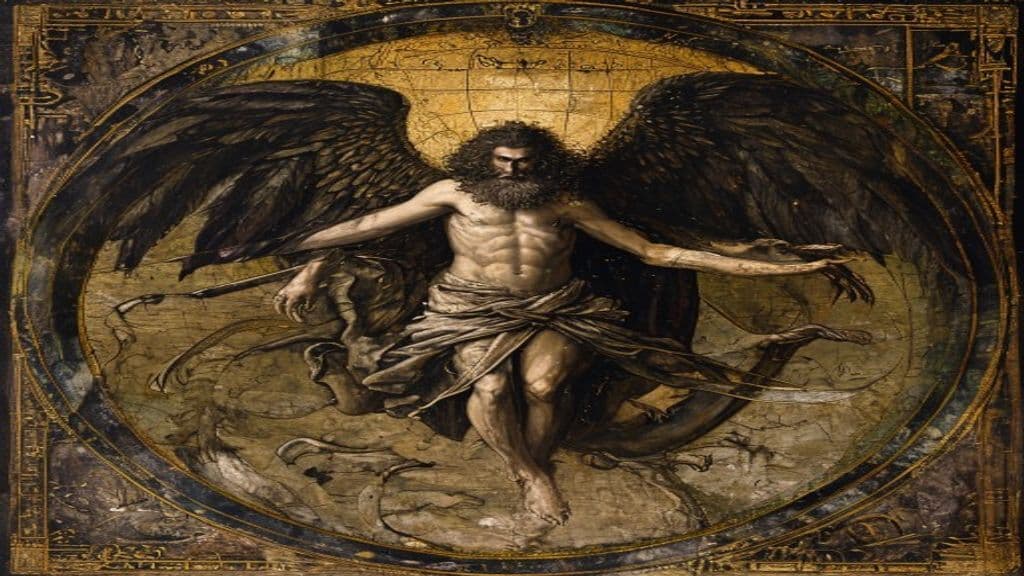
Samael
An angelic figure in Jewish textual traditions whose roles include accuser/adapter (Satanic function), tempter, destroyer/angel of death, and, in later mystical texts, leader of demonic or qlippothic forces. Samael is presented variously across Second Temple literature, midrashim, and Kabbalah; his destructive functions are often framed as serving divine purposes rather than as an independent absolute evil.

Pishacha
Flesh-eating spirits of Hindu mythology that haunt cremation grounds and are associated with disease, madness, and possession. The lowest class of demon in the Vedic hierarchy.

Shedim
In Jewish tradition, Shedim are spirits associated with foreign deities and idolatrous worship, embodying a theological context where monotheistic devotion is threatened by other divine entities. (Note: 1. Factual claim "Primordial" power tier should be adjusted to "Ancient", as Shedim are described as tied to foreign deities and do not appear to possess cosmic-level powers. 2. Remove reference to "m)
Aaron
Aaron is a central human figure in Israelite sacred literature: the elder brother of Moses, the first high priest (progenitor of the Aaronide priesthood), and a spokesman/prophet who mediates between Israel and God in Exodus–Deuteronomy narratives. His role in the texts establishes hereditary priestly authority, ritual functions (sacrifices, blessing, use of Urim and Thummim), and institutional norms for Israelite cultic life.
Abaddon
In Hebrew scripture Abaddon is primarily a noun meaning 'destruction' or a section/condition of the underworld paired with Sheol; in the New Testament Book of Revelation Abaddon is personified as an angelic figure (Greek Apollyon) described as the king of an army of locusts released from the abyss during the apocalypse.
Abagtha
Abagtha (Hebrew: אבגתא, ’Ǎḇaḡṯā) is a named human court official in the Hebrew Bible’s Book of Esther, listed among seven chamberlains who ministered before King Ahasuerus and were commanded to bring Queen Vashti before the king. He is attested only in Esther 1:10 and is presented as an institutional palace attendant rather than a supernatural being.
Abdiel
Abdiel (Hebrew עֲבְדִּיאֵל) is primarily a theophoric Hebrew personal name meaning "servant of El/servant of God," attested once in the Hebrew Bible (1 Chronicles 5:15). In later literature—most notably John Milton's Paradise Lost—Abdiel is reimagined as a faithful seraph who opposes Satan's revolt. The provided sources do not treat Abdiel as an autonomous folkloric spirit type or record rituals or wards associated with the name.
Abel
Abel is the second son of Adam and Eve in the Genesis narrative, a shepherd whose accepted offering and subsequent murder by his brother Cain form the biblical account of the first death. Later interpretive traditions expand his role, treating him as an archetypal righteous victim, a postmortem avenging or adjudicating figure, and in some systems (notably Mandaean) identifying him with an angelic lightbeing.
Abiathar
Abiathar (Hebrew: אֶבְיָתָר, ʾEḇyāṯār) is a named human priestly figure in the Hebrew Bible. He is presented as a survivor of the Nob massacre who fled to David with priestly regalia, served as a priest and counselor in David's court, and was later deposed and sent to Anathoth by Solomon for supporting Adonijah.
Abiel
Abiel is attested in the supplied sources only as a male given name — borne by several historical American individuals and listed as two minor biblical figures. The provided materials contain no evidence presenting Abiel as a supernatural, mythological, or folkloric entity.
Abigail
Abigail is a female figure in the Hebrew Bible portrayed in 1 Samuel 25 as the intelligent and beautiful wife of Nabal who intervenes to prevent David from committing violence; later tradition regards her as one of the Tanakh's seven female prophets and as a model of beauty and wisdom.
Abijah of Judah
Abijah (also Abijam or Abiah) is presented in the biblical and later interpretive traditions as a short-reigning human king of Judah from the Davidic line. He is portrayed as a dynastic successor whose military actions (notably the battle at Mount Zemaraim) and moral evaluation in rabbinic literature are interpreted theologically in relation to the Davidic covenant.
Abimelech
Abimelech is a Hebrew personal name and occasionally a regnal title attested in the Hebrew Bible and later traditions. It appears as the name/title of Philistine rulers in the patriarchal narratives (the "king of Gerar" who interacts with Abraham and Isaac) and as the personal name of Abimelech son of Jerubbaal (Gideon) in Judges, a dynastic usurper whose brief rule ends in violent death.
Abishag
Abishag is a young woman from Shunem described in 1 Kings 1 as chosen to attend the aged King David, brought to lie beside him to provide warmth and serve as a helper/servant; her later status became a political issue in the succession disputes following David's death.
Abishai
Abishai is a personal name attested in several distinct sources: a biblical individual described as the eldest son of Zeruiah (sister of King David); a Semitic chief named in an inscription at Beni-Hasan in Middle Egypt; and modern cultural uses including a named monster in Dungeons & Dragons and as an artist/stage name. The supplied materials do not present Abishai as a supernatural being within a living cosmology.
Community Record
- [1]Naamah (demon) — Wikipedia summary. Wikipedia contributors, 'Naamah (demon)', Wikipedia, The Free Encyclopediawiki
- [2]Naamah (wife of Solomon) — Wikipedia summary. Wikipedia contributors, 'Naamah (wife of Solomon)', Wikipedia, The Free Encyclopediawiki
- [3]Naamah — Wikipedia disambiguation summary. Wikipedia contributors, 'Naamah', Wikipedia, The Free Encyclopediawiki
- [4]Shidim (excerpt referencing Azael and Naamah). FABIO KEINER, 'Shidim' (archive excerpt noting 'Azael slept with Naamah and spawned Assyrian guard spirits known as sedim')other
- [5]Naamah and Nimrod : a defense of the faith of our fathers (archive entry). Archive entry (listed among provided materials)other