
Ongentheow is attested across Old English and Old Norse literary traditions as a member of the Scylfing/Yngling royal line. In Old English heroic poetry (chiefly Beowulf and references in Widsith) he appears as a fearsome Swedish king who fights the Geats; in Scandinavian sources he is generally equated with Egil Vendelcrow recorded in Ynglingatal, Ynglinga saga, Historia Norwegiae and Íslendingabók. Genealogically he is placed after Aun (Aun the Old) and before Ohthere/Óttarr (often conflated with later Eadgils) in dynastic lists. Modern scholarship treats the identification between the Old English and Old Norse attestations as persuasive but interpretive rather than absolutely proven, and the tradition preserves variant tellings of his life and death.
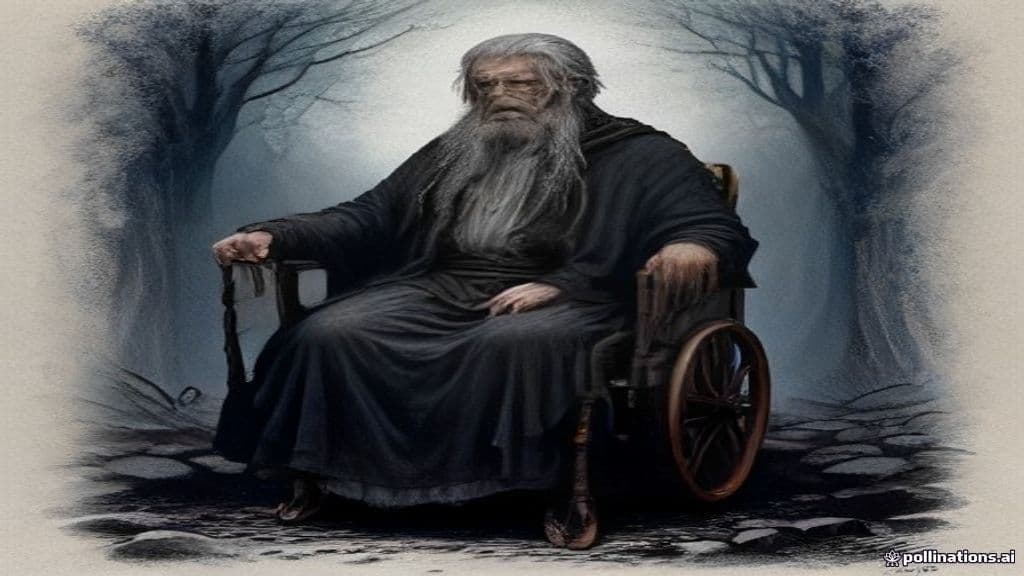
The sources give no detailed physical portrait beyond martial epithets. In Beowulf Ongentheow is described as a fearsome, hoary (elderly) warrior-king, battle-hardened and commanding in combat; the poem emphasizes his age and martial reputation rather than bodily detail. Scandinavian saga tradition preserves him under the epithet Vendelcrow (Vendelcráka / Vendelkráka / Vendelcrow), linking him to the Vendel estate, but does not attribute supernatural or monstrous features. Across accounts he appears as a human aristocratic ruler whose physiognomy is left largely unspecified.
Narrative accounts stress Ongentheow's martial prowess, leadership and role in dynastic politics rather than any supernatural powers. In Beowulf he kills Hæthcyn, besieges the Geats at Hrefnesholt to recover the captured Swedish queen, and wounds the warrior Wulf before being slain when Eofor delivers the death-blow (Beowulf summary). Saga materials portray related episodes of political violence: rebellion by a thrall named Tunni/Tonne against Egil, flight or tributary relations with Denmark in some accounts, and a saga version in which Egil is killed by a bull during sacrifices at Gamla Uppsala. The sources explicitly attribute no magical abilities to him; his extraordinary aspects are reputation and dynastic centrality.
Weaknesses
- conditionmortality
- othervulnerability in battle (slain by Eofor in Beowulf)
- othernarrative vulnerability to ritual/animal accident (killed by a bull during sacrifices in saga tradition)
Wards
- othernone attested in sources
Aun the Old
Aun (Old Norse: Aunn inn gamli; Latinized Auchun) is a legendary Swedish king of the Yngling dynasty attested in Old Norse sources (Ynglingatal, Ynglinga saga in Heimskringla, and Historia Norwegiae). He is portrayed as a mortal ruler who prolonged his life by performing human sacrifices to the god Odin until his community refused a final offering.

Ohthere (Vendelcrow)
Ohthere (Old Norse Óttarr vendilkráka; modern Swedish Ottar Vendelkråka) is a semi-legendary Swedish king of the Scylfing house, placed by sources in the Germanic Heroic Age, possibly early 6th century (fl. c. 515–c. 530). Literary traditions present him as a warrior-king involved in Swedish–Geatish and Swedish–Danish conflicts; a burial mound in Vendel parish (Ottarshögen) has long been associated with his name. Some narrative details (notably a Danish death in the Limfjord and the story of a wooden "Vendelcrow" of humiliation) are attested only in Snorri's later Ynglinga saga and may represent literary elaboration.
Abdiel
Abdiel (Hebrew עֲבְדִּיאֵל) is primarily a theophoric Hebrew personal name meaning "servant of El/servant of God," attested once in the Hebrew Bible (1 Chronicles 5:15). In later literature—most notably John Milton's Paradise Lost—Abdiel is reimagined as a faithful seraph who opposes Satan's revolt. The provided sources do not treat Abdiel as an autonomous folkloric spirit type or record rituals or wards associated with the name.
Abiel
Abiel is attested in the supplied sources only as a male given name — borne by several historical American individuals and listed as two minor biblical figures. The provided materials contain no evidence presenting Abiel as a supernatural, mythological, or folkloric entity.
Abigail
Abigail is a female figure in the Hebrew Bible portrayed in 1 Samuel 25 as the intelligent and beautiful wife of Nabal who intervenes to prevent David from committing violence; later tradition regards her as one of the Tanakh's seven female prophets and as a model of beauty and wisdom.
Accolon
Accolon is a mortal knight of the Arthurian court, presented in the Post-Vulgate Merlin tradition and Malory's Le Morte d'Arthur as Morgan le Fay's paramour and instrument in a plot to supplant King Arthur; his tale centers on enchanted weapons (Excalibur and its scabbard), love-manipulation, and a tragic duel with Arthur.
Adils
Adils (Old Norse Aðils; also Eadgils, Adillus, Athisl, Adhel) is a semi‑legendary sixth‑century Swedish king attested in Old Norse saga material and later medieval traditions. He appears in saga episodes as a storied royal figure involved in warfare, court acts, and marriage suits rather than as a supernatural being.
Adsullata
Adsullata is attested as a Continental Celtic river goddess associated with the River Savus (modern Sava) in the Roman province of Noricum. Later traditions record her presence in Brittany as a goddess of hot springs and present her as an antecedent or origin-form of the Anglo‑Celtic sun goddess Sul.
Afaon fab Taliesin
Afaon fab Taliesin is a medieval Welsh warrior-counsellor, named as a son of the bard Taliesin and recorded among Arthur’s retinue in Welsh tradition. He appears in the Welsh Triads and in the tale Breuddwyd Rhonabwy (The Dream of Rhonabwy) as a notable martial figure and proverb-speaker rather than as a supernatural being.
Agilaz (Egil)
Agilaz (reconstructed Proto-Germanic) — commonly recorded in medieval sources as Egil or Ægil — is a legendary archer attested in Germanic heroic tradition. He appears as the brother of Völund (Wayland/Weland) in the Old Norse poem Völundarkviða and in the Thidreks saga, and his name is also inscribed on early medieval objects (Franks Casket, Pforzen buckle). The attested material presents him as a named heroic human archer within saga and inscriptional contexts rather than as a recurrent supernatural species.
Aglovale
Aglovale (also Agloval, Aglovan, Aglovaus, Acglavael) is a human knight of Arthurian romance, presented as the eldest legitimate son of King Pellinore and a Knight of the Round Table in the Vulgate/Post‑Vulgate cycles, Malory, and later adaptations. He brings his long‑lost brother Perceval to Camelot, takes part in military actions (including slaying Agrippa in one account), and his death is related in varying ways across traditions (accidental at Gawain's hand, deliberate murder by Orkney kin, or killed during Lancelot's rescue of Guinevere).
Agnarr Geirröðsson
Agnarr Geirröðsson is a mortal prince attested only in the Poetic Edda poem Grímnismál; he aids Odin (disguised as Grímnir) during Geirröðr's torture and, after Odin reveals himself and King Geirröðr dies, Agnarr succeeds as king.
Agne
Agne (also attested Agni, Hogne, Agni Skjálfarbondi) is a semi-legendary king of Sweden in Old Norse saga tradition, preserved in the Ynglingatal corpus and prose expansions such as Snorri Sturluson's Ynglinga saga. He is portrayed as a mighty and famous warrior-king whose campaign in Finland, marriage to Skjalf, and death by hanging form a remembered episode connected to local place-names and a burial mound.
Agravain
Agravain is a literary knight of Arthurian romance cycles: one of the sons of King Lot of Orkney, a member of the Round Table, and a recurring figure in French and English medieval prose and verse. He is portrayed as a skilled but morally problematic courtly knight whose jealousy, malice, and intra-familial violence drive key narrative conflicts (notably the slaying of Lamorak and the exposure of Guinevere).
Community Record
- [1]Beowulf (summary and references). Beowulf (as summarized on Wikipedia entry for Ongentheow); references to Beowulf poem episodes involving Ongentheow, Eofor and Wulf.literary
- [2]Ynglingatal / Ynglinga saga / Historia Norwegiae / Íslendingabók (synoptic attestation). Modern summaries referencing Ynglingatal and saga sources that identify Egil Vendelcrow with Ongentheow (as cited in the provided research notes).literary
- [3]Widsith (mention). Reference to Widsith's citation of Ongentheow in summaries collected in the provided material.literary
- [4]Onomastic and kenning-based interpretation (secondary scholarship summarized). Summarized scholarly discussion of name elements (þeōw and ongēan), and of kenning/dialect issues linking boar/bull imagery across traditions (scholarly notes attributed to Schück, Nerman, Sundquist in the provided material).other
- [5]Archive: Historical biography of Ongentheow (archival compilation). Collected materials and essays on Ongentheow (as included in the provided research notes).other