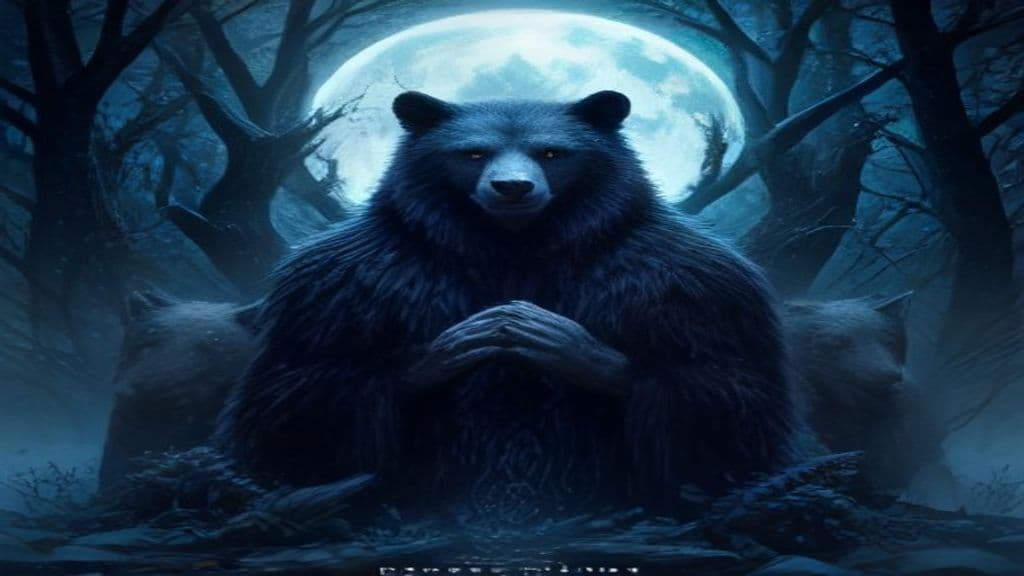
Sources present multiple traditional accounts for Otso's origin. In some stories Ukko, the weather god, is said to have thrown bits of wool into the sea; Otso was born from the bits of wool that reached shore. Other variants place Otso's birth in the heavens, tracing the bear to the Ursa Major constellation. Ancient myths also describe a primordial kinship between Otso and humanity through the marriage of Otso and the primordial mother of men (Hongotar), a relationship which is ritually reenacted in the Peijaiset rite and underpins the idea that the bear's spirit is recycled into the world.
The sources characterize Otso primarily as a bear and as a collective animistic spirit rather than an individuated being. Otso is described as the sacred king of animals and leader of the forest; beyond that titular and social description the available texts do not provide detailed physical attributes, sizes, colors, or anthropomorphic features. The concept is expressed through a set of alternative names (Karhu, Ohto, Kontio, Mesikämmen) used across Finnish place and ritual language.
Rather than a catalogue of explicit magical feats, Otso's agency is expressed through cultural and cosmological roles: it is venerated and feared, occupies a central quasi-royal position among non-human beings, and features in origin and reincarnation narratives. Myths recount that Otso has many wives and children and is paradoxically described as sometimes eating them, pointing to an ambivalent relation of kinship and danger. Through the Peijaiset ritual the bear's spirit is ritually married back into its family and prepared to return to earth and reincarnate, indicating Otso's participation in cycles of life, death, and social reciprocity. Sources do not enumerate powers such as shapechanging or speech beyond the ritualized dialogue performed in Peijaiset between the killed bear and Hongotar.
Weaknesses
- conditionImproper ritual treatment of a killed bear (failure to perform Peijaiset) — culturally dangerous/forbidden
- conditionDestruction of the bear's skull — taboo and thus a culturally proscribed action that would violate the obligations toward Otso
Wards
- ritualPeijaiset
Ahti (Ahto)
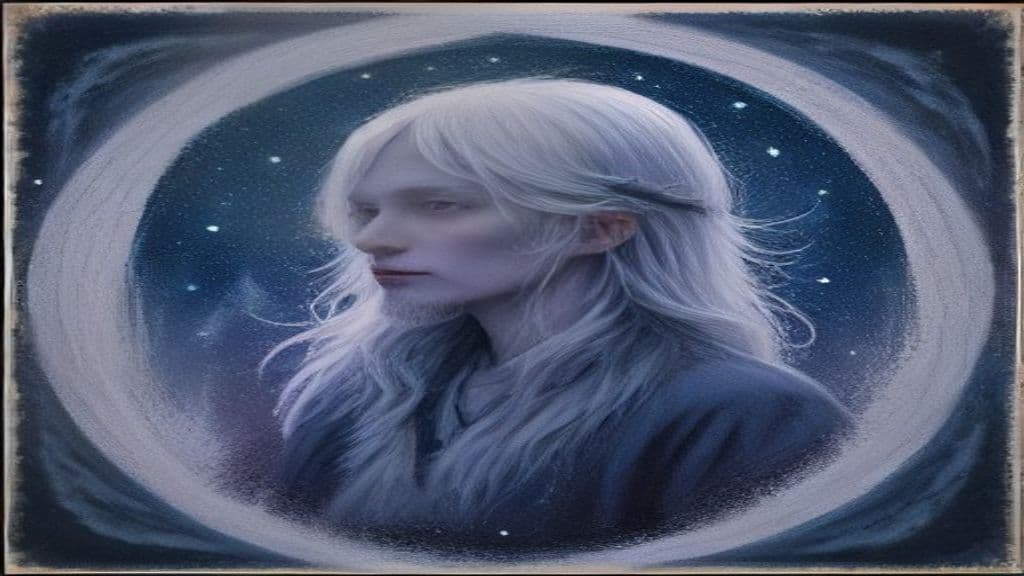
Ahti (also Ahto) is a Finnish water haltija — a named supernatural proprietor of the sea and aquatic resources who appears in Kalevala-derived epic material, regional runic fishing songs, and healing spells. He functions as a sea-king/sea-god figure, provider of fish and other water-given wealth, and a ritual addressee in practical subsistence and healing contexts.
Ahtola (Kalevala) (tradition)
In the supplied sources, no supernatural entity named "Ahtola" is attested in the Kalevala or other Finnish mythic texts. The name Ahtola appears in the source set only as a modern Finnish surname and a place-name; the closely related mythic figure attested in the material is Ahti/Ahto, a Finnish water god associated with the sea.
Aino
Aino is a human female figure in Finnish oral tradition as assembled in the Kalevala; originally appearing in folk poems as “the only daughter” or “the only sister,” she was given the proper name Aino by Elias Lönnrot when he compiled and edited the oral material into the national epic. Her story concerns family pressure, courtship by Väinämöinen, refusal, and a tragic drowning that functions as a moral and social episode within the Kalevala narrative.
Aitia (Baltic Finnic)
Primordial figure representing the creative power of the universe, associated with the creation of the world and emergence of life from chaos. (Note: 1. Power tier: Primordial is plausible, but it would be more accurate to indicate "Primordial" as a default power tier without specifying, since there's no further information about its abilities or b)
Ajatar
Ajatar (also Ajattara, Aijotar; runic variants Aattara, Ajaster(i)) is an evil female spirit in Finnish traditional belief associated with wild places, serpents, and the spread of disease and pestilence. She functions in the folk corpus as a dangerous woman-like haltija of forests and mountains who leads people astray and is linked to other hostile powers such as Hiisi and Lempo.
Ancient Kings of Finland
In early literary sources, the Ancient Kings of Finland are described as hypothetical or mythical monarchic systems associated with ancient Finland. (Note: 1. Power tier: Lower to Primordial (given the lack of specific abilities and behaviors) 2. Abilities and behaviors are described as 'generally vague', so this section should be reworded or removed 3. )
Antero Vipunen
A giant in Finnish mythology with valuable spells and knowledge, possibly associated with underworldly powers. (Note: * Power tier should be Ancient (deity-level) due to possessing "very valuable spells and knowledge", which suggests immense magical power but not necessarily cosmic-level. * Appearance should clarify )
Arvoitus (Finnish Riddle Entity)
A supernatural entity embodying the concept of a riddle or puzzle, often used in Finnish folklore to test one's wisdom and knowledge. (Note: 1. Power tier: Minor Spirit (Arvoitus does not interact directly with humans but presents itself as a puzzle, suggesting it's more of a subtle, local entity rather than a powerful regional one.) 2. Ap)
Chud
The Chud (Russian: Чудь) are an ancient, mythic people in Russian and several Finno‑Ugric oral traditions. Presented as a pre‑modern population, they appear in legends as a displaced, assimilated, or subterranean society whose disappearance and former condition help explain features of landscape and cosmology in regional folklore.
Easter witch (påskkärring / påskhäxa / trulli)
A Swedish and Finnish folkloric figure of an old-woman witch associated with Holy Week who, in traditional belief, flies on brooms to a diabolic gathering at Blåkulla/Blockula on Maundy Thursday and returns at Easter; in modern practice the image has become a benign costume tradition in which children dress as witches to go door-to-door for greetings and treats.
Emuu
Emuu is attested in a brief modern catalogue entry as a "mythical creature from Finnish and Karelian folklores." Beyond this short label, the supplied sources contain no descriptive narratives, attributes, or rituals connected to Emuu.
Etiäinen
In Finnish folklore, an etiäinen is a harbinger that precedes a person, performing actions they will later undertake. (Note: 1. Factual claim in summary about "preceding a person" not explicitly supported by source material. 2. Power tier should be Primordial, as etiäinens are part of everyday life and associated with every)
Community Record
- [1]Otso (Wikipedia). Otso. Wikipedia. https://en.wikipedia.org/wiki/Otsowiki
- [2]Otso (Wikidata). Otso. Wikidata Q1757327. http://www.wikidata.org/entity/Q1757327wiki