
Perchta appears in medieval and post-medieval sources as a liminal midwinter figure; earliest formal attestation appears c. 13th century as 'Domina Perchta'. Scholars have proposed multiple etymologies: a link to Old High German giberaht naht ('Epiphany night') tying the name to the festival period; Jacob Grimm's proposal of Old High German Perahta from beraht ('the bright one' / Proto-Germanic *berhtaz) — though sources note lack of firm evidence for this; and Eugen Mogk's suggestion deriving the name from Old High German pergan ('hidden' or 'covered'). These proposals are scholarly reconstructions rather than a single agreed origin. In popular tradition Perchta functions simultaneously as a personified supernatural woman, a named ritual season, and a motif enacted by masked Perchten.
Perchta is described with two principal aspects: a beautiful aspect and an ugly, terrifying aspect. Local descriptions vary. In Tyrol she is called a 'little old woman with a very wrinkled face, bright lively eyes, and a long hooked nose' with dishevelled hair and tattered garments. In masquerade (Perchtenlauf) the 'beautiful' Perchten wear dresses decorated with ribbons and galloons, while the 'ugly' Perchten appear hideous, sometimes with bells, chains, and animals attached to their costumes. Older accounts recurrently report one large distinctive foot (variously described as a 'goose foot' or 'swan foot'). In some Czech/Bohemian localities Perchta masks are dressed in furs and may be depicted holding a knife or bloody hand as a device to frighten children (a localized variant).
Perchta's primary cultural role is supervisory and punitive: she inspects households during the twelve days between Christmas and Epiphany (especially Twelfth Night and Epiphany Eve) and enforces proper completion of spinning and the observance of fast-day dietary rules. Narrative accounts attribute to her the power to punish transgressors—examples recorded in the sources include scratching a lazy spinstress's face and smacking her fingers (leaving scars), or more violent penalties such as slitting the belly and stuffing it with flax, straw, or stone and sewing it up. She is described as roaming countryside and entering homes during the Rauhnächte. The Perchtenlauf communal masquerade dramatizes motifs associated with Perchta (fear, inspection, ambivalence) but sources treat the masquerade as a social enactment rather than literal documentation of supernatural action.
Weaknesses
- conditionCompliance with domestic obligations (spinning completed)
- conditionObservance of fast-day dietary rules (eating only permitted fish and gruel)
Wards
- ritualPerchtenlauf (communal masquerade)
- conditionDomestic compliance (spinning completed; fasting observed)
Stree
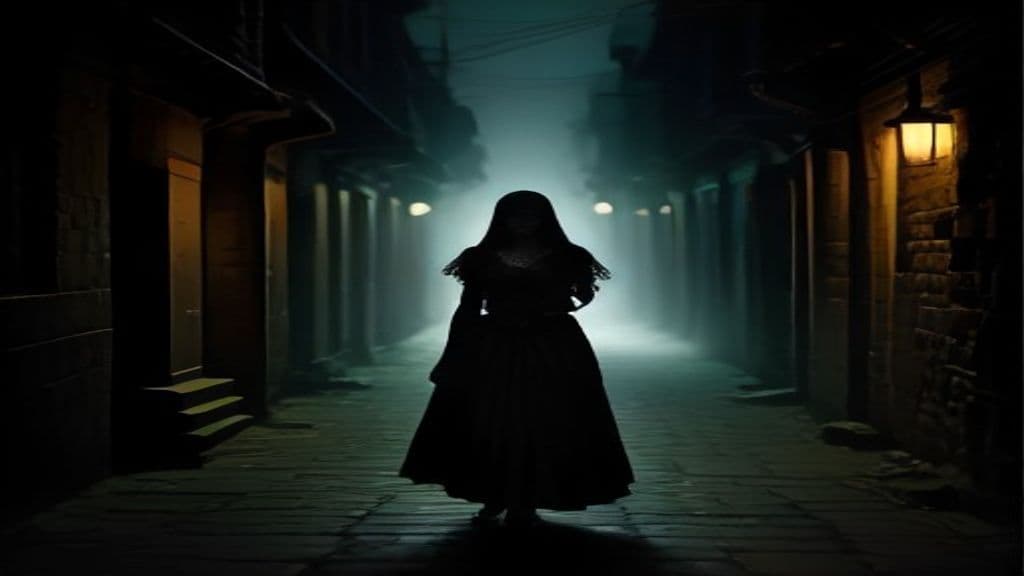
A vengeful female spirit from Chanderi who abducts men during festival nights. Warded off by the inscription 'O Stree, kal aana' — her legend, still practised on walls across Madhya Pradesh, inspired the 2018 Bollywood horror-comedy.

Apsara
Celestial dancers and water nymphs of Hindu cosmology — beautiful semi-divine beings who dance at the court of Indra and, by his command, descend to earth to distract sages from excessive asceticism.
Baba Yaga
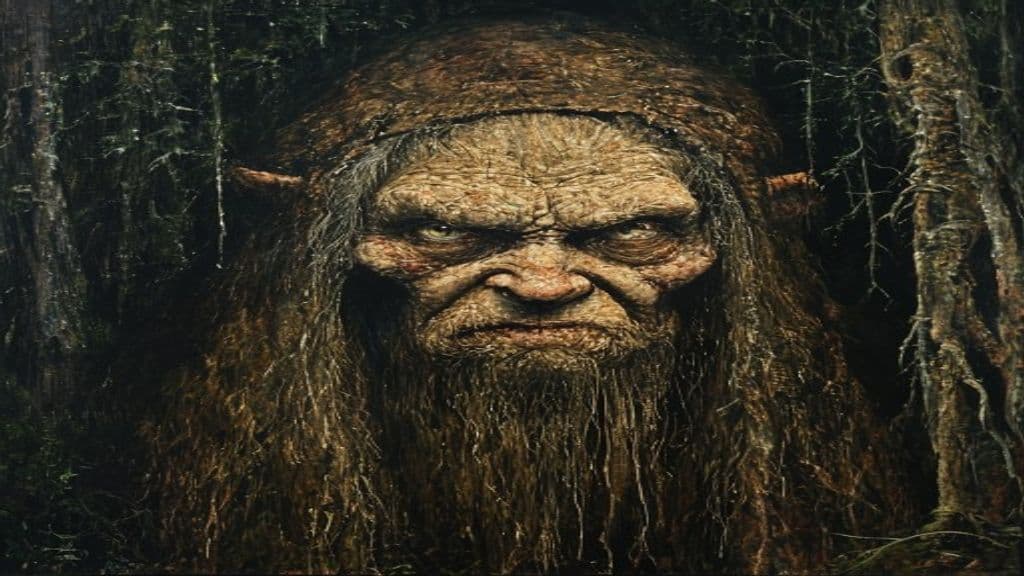
Baba Yaga is an ambivalent female figure of East Slavic folktale tradition, depicted variously as a fearsome, child-eating crone or as a helpful, maternal donor. She is associated with the deep forest, a hut described as standing on chicken legs, and the motific accoutrements of a mortar and pestle.
*Perkʷūnos
*Perkʷūnos is the reconstructed Proto-Indo-European thunder‑god hypothesized by comparative linguistics and mythology. Scholarly reconstructions portray him as a storm or thunder figure associated with fructifying rain and as the combatant who fights a multi‑headed water‑serpent to release life‑giving waters; no direct attestations from the Proto‑Indo‑European period survive and the figure is inferred from later Indo‑European traditions.
*Péh₂usōn (reconstructed)
Péh₂usōn is a hypothetical Proto‑Indo‑European pastoral guardian reconstructed by comparative scholars from parallels in Greek and Vedic traditions. Proposed as a Graeco‑Aryan ancestor‑figure, the reconstruction describes a protector of flocks, roads, and travellers rather than an attested historical cultic personality.
57 Mnemosyne
57 Mnemosyne is a large main-belt asteroid (S-type) discovered in 1859 and named after the Greek Titaness Mnemosyne. It is a non-sentient astronomical body studied for its orbital and rotational properties and has been used in dynamical measurements related to Jupiter.
Abaddon
In Hebrew scripture Abaddon is primarily a noun meaning 'destruction' or a section/condition of the underworld paired with Sheol; in the New Testament Book of Revelation Abaddon is personified as an angelic figure (Greek Apollyon) described as the king of an army of locusts released from the abyss during the apocalypse.
Aban Yasht
The Aban Yasht is a hymn from the Persian tradition that praises Anahita, a goddess associated with water, fertility, and wisdom. It consists of 132 stanzas and is part of the 21 Yashts collection. (Note: - Power tier should be "Primordial" or possibly "Cosmic", given that it's a hymn of great spiritual significance and associated with a goddess. - The article incorrectly states that Anahita is associa)
Abath
No corroborated folkloric entity named "Abath" is documented in the provided sources. The string appears in the supplied material only as a surname/personal name in Aruban/Dutch-Caribbean archival records and as an unrelated taxonomic or encyclopedic hit; no mythic attributes, origin stories, rituals, or apotropaic practices for an entity called Abath are present in the documents reviewed.
Abatur
Abatur is an uthra (celestial emanation) in Mandaeism described as the 'father of the Uthras' and called the Ancient (ʿattīqā). He resides on the boundary between the World of Light and lower regions, functions as a judge who weighs souls (Abatur Muzania), and supplies instructions and materials to the demiurgic uthra Ptahil in accounts from the Diwan (Scroll) of Abatur.
Abatwa (Twa / Batwa)
Abatwa (also recorded as Twa, Batwa, Mutwa; singular forms Barhwa or Murhwa in some transcriptions) are indigenous hunter‑gatherer peoples of the Great Lakes region of Central Africa, historically identified as some of the earliest inhabitants of the area. The available sources treat them as human ethnic groups whose livelihoods, lands, and populations have been severely affected by conservation policies and modern violence.
Abellio
Abellio is a theonym attested in Roman‑period inscriptions from the Comminges area of the Pyrenees and reported as worshipped in the Garonne Valley of ancient Gallia Aquitania. Surviving evidence is limited to a small number of inscriptions; scholars have variously hypothesized solar or arboreal associations and compared the name to forms of Apollo or to Celtic Belenus, but the deity's precise role in local cosmology remains uncertain.
Abraham
Abraham (originally Abram) is the foundational patriarchal ancestor in the Hebrew Bible whose life establishes a covenantal relationship between his family/people and God. He functions as an exemplar of faith, the progenitor of promised descendants, and a narrative anchor for claims of land, blessing, and communal identity in later religious traditions.
Abraun
Abraun is an attested name in German-language plant-legend scholarship (Der abraun, ein beitrag zur pflanzensagenkunde, 1916) and a short database entry (Wikidata) labels it as a spirit from German mythology. Surviving accessible documentation is extremely limited: the principal academic treatment is a 1916 contribution to pflanzensagenkunde (plant-saga studies), but the excerpts available here contain only bibliographic metadata and do not record tales, descriptions, or rituals.
Abtin
Abtin (Persian: آبتین), attested also as Athwya, is a mythic ancestral figure in Iranian tradition described in Avestan and later epic literature as one of a small set of formative human-like figures involved in preparing the corporeal world and as the father of the epic hero-king Fereydun in the Shahnama.
Community Record
- [1]Perchta — Wikipedia. Wikipedia entry 'Perchta'.wiki
- [2]Perchta — Wikidata Q258927. Wikidata item Q258927.other
- [3]Archive: Lore of the Lutzelfrau / St. Lucy (related midwinter materials). Archive item cited in research notes (used only to confirm presence of Perchta in contemporary media/performances).other
- [4]Archive: M&S #1: Wyrd Sisters (related folkloric audio). Archive item cited in research notes (not used for primary folkloric detail beyond contemporary references).other
- [5]Archive: NoSleep Podcast S17E21 (modern media reference). Archive item cited in research notes (modern/popular culture reference).other
- [6]LA GRANDE DEA (Archive video with Italian subtitles/notes). Archive.org: 'LA GRANDE DEA' (documentary), Italian-language description/notes identifying 'Berchta (o Perchta) è una divinità del paganesimo alpino, "la brillante"' and commenting that she is identified by commentators as derivational from Holda and Freia/Frigg.other
- [7]The Krampus | The Grimm Archives (contextual archival material). Archive.org: 'The Krampus | The Grimm Archives' (included among source materials to indicate broader Alpine folkloric context; does not itself provide specific claims about Perchta in the supplied excerpt).other