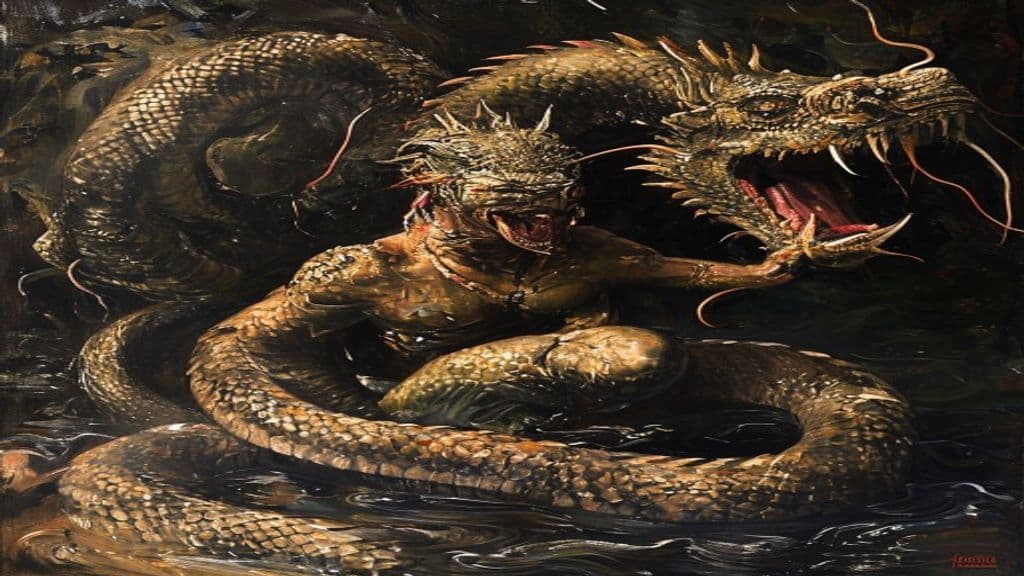
Phaya Naga are presented in regional belief as a local manifestation of the broader South Asian/Southeast Asian nāga tradition: semi-divine serpent/dragon beings originating from nāga cosmology (the netherworld/Patala) and incorporated into Mekong riverine myth. In Lao and Thai contexts these beings are woven into local ritual calendars and popular practice — for example, nights associated with nāga imagery occur around Buddhist Lent and Loy Khatung/Loy Krathong observances in Lao communities — so that veneration and communal timing link Buddhist observance with older nāga reverence and river-based cosmologies.
Descriptions follow the broad nāga typology: some representations are fully serpentine (large river-serpents or dragon-like serpents), others are half-human/half-serpent forms or human figures with serpents at head/neck; regional imagery often depicts them as large serpent/dragon water-spirits associated with the Mekong. Popular accounts and sighting-discussions portray elongated, serpent-like bodies; popular non-supernatural explanations for sightings (mentioned in modern sources) include large marine animals such as oarfish, but these are presented as modern hypotheses rather than traditional descriptions.
Sources describe Phaya Naga as semi-divine water spirits and dragons that inhabit the Mekong and may occasionally be associated with visible phenomena. Locally many attribute the periodic luminous 'Naga fireballs' rising from the river to Phaya Naga; alternative, non-cultural explanations discussed in the literature include earth lights or other anomalous light phenomena. Inherited nāga traits from South Asian tradition — semi-divine status and occasional part-human manifestation — are applied to Phaya Naga in the regional context, and the beings function as guardians or meaningful agents within riverine cosmology and festival time.
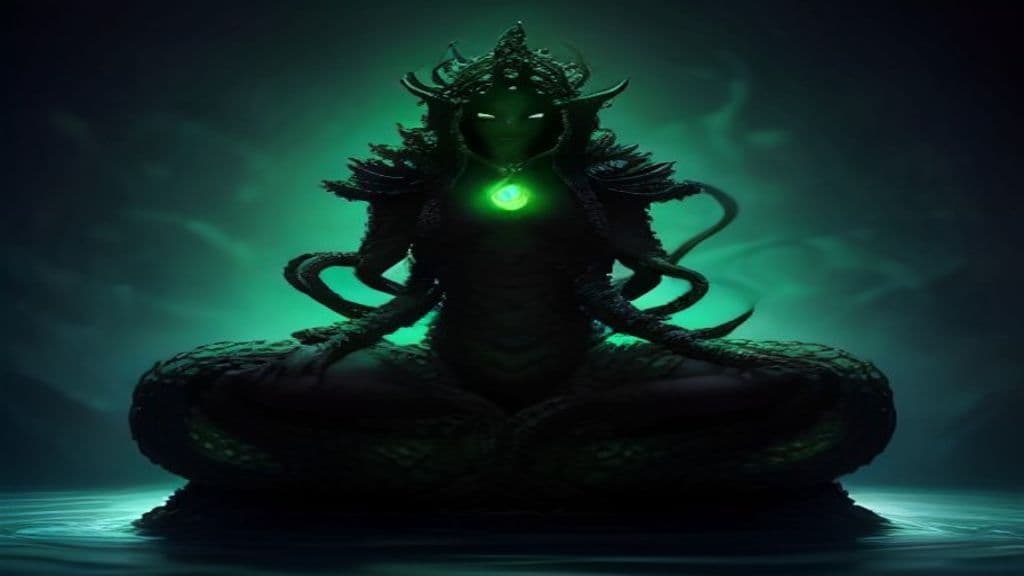
Naga
Divine serpent beings of Hindu, Buddhist, and Jain cosmology — powerful guardians of water, earth, and underground treasures. Revered as deities in South and Southeast Asia.
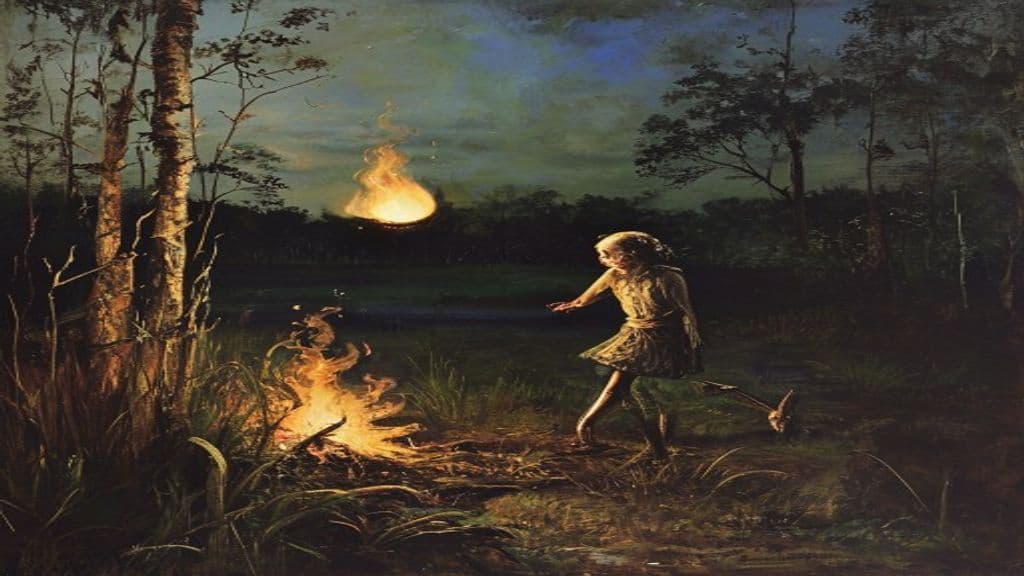
Will-o'-the-wisp
An atmospheric 'ghost light' — a small, mobile, lamp-like light seen at night over marshes, bogs, wet ground, or graveyards. In many cultures the phenomenon is interpreted as a supernatural being or manifestation (wandering nature-spirit, soul of the dead, transformed witch, or treasure-indicator); modern science offers chemiluminescent explanations for some occurrences.
Adi Vinayaka
Adi Vinayaka (Ādi Vināyaka; also called Nara Mukha Vinayaka) is a named iconographic and devotional form of the Hindu god Ganesha portraying the deity with a human head, described in sources as the form before the episode of decapitation by Shiva. It is rarely worshipped and appears in a small number of South Indian shrines and in devotional/musical repertoires.
Agastya
Agastya (also Agathiyar/Agasti) is a revered Vedic and later-period Indian rishi (sage) figure credited in textual traditions as an inspired seer, ascetic, teacher, culture-founder, and attributed author of Vedic, Puranic and Tamil works; in South Indian tradition he is associated with origins of Tamil grammar and Siddha medicine and is identified astronomically with the star Canopus.
Agiya Baital
The fire-form of the Vetala — a cremation ground spirit of UP and Bihar that manifests as a wandering flame rather than a corpse-inhabitor, leading night travellers off roads and into marshland or flames with a dancing fire that seems always just ahead.
Agniveśa
Agniveśa is a legendary rṣi (sage) in the Ayurvedic textual tradition, traditionally credited as the pupil of Punarvasu Atreya and as the attributed author of the lost Agniveśa Saṃhitā / Agniveśatantra. Later Ayurvedic compilers, notably Charaka, are described in the sources as having compiled, edited, and modified material attributed to Agniveśa into texts such as the Charaka Saṃhitā.
Ahiravan (Mahiravan)
Ahiravan (also Mahiravan) is a rakshasa-king of Patala in Ramayana-derived narratives who abducts Rama and Lakshmana to sacrifice them to a goddess. Presented as a brother or trusted ally of Ravana in eastern Ramayana recensions, he is defeated and beheaded by Hanuman with divine aid.
Aiyanar
Aiyanar (Aiyaṉār, ஐயனார்) is a Tamil rural tutelary deity venerated chiefly in village contexts of Tamil Nadu and among Tamil communities in Sri Lanka. Portrayed as a martial guardian often mounted on a horse or elephant and accompanied by attendant spirits, he functions primarily to protect village boundaries, people, and livestock and has later been syncretized with the Sanskritic Sastha tradition.
Aiyyanar
Aiyyanar (also spelled Aiyanar) is a Tamil rural village deity venerated in South India and Sri Lanka, primarily among rural Tamil communities. He is associated in material culture with large, colorful roadside and temple statues often shown with companions and mounted on horses or elephants, and functions as a local protective/patronal figure within village devotional practice.
Akṣayakumāra
Akṣayakumāra appears in the Ramayana as the youngest son of Rāvaṇa and a warrior sent to oppose Hanuman in the Ashoka Vatika episode; described as about sixteen, he fights bravely from a chariot and is killed by Hanuman.
Alakh Niranjan
A doctrinal and devotional formula in the Nath-yogi tradition denoting the unseen, unblemished ultimate reality (Nirguna Brahman/Atman). Used as a salutational invocation, theological name, and signifier of realised Self rather than a personified supernatural being.
Alakshmi
Alakshmi is an inauspicious female supernatural figure in Hindu tradition, presented as the negation or shadow-counterpart of the prosperity-goddess Lakshmi. She personifies poverty, grief, jealousy and social discord and is managed in domestic ritual and festival practice.
Alamelu
Alamelu (also Alamelu Manga / Alarmel Mangai) is a South Indian devotional name for the goddess Padmavati, identified in sources as an avatar of Lakshmi and the consort of Venkateswara; the name is also used widely as a female personal name and in titles of cultural works in Tamil and Telugu contexts.
Aleya
Ghost lights of the Sundarbans delta — flickering flames over swamp water said to be the souls of dead fishermen, luring the living off safe paths into drowning waters.
Community Record
- [1]Nāga. Wikipedia, 'Nāga' (discussion of nāga as divine/semi-divine half-human, half-serpent beings and their association with water and dragons).wiki
- [2]Phaya Naga (Wikidata). Wikidata entry: 'mythical creatures believed to live in the Laotian stretch of the Mekong River.'wiki
- [3]Phaya Naga | Cryptid Wiki. Cryptid Wiki: overview of Phaya Naga (Thai: พญานาค; RTGS: phaya nak), association with Mekong river and attribution of Naga Fireballs to these creatures; also notes popular hypotheses such as oarfish explanations.folk
- [4]Loy Khatung: the night of the Naga. Travelfish: connects Lao observance of Buddhist Lent and festival nights with nāga-themed nights and cultural events on the river.other
- [5]Earth Lights: Spooklights and Ghost Lights, etc.. Discussion of earth lights and anomalous light phenomena as naturalistic explanations sometimes offered for luminous events attributed in local belief to nāga.other