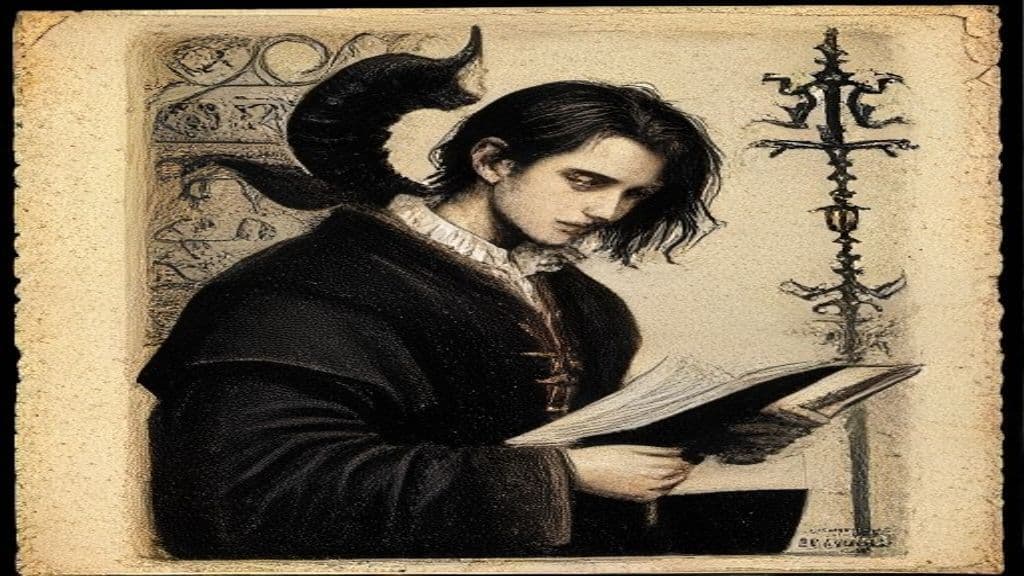
The label ‘‘printer's devil’’ functions as a crossroads of several strands in the historical record rather than a single unified origin myth. Sources present multiple, overlapping explanations: a jocular seventeenth-century account (Joseph Moxon, 1683) explains the name as workshop slang applied to ink-stained boy apprentices; medieval demonology links the idea to Titivillus, a spirit blamed for collecting stray word-fragments and causing errors in copied and printed texts; anecdotal etymologies associate the term with figures connected to early press history (Johann Fust/Faust and stories surrounding early printers such as Aldus Manutius and William Caxton); and in other locales lexical coincidences (a Malayalam near-homophone between words for printing error and a devil term) have been proposed to explain local use. The sources present these alternatives without establishing a single definitive origin, indicating the term's emergence from both occupational practice and folkloric projection.
As an occupational figure the printer's devil was typically a young press apprentice: a low-status worker who mixed ink, fetched type, tended the ‘hellbox’ of worn sorts, and whose skin and hands were commonly stained black by ink. In the folkloric register—largely through association with Titivillus—depictions draw on medieval demon imagery: small mischievous creatures often described with horns and claw-like feet. The sources emphasize that such visual descriptions derive from the Titivillus tradition and are not a single canonical portrayal of every ‘‘printer's devil’’ usage; many historical references are to human apprentices rather than to a literal demonic form.
Folkloric attributions (especially those deriving from Titivillus legends) credit the printer's devil with mischievous, text-focused acts: inverting type, misspelling words, removing lines of set type, and collecting dropped fragments of words or poorly recited prayers to be recorded for infernal use. Printers historically blamed such beings for major errors and corruptions in texts (the sources cite the practice of attributing printing mistakes to Titivillus/‘‘printerly devils’’). In contrast, the human apprentice associated with the term performed mundane, concrete tasks—mixing tubs of ink, fetching and sorting type, emptying the hellbox and returning or melting worn sorts—and functioned socially as a convenient scapegoat for mistakes, whether through jocular slang or pejorative blame.
Weaknesses
- otherNo documented supernatural weaknesses in provided sources (sources record attribution and humor rather than concrete vulnerabilties)
- conditionSocial/occupational scapegoating — attribution of errors to a human apprentice rather than a supernatural agent (documented as a historical practice)
Wards
- otherNo recorded ritual wards specific to the printer's devil in the cited sources; historical response is attribution to Titivillus or labeling apprentices rather than documented ritual protection
- ritualClerical vigilance and textual correction (implicit protective practice: careful proofreading and editorial correction rather than liturgical exorcism)

Titivillus
Titivillus is a medieval Christian demon associated with the collection of omitted, syncopated, or mispronounced syllables and fragments from liturgy and the errors of scribes and printers; he is depicted chiefly as an infernal agent who gathers these fragments in sacks to be counted against offenders.
Faust
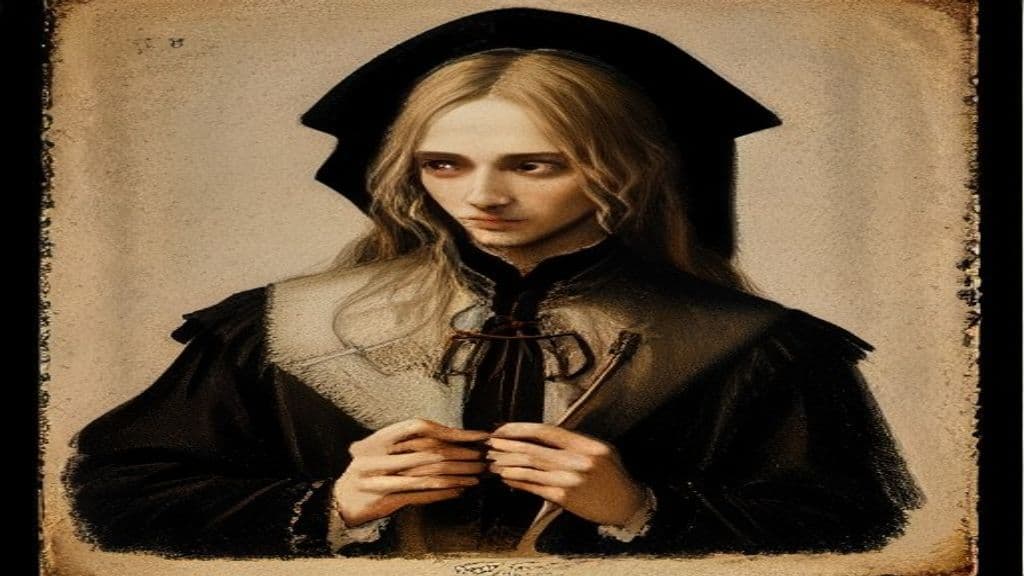
Faust is the human protagonist of a long-standing German legend, based on a probable historical figure (Johann Georg Faust, c. 1480–1540), whose central motif is making a pact with an infernal representative (commonly named Mephistopheles) at a crossroads to exchange his soul for unlimited knowledge and worldly pleasures. The figure functions as a moral and literary archetype warning against preferring human/occult knowledge and worldly gain over divine order; later usages yield the adjective “Faustian.”
*Perkʷūnos
*Perkʷūnos is the reconstructed Proto-Indo-European thunder‑god hypothesized by comparative linguistics and mythology. Scholarly reconstructions portray him as a storm or thunder figure associated with fructifying rain and as the combatant who fights a multi‑headed water‑serpent to release life‑giving waters; no direct attestations from the Proto‑Indo‑European period survive and the figure is inferred from later Indo‑European traditions.
*Péh₂usōn (reconstructed)
Péh₂usōn is a hypothetical Proto‑Indo‑European pastoral guardian reconstructed by comparative scholars from parallels in Greek and Vedic traditions. Proposed as a Graeco‑Aryan ancestor‑figure, the reconstruction describes a protector of flocks, roads, and travellers rather than an attested historical cultic personality.
3-D Man
3-D Man is a Marvel Comics superhero identity associated with a 1950s-era origin in which the body of Chuck Chandler can materialize in three-dimensional existence when activated by his brother Hal via a pair of glasses. The mantle was later assumed by Delroy Garrett (formerly Triathlon) in modern continuity.
5 Ronin
5 Ronin is a 2011 Marvel Comics five-issue limited series that reimagines five Marvel superhero archetypes as rōnin (masterless samurai) in a fictionalized post‑Sekigahara feudal Japan. The work places Wolverine, Hulk, Punisher, Psylocke, and Deadpool analogues into period roles to explore displacement, revenge, and identity in an era of political upheaval.
57 Mnemosyne
57 Mnemosyne is a large main-belt asteroid (S-type) discovered in 1859 and named after the Greek Titaness Mnemosyne. It is a non-sentient astronomical body studied for its orbital and rotational properties and has been used in dynamical measurements related to Jupiter.
58 Concordia
58 Concordia is a fairly large main-belt asteroid orbiting the Sun, discovered in 1860 and named after the Roman goddess Concordia. Astronomical sources classify it as a C-type (carbonaceous) body with a multi-year orbital period and measurable rotation and pole orientations.
9MOTHER9HORSE9EYES9
An anonymous Reddit screen name and online persona used by the author of the Interface series, a multipart speculative-horror narrative posted in short installments across Reddit in 2016. The name functions as the signature of an authorial identity and as a focal label for a fandom that created archives, a subreddit, and a wiki documenting the story and its fictional phenomena (notably entities called "flesh interfaces").
A.R.G.U.S.
A.R.G.U.S. is a fictional clandestine United States government agency in the DC Comics universe that investigates, contains, and manages superhuman, meta-human, and supernatural incidents and assets. Introduced in The New 52 continuity, it functions as an institutional actor providing intelligence, logistical support, covert task forces (notably Task Force X / the Suicide Squad), and a dedicated magic division across comics and media adaptations.
Abaddon
In Hebrew scripture Abaddon is primarily a noun meaning 'destruction' or a section/condition of the underworld paired with Sheol; in the New Testament Book of Revelation Abaddon is personified as an angelic figure (Greek Apollyon) described as the king of an army of locusts released from the abyss during the apocalypse.
Abadir
Abadir is a polysemous name attested in distinct cultural contexts: a legendary founding saint and clan ancestor in eastern Ethiopia (Sheikh Abadir Umar Al‑Rida / Aw Abadir), a term applied to cone‑shaped cult stones in Phoenician religious description, and a personal name of a martyr (Abadir/Apater) in the Coptic Synaxarium. The attestations are independent usages of the same name rather than a single supernatural being.
Abadiu of Antinoe
Abadiu of Antinoe was a fourth‑century bishop of Antinoe (Antinoopolis, in Roman Egypt) commemorated as a martyr and saint in the Coptic Orthodox Church, with a feast day on 26 December. Sources record that he was killed during a theological dispute with Arian opponents and reference him in collections of Egyptian martyrs.
Abagtha
Abagtha (Hebrew: אבגתא, ’Ǎḇaḡṯā) is a named human court official in the Hebrew Bible’s Book of Esther, listed among seven chamberlains who ministered before King Ahasuerus and were commanded to bring Queen Vashti before the king. He is attested only in Esther 1:10 and is presented as an institutional palace attendant rather than a supernatural being.
Community Record
- [1]Printer's devil - Wikipedia. Wikipedia contributors. 'Printer's devil.' Wikipedia, The Free Encyclopedia.wiki
- [2]Printer's Devil (Wikidata). Wikidata: Q7245297 (Printer's Devil)other
- [3]Raleigh : a living history of North Carolina's capital (archive listing referencing printers' devils). Archive.org item referencing historical uses of the term 'printer's devil'.other
- [4]Redcliff Review (1912) — memoir 'the newspaper war: recollections of a printer's devil'. Archive.org: Redcliff Review, May 17, 1912 — recollections referencing the occupational role.other
- [5]Printer's Devil — Godine (book listing, cultural reuse). Publisher listing for works titled 'Printer's Devil' demonstrating cultural reuse of the term.other