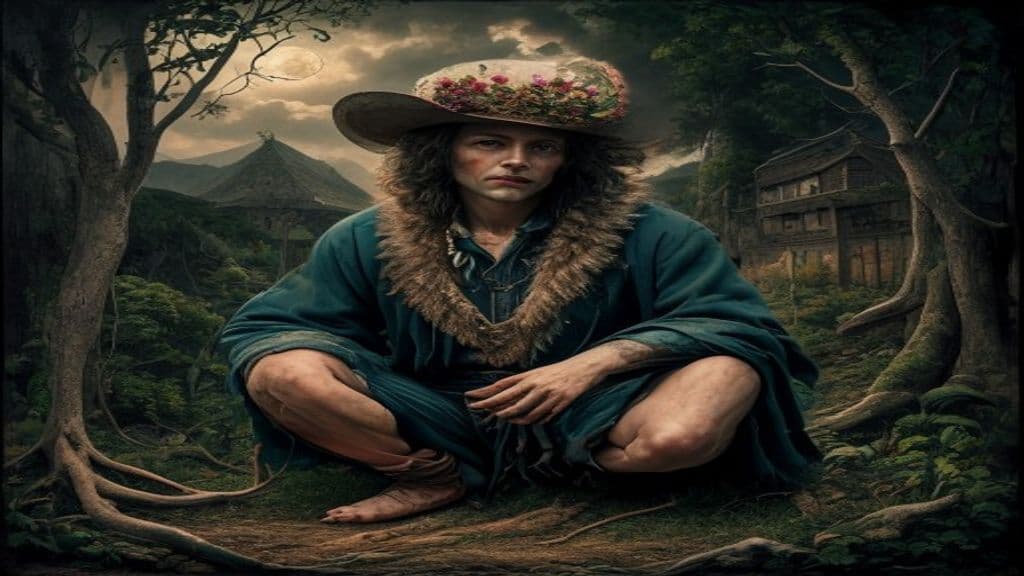
There is no single mythic origin recorded in the provided sources; the status derives from genealogical counting within communities and draws on a broader cultural valuation of the number seven (e.g., seven virtues, Seven Heavens) to confer cosmological resonance. Local legends tie particular named exemplars to the category (for example, the Montenero di Bisaccia legend naming Ciarallo as a seventh son who charms snakes), but comparative accounts indicate the idea arises independently in multiple regions rather than from a single origin narrative.
As a classificatory birth-status, the seventh son of a seventh son has no fixed outward appearance across traditions. Some localized accounts add contingent physical markers: an early 19th-century U.S. travel account reports that, in one mining-related belief, a seventh son of a seventh son born in February and with a caul on his head could scry with a black stone. Such markers are specific to particular local beliefs rather than general features of the status.
Reported capacities vary by region. In England (Lancashire/Blackburn) and Ireland the status is associated with healing: seventh sons (and especially seventh sons of seventh sons) were sometimes addressed as 'Doctor' and regarded as folk healers within the 'cure' or 'charm' tradition. In Montenero di Bisaccia, an individual named Ciarallo, described as a seventh son, could enchant and recall snakes, was immune to snake venom, could attract snakes with a whistle, and could initiate others via an inciaramazione rite using a special oil for protection. In Latin American and some Iberian traditions the status is instead feared as a mark that may doom the person to transform into werewolf-like beings (lobizón/Luison/lobisomem); in Transylvania some accounts associate the status with becoming a vampire. A U.S. account links a very specific scrying ability (discernment of subterranean things) to a narrowly specified cluster of birth-order, month, and physical traits.
Weaknesses
- ritualbaptism in seven churches (prevention in Latin American lore)
- ritualbaptism under the name Benito with eldest brother as godfather (alternative prevention in Latin American lore)
Wards
- ritualbaptism in seven different churches (preventative measure against werewolf outcome)
- ritualbaptism under the name Benito with eldest brother as godfather (preventative naming/godparenting)
- ritualinciaramazione with special oil (Italian protection from snakes administered by a seventh-son specialist)
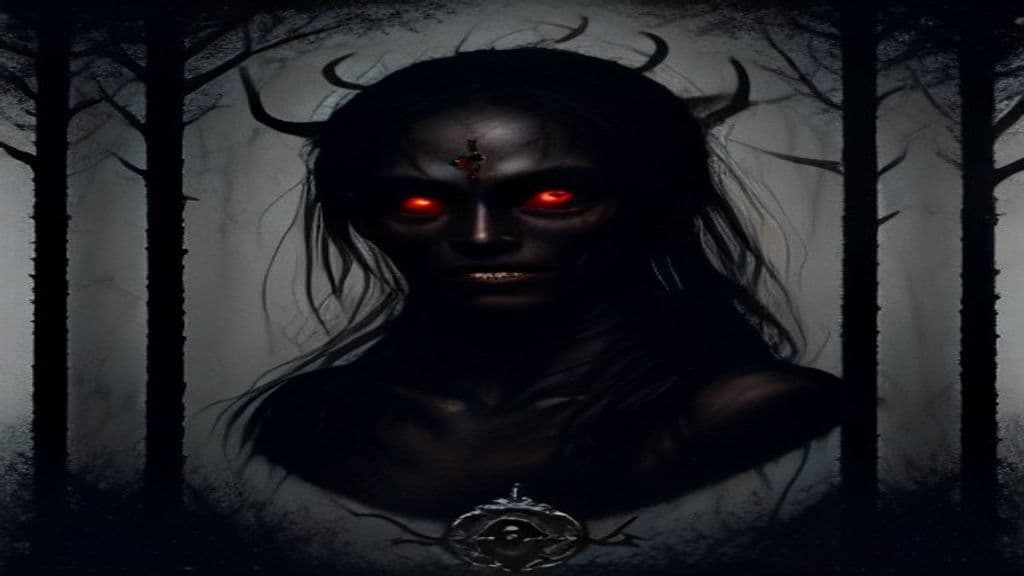
Pishacha
Flesh-eating spirits of Hindu mythology that haunt cremation grounds and are associated with disease, madness, and possession. The lowest class of demon in the Vedic hierarchy.

Banshee
A female spirit of Irish and Scottish folklore whose wail heralds an impending death in a family of Gaelic descent. Not a cause of death — a witness to it.
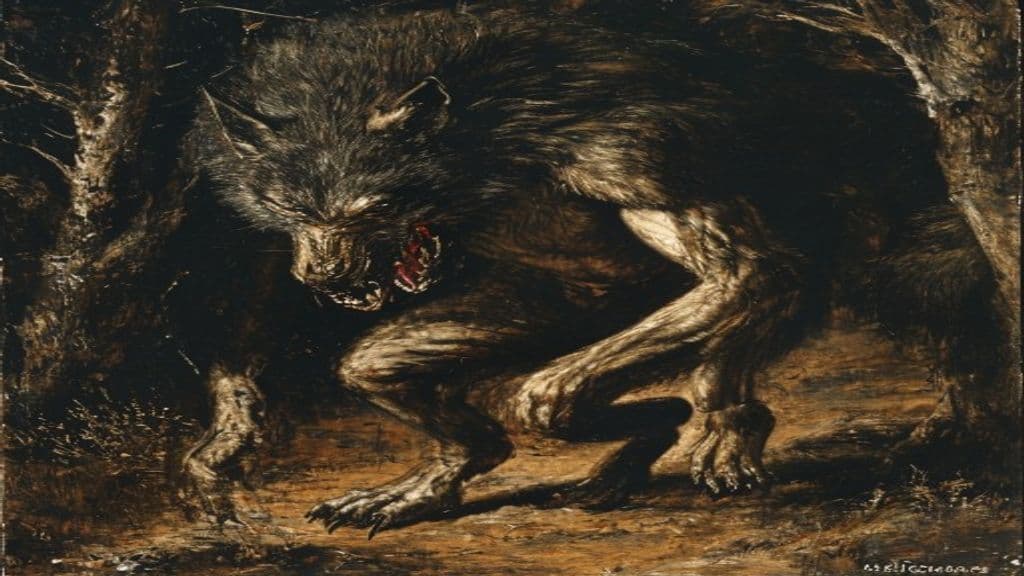
Werewolf
A figure of European folklore of a human who can change into a wolf or wolf–human hybrid, variously portrayed as voluntary shapeshifter, cursed afflicted person, or clinical delusion (lycanthropy). Belief in werewolves was entwined with medieval and early modern witchcraft accusations and persisted into Gothic and popular fiction.
Abdiel
Abdiel (Hebrew עֲבְדִּיאֵל) is primarily a theophoric Hebrew personal name meaning "servant of El/servant of God," attested once in the Hebrew Bible (1 Chronicles 5:15). In later literature—most notably John Milton's Paradise Lost—Abdiel is reimagined as a faithful seraph who opposes Satan's revolt. The provided sources do not treat Abdiel as an autonomous folkloric spirit type or record rituals or wards associated with the name.
Abiel
Abiel is attested in the supplied sources only as a male given name — borne by several historical American individuals and listed as two minor biblical figures. The provided materials contain no evidence presenting Abiel as a supernatural, mythological, or folkloric entity.
Abigail
Abigail is a female figure in the Hebrew Bible portrayed in 1 Samuel 25 as the intelligent and beautiful wife of Nabal who intervenes to prevent David from committing violence; later tradition regards her as one of the Tanakh's seven female prophets and as a model of beauty and wisdom.
Accolon
Accolon is a mortal knight of the Arthurian court, presented in the Post-Vulgate Merlin tradition and Malory's Le Morte d'Arthur as Morgan le Fay's paramour and instrument in a plot to supplant King Arthur; his tale centers on enchanted weapons (Excalibur and its scabbard), love-manipulation, and a tragic duel with Arthur.
Admeto (Admetus)
Admeto is the legendary King of Thessaly from classical myth as transmitted into European opera (notably Handel's Admeto, HWV 22). Portrayed as a mortal tragic protagonist, his fate in the narrative is determined by divine oracular decree and by the actions of other mythic figures (Alceste, Apollo, Hercules) rather than by any innate supernatural power.
Adsullata
Adsullata is attested as a Continental Celtic river goddess associated with the River Savus (modern Sava) in the Roman province of Noricum. Later traditions record her presence in Brittany as a goddess of hot springs and present her as an antecedent or origin-form of the Anglo‑Celtic sun goddess Sul.
Afaon fab Taliesin
Afaon fab Taliesin is a medieval Welsh warrior-counsellor, named as a son of the bard Taliesin and recorded among Arthur’s retinue in Welsh tradition. He appears in the Welsh Triads and in the tale Breuddwyd Rhonabwy (The Dream of Rhonabwy) as a notable martial figure and proverb-speaker rather than as a supernatural being.
Aggi and Ebbi (lexical occurrences)
Aggi and Ebbi are not attested as folkloric beings in the supplied sources; they appear only as isolated word-forms in an Italian poetic excerpt and as capitalized letter-strings in a puzzle/solution transcript. No mythic identity, powers, or rituals are documented for these tokens in the provided materials.
Aglovale
Aglovale (also Agloval, Aglovan, Aglovaus, Acglavael) is a human knight of Arthurian romance, presented as the eldest legitimate son of King Pellinore and a Knight of the Round Table in the Vulgate/Post‑Vulgate cycles, Malory, and later adaptations. He brings his long‑lost brother Perceval to Camelot, takes part in military actions (including slaying Agrippa in one account), and his death is related in varying ways across traditions (accidental at Gawain's hand, deliberate murder by Orkney kin, or killed during Lancelot's rescue of Guinevere).
Agolant
Agolant is a literary Saracen king who appears as a recurring antagonist in medieval and Renaissance epic cycles (Matter of France). He functions as a human royal opponent to Charlemagne and his peers, supplying martial episodes, genealogical connections, and the transfer of legendary arms and horses in chansons de geste and later Italian romances.
Agravain
Agravain is a literary knight of Arthurian romance cycles: one of the sons of King Lot of Orkney, a member of the Round Table, and a recurring figure in French and English medieval prose and verse. He is portrayed as a skilled but morally problematic courtly knight whose jealousy, malice, and intra-familial violence drive key narrative conflicts (notably the slaying of Lamorak and the exposure of Guinevere).
Akenta
Akenta is attested in the provided sources only as a proper name appearing in several unrelated contexts (a listing of South Australian groups, commercial wine branding, a health company, and a parliamentary text). The sources do not describe Akenta as a supernatural being, and no mythic attributes, appearance, powers, or rituals are recorded.
Community Record
- [1]Seventh son of a seventh son (Wikipedia). Wikipedia, 'Seventh son of a seventh son'.wiki
- [2]Wikidata: Seventh Son of a Seventh Son. Wikidata entry Q641620.other