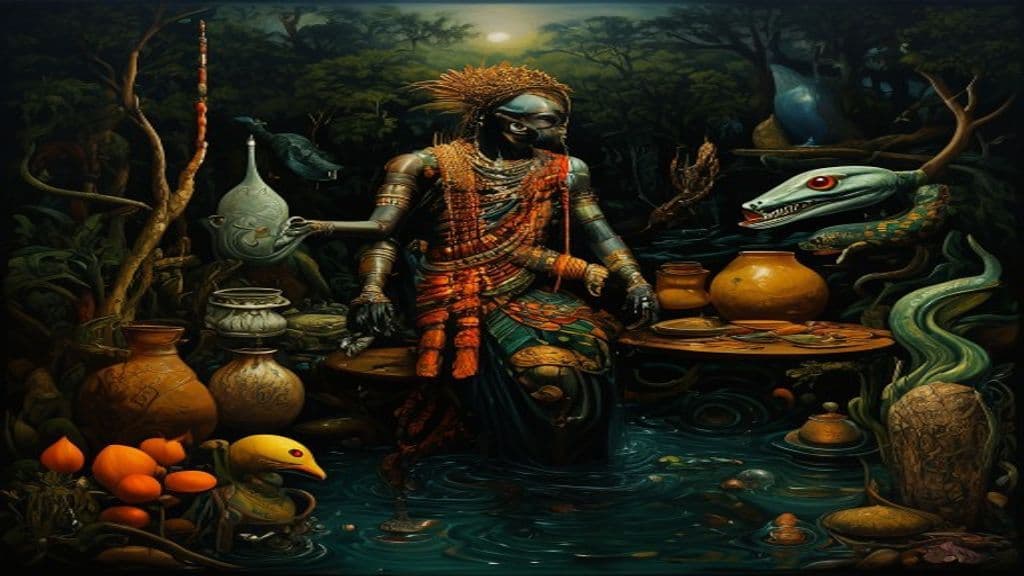
Multifaceted and potentially transformative; associated with water features, aquatic animals, pottery, snakes, gourds, and fire.
Believed to protect water and nature, implying a deep connection with the environment.
Weaknesses
- unknown
Wards
- unknown

A ƭat Roog
A term attested in the vocabulary surrounding Roog within the Serer religious system; the provided sources do not supply a clear definitional account of an entity by this exact name. Material available situates the term in the wider context of Serer cosmology in which Roog is the universal supreme deity and ancestor cult (pangool) and priestly mediation (o yaal pangool) structure ritual life.
Abada (unicorn)
Mythical creature in Central African tradition with two crooked horns, possessing healing properties. (Note: 1. Power tier: Primordial (Abada has cosmic, deity-level healing properties) 2. Sensory cues: physical presence and possibly an aura or energy emanating from the horns 3. Weaknesses: should be mention)
Abena Mansa
A name attested in a single contemporary Ghanaian blog anecdote as a 'mysterious being'; available sources do not establish Abena Mansa as a coherent, traditional supernatural figure or provide corroborating ethnographic detail.
Abonsam
Abonsam is a malevolent spirit name used in accounts from the Gold Coast (modern Ghana) to explain community-level misfortune such as accidents and disease. When local ritual specialists diagnose Abonsam as the cause, communities perform a prolonged communal expulsion ritual intended to drive the spirit into the sea.
Adjassou-Linguetor
Adjassou-Linguetor is a loa in Haitian Vodou associated with spring water. The limited cited sources describe her as having protruding eyes and a bad temper; beyond these points, the available documentation (Wikipedia and Wikidata) is minimal.
Adze
A vampiric firefly of the Ewe people of West Africa — a spirit that takes the form of a firefly by night and a malicious possessing being by day, drinking the blood of sleeping children and spreading disease.
Adze (Folklore)
Vampiric being in Ewe folklore, transforming into human shape upon capture. (Note: 1. Power tier should be Greater, as "deity-level" powers are implied by the ability to possess humans. 2. Add sensory cues (e.g., glowing lights) based on its firefly form. 3. Add weaknesses and wards)
Aganjú
Primordial Orisha associated with the sun, fire, and the untamed wilderness in Yoruba tradition. (Note: - Remove "untamed wilderness" from Power tier description as it's a trait associated with Lesser entities, not Primordial. - Add Appearance section based on source material (e.g., no specific descript)
Agbọghọ Mmụọ Masquerade
An Igbo masquerade category—literally 'Maiden Spirits'—in which masked (traditionally male) dancers embody the spirits of deceased unmarried girls, performing idealized adolescent feminine comportment and beauty in annual dry‑season civic ceremonies and at funerals and initiation rites in the Nri–Awka region.
Agwé
Agwé is a high-ranking lwa in Haitian Vodou associated with the sea, navigation, fishing, and certain funerary conveyances. He is portrayed as a naval officer who lives in a palace beneath the sea, commands attendant spirits, and is propitiated with maritime offerings and ceremonies.
Alusi
Alusi (also spelled arusi) are spirit-agents or divinities in the traditional religion of the Igbo people, each responsible for specific domains such as health, agriculture, rivers, justice, and the sky. They are worshipped and served through localized cults with priests and devotees and are distinct from clan ancestors (Ndichie).
Anansi
The spider trickster god of Akan folklore — cunning, mischievous, and wise. Keeper of stories and teacher of human beings, brought through the slave trade into Caribbean and African-American tradition.
Community Record
- [1]